Blog

  • Red Light Therapy FAQ: Does It Work, How Often Should You Use It, and What Can You Expect?

    Red Light Therapy FAQ: Does It Work, How Often Should You Use It, and What Can You Expect?

    Red light therapy has become a popular wellness option for people looking for support with pain, recovery, skin health, and general rejuvenation. But the most important questions are practical ones:

    Does red light therapy work? How often should you use it? What results are realistic? And is it safe for everyone?

    This FAQ explains red light therapy in plain language, separates promising evidence from stronger findings, and outlines what you can expect from sessions at a professional studio such as Wave Therapy in Edmonton.

    What is red light therapy?

    Red light therapy, also called photobiomodulation therapy, uses low levels of red and near-infrared light to interact with cells in the body.

    • Red light generally works closer to the skin’s surface.
    • Near-infrared light has longer wavelengths that may reach deeper tissues, including muscles and joints.

    These wavelengths are not ultraviolet light. They are designed to deliver light energy without intentionally damaging the skin.

    At a cellular level, researchers believe the light may influence mitochondria, which are the parts of cells involved in producing energy. This may support cellular activity, circulation, inflammation regulation, and tissue repair. However, the exact response depends on factors such as wavelength, dose, treatment area, and individual health.

    Does red light therapy work?

    Short answer: It can help with some goals, but it is not a cure-all and results vary.

    The evidence is most encouraging for selected applications involving:

    • Temporary relief of some types of muscle and joint pain
    • Muscle recovery and exercise-related soreness
    • Certain skin concerns, including texture and signs of photoaging
    • Support for tissue repair and inflammation management

    Research is less settled for broad claims involving significant fat loss, whole-body health changes, hair growth, or the treatment of complex medical conditions.

    A 2021 review of photobiomodulation for musculoskeletal pain found evidence of potential benefit for several conditions, including knee pain, osteoarthritis, neck pain, temporomandibular disorders, and fibromyalgia. The authors also noted that treatment parameters and study quality varied. Read the peer-reviewed review on musculoskeletal pain through PubMed Central.

    The most accurate way to think about red light therapy is as a potentially useful supportive therapy, rather than a replacement for diagnosis, rehabilitation, medication, surgery, or other medical care.

    What are the evidence-based red light therapy benefits?

    The benefits with the most relevant clinical and scientific support include the following.

    Pain and inflammation support

    Red light therapy may help reduce discomfort associated with some musculoskeletal conditions. People commonly explore it for:

    • Joint stiffness
    • Knee or shoulder discomfort
    • Arthritis-related pain
    • Tendon irritation
    • Muscle soreness
    • Neck and back discomfort
    • Exercise-related inflammation

    The results are not universal. For example, evidence for nonspecific low back pain is mixed, while some studies of knee osteoarthritis and neck pain have reported improvements.

    Muscle recovery

    Red light therapy is also used by active people who want to support recovery after exercise. Potential benefits may include:

    • Less delayed-onset muscle soreness
    • Reduced feelings of muscle fatigue
    • Support for normal tissue repair
    • Improved ability to return to regular activity

    A review of 46 studies involving more than 1,000 participants found that photobiomodulation may support aspects of muscle performance and recovery, although the researchers emphasized that results depend on the light source, dose, timing, and muscle group treated. See the systematic review of photobiomodulation in human muscle tissue.

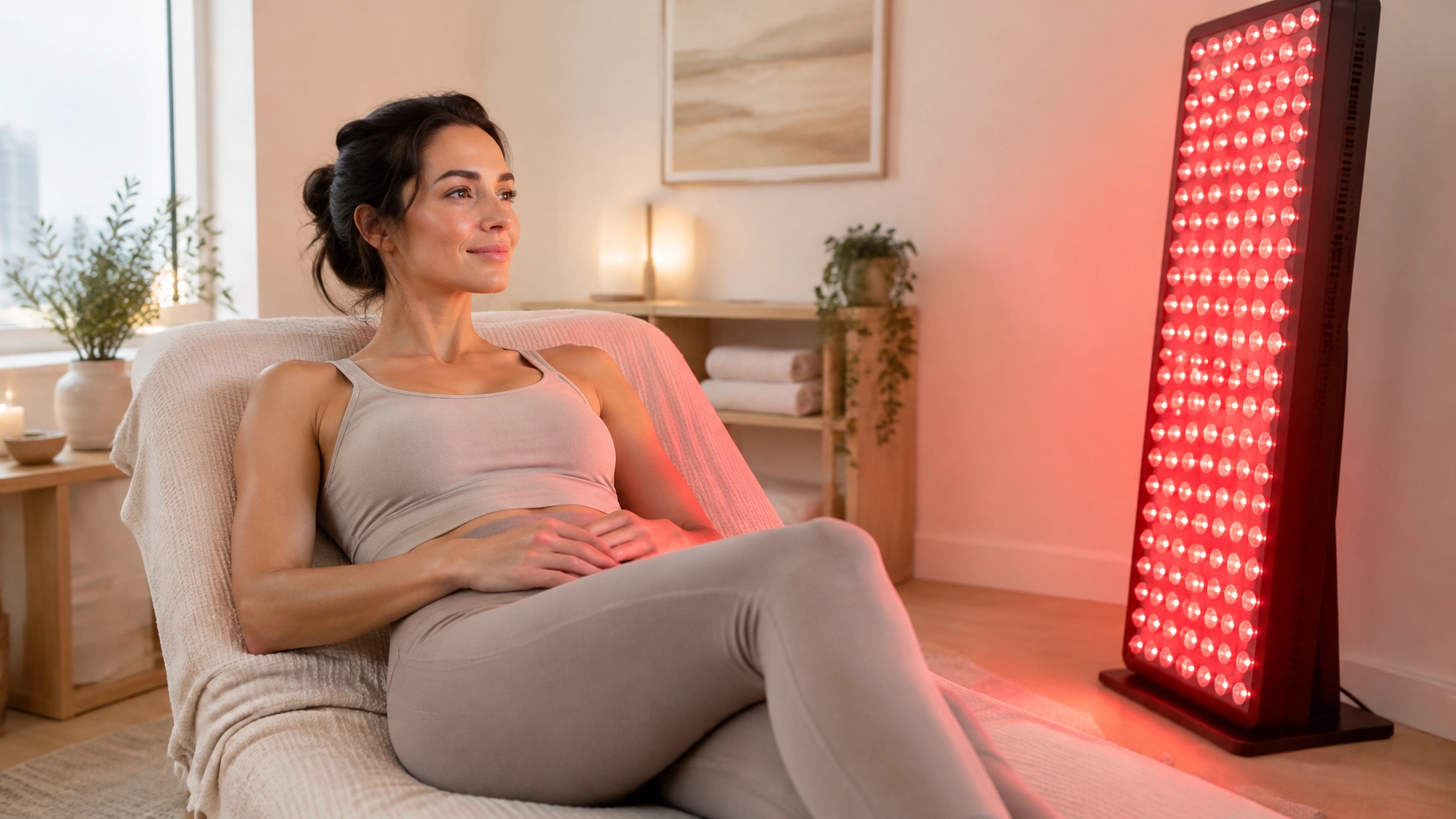
    Recreational athlete relaxing beside a red light therapy panel after exercise

    Skin rejuvenation

    Red light therapy is often used as part of a skin-focused wellness routine. It may support:

    • Skin tone and texture
    • The appearance of fine lines
    • Collagen activity
    • Mild redness and inflammation
    • General skin radiance

    Skin changes usually take longer than a single visit. Collagen-related improvements are gradual because the skin needs time to respond and remodel.

    Areas that need more research

    Wave Therapy clients may also ask about red light therapy for body contouring, cellulite, wound healing, or hair growth. These are active areas of research, but the evidence is not equally strong for every use.

    Red light therapy should not be presented as a stand-alone weight-loss treatment or as a guaranteed way to regrow hair. Body contouring, for example, should be considered a supportive cosmetic service rather than a substitute for nutrition, movement, or medical weight-management care.

    What is red light therapy used for pain and muscle recovery?

    For pain, the light may influence local inflammation, circulation, and the way tissues respond to irritation. Near-infrared wavelengths are often included when the goal involves muscles or joints because they may reach deeper than visible red light.

    For muscle recovery, sessions may be used before or after exercise. Some studies have reported reduced muscle-damage markers, soreness, or fatigue, but other studies have found little or no meaningful difference.

    Red light therapy tends to work best as part of a broader recovery plan that includes:

    • Appropriate exercise and strengthening
    • Sleep and rest
    • Hydration and nutrition
    • Physical therapy when needed
    • Medical assessment for persistent or worsening pain

    Massage may also complement a recovery routine. For hands-on treatment, clients can explore Massage Quest or the sister massage company Book-a-Therapy.

    How often should you use red light therapy?

    There is no single schedule that works for everyone.

    Treatment frequency depends on the device, wavelength, dose, treatment area, and your goal. A professional plan may begin with:

    • Two to three sessions per week for general wellness, pain support, or recovery
    • A consistent short-term series for several weeks when addressing an ongoing concern
    • Less frequent maintenance visits after an initial series, if appropriate

    More is not automatically better. Photobiomodulation appears to have a dose-response relationship, meaning that too little may not create a noticeable response, while excessive exposure may not improve results and could cause irritation.

    Follow the instructions provided by the clinic or device manufacturer. Do not extend session times or add extra visits simply because you want faster results.

    For more detail, read Wave Therapy’s guide on how often to use red light therapy.

    What should you expect from red light therapy before and after results?

    Results are individual, and photos can be misleading when lighting, posture, hydration, or camera angles change. A realistic timeline may look like this:

    • After one to a few sessions: Some people notice warmth, relaxation, or temporary changes in how an area feels.
    • After several sessions: A client may begin to notice changes in soreness, stiffness, skin comfort, or recovery.
    • After four to eight sessions: Visible or noticeable changes may become easier to evaluate for some goals.
    • After several weeks to months: Skin texture, collagen-related changes, or hair-growth goals generally require more time and consistency.

    Before-and-after results are not guaranteed. If you are tracking progress, use consistent lighting, clothing, posture, and timing. Wave Therapy’s article on realistic red light therapy before-and-after results offers additional guidance.

    Adult with healthy natural skin receiving gentle red light in a bright wellness setting

    What is a red light therapy session like?

    A session is typically quiet, non-invasive, and straightforward.

    At a professional full-body studio, you may:

    1. Discuss your goal and any relevant health considerations.
    2. Remove products or clothing that may block the treatment area, as directed.
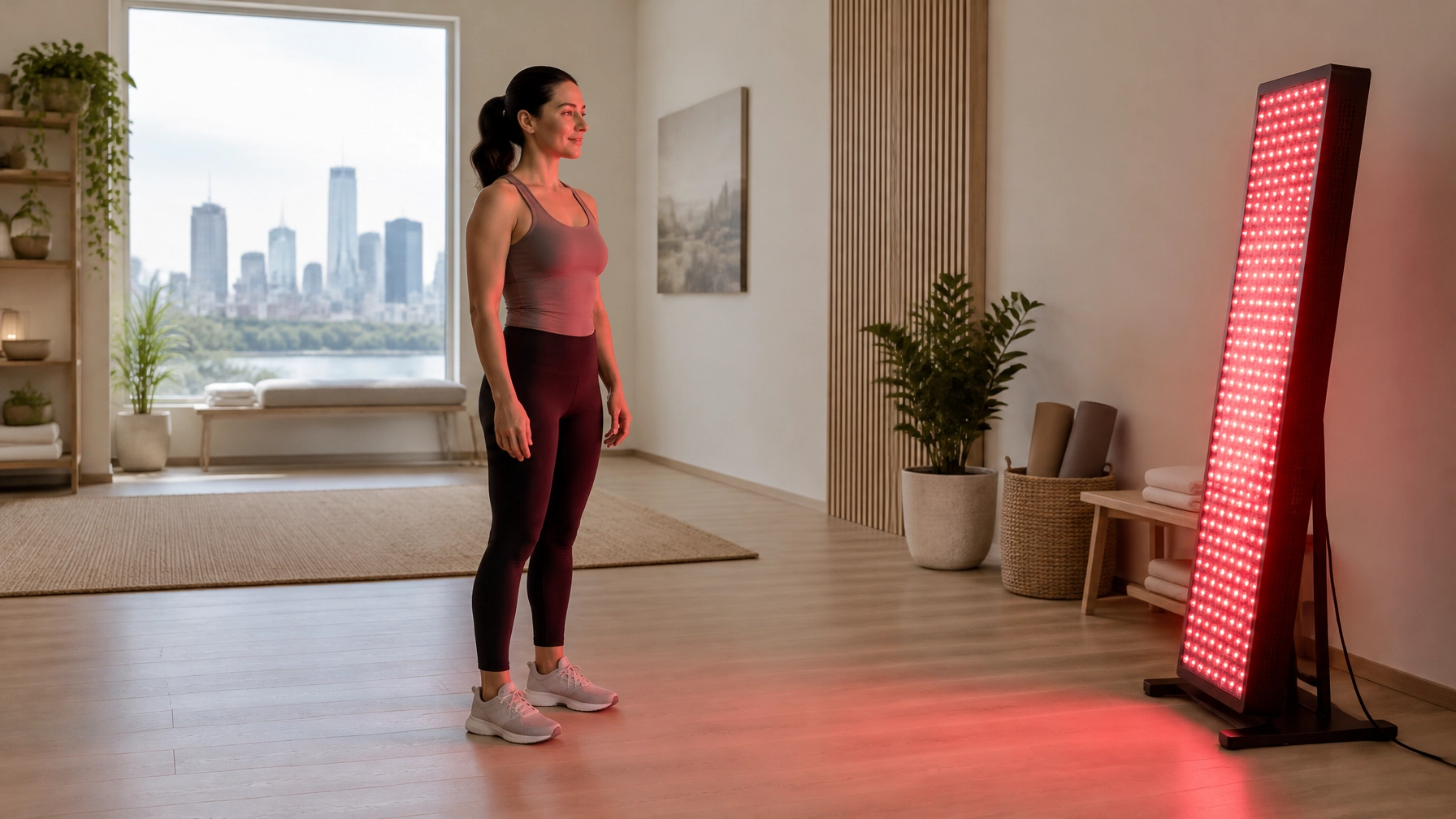
    3. Stand or lie near a red and near-infrared light system.
    4. Wear protective eyewear when recommended.
    5. Relax while the system delivers the programmed light exposure.
    6. Return to your normal routine afterward unless your provider gives different instructions.

    Most people feel gentle warmth rather than pain. Red light therapy does not involve needles, incisions, or recovery downtime. At Wave Therapy, full-body systems are designed to make sessions convenient for Edmonton clients who want to fit treatment into a regular wellness routine.

    Adult client relaxing on a sleek full-body red light therapy bed in a bright private wellness room

    What are the possible red light therapy side effects?

    Red light therapy is generally considered low risk when used appropriately. Possible side effects may include:

    • Temporary redness or warmth
    • Mild skin irritation or dryness
    • Temporary eye discomfort or sensitivity
    • Headache or discomfort from bright light

    Protective eyewear and appropriate dosing are important, especially with high-powered systems. Stop treatment and speak with a healthcare professional if you experience unusual or persistent symptoms.

    Who should avoid red light therapy or discuss it with a healthcare professional?

    Speak with a physician, pharmacist, or other qualified healthcare professional before treatment if you:

    • Take photosensitizing medication
    • Have a photosensitive medical condition
    • Have an active infection or unexplained skin lesion in the treatment area
    • Have active cancer or a history of cancer near the proposed treatment area
    • Are pregnant, especially if treatment would involve the abdomen or pelvis
    • Have a light-triggered seizure disorder
    • Have a significant medical condition or are recovering from surgery

    This list is not complete. When in doubt, ask before starting.

    Does red light therapy replace medical care?

    No.

    Red light therapy should not replace medical diagnosis, prescribed treatment, physiotherapy, urgent care, or surgery. It cannot repair every structural injury. A torn ligament, fracture, serious infection, unexplained swelling, or progressive neurological symptom requires proper medical assessment.

    Seek medical care promptly for severe pain, chest pain, sudden weakness, fever, major injury, loss of sensation, or symptoms that are getting worse.

    Practical takeaways

    • Red light therapy may help support pain management, muscle recovery, and skin health.
    • The strongest results are not guaranteed and may depend on treatment dose and consistency.
    • Near-infrared light is generally used when deeper tissues such as muscles and joints are part of the goal.
    • Start with a reasonable schedule rather than assuming daily or longer sessions are better.
    • Expect gradual changes, not an overnight transformation.
    • Use it alongside: not instead of: appropriate medical care, exercise, rest, and nutrition.
    • Discuss treatment with a healthcare professional if you have a medical condition, take photosensitizing medication, or are pregnant.

    If you are exploring red light therapy in Edmonton, you can learn more about Wave Therapy or review available session options when you are ready.

  • AI-Driven Public FAQ Strategy: Can Red Light Therapy Help You Sleep Better in 2026?

    AI-Driven Public FAQ Strategy: Can Red Light Therapy Help You Sleep Better in 2026?

    Many people are searching for natural ways to sleep better in 2026. Red light therapy has become part of that conversation, especially among people interested in wellness, recovery, and non-invasive treatments.

    But does red light therapy work for sleep?

    The honest answer is: possibly, for some people — but the evidence is still emerging and mixed. Red light therapy may support sleep quality as part of a broader wellness routine. It is not a proven cure for insomnia, and it should not replace medical care or established sleep strategies.

    Can red light therapy help you sleep better?

    A 2026 systematic review and meta-analysis published in Lasers in Medical Science examined five randomized controlled trials involving 240 participants. Overall, photobiomodulation produced a modest improvement in subjective sleep quality compared with sham treatment, measured using the Pittsburgh Sleep Quality Index.

    The researchers found that studies using shorter interventions of four weeks or less showed a measurable benefit. However, the included studies were considered at high risk of bias, the confidence intervals were wide, and the effect may not be large enough to be clinically meaningful for everyone. Longer-term benefits still need more research.

    This is an encouraging signal, not a final answer.

    Earlier research has also been promising but small. Healthline describes a 2012 study involving 20 female athletes who received 30 minutes of red light therapy each night for 14 days. The participants reported improved sleep quality and melatonin levels compared with the placebo group. However, a study this small cannot tell us how red light therapy will affect the wider population.

    So, if you are wondering does red light therapy work for sleep, the most accurate answer is that it may help support sleep quality in some people, but more high-quality research is needed.

    What is red light therapy?

    Red light therapy is also called photobiomodulation. It uses low levels of visible red light and near-infrared light to interact with cells.

    In simple terms, certain wavelengths of light may be absorbed by cellular structures, including the mitochondria. Mitochondria help produce energy for the body’s cells. Researchers are studying whether photobiomodulation may influence cellular energy, circulation, inflammation, and tissue repair.

    The red light therapy science around sleep is less established than the research involving skin health, pain, and wound healing. The possible sleep connection may involve several overlapping effects:

    • Supporting relaxation before bed.
    • Reducing evening muscle tension or soreness.
    • Providing gentle warmth without ultraviolet exposure.
    • Limiting exposure to blue light from phones, televisions, and computers.
    • Potentially influencing melatonin or circadian signals.
    • Supporting recovery when discomfort makes it difficult to settle down.

    These are plausible explanations, but they should not be presented as proven outcomes for every person.

    A serene adult winding down in a quiet bedroom with a dim red light in the background and a phone turned face down, representing healthy evening light habits

    Does red light therapy make you sleepy?

    Not necessarily.

    Red light therapy does not work like a sedative, and many people do not feel suddenly sleepy during a session. Instead, some clients describe feeling calm, warm, or relaxed afterward.

    That distinction matters. Red light therapy may help create conditions that are more comfortable for winding down, but it does not force the brain into sleep. Your response may also depend on the timing, brightness, treatment area, personal sensitivity, and what else you do during the evening.

    A dim red light in a bedroom is also different from a professional photobiomodulation session. A red-tinted bulb may feel soothing, but it may not provide the same wavelength or intensity used in therapeutic systems.

    Can it help if muscle soreness keeps you awake?

    It may be useful as part of a recovery routine.

    Muscle soreness, joint stiffness, or post-exercise tension can make it harder to find a comfortable sleeping position. Red and near-infrared light are being studied for their potential effects on inflammation, circulation, and tissue recovery.

    This is one reason people interested in red light therapy for pain may also report better rest. The benefit may not come from directly treating insomnia. Instead, reducing discomfort may make it easier to relax and sleep.

    A 2025 PubMed systematic review of whole-body photobiomodulation found that two of the included studies reported better sleep quality, along with higher melatonin or lower nighttime heart rate. However, only five studies involving 105 physically active participants were included, and the review found no consistent improvement in exercise performance or recovery biomarkers.

    For additional context, see Wave Therapy’s guide to joint pain relief and red light therapy.

    Should you use red light therapy in the morning or evening?

    It depends on your goal and how your body responds.

    Evening use

    Evening sessions may make sense if your goal is relaxation, recovery, or reducing muscle tension before bed. A session earlier in the evening may fit better than using bright screens late at night.

    However, there is no universally proven bedtime schedule for full-body red light therapy. Some people may feel relaxed, while others may feel more alert after light exposure.

    Morning or daytime use

    Morning use may be more appropriate if you are using red light therapy for general wellness, skin support, muscle recovery, or pain management. It can also be easier to maintain as part of a consistent routine.

    If you are unsure, start at a time when you can observe your response. Avoid changing several sleep habits at once, so you can better understand what is helping.

    Most importantly, do not confuse red light therapy with bright-light therapy used for certain circadian rhythm conditions. Bright-light therapy has different wavelengths, intensity, timing, and clinical applications.

    How often should you use red light therapy for wellness?

    There is no single schedule that works for every goal.

    For general wellness, many people begin with two to three sessions per week, following the instructions of the provider and equipment manufacturer. The appropriate frequency may differ depending on whether your goal is relaxation, skin rejuvenation, pain support, or muscle recovery.

    Consistency is usually more practical than very long or very frequent sessions. More light does not automatically mean better results. Overuse may cause temporary skin warmth, redness, eye discomfort, or headaches in some people.

    For a more detailed framework, read How Often Should You Use Red Light Therapy?.

    It is also helpful to track your sleep for a few weeks. Notice:

    • How long it takes you to fall asleep.
    • Whether you wake during the night.
    • How rested you feel in the morning.
    • Whether soreness or stiffness is affecting your sleep.
    • Whether evening sessions make you relaxed or more alert.

    What other red light therapy benefits are being studied?

    Sleep is only one area of interest. Red light therapy is also being studied and used as a supportive wellness treatment for:

    • Joint pain and inflammation.
    • Muscle recovery after exercise.
    • Skin tone and texture.
    • Collagen support and signs of aging.
    • Minor wound healing.
    • Hair growth support.
    • Cellulite and skin tightening.
    • General relaxation and recovery.

    The strength of evidence varies by condition. Cleveland Clinic describes red light therapy as an emerging treatment and notes that more clinical trials are needed to confirm its effectiveness for many promoted uses.

    You can also read Wave Therapy’s guide to realistic red light therapy results and timelines.

    Who should be cautious with red light therapy?

    Red light therapy appears to be low risk for many people when used as directed, but it is not appropriate for everyone without medical guidance.

    Speak with a healthcare professional before treatment if you:

    • Take medication that increases sensitivity to light.
    • Have a photosensitivity disorder.
    • Have an eye condition or a history of light-triggered seizures.
    • Are pregnant or trying to become pregnant.
    • Have active cancer or unexplained skin changes.
    • Have chronic insomnia, severe daytime sleepiness, or ongoing sleep disruption.
    • Are managing a medical condition that may be affected by light exposure.

    Protective eyewear should be used when recommended. Avoid looking directly into bright LEDs, and follow the provider’s instructions rather than extending sessions on your own.

    If sleep problems continue for several weeks, affect your work or mood, or involve loud snoring or breathing interruptions, speak with your doctor. Chronic insomnia may require specific assessment and treatment, including cognitive behavioural therapy for insomnia.

    An adult athlete resting comfortably during a professional red and near-infrared light therapy session after exercise, representing recovery support when muscle soreness affects sleep

    What can you expect from a session at Wave Therapy in Edmonton?

    At Wave Therapy, a full-body session typically takes about 15 to 20 minutes. You remain clothed and stand or sit near the professional red and near-infrared light system, depending on the treatment setup.

    Most clients notice:

    • Gentle warmth.
    • Bright red light.
    • A quiet, relaxing environment.
    • No needles or invasive procedures.
    • No required downtime afterward.

    Some people use the time to breathe quietly, listen to a podcast, or simply disconnect from their screens. A session can be part of a broader evening routine, but it should not be treated as a replacement for sleep hygiene.

    If relaxation is your main goal, some clients choose to combine light therapy with massage. You can learn more about local massage options through Massage Quest or explore massage services through Wave Therapy’s sister company, Book-a-Therapy.

    Practical takeaways

    Red light therapy may help some people sleep better, particularly when sleep is affected by muscle tension, soreness, or difficulty winding down. The newest research suggests a modest improvement in subjective sleep quality, especially with shorter treatment periods, but the evidence remains limited.

    For best results:

    1. Keep expectations realistic.
    2. Follow a consistent schedule.
    3. Use red light therapy alongside healthy sleep habits.
    4. Reduce bright screens and blue light before bed.
    5. Track your response over several weeks.
    6. Speak with a healthcare professional about chronic sleep concerns.

    Wave Therapy offers non-invasive full-body red and near-infrared light therapy in Edmonton. Learn more about Wave Therapy, explore available sessions, or book when you feel ready.

    Sources

    • Vital de Azevedo WM, de Souza K, Defante ML, et al. “Photobiomodulation and sleep quality: systematic review and meta-analysis.” Lasers in Medical Science, 2026. Read the systematic review.
    • “Does Red Light at Night Help or Hinder Your Sleep?” Healthline, medically reviewed by Alana Biggers, M.D., MPH. Read the overview.
    • “Red Light Therapy.” Cleveland Clinic. Read the medical overview.
    • “Whole-body photobiomodulation for exercise performance, recovery, and sleep.” PubMed systematic review. View the PubMed record.

  • AI-Driven Public FAQ Strategy: What Are the Side Effects of Red Light Therapy in 2026?

    AI-Driven Public FAQ Strategy: What Are the Side Effects of Red Light Therapy in 2026?

    If you have searched “red light therapy side effects,” you are not alone. Many Edmonton residents are interested in red light therapy for joint discomfort, skin rejuvenation, muscle recovery, hair growth, or general wellness. At the same time, it is reasonable to ask whether sitting in front of bright red and near-infrared light can affect your skin, eyes, or overall health.

    The short answer is that red light therapy is generally considered low-risk when the correct device is used as directed. Most reported side effects are mild and temporary. However, the treatment is not completely risk-free, and more light or longer sessions do not automatically mean better results.

    Here is what current safety information suggests in 2026.

    Is red light therapy safe?

    Red light therapy, also called photobiomodulation, uses low levels of visible red and near-infrared light. Unlike tanning beds and many laser treatments, it does not use ultraviolet radiation.

    When used within appropriate treatment parameters, red light therapy is:

    • Non-invasive
    • Typically comfortable
    • Not associated with UV-related skin damage
    • Usually performed without downtime
    • Generally well tolerated in short-term studies

    Many red light therapy devices are FDA-cleared for specific uses. It is important to understand what that means. FDA clearance generally indicates that a device is considered low risk and substantially equivalent to an existing legally marketed device. It does not guarantee that every advertised benefit has been proven, and “FDA-cleared” is not the same as “FDA-approved.”

    The evidence for effectiveness also varies by goal. Research is promising for some skin, hair, pain, and recovery applications, but outcomes depend on the wavelength, dose, treatment schedule, device quality, and the individual. The American Academy of Dermatology’s overview of red light therapy notes that more research is still needed to understand the best treatment parameters.

    So, does red light therapy work? It may help support specific goals for some people, but it should be viewed as a complementary wellness treatment rather than a guaranteed cure.

    What are the possible side effects of red light therapy?

    Most side effects are mild and resolve on their own. They may include:

    Temporary skin redness

    Some people notice mild redness or warmth in the treated area immediately after a session. This is usually short-lived and may be related to increased circulation or individual skin sensitivity.

    Mild skin sensitivity or dryness

    The skin may feel slightly tight, dry, tingly, or sensitive, particularly during the first few sessions. This may be more noticeable if you are also using exfoliating acids, retinoids, or other strong skincare products.

    Eye glare, eye strain, or afterimages

    Bright red light can be uncomfortable for some people. You may notice mild glare, a headache, eye fatigue, or temporary afterimages after looking toward a bright panel.

    Closing your eyes is not always a complete substitute for protective eyewear, especially during close facial treatments or when near-infrared light is involved. Near-infrared light is invisible, so you cannot rely on brightness or your blink reflex to tell you when exposure is too high.

    Wave Therapy explains this in more detail in its guide: Do You Need Eye Protection for Red Light Therapy?

    Temporary changes in how you feel

    A small number of people report feeling tired, lightly stimulated, or experiencing a temporary increase in soreness after an early session. These reactions are not necessarily dangerous, but they are a reason to reduce exposure and monitor how your body responds.

    Irritation from overuse

    Using a device too often, for too long, or too close to the body can increase the chance of prolonged redness, discomfort, swelling, or skin irritation. At very high doses, studies have reported more serious skin reactions such as blistering.

    Why more red light is not always better

    Red light therapy has what is often called a biphasic dose response. In plain language, the body may respond best within a certain dose range.

    • Too little light may not create a noticeable effect.
    • An appropriate dose may support the intended response.
    • Too much light may reduce the benefit or cause irritation.

    This is why extending a 15-minute session to 45 minutes is not necessarily more effective. The same applies to using multiple devices on the same area in one day.

    A practical red light therapy plan should consider:

    • Wavelength
    • Light intensity
    • Distance from the device
    • Treatment duration
    • Frequency of sessions
    • The treatment area and your individual sensitivity

    Respecting the recommended protocol is one of the simplest ways to reduce red light therapy side effects.

    How common are red light therapy side effects?

    For most healthy adults using a suitable device properly, significant side effects appear to be uncommon. Clinical reviews generally describe adverse reactions as mild, temporary, and reversible.

    A PubMed-indexed randomized controlled trial evaluated the safety of repeated low-level red light therapy over 12 months in children using it for myopia and found no evidence of harm to retinal structure or function. The Cleveland Clinic’s red light therapy guidance also describes the treatment as generally safe when used short-term and according to instructions.

    Still, “generally safe” does not mean “safe for everyone” or “impossible to misuse.” Device output, distance, exposure time, eye protection, medications, and existing health conditions all matter.

    Stop treatment and seek medical advice if you experience:

    • Persistent or intense burning
    • Blistering or swelling
    • A rash that does not settle
    • Significant eye pain
    • Ongoing visual changes or loss of vision
    • A severe or unusual headache
    • Worsening of an existing condition

    Who should be cautious or avoid red light therapy?

    Speak with your doctor, dermatologist, or eye-care professional before starting red light therapy if you have any of the following:

    Photosensitive skin conditions

    Conditions such as lupus, porphyria, or a history of severe light reactions may make light-based treatment unsuitable without medical supervision.

    Photosensitizing medications

    Some medications can increase sensitivity to light. Examples may include certain antibiotics, isotretinoin, amiodarone, some anti-inflammatory drugs, and certain cancer treatments. The complete list depends on the medication and your health history.

    Do not stop taking prescribed medication. Instead, ask your pharmacist or doctor whether red light exposure is appropriate.

    Pregnancy

    There is limited research on routine cosmetic or full-body red light therapy during pregnancy. A precautionary approach is sensible. If you are pregnant or breastfeeding, ask your healthcare provider before beginning treatment, particularly if the treatment would involve the abdomen or lower back.

    Eye conditions

    People with retinal disorders, macular degeneration, unexplained visual symptoms, or other eye conditions should obtain professional advice before facial or eye-area exposure. Protective eyewear does not replace an eye-care assessment.

    Active cancer in the treatment area

    Red light therapy is not known to cause cancer, and photobiomodulation has been studied in some supportive-care settings. However, it is generally sensible to avoid directing treatment over an active tumour unless your oncology team specifically recommends it.

    What did the 2026 JAMA Ophthalmology study find?

    A 2026 laboratory study in JAMA Ophthalmology raised important questions about certain home-use devices designed for myopia management.

    The researchers evaluated four commercially available red light therapy devices using optical measurements and ANSI safety standards. Two laser-based devices reached the study’s retinal safety limits in very short exposure times under a large-pupil testing condition. The LED-based device produced diffuse illumination and had a much larger calculated safety margin.

    The study does not mean that every red light therapy panel or LED wellness device is dangerous. It focused on eye-directed myopia devices, some of which require users to look directly into a light source. That is different from a professional full-body panel used for the skin, muscles, or joints.

    However, the findings reinforce an important point: device design matters. You should not assume that every product labelled “low-level” or “red light” has the same eye-safety profile.

    Read the study on PubMed. If a device is intended for direct eye viewing, especially for children, it should be prescribed and monitored by an eye-care professional.

    Professional full-body devices vs. cheap home devices

    Home devices are not automatically unsafe, and professional systems are not automatically risk-free. The main difference is often the level of information, consistency, and supervision available.

    A professional full-body system may offer:

    • More consistent light output
    • Broader treatment coverage
    • Clearly defined wavelengths
    • Established distance and timing protocols
    • Routine equipment checks
    • Guidance from trained staff
    • Appropriate eye protection when needed

    Lower-cost home devices may have less consistent output, limited treatment coverage, unclear irradiance specifications, or instructions that are difficult to interpret. Some products may also use lasers or focused light sources rather than diffuse LEDs.

    Before purchasing a home device, look for:

    • FDA clearance for the specific intended use
    • Clearly stated wavelengths
    • Irradiance and treatment-time information
    • Reliable eye-protection instructions
    • A reputable manufacturer
    • Clear warnings and contraindications
    • Independent safety testing when available

    The American Academy of Dermatology recommends following device directions and using the eye protection supplied or recommended by the manufacturer.

    What should you expect during a professional session?

    At Wave Therapy in Edmonton, a typical full-body session is designed to be simple and relaxing. You may stand or sit in front of professional panels for approximately 15 to 20 minutes, depending on the treatment plan.

    Most people feel gentle warmth rather than pain. There is generally no recovery period, so you can return to normal activities afterward. Staff can explain the positioning, timing, and eye-protection requirements before the session begins.

    Red light therapy may be used as part of a broader wellness routine for goals such as:

    • Joint comfort and inflammation support
    • Muscle recovery
    • Skin tone and collagen support
    • Hair-growth support
    • Wound-healing support
    • Non-invasive body-contouring goals

    For more background, see Wave Therapy’s guide on red light therapy and joint pain relief.

    Some clients also combine light therapy with other recovery-focused services. Wave Therapy can refer clients to Massage Quest for provider and referral-partner support, or to its sister company, Book a Therapy, for massage services.

    Practical takeaways

    • Red light therapy is generally safe when used correctly, but side effects are possible.
    • Mild redness, warmth, sensitivity, glare, eye strain, and afterimages can occur.
    • More exposure is not always better because red light follows a biphasic dose response.
    • Use extra caution with photosensitive conditions, certain medications, pregnancy, and eye disease.
    • Avoid staring directly into bright LEDs or lasers.
    • Use wavelength-appropriate eye protection for close facial treatments when recommended.
    • FDA clearance indicates a device’s safety classification, not a guarantee of every advertised result.
    • Professional systems and guidance can help reduce dosing and equipment-related mistakes.
    • Stop treatment if you develop persistent skin reactions or visual symptoms.

    If you are curious about red light therapy in Edmonton, you can learn more about Wave Therapy or explore Edmonton session options when you are ready.

  • AI-Driven Public FAQ Strategy: Can Red Light Therapy Improve Skin and Hair Growth in 2026?

    AI-Driven Public FAQ Strategy: Can Red Light Therapy Improve Skin and Hair Growth in 2026?

    Red light therapy continues to attract attention in 2026, especially from people searching for natural ways to support healthier-looking skin and fuller hair. But does red light therapy work, and what can you realistically expect?

    The short answer is: it may help with some skin concerns and certain types of hair loss, but results are gradual, modest, and dependent on consistent treatment. It is not a miracle cure or a replacement for medical care.

    This guide answers the most common public questions about red light therapy benefits, results, side effects, treatment frequency, and candidacy.

    What is red light therapy?

    Red light therapy, also called photobiomodulation or low-level light therapy, uses specific red and near-infrared wavelengths to interact with cells.

    In simple terms, the light may support cellular energy production and help regulate processes involved in tissue repair, inflammation, and circulation. For skin, researchers are interested in how light may support fibroblast activity, collagen production, and skin recovery. For hair, the focus is on how light may stimulate follicles and support the active growth phase.

    Red light is different from ultraviolet light. It does not tan the skin and does not use the UV wavelengths associated with sun damage.

    At Wave Therapy in Edmonton, red and near-infrared light are used in non-invasive wellness sessions designed to support skin rejuvenation, recovery, and overall cellular wellness. You can learn more about Wave Therapy before deciding whether a session is right for you.

    Does red light therapy really work for skin?

    Research suggests that red light therapy can produce subtle to noticeable improvements in some signs of skin aging.

    The most commonly studied skin-related benefits include:

    • A smoother-feeling skin texture
    • Mild improvement in fine lines
    • Support for collagen and elasticity
    • Reduced appearance of redness
    • More even-looking skin tone
    • Support for skin recovery and healing

    The American Academy of Dermatology notes that some studies have found improvements in fine lines, wrinkles, rough skin, discoloration, and loose skin. However, it also emphasizes that results vary between devices and individuals. At-home devices are generally less powerful than professional systems, and research protocols are not identical.

    A review published through the National Library of Medicine explains that photobiomodulation may influence cellular activity involved in skin repair and regeneration. That does not mean every device or treatment produces the same result. Wavelength, intensity, treatment distance, and consistency all matter.

    Woman using red light therapy for smoother skin texture and collagen support

    What does red light therapy do for collagen?

    Collagen is a protein that helps support skin structure and firmness. As we age, collagen production naturally declines.

    Red light therapy is being studied because it may support fibroblasts, the cells responsible for producing collagen and other structural proteins. Over time, this may contribute to a gradual improvement in firmness, texture, and the appearance of fine lines.

    It is important to keep expectations realistic. Red light therapy is not equivalent to surgery, laser resurfacing, or injectable treatments. The changes are usually more natural-looking and incremental.

    How long until you see results?

    The timeline depends on the concern being treated, your skin or hair cycle, the equipment used, and how consistently you attend sessions.

    For skin, some people notice a fresher appearance or smoother feel after several sessions. More meaningful changes in texture, tone, or fine lines generally require weeks to months of regular treatment.

    For hair, the timeline is usually longer because hair grows slowly. Research on low-level light therapy for pattern hair loss commonly evaluates outcomes after approximately 16 to 26 weeks or longer.

    A practical expectation may look like this:

    • After a few sessions: You may notice temporary skin brightness or a relaxed, refreshed feeling.
    • Around 6–12 weeks: Early changes in skin texture or tone may become easier to notice.
    • Around 3–6 months: Hair density or thickness may begin to show measurable changes for some people.
    • Beyond 6 months: Continued consistency may be needed to maintain or build on results.

    Before-and-after photos can be useful, but they need to be interpreted carefully. Lighting, hydration, camera angle, facial expression, hair styling, and the time between photos can all change how results appear. For a balanced overview, read Wave Therapy’s guide to realistic red light therapy before-and-after results.

    Can red light therapy help hair growth?

    It may help support hair growth in people with pattern hair loss, also known as androgenetic alopecia.

    Clinical research has reported increases in hair density, terminal hair count, or hair shaft thickness after repeated low-level light treatments. A review in the Journal of Cutaneous and Aesthetic Surgery found that low-level light therapy may be a safe and potentially effective option for androgenetic alopecia, although it also noted that more high-quality research is needed.

    A separate study published in Annals of Dermatology found that 650-nanometre red light promoted growth activity and delayed the transition to a resting phase in cultured human hair follicles. This is useful scientific evidence, but laboratory findings do not guarantee the same response in every person.

    Man receiving red light therapy to support scalp and hair growth in a modern wellness clinic

    Red light therapy is more likely to help when hair follicles are still active but becoming thinner. It is less likely to restore hair in areas where follicles have been inactive for a long time.

    It also does not treat every cause of hair loss. Hair shedding may be related to genetics, hormonal changes, nutritional deficiencies, stress, medications, autoimmune conditions, infection, or scarring. Sudden, patchy, painful, or rapidly progressing hair loss should be assessed by a healthcare professional.

    You can also read Wave Therapy’s Edmonton-focused guide to natural hair growth treatments using red light therapy.

    What are the red light therapy side effects?

    Red light therapy is generally well tolerated when used correctly. Reported side effects are usually mild and temporary.

    Some people may experience:

    • Temporary redness
    • Mild warmth
    • Minor skin irritation
    • Eye strain or discomfort from bright light
    • Headache in people who are sensitive to bright light

    Red light therapy is not UV therapy, and current research has not found that red light causes the same type of DNA damage or skin-cancer risk associated with UV exposure. Still, “FDA-cleared” does not mean a device is guaranteed to work for everyone. It indicates that the device has met a particular safety and regulatory standard.

    Avoid staring directly into bright LEDs. Follow the equipment instructions regarding eye protection, and stop treatment if you experience persistent discomfort or visual symptoms.

    For more practical guidance, see Wave Therapy’s 2026 safety guide to side effects and daily use.

    How often should you use red light therapy?

    There is no single schedule that applies to every device. Treatment frequency depends on the light’s wavelength, intensity, dose, distance, and the goal of treatment.

    Many clinical and professional protocols use several sessions per week. A common starting range for skin and general wellness may be two to four sessions per week, while hair-growth protocols are often designed around repeated sessions over several months.

    More is not always better. Photobiomodulation can have a dose-dependent response, which means excessive exposure may not improve results and can sometimes irritate sensitive skin.

    The safest approach is to:

    1. Follow the instructions for the specific system.
    2. Avoid increasing session length without guidance.
    3. Track changes with consistent photos if monitoring skin or hair.
    4. Allow enough time for gradual results.
    5. Ask a qualified provider to adjust your schedule if needed.

    Wave Therapy’s article on how often to use red light therapy provides additional information about frequency and consistency.

    Who should skip it or speak with a professional first?

    Red light therapy may not be suitable for everyone. Speak with a physician, dermatologist, or other qualified healthcare professional before treatment if you:

    • Have a condition that causes photosensitivity
    • Take medication that increases light sensitivity
    • Have active skin cancer or a suspicious skin lesion in the treatment area
    • Have a history of unusual reactions to light
    • Have a significant eye condition or recent eye surgery
    • Are pregnant and are considering treatment over the abdomen
    • Have sudden, patchy, or scarring hair loss
    • Have a chronic skin condition that worsens with visible light

    People with darker skin tones should also be mindful that visible light can contribute to hyperpigmentation in some circumstances. The American Academy of Dermatology recommends discussing at-home red light use with a dermatologist, especially if you have a history of pigmentation concerns.

    What should you expect from a session?

    A professional session is usually straightforward:

    • You discuss your goals and relevant health information.
    • The treatment area is exposed to red or near-infrared light.
    • You may feel gentle warmth, but treatment should not be painful.
    • Sessions generally involve no injections, incisions, or recovery period.
    • You can usually return to your normal day afterward.

    Client relaxing during a full-body red and near-infrared light therapy session in an airy Edmonton clinic

    Red light therapy can be part of a broader wellness routine. If you also use massage for relaxation or muscle recovery, Wave Therapy can naturally complement services from Massage Quest, a provider and referral partner, or Book a Therapy, the sister massage company.

    The practical takeaway

    So, can red light therapy improve skin and hair growth in 2026?

    For skin: It may support collagen, smoother texture, more even tone, and a gradual reduction in the appearance of fine lines.

    For hair: It may help increase density or thickness in some people with pattern hair loss, particularly when follicles are still active.

    For both: Consistency matters more than a single session. Results are usually gradual, and not everyone responds in the same way.

    Red light therapy is best viewed as a supportive, non-invasive option: not a guaranteed transformation. If you are exploring red light therapy in Edmonton, you can explore Wave Therapy sessions and book when you feel ready.

    Sources

  • AI-Driven Public FAQ Strategy: Can Red Light Therapy Help Joint Pain and Wound Healing in 2026?

    AI-Driven Public FAQ Strategy: Can Red Light Therapy Help Joint Pain and Wound Healing in 2026?

    If you are managing stiff knees, osteoarthritis, or a slow-healing injury, you may be wondering whether red light therapy can help.

    The short answer is: it may provide modest pain relief and support tissue repair for some people, but it is not a cure or replacement for medical care. The results depend on the condition being treated, the wavelength and dose, and how consistently the therapy is used.

    This FAQ explains what current red light therapy science says about joint pain, arthritis, and wound healing in 2026.

    What is red light therapy?

    Red light therapy, also called photobiomodulation, uses low-level red and near-infrared light to influence activity inside cells.

    In simple terms, the light may help cells produce energy more efficiently. This can support processes involved in inflammation control, circulation, collagen production, and tissue repair.

    Unlike ultraviolet light, red and near-infrared light are not designed to damage the skin. Treatment is non-invasive and usually feels like gentle warmth, although the exact experience depends on the equipment and session settings.

    The Cleveland Clinic’s overview of red light therapy describes it as generally safe when used correctly, while also noting that research is still developing for many conditions.

    Can red light therapy help joint pain?

    It may help reduce pain, especially in knee osteoarthritis

    Research suggests that red and near-infrared photobiomodulation may provide short-term relief for some people with joint pain.

    The strongest research has focused on knee osteoarthritis, a condition involving pain, stiffness, and changes in the joint cartilage and surrounding tissues.

    A 2024 systematic review and meta-analysis published in Physical Therapy examined 10 placebo-controlled studies involving 542 people with knee osteoarthritis. The researchers found a moderate reduction in pain at rest compared with placebo treatment.

    However, the certainty of the evidence was rated very low. The studies used different devices and treatment protocols, and many had unclear or high risks of bias. Improvements in walking tests and daily function were not consistent.

    This means red light therapy may be useful for pain management, but it should be viewed as an adjunct, not a stand-alone treatment.

    You can read the full 2024 Physical Therapy meta-analysis on PubMed.

    Professional red light therapy panel positioned near an adult knee to illustrate photobiomodulation for joint pain and osteoarthritis

    What did the BMJ Open 2019 review find?

    A 2019 systematic review in BMJ Open looked at 22 randomized placebo-controlled trials involving 1,063 people with knee osteoarthritis.

    Overall, low-level laser therapy reduced pain by approximately 14 to 16 points on a 100-point pain scale compared with placebo at the end of treatment and during follow-up.

    The results were more encouraging when treatments used dose and wavelength ranges recommended by the World Association for Laser Therapy. In those subgroups, pain relief was larger and disability scores also improved.

    The review found no reported adverse events in the included trials. Still, the authors emphasized that results depend heavily on treatment parameters.

    Read the BMJ Open systematic review.

    Is red light therapy useful for arthritis?

    It may help arthritis symptoms, but it does not reverse arthritis

    The phrase “red light therapy for arthritis” can refer to several conditions, including osteoarthritis and inflammatory forms of arthritis.

    For osteoarthritis, the evidence is most supportive for temporary improvements in pain and stiffness. It does not show that red light therapy rebuilds lost cartilage or reverses the underlying joint changes.

    For rheumatoid arthritis or another autoimmune condition, light therapy should not replace disease-modifying medication or medical supervision. Symptoms such as persistent swelling, heat, joint deformity, or unexplained fatigue should be assessed by a healthcare professional.

    Red light therapy may be considered as part of a broader plan that includes:

    • Appropriate exercise and strengthening
    • Physical therapy
    • Weight management where relevant
    • Sleep and recovery support
    • Medical treatment when needed
    • Activity adjustments during flare-ups

    Our earlier guide, Looking for Joint Pain Relief? Here Are 10 Things You Should Know About Red Light Therapy, explains how light-based treatments may fit into a larger joint-care routine.

    Which wavelength is better for joint pain?

    Near-infrared is generally preferred for deeper joint tissue

    Visible red light is commonly used for surface-level skin and wound applications. Near-infrared wavelengths travel farther into tissue, so they are generally preferred when the goal is to reach deeper structures around the knee, shoulder, hip, or other joints.

    A typical treatment system may combine:

    • Red light: commonly used for skin, surface-level tissue, and wound-healing support
    • Near-infrared light: commonly used for deeper muscle, connective tissue, and joint areas

    Wavelength is only one part of the equation. Dose, irradiance, treatment time, distance from the panel, and the area being treated all matter.

    More light is not automatically better. Photobiomodulation can have a dose range where the response is more helpful, while excessive exposure may be less effective or more irritating.

    Can red light therapy help wound healing?

    Evidence is promising, but it depends on the type of wound

    Red light therapy for wound healing is being studied because photobiomodulation may influence several processes involved in repair, including:

    • Cellular energy production
    • Inflammation regulation
    • Local circulation
    • Fibroblast activity
    • Collagen and connective tissue formation
    • Skin cell migration and closure

    Red light is commonly used for surface-level wound-healing support, while near-infrared wavelengths may be included when treatment is intended to reach deeper tissue.

    Systematic reviews report promising findings for some diabetic foot ulcers, chronic wounds, and postoperative wounds. A 2024 systematic review and meta-analysis of red and infrared light as an adjunctive treatment for diabetic foot ulcers found that photobiomodulation significantly improved healing and wound closure compared with conventional care alone, while the authors noted that treatment protocols varied widely and more high-quality trials are needed.

    However, the research is not uniform. Studies differ widely in wavelength, dosage, wound type, timing, and standard care. Evidence is more encouraging for some diabetic and postoperative wounds than for venous leg ulcers or human burn wounds.

    For that reason, red light therapy should be considered a supportive treatment, not a substitute for wound assessment, cleaning, dressings, infection control, surgery, or other recommended care.

    See the 2024 systematic review and meta-analysis on PubMed.

    Practitioner using a red light therapy panel near a clean, covered superficial healing area on an adult forearm in a modern wellness room

    Can you use red light therapy on an open wound?

    Not without professional guidance.

    A wound that is open, infected, bleeding, worsening, or associated with significant swelling should be assessed by an appropriate healthcare provider. People with diabetes, poor circulation, neuropathy, immune suppression, or a history of slow wound healing should be especially cautious.

    A wellness session is not a replacement for wound care. If your clinician approves photobiomodulation as an adjunct, the treatment plan should account for the wound type, infection risk, dressings, medications, and the specific device being used.

    What are the red light therapy side effects?

    Side effects are usually mild when treatment is used correctly

    Research and clinical overviews generally describe red light therapy as well tolerated. Possible short-term effects include:

    • Mild warmth
    • Temporary redness
    • Skin sensitivity or dryness
    • Eye strain or headache if the light is too bright or directed toward the face
    • Temporary soreness in a sensitive treatment area

    More serious problems, such as burns or eye injury, are uncommon but may occur with excessive exposure, faulty equipment, or direct viewing of intense light.

    The Healthline red light therapy overview also highlights the importance of following device instructions and protecting the eyes.

    A systematic review of LED treatments in dermatology found that light therapy was generally well tolerated, with relatively few adverse events reported across studies. You can review the LED dermatology systematic review on PubMed.

    For practical guidance, see Wave Therapy’s 2026 eye protection safety guide.

    Who should avoid or discuss red light therapy first?

    Speak with a healthcare professional before treatment if you:

    • Have an active or recently treated cancer
    • Are pregnant or breastfeeding
    • Take photosensitizing medication
    • Have a significant eye condition or unusual light sensitivity
    • Have an implanted electronic device near the treatment area
    • Have an undiagnosed or infected wound
    • Have uncontrolled epilepsy or another condition affected by light exposure
    • Have diabetes-related circulation or sensation problems

    This does not automatically mean treatment is unsuitable. It means your situation deserves individualized advice.

    What should you expect from a session in Edmonton?

    A professional red light therapy Edmonton session is usually straightforward.

    You may be asked to expose the area being treated and position yourself near a panel or full-body system. Eye protection may be recommended or required, especially when the face is near a bright panel or near-infrared light.

    Sessions are generally comfortable and non-invasive. Most people feel gentle warmth rather than pain. A provider may recommend a series of treatments rather than a single visit because research commonly evaluates repeated sessions over several weeks.

    At Wave Therapy, treatment plans are designed around your goals, comfort, and the area being treated. Results vary. Some people notice changes in comfort after several sessions, while others may notice little improvement.

    For complementary support with muscle tension or general relaxation, some clients also explore massage through Massage Quest or Book a Therapy, Wave Therapy’s sister company for massage services.

    What is the practical takeaway?

    Red light therapy may be worth discussing if you are looking for a non-invasive way to support:

    • Knee osteoarthritis pain and stiffness
    • General joint discomfort
    • Muscle and connective tissue recovery
    • Surface-level skin repair
    • Selected wound-healing plans approved by your healthcare provider

    The most accurate way to describe the evidence is promising but still evolving. Near-infrared light is generally used for deeper joint tissue, while red light is commonly used for surface-level wound and skin applications. Neither should be presented as a cure.

    If you are curious about red light therapy in Edmonton, you can learn more about Wave Therapy sessions or review available options through the Edmonton checkout page. Explore the information, ask questions, and book when you feel ready.

  • AI-Driven Public FAQ Strategy: How Often Should You Use Red Light Therapy in 2026?

    AI-Driven Public FAQ Strategy: How Often Should You Use Red Light Therapy in 2026?

    If you are considering red light therapy in Edmonton, one of the first questions to ask is simple: How often should you use red light therapy?

    The honest answer is that there is no universal schedule. Frequency depends on your goal, the device being used, treatment intensity, your health history, and how your body responds.

    In general, red light therapy works through consistent, repeated exposure rather than occasional visits or cramming several sessions into a short period. Cleveland Clinic notes that treatment is often ongoing, with people typically attending one to three sessions per week for weeks or even months.[^1]

    Wave Therapy clients typically begin reviewing visible changes within four to eight sessions, although individual timelines vary.

    Is there a one-size-fits-all red light therapy schedule?

    No.

    Red light therapy, also called photobiomodulation, uses low-level red and near-infrared light to influence cellular activity. Red light is often used for more superficial goals such as skin rejuvenation, while near-infrared light may reach deeper tissues involved in muscle and joint concerns.

    However, not every red light therapy system delivers the same:

    • Wavelengths.
    • Light intensity.
    • Treatment area.
    • Session duration.
    • Distance from the body.
    • Recommended frequency.

    Healthline also emphasizes that there is no universal prescription for red light therapy. A healthcare professional or qualified provider should help tailor the plan, especially if you are treating pain, a skin condition, hair loss, or another specific concern.[^2]

    A schedule that is appropriate for a low-powered home mask may not be suitable for a professional full-body panel. More time under the light is not automatically better.

    What do clinics typically recommend?

    Across many clinical protocols and wellness settings, a common starting range is:

    • Two to three sessions per week.
    • Approximately 10 to 20 minutes per treatment area.
    • Four to 12 weeks of consistent use.
    • A maintenance schedule afterward if you want to support ongoing results.

    Some protocols use once-weekly treatment, while others may recommend more frequent sessions. The correct schedule depends on the device and the goal.

    The light exposure itself may last 10 to 20 minutes, but a full clinic appointment can take longer because of check-in, positioning, safety instructions, and treatment setup.

    Published studies also vary. For example, a controlled study of red and near-infrared light for photoaged skin used treatments twice weekly over approximately 15 weeks.[^3] Other clinical studies use schedules of two or three sessions per week for four to 12 weeks.

    This variation is why it is best to follow the instructions provided for the specific system rather than copying a schedule from an unrelated device.

    Adult client relaxing comfortably during a professional red light therapy session with eye protection in a bright wellness treatment room

    Does frequency differ by goal?

    Yes. Different goals often require different timelines and treatment approaches.

    How often should you use red light therapy for pain?

    For mild muscle soreness or occasional joint stiffness, some people begin with two to three sessions per week.

    Red light therapy for pain may be explored as supportive care for:

    • Joint stiffness.
    • Muscle soreness.
    • Tendon discomfort.
    • Exercise-related inflammation.
    • Some chronic musculoskeletal concerns.

    Pain-related protocols vary widely. Some clinical research uses more frequent treatment during an acute phase, while chronic concerns may be treated several times per week over a longer period.

    The important point is that red light therapy should not mask a serious or worsening problem. If your pain is severe, unexplained, associated with weakness or numbness, or follows an injury, seek medical advice.

    For more information about expected timelines, read Wave Therapy’s guide to how long it takes to see red light therapy results.

    How often should you use red light therapy for skin rejuvenation?

    For skin tone, texture, fine lines, and collagen support, many professional protocols use two to three sessions per week for at least eight to 12 weeks.

    Skin changes are gradual because collagen production and skin remodeling take time. You may notice that your skin feels refreshed or looks slightly more radiant after several sessions. More meaningful changes in texture and firmness usually require a longer series.

    The evidence is promising but not uniform. A PubMed-indexed meta-analysis of red light therapy for acne found that results were mixed and that more research is needed to determine how it compares with conventional treatments.[^4]

    You can learn more in Wave Therapy’s article about red light therapy for skin rejuvenation and anti-aging.

    How often should you use red light therapy for muscle recovery?

    Active adults often use red and near-infrared light therapy two to five times per week during demanding training periods, depending on the treatment system and provider guidance.

    It may be used:

    • Before exercise as part of a broader preparation routine.
    • After exercise to support recovery.
    • During the following days when delayed-onset muscle soreness develops.
    • As part of an ongoing training and recovery plan.

    Some people notice less soreness within a few sessions. More consistent recovery support may take several weeks.

    Red light therapy should complement, not replace:

    • Sleep.
    • Hydration.
    • Adequate nutrition.
    • Progressive training.
    • Rest days.
    • Physiotherapy or medical care when needed.

    Read Wave Therapy’s Edmonton guide to red light therapy for muscle recovery for more detail.

    Adult recreational athlete using red and near-infrared light therapy as part of a calm post-workout recovery routine

    How often should you use red light therapy for fat loss or body contouring?

    Body-contouring programs commonly use two to three sessions per week during an initial series, followed by less frequent maintenance sessions.

    This goal requires especially realistic expectations. Red light therapy may support localized contouring or the appearance of skin, but it should not be treated as a guaranteed weight-loss solution.

    Cleveland Clinic states that there is not enough scientific evidence to support red light therapy as a treatment for weight loss or cellulite removal.[^1] Any changes in circumference should be interpreted carefully and measured consistently.

    Red light therapy should not replace nutrition, movement, sleep, or medical weight-management care. For a balanced overview, read Wave Therapy’s weight loss and fat reduction FAQ.

    How many sessions before seeing results?

    Wave Therapy clients typically see visible results within four to eight sessions, but that is a general guide rather than a guarantee.

    The timeline may look different depending on the goal:

    Goal Possible early changes More realistic review period
    Muscle soreness A few sessions Two to six weeks
    Joint comfort Several sessions to a few weeks Four to eight weeks or longer
    Skin rejuvenation Subtle glow or calmness Eight to 12 weeks
    Body contouring Gradual measurement changes Often eight to 12 or more sessions
    Hair support Usually no immediate change Several months

    Before-and-after photos can be helpful, but lighting, posture, hydration, and camera angle can create misleading comparisons. Use consistent photos, measurements, and symptom tracking when possible.

    The most important factor is usually consistency rather than intensity. A regular schedule is more useful than attending several sessions close together and then stopping.

    What happens if you use red light therapy too much?

    Using red light therapy more often or for longer periods does not necessarily speed up results.

    Overuse or incorrect use may increase the chance of:

    • Skin irritation.
    • Excessive warmth.
    • Dryness or redness.
    • Headaches.
    • Eye discomfort.
    • Temporary sensitivity.
    • Burns or blistering in cases of significant misuse or equipment problems.

    Cleveland Clinic notes that red light therapy appears to be safe when used short-term and as directed, but misuse may damage the skin or eyes.[^1] Healthline also reports that burns and lesions have occurred when devices were used incorrectly, for too long, or while someone fell asleep during treatment.[^2]

    Do not double your session length to make up for a missed appointment. Do not add extra daily sessions unless the provider or device manufacturer specifically recommends it.

    If you develop persistent redness, pain, swelling, eye symptoms, or unusual skin changes, stop treatment and seek appropriate advice.

    When should you not use red light therapy?

    Speak with a healthcare professional before starting treatment if you:

    • Have a photosensitive medical condition.
    • Take medication that increases sensitivity to light.
    • Have an active infection, severe rash, or unexplained skin lesion.
    • Have cancer or a suspicious lesion in the treatment area.
    • Are pregnant and considering full-body treatment.
    • Have a significant eye condition or recent eye surgery.
    • Have a seizure disorder triggered by light.
    • Recently had surgery or have a wound that has not been assessed.

    Red light therapy should not delay medical care for sudden pain, a changing mole, a persistent wound, rapid hair loss, or another unexplained symptom.

    What should you expect from a Wave Therapy session?

    A typical session is comfortable and non-invasive. You may begin with a discussion about your goals and relevant health considerations. The provider can then guide your positioning, treatment distance, session length, and eye-safety precautions.

    During treatment, you may notice:

    • A visible red glow.
    • Gentle warmth.
    • A quiet, relaxing environment.
    • No needles or incisions.
    • No expected recovery period for most people.

    Some Edmonton clients also pair red light therapy with massage as part of a broader recovery routine. Red light therapy and massage work differently, but they may complement each other for relaxation and post-workout comfort. You can explore Massage Quest as a provider and referral partner or visit Book a Therapy, Wave Therapy’s sister company for massage.

    The practical answer

    So, how often should you use red light therapy?

    For many people, a reasonable starting point is two to three sessions per week for four to 12 weeks, with session duration and frequency adjusted for the device and goal. Cleveland Clinic’s broader guidance of one to three sessions weekly reflects the fact that treatment plans vary.

    Pain, skin, muscle recovery, and body-contouring goals do not follow the same timeline. Results are usually gradual, and consistency matters more than cramming in extra sessions.

    If you are exploring red light therapy in Edmonton, learn more about Wave Therapy or explore available sessions when you are ready.

    Sources and further reading

  • Can Red Light Therapy Help Muscle Recovery? What Edmonton Athletes Should Know in 2026

    Can Red Light Therapy Help Muscle Recovery? What Edmonton Athletes Should Know in 2026

    If you have ever felt the familiar stiffness after a hard workout, long run, hockey game, or weekend hike, you may have wondered whether red light therapy can help your muscles recover.

    The short answer is: possibly. Current research suggests that red and near-infrared light may reduce delayed-onset muscle soreness, or DOMS, and support the return of muscle strength in some situations. However, the results are not guaranteed. Benefits can vary depending on the wavelength, dose, timing, muscle group, exercise type, and quality of the study.

    Here are the most common questions Edmonton athletes and active adults are asking about red light therapy for muscle recovery in 2026.

    What is red light therapy for muscle recovery?

    Red light therapy is a non-invasive treatment that uses low-level red and near-infrared light. The clinical term is photobiomodulation, often shortened to PBM.

    The light does not use ultraviolet radiation, and it is not intended to heat or damage tissue. Instead, specific wavelengths may interact with cells and influence processes involved in energy production, circulation, inflammation, and tissue repair.

    Red light is generally used at wavelengths around 630–670 nanometres, while near-infrared light often falls between approximately 800–950 nanometres. Near-infrared wavelengths may reach deeper tissue than visible red light, which is one reason they are often discussed in relation to muscles and joints.

    In plain language, the proposed process looks like this:

    1. Light reaches the treated tissue.
    2. Cells absorb some of the light energy.
    3. Mitochondria : the energy-producing structures inside cells : may become more efficient.
    4. This may support cellular repair and help regulate inflammation and oxidative stress.

    This is the basic idea behind the current red light therapy science. The mechanism is plausible, but the clinical effect depends on using the right dose and treatment protocol.

    Does red light therapy work for muscle recovery?

    Research suggests that it may help with some aspects of recovery, particularly muscle soreness and short-term strength recovery after strenuous or unfamiliar exercise.

    A 2025 systematic review and meta-analysis examined photomodulation therapy for DOMS. Across the included studies, the researchers found moderate reductions in reported soreness at 72 and 96 hours, along with improvements in some muscle-strength measures at 24 and 48 hours. However, only a small number of studies provided enough data for the meta-analysis, and the treatment parameters varied considerably.

    That matters because red light therapy is not one standardized treatment. Studies may use different:

    • Wavelengths.
    • Light intensities.
    • Treatment times.
    • Distances from the muscle.
    • Number of treatment points.
    • Timing before or after exercise.
    • Exercise protocols and participant groups.

    A previous PubMed systematic review on low-level phototherapy and exercise-related muscle soreness reached a more cautious conclusion. It found limited evidence and substantial variation between studies. This is an important reminder that promising findings do not mean every person will experience the same result.

    The balanced answer is that red light therapy may be a useful recovery adjunct, but it should not be treated as a guaranteed performance enhancer or a replacement for established recovery habits.

    Adult athlete receiving targeted red and near-infrared light therapy on the legs in a calm wellness studio

    Can red light therapy reduce delayed-onset muscle soreness, or DOMS?

    It may.

    DOMS typically appears 12 to 24 hours after unfamiliar or demanding exercise. It often reaches its highest intensity between 24 and 72 hours. Eccentric movements : such as lowering a heavy weight, running downhill, landing jumps, or completing a new training routine : are common triggers.

    The 2025 review mentioned above found that photomodulation therapy was associated with less soreness at later follow-up points in several studies. Some individual trials also reported improvements in range of motion, muscle-strength recovery, or markers such as creatine kinase.

    But the evidence is mixed. Some trials have found no meaningful benefit, especially when the exercise was short and explosive or when the wavelength and dose were not well matched to the target muscle.

    For that reason, it is more realistic to expect:

    • Possible reduction in the intensity or duration of soreness.
    • Some support for returning strength more comfortably.
    • No guarantee that DOMS will disappear.
    • No assurance of improved speed, power, or competition results.

    If soreness is severe, one-sided, associated with significant swelling, or accompanied by dark urine, marked weakness, fever, or injury, seek medical care rather than relying on light therapy.

    Is it better to use red light therapy before or after exercise?

    Both options have been studied, but they may serve different purposes.

    Before exercise

    Using photobiomodulation before training is sometimes described as a preconditioning approach. Some studies suggest it may help reduce the effects of muscle damage after eccentric or high-load exercise.

    A pre-exercise session may be worth considering when:

    • You are returning to training after a break.
    • You are preparing for an unfamiliar workout.
    • You expect a high-volume or eccentric session.
    • You want to include light therapy as part of a broader warm-up and recovery plan.

    This does not replace a proper warm-up. Red light therapy should not be used as a reason to skip movement preparation, technique work, or a gradual increase in training load.

    After exercise

    Post-exercise treatment is often the more practical choice. It may help support comfort during the hours and days after training, when soreness and fatigue begin to develop.

    Some research has found benefits when treatment is used shortly after exercise or during the 24-to-72-hour recovery period. The most appropriate timing depends on the person, the treated area, and the treatment system.

    At Wave Therapy, an Edmonton client may discuss whether pre- or post-exercise sessions make more sense for their goals. The aim is to use red and near-infrared light as one part of a sensible recovery routine : not as a substitute for sleep, nutrition, hydration, progressive training, or physiotherapy.

    How often should you use red light therapy for muscle recovery?

    There is no single schedule that applies to every athlete.

    The answer to “how often to use red light therapy” depends on the device, treatment dose, target area, health history, and reason for treatment. Research studies have used a wide range of schedules, from single sessions to repeated treatments over several days or weeks.

    A practical approach is to:

    • Follow the treatment provider’s recommended schedule.
    • Avoid assuming that longer or more frequent sessions are automatically better.
    • Give yourself time to notice how your body responds.
    • Track soreness, range of motion, sleep, and training quality rather than judging results after one session.
    • Reassess the plan if symptoms worsen or do not improve.

    Many people use an initial series of sessions before evaluating whether the treatment is useful for them. Wave Therapy’s existing guide on how long red light therapy results may take explains why muscle recovery, pain, skin, and other goals can have different timelines.

    What are the red light therapy benefits for active adults?

    The potential recovery-related benefits may include:

    • Less perceived muscle soreness.
    • Support for comfortable movement after exercise.
    • Temporary relief of muscle or joint discomfort.
    • Support for circulation and cellular repair.
    • Possible improvement in short-term strength recovery.
    • A relaxing, non-invasive addition to a recovery routine.

    Red light therapy for pain may also be explored for certain joint, tendon, or soft-tissue concerns. However, ongoing or unexplained pain should be assessed by a qualified healthcare professional. Pain relief alone does not necessarily mean an injury has healed.

    The broader evidence for red light therapy benefits remains condition-specific. Cleveland Clinic describes red light therapy as an emerging treatment and notes that more high-quality clinical trials are needed for many of its promoted uses. Read its overview of red light therapy, effectiveness, and safety.

    Active adult athlete seated beside a red light therapy system, drinking water as part of a calm post-workout recovery routine

    What happens during a Wave Therapy recovery session?

    A typical session is designed to be comfortable and straightforward.

    You can expect:

    1. A conversation about your goals, training routine, and relevant health considerations.
    2. Guidance on positioning your body in relation to the light system.
    3. Exposure to red and near-infrared light over the selected area or across the body, depending on the session.
    4. Eye protection guidance when appropriate.
    5. A quiet period in which you can relax while the treatment is delivered.
    6. Recommendations for future sessions based on your response and goals.

    You may notice visible red light and mild warmth. The treatment should not feel painful. If you experience discomfort, unusual skin irritation, dizziness, or eye symptoms, stop the session and tell the provider.

    You can learn more about Wave Therapy in Edmonton or explore available Edmonton session options when you are ready.

    Is red light therapy safe?

    For many people, red light therapy appears to be well tolerated when used correctly and according to the device instructions. It uses non-ionizing light rather than UV radiation, and it is non-invasive.

    However, “low risk” does not mean appropriate for everyone.

    Speak with a healthcare professional before treatment if you:

    • Have a photosensitive medical condition.
    • Take medication that increases light sensitivity.
    • Have an active infection, open wound, or unexplained skin lesion in the treatment area.
    • Have a current or suspected cancer in the treatment area.
    • Have a significant medical condition or recent surgery.
    • Are pregnant and considering full-body treatment.
    • Have an eye condition or concerns about light exposure.

    Do not look directly into bright treatment lights unless the provider specifically confirms that it is safe. Wave Therapy also provides additional information in its 2026 guide to eye protection during red light therapy.

    Red light therapy should not replace medical assessment, physiotherapy, rehabilitation, or emergency care. It is best viewed as a supportive wellness option.

    Can massage be combined with red light therapy?

    Some active adults choose to combine light therapy with massage, although each service has a different role.

    Red light therapy may support cellular recovery and comfort, while massage may help address soft-tissue tension, relaxation, and general post-workout comfort. If you are considering massage in Edmonton, Wave Therapy clients can also explore Massage Quest, a provider and referral partner, or Book a Therapy, Wave Therapy’s sister company for massage.

    Ask the providers how to space treatments if you are recovering from an injury or managing significant soreness.

    Practical takeaways for Edmonton athletes

    • Red light therapy may help reduce DOMS and support short-term muscle-strength recovery.
    • The evidence is promising but mixed, not definitive.
    • Wavelength, dose, timing, target area, and study quality all matter.
    • Before- and after-exercise use have both been studied.
    • There is no universal answer to how often to use red light therapy.
    • Do not expect guaranteed performance gains or complete elimination of soreness.
    • Continue prioritizing sleep, adequate nutrition, hydration, training structure, and professional rehabilitation when needed.
    • Consult a healthcare professional first if you have a photosensitive condition, take photosensitizing medication, are pregnant, or have an injury or medical concern.

    For people exploring red light therapy in Edmonton, a Wave Therapy session may be a calm, non-invasive addition to a well-rounded recovery plan. Learn more or book when it feels right for you.

    Sources

  • AI-Driven Public FAQ Strategy: Can Red Light Therapy Help with Weight Loss and Fat Reduction in 2026?

    AI-Driven Public FAQ Strategy: Can Red Light Therapy Help with Weight Loss and Fat Reduction in 2026?

    If you have searched for red light therapy in 2026, you have probably seen claims about fat reduction, body contouring, and weight loss. That naturally raises an important question:

    Can red light therapy actually help with weight loss and fat reduction?

    The honest answer is: possibly, but only modestly and as a supportive tool. Red light therapy is not a replacement for nutrition, movement, sleep, stress management, or medical weight-management care. The research is promising in some areas, but it is still limited, inconsistent, and not strong enough to call red light therapy a proven standalone weight-loss method.

    Why do people ask whether red light therapy can reduce fat?

    Red light therapy is often marketed as a non-invasive body-contouring treatment. It uses low-level red and near-infrared wavelengths to interact with cells beneath the skin.

    Some providers promote it for:

    • Localized fat reduction
    • Waist, hip, or thigh circumference changes
    • Cellulite appearance
    • Skin tightening
    • Metabolic support
    • General body contouring

    The appeal is understandable. Many people have areas of stubborn fat that do not seem to change easily, even when they are active and following a balanced eating pattern. A non-invasive option with no needles, surgery, or downtime can sound attractive.

    However, advertising claims and scientific evidence are not always the same. The most responsible approach is to separate localized contouring support from long-term weight loss.

    Does red light therapy help with weight loss?

    Short answer: it may help modestly, but it is not a proven weight-loss treatment

    Earlier studies found small reductions in waist, hip, or thigh measurements after several sessions. However, results have not been consistent across studies. Some trials used small groups, short follow-up periods, or different devices and treatment protocols.

    Healthline’s review of red light therapy for weight loss describes the possible benefits as modest at best. It also notes that larger and longer-term studies are needed. A healthy diet and regular exercise remain better-supported approaches for sustainable weight management.

    Cleveland Clinic is more cautious, stating that there is currently no solid scientific evidence to support red light therapy for weight loss.

    So, what should you take from this?

    • Red light therapy may support small, localized circumference changes in some people.
    • It should not be expected to cause dramatic weight loss.
    • It may be more appropriate to describe it as body-contouring or wellness support.
    • Results are individual and cannot be guaranteed.
    • Long-term maintenance and overall health still depend on broader lifestyle habits.

    Client receiving a comfortable full-body red light therapy session in a neutral modern wellness studio

    What does newer research from 2025 and 2026 show?

    Recent research has made the conversation more interesting, but it has not changed the basic conclusion that red light therapy should be viewed as an adjunct rather than a primary weight-loss method.

    A 2025 systematic review and meta-analysis

    A 2025 BMC Complementary Medicine and Therapies systematic review and meta-analysis examined 11 randomized controlled trials involving 569 participants.

    The pooled results suggested that photobiomodulation may improve some measurements compared with control groups. These included:

    • Body weight
    • BMI
    • Waist circumference
    • C-reactive protein
    • Total cholesterol
    • HOMA-IR, a measure related to insulin resistance

    The analysis reported average differences of approximately 3.5 kilograms in weight and 7.3 centimetres in waist circumference compared with control groups. These numbers should not be interpreted as typical results for every client.

    The researchers also identified important limitations:

    • The studies used different wavelengths, doses, and treatment schedules.
    • Most trials were relatively small.
    • Follow-up periods were short, with none extending beyond six months.
    • The overall quality of evidence ranged from very low to moderate.
    • Results for body-fat percentage were not statistically significant.
    • More diverse, long-term, multi-centre studies are needed.

    In other words, the review suggests potential, but it does not establish red light therapy as a reliable standalone treatment for obesity or long-term weight loss.

    A 2025 study on resting energy expenditure

    A separate study published in Nutrients, “Photobiomodulation Acutely Augments Resting Metabolism in Women with Obesity,” examined the immediate effect of one 12-minute whole-body red and near-infrared light exposure.

    In women with obesity, resting energy expenditure increased by approximately 9% immediately after the session. This is a noteworthy finding, but it needs to be interpreted carefully.

    The study showed an acute response, not long-term weight loss. It did not prove that repeated treatments produce a sustained increase in metabolism, nor did it demonstrate that participants lost a meaningful amount of weight over time. The study also found no change in respiratory exchange ratio, meaning it did not show a clear shift toward burning more fat rather than carbohydrates.

    This is best understood as an early signal that photobiomodulation may influence energy metabolism under controlled conditions. More research is needed to determine whether that short-term response has a meaningful effect on long-term health or body composition.

    How might red light therapy influence fat and metabolism?

    Researchers are still studying the biological mechanisms. Proposed explanations include:

    • Changes in cellular energy production
    • Effects on mitochondrial activity
    • Temporary changes in fat-cell membranes
    • Support for circulation and cellular signalling
    • Possible effects on inflammation and insulin sensitivity

    These mechanisms are biologically plausible, but they do not automatically translate into significant weight loss. A cellular effect in a laboratory or short-term study is not the same as losing and maintaining a large amount of body weight in everyday life.

    That distinction is important when evaluating any wellness treatment.

    How should red light therapy fit into a weight-management plan?

    The most realistic approach is to use red light therapy as one part of a broader health routine.

    A balanced weight-management plan may include:

    • Eating patterns that provide adequate protein, fibre, and nutrients
    • Regular walking, resistance training, or other enjoyable movement
    • Consistent sleep
    • Stress-management strategies
    • Medical support when appropriate
    • Progress tracking using more than the scale alone
    • Support for pain or recovery that makes movement easier

    Red light therapy may be useful for someone who wants a non-invasive wellness session alongside these habits. It may also appeal to people interested in localized body contouring or skin appearance.

    It should not replace treatment for diabetes, insulin resistance, obesity, or another medical condition. If you are managing a chronic disease, speak with your physician or qualified healthcare provider before making changes to your care plan.

    Adult woman walking outdoors in soft morning light as part of a balanced weight-management and wellness routine

    Who may be a good candidate?

    Red light therapy may be worth discussing if you are:

    • An adult interested in non-invasive wellness support
    • Already working on nutrition and movement habits
    • Seeking gradual body-contouring support
    • Interested in supporting muscle recovery after exercise
    • Looking for a comfortable treatment with no needles or surgical recovery
    • Comfortable with modest, individual results rather than guaranteed weight loss

    It may not be appropriate for everyone. Speak with a healthcare professional before treatment if you:

    • Have a photosensitive medical condition
    • Take medication that increases light sensitivity
    • Have an active infection or open wound in the treatment area
    • Have active cancer or a concerning unexplained growth
    • Are pregnant and considering full-body treatment
    • Have a condition that requires medical weight-management support

    A responsible provider should review your goals and relevant health information before beginning a treatment plan.

    What can you expect at Wave Therapy?

    Wave Therapy offers full-body red light therapy and near-infrared sessions in Edmonton. Depending on your goals, a session may be used as supportive care for recovery, skin rejuvenation, joint comfort, or body-contouring goals.

    During a typical visit, you can expect:

    1. A conversation about your goals and any relevant safety considerations.
    2. Guidance on positioning and eye protection.
    3. Exposure to red and near-infrared light from a full-body system.
    4. Gentle warmth and a calm, relaxing environment.
    5. No needles, surgery, or required recovery time.
    6. A recommendation to assess progress over multiple sessions rather than judging results after one visit.

    For body-contouring goals, gradual progress is more realistic than an immediate transformation. Wave Therapy’s existing guide on how long it takes to see red light therapy results explains why different goals require different timelines. You can also read Red Light Therapy Before and After: What Edmonton Clients Can Really Expect in 2026 for practical guidance on measurements, lighting, and realistic comparisons.

    Some clients also pair light therapy with massage as part of a broader recovery and wellness routine. Edmonton residents can explore Massage Quest for registered massage therapy services or visit Book a Therapy to learn more about massage options.

    Frequently asked questions

    Can red light therapy cause large amounts of weight loss?

    There is no strong evidence that red light therapy causes large or sustained weight loss on its own. Current research points to modest and inconsistent changes, particularly in waist circumference and localized body contouring.

    Can red light therapy reduce belly fat?

    Some studies have reported reductions in waist or abdominal circumference after multiple treatments. However, results vary, and research has not consistently shown a meaningful reduction in total body fat. It should not be considered a substitute for an overall weight-management plan.

    Does red light therapy increase metabolism?

    A 2025 study found that one 12-minute whole-body photobiomodulation session acutely increased resting energy expenditure by approximately 9% in women with obesity. This was a short-term finding. It does not prove that repeated sessions cause lasting metabolic changes or long-term weight loss.

    How many sessions are needed?

    There is no universal number. For many red light therapy goals, four to eight sessions may be a reasonable point to review early progress. Body-contouring goals may require a longer series, and evidence remains limited. Your provider should help set a schedule based on your goals and response.

    Is red light therapy a replacement for diet and exercise?

    No. Nutrition, movement, sleep, stress management, and medical care when appropriate remain the foundation of healthy weight management. Red light therapy may be considered an optional supportive tool.

    Is red light therapy safe?

    It is generally well tolerated when used correctly, but it is not suitable for everyone. Discuss treatment with a healthcare professional if you have photosensitivity, take photosensitizing medication, are pregnant, or have a medical condition requiring specialized care.

    The practical takeaway

    Can red light therapy help with weight loss and fat reduction? The most accurate 2026 answer is:

    It may provide modest, localized support for body contouring and may influence certain metabolic measures, but the evidence is still limited. It is not a proven standalone weight-loss treatment.

    If you are curious about adding red light therapy to a balanced wellness routine, learn more about Wave Therapy or explore Edmonton sessions and checkout options when you are ready.

  • Red Light Therapy at Home vs. Edmonton Studio Sessions: What Actually Works in 2026?

    Red Light Therapy at Home vs. Edmonton Studio Sessions: What Actually Works in 2026?

    If you have searched for a red light therapy device in 2026, you have probably noticed two very different options: buy a panel or mask for home use, or book sessions at a professional studio in Edmonton.

    So, which option is more effective? Is one safer? Which offers better value? And, most importantly, does red light therapy work outside a clinic?

    The honest answer is that both options can be useful. The better choice depends on your goal, the quality of the equipment, treatment dose, consistency, and whether you need professional guidance.

    The short answer

    For many cosmetic, recovery, and general wellness goals, a well-designed home device may be practical and effective when used consistently. However, research on consumer devices is uneven, and not every product delivers clinically relevant wavelengths or doses.

    Professional studio sessions may offer:

    • Larger treatment areas
    • Higher or more consistent output
    • Professional positioning and dosing guidance
    • Eye-safety screening
    • A simpler way to try red light therapy before buying equipment

    Home use may offer:

    • Greater convenience
    • More frequent sessions
    • Lower long-term cost for regular users
    • Easy maintenance between professional visits

    There is no universal winner. The right question is: Which option can deliver an appropriate treatment safely and consistently for your specific goal?

    How red light therapy works

    Red light therapy, also called photobiomodulation, uses low-level red and near-infrared light. These wavelengths may interact with cellular structures, including mitochondria, which help cells produce energy.

    In plain language, the light may support processes involved in:

    • Cellular energy production
    • Inflammation regulation
    • Collagen production
    • Local circulation
    • Muscle recovery
    • Skin repair and rejuvenation

    Visible red light is commonly used for more superficial goals, such as skin tone and texture. Near-infrared light is often included in protocols focused on muscles, joints, and deeper tissues.

    The biological response depends on more than the colour of the light. Wavelength, irradiance, dose, distance, treatment time, and frequency all matter. A 2026 product guide published through PubMed Central emphasizes that consumers should look for clearly disclosed specifications rather than relying on broad marketing claims.

    Modern red light therapy panel emitting a soft red glow in a clean, minimalist wellness studio

    Does red light therapy work better in a studio?

    Professional equipment is often larger and more powerful than consumer equipment. This can be valuable when treating the back, legs, multiple joints, or much of the body at once.

    A studio may also reduce some of the guesswork. Staff can help with:

    • Positioning
    • Treatment distance
    • Session duration
    • Eye protection
    • Frequency
    • Whether the treatment is appropriate for your goal

    However, “professional” does not automatically mean guaranteed results. Stanford Medicine notes that the effectiveness of red light therapy depends on factors such as wavelength, strength, treatment duration, and frequency. It also points out that clinic treatments are usually more powerful than at-home tools, but that outcomes can still vary.

    There is limited direct research comparing the same person using a studio system and a home device under perfectly matched conditions. Instead, studies have examined different devices and protocols separately.

    For example, clinical research has reported benefits from both professional and home-use LED systems for skin rejuvenation:

    • A controlled trial of red and near-infrared light reported improvements in wrinkles, skin roughness, and collagen density after a structured treatment series. View the study on PubMed.
    • A 2025 randomized, sham-controlled study found that a home-use LED and infrared mask improved crow’s-feet measures over 16 weeks. View the study on PubMed.
    • A 2020 split-face study of a home-use 637/854 nm LED device reported improvements in facial rejuvenation measures. View the study on PubMed.

    These studies are encouraging, but they do not mean every home device performs like a professional system. They show that properly designed home treatments can produce measurable results for some goals.

    Is red light therapy at home safer?

    Both home and studio treatments can have a favourable safety profile when used correctly. Red light therapy does not use ultraviolet light, and standard photobiomodulation is generally non-invasive.

    The main difference is how much responsibility falls on the user.

    At home, you need to understand:

    • The device’s wavelengths
    • Irradiance at the recommended distance
    • Session duration
    • How often to use it
    • Whether eye protection is required
    • Any medication or health-related precautions

    The 2026 PMC product guide also warns that many consumer products do not clearly disclose irradiance or fluence. Without those details, it is difficult to know whether a product is delivering too little, too much, or an untested dose.

    In a studio, the provider can screen for common concerns and help control the treatment parameters. That can be especially helpful when using a high-output system or treating the face and scalp.

    Eye safety deserves particular attention. Red light can be very bright, while near-infrared light is invisible. You cannot rely on discomfort or blinking to warn you about invisible light exposure. Read Wave Therapy’s guide to eye protection during red light therapy before using a device near your face.

    Speak with a healthcare professional before treatment if you:

    • Take photosensitizing medication
    • Have a photosensitive condition
    • Have an active skin infection or unexplained lesion
    • Have significant eye disease
    • Are pregnant and considering full-body treatment
    • Are receiving cancer treatment
    • Have sudden or unexplained pain

    Red light therapy should not delay medical assessment for a changing mole, persistent wound, serious injury, or worsening symptoms.

    Which option is better value?

    The value comparison depends on how often you plan to use red light therapy.

    A home device usually involves a larger upfront purchase but little ongoing cost. A studio involves a smaller initial commitment but a fee for every session.

    A simple calculation is:

    Home device cost ÷ studio session price = approximate break-even point

    For example, if a device costs $600 and a studio session costs $60, the basic break-even point is 10 sessions. That does not include electricity, maintenance, warranties, or the value of your time.

    Home use may be better value if you:

    • Plan to use red light therapy several times per week
    • Have a targeted goal, such as facial skin support or one joint
    • Have space for a suitable device
    • Are comfortable following instructions
    • Want long-term maintenance

    Studio sessions may be better value if you:

    • Are trying red light therapy for the first time
    • Want to avoid buying and maintaining equipment
    • Need full-body coverage
    • Prefer professional support
    • Have a more complex goal that requires careful dosing
    • Are unlikely to use a home device consistently

    A consumer-focused 2026 comparison from Red Light Finder offers additional cost and convenience considerations. Because it is an independent consumer guide rather than a peer-reviewed clinical trial, use it alongside scientific sources and device documentation.

    Friendly wellness practitioner discussing red light therapy safety and treatment goals with an adult client

    Who is home use best for?

    A home red light therapy device may suit an adult who wants to support:

    • Skin texture and the appearance of fine lines
    • Mild muscle soreness or joint stiffness
    • Workout recovery
    • Ongoing wellness and maintenance
    • Some forms of pattern hair thinning, with appropriate medical guidance

    The most important requirement is consistency. A device used three or four times a week is more useful than an expensive device that stays in a cupboard.

    Home use may not be the best starting point if you are unsure what is causing your pain, hair loss, skin changes, or inflammation. It is also not ideal if you are tempted to increase treatment time because you want faster results. Photobiomodulation has a dose-response relationship, and more exposure is not automatically better.

    What to expect from an Edmonton studio session

    At Wave Therapy in Edmonton, a typical session may include:

    1. A discussion of your goals and relevant health considerations.
    2. Guidance on positioning and treatment distance.
    3. Instructions about eye protection.
    4. Comfortable exposure to red and near-infrared light.
    5. Gentle warmth and a relaxing, non-invasive experience.
    6. Recommendations for a consistent treatment schedule.

    There are no needles or incisions, and most people can return to their regular activities afterward. Results are usually gradual rather than immediate. Depending on your goal, you may review early changes after several sessions, while skin and hair-related goals generally require longer periods.

    For more detail, read Wave Therapy’s guide on how often to use red light therapy and what results timelines may look like.

    Could a hybrid approach make sense?

    For some people, the best plan is a combination.

    You might use professional studio sessions to:

    • Understand the treatment
    • Establish a suitable routine
    • Treat larger areas
    • Receive guidance on safety and positioning

    Then, you might use a home device for maintenance or targeted areas.

    Red light therapy can also complement, rather than replace, other recovery practices. Massage works through hands-on pressure and soft-tissue manipulation, while red light therapy works through light exposure and cellular signalling. If massage is part of your wellness routine, explore MassageQuest or massage services through Wave Therapy’s sister company, Book a Therapy.

    The practical takeaway

    A quality red light therapy device can be a reasonable home wellness investment, especially for targeted goals and regular users. Professional Edmonton studio sessions may be the better choice when you want larger coverage, calibrated equipment, guidance, or a chance to try the treatment before buying.

    The evidence supports cautious optimism: red light therapy may help with selected skin, hair, pain, and recovery goals. But results depend on the device and protocol, and the evidence is not equally strong for every claim.

    Before choosing, ask:

    • What wavelengths does the device use?
    • Is irradiance measured at a clear treatment distance?
    • Is the recommended dose disclosed?
    • What eye protection is required?
    • How many sessions are realistic for my goal?
    • How will progress be measured?

    If you are curious about red light therapy in Edmonton, you can learn more about Wave Therapy or explore available sessions when you feel ready.

    Sources and further reading

  • AI-Driven Public FAQ Strategy: How Does Red Light Therapy Work, and Is It Really Safe in 2026?

    AI-Driven Public FAQ Strategy: How Does Red Light Therapy Work, and Is It Really Safe in 2026?

    Red light therapy is now a common topic in wellness clinics, dermatology discussions, fitness communities, and online searches. But two questions continue to matter most:

    1. How does red light therapy actually work at a cellular level?
    2. Is red light therapy really safe, and can it cause side effects?

    The short answer is that red light therapy, also called photobiomodulation, uses specific wavelengths of red and near-infrared light to influence cellular activity. It is generally well tolerated when used correctly, although mild side effects are possible and certain people should consult a healthcare professional first.

    Here is what the current science tells us in 2026.

    What Is Red Light Therapy?

    Red light therapy uses low-intensity, non-UV light. Common treatment wavelengths include visible red light in the approximate red and near-infrared ranges.

    Unlike ultraviolet light, red and near-infrared light are non-ionizing. They are not intended to burn, remove, or damage the skin. Instead, the goal is to encourage biological activity in cells and tissues.

    The medical term, photobiomodulation, reflects this process:

    • Photo means light.
    • Bio refers to biological systems.
    • Modulation means influencing or adjusting activity.

    Depending on the treatment goal, people may explore red light therapy for joint comfort, inflammation support, muscle recovery, skin rejuvenation, collagen production, hair growth, or body-contouring support. The strength of the evidence varies by application, so it is best viewed as a supportive wellness treatment rather than a cure-all.

    How Does Red Light Therapy Work at a Cellular Level?

    1. Light reaches cellular targets

    When red or near-infrared light reaches the skin, some of the photons are absorbed by molecules within cells. Near-infrared wavelengths may travel deeper into tissue than visible red light, although penetration depends on wavelength, dose, skin characteristics, and the tissue being treated.

    The leading biological model focuses on the mitochondria.

    Mitochondria are often described as the cell’s energy-producing structures. They help create adenosine triphosphate, or ATP. ATP provides energy for many cellular processes, including movement, repair, communication, and regeneration.

    2. Mitochondria and cytochrome c oxidase respond

    A major proposed target is cytochrome c oxidase, an enzyme within the mitochondrial electron transport chain.

    According to Michael R. Hamblin’s 2018 review, red and near-infrared light may interact with cytochrome c oxidase and influence mitochondrial respiration. The proposed result is improved electron transport, changes in mitochondrial membrane potential, and increased ATP production.

    You can read the full paper, “Mechanisms and Mitochondrial Redox Signaling in Photobiomodulation,” on PubMed, or access the full article through PubMed Central.

    In plain language, red light may help cells manage energy production more effectively. This does not mean the light “forces” the body to heal. Rather, it may support the cells involved in the body’s existing repair and maintenance processes.

    3. Nitric oxide may influence circulation

    Another proposed mechanism involves nitric oxide, a signalling molecule that also affects blood vessels.

    Under some conditions, nitric oxide can bind to cytochrome c oxidase and reduce the efficiency of mitochondrial respiration. Photobiomodulation may help release nitric oxide from that enzyme. Once released, nitric oxide can contribute to blood-vessel relaxation and local circulation.

    Improved local blood flow may support the delivery of oxygen and nutrients to tissues. It may also help remove metabolic waste. This is one reason red and near-infrared light are often explored as part of muscle recovery and tissue-repair routines.

    4. Cells respond through redox and signalling pathways

    Red light therapy may also create small, temporary changes in reactive oxygen species, or ROS.

    High levels of ROS can be harmful. However, small changes can act as cellular signals. These signals may influence antioxidant defences, inflammation pathways, cell survival, and repair-related gene activity.

    The response is not identical in every cell. Healthy, stressed, injured, or inflamed cells may respond differently. This is one reason treatment dose matters.

    Photobiomodulation is often described as having a biphasic dose response. A dose that is too low may have little effect. A dose within an appropriate range may be beneficial. A dose that is too high or too frequent may reduce benefits or increase irritation.

    More time under the light is not automatically better.

    Relaxed client receiving a professional red light therapy session in a bright, neutral Edmonton wellness environment

    What May Happen at the Tissue Level?

    Cellular changes can influence larger tissue processes. Depending on the condition and treatment protocol, red light therapy may support:

    • Cellular energy production
    • Inflammation regulation
    • Collagen production and skin structure
    • Muscle recovery after exercise
    • Local circulation
    • Tissue repair and wound-healing processes
    • Hair follicle activity in some forms of pattern hair loss

    The research is not equally strong for every claim. There is more encouraging evidence for some skin, hair, wound-healing, and recovery applications than for broad claims about rapid fat loss or whole-body weight reduction.

    For a broader explanation of what current research supports, see Wave Therapy’s article on whether red light therapy is scientifically proven.

    Is Red Light Therapy Really Safe?

    For most healthy adults, red light therapy appears to have a favourable safety profile when the device is appropriate and the recommended dose is followed.

    It does not use UV radiation, and it is generally considered non-thermal at standard photobiomodulation doses. However, “generally safe” does not mean “risk-free.”

    Safety depends on:

    • Wavelength
    • Irradiance, or power density
    • Session length
    • Distance from the device
    • Treatment frequency
    • Whether the face or eyes are exposed
    • Individual health history and medications

    A systematic review of randomized controlled trials examining LED treatments in dermatology found that LED therapy was generally well tolerated, with relatively few adverse events reported. The authors also noted that treatment parameters varied between studies. You can review the study by Jagdeo and colleagues through PubMed or PubMed Central.

    What Are the Common Red Light Therapy Side Effects?

    Most people experience no significant reaction or only mild, temporary effects. Possible red light therapy side effects include:

    • Temporary redness: The treated area may look slightly pink for a short time.
    • Warmth: Gentle warmth is common. Burning or intense heat is not expected.
    • Tingling: Some people notice mild tingling during or shortly after treatment.
    • Dryness or tightness: This may occur, especially in sensitive skin.
    • Mild headache or eye strain: These reactions are more likely when bright light is directed toward the face without suitable protection.
    • Temporary skin sensitivity: A reactive skin condition may become temporarily irritated.

    These effects should be mild and short-lived. They should not be confused with the stronger burning, peeling, or pain that can occur with some other dermatology treatments, such as photodynamic therapy involving a photosensitizing product.

    Rare reactions, including blistering or prolonged redness, are more likely to be associated with excessive exposure, very high doses, equipment problems, or inappropriate use.

    Do You Need Eye Protection?

    Eye safety deserves special attention during facial or scalp treatments. Red light is bright, and near-infrared light is invisible. Because you cannot see near-infrared light, you should not rely only on your blink reflex.

    A reputable provider should explain whether eye protection is required for the particular device and treatment position. Wave Therapy’s 2026 eye protection and safety guide explains why distance, device output, and wavelength matter.

    As a general precaution:

    • Avoid staring directly at high-output LEDs.
    • Follow the provider’s instructions.
    • Use wavelength-appropriate protective eyewear when recommended.
    • Stop treatment if you experience eye pain, visual changes, or persistent discomfort.

    Wavelength-specific protective eyewear for red light therapy arranged in a calm, minimalist wellness room

    Who Should Use Extra Caution?

    Red light therapy may not be appropriate for everyone. Speak with a physician, dermatologist, or pharmacist before treatment if you:

    • Have a photosensitive condition, such as some forms of lupus.
    • Take medication or use topical products that increase light sensitivity.
    • Have active skin cancer, an unexplained lesion, or an infection in the treatment area.
    • Have a history of light-triggered seizures.
    • Have a significant eye condition or are concerned about facial light exposure.
    • Are pregnant and considering full-body or abdominal treatment.
    • Are receiving cancer treatment or have questions about treating areas near a tumour.

    Do not use red light therapy to delay assessment of sudden pain, unexplained wounds, rapid hair loss, or changing skin lesions.

    What Can You Expect During a Session?

    At Wave Therapy Edmonton, a typical session may include:

    1. A discussion about your goals and relevant health considerations.
    2. Guidance on positioning and eye safety.
    3. Exposure to red and near-infrared light from a professional system.
    4. Gentle warmth and a relaxed, non-invasive experience.
    5. Recommendations for a consistent schedule based on your goals.

    Many clients can return to normal activities immediately. Results, when they occur, are usually gradual. Skin and recovery goals may be reviewed after several sessions, while hair-related goals often require several months. Body-contouring and fat-loss claims should be approached with realistic expectations because the evidence is more limited.

    Some people also combine light therapy with other wellness services. Massage may support relaxation and soft-tissue comfort through a different mechanism. Edmonton clients can explore local provider options through MassageQuest or massage bookings through Book a Therapy.

    The Practical Takeaway

    So, how does red light therapy work?

    At a cellular level, red and near-infrared light may interact with mitochondrial cytochrome c oxidase and related signalling pathways. This can influence ATP production, nitric oxide, reactive oxygen species, calcium activity, inflammation, and tissue-repair processes.

    Is it really safe?

    For most people, yes, when used correctly. The most common red light therapy side effects are mild and temporary, such as warmth, redness, dryness, tingling, or occasional eye discomfort. Correct dosing, eye protection, equipment quality, and health screening all matter.

    If you are curious about red light therapy in Edmonton, you can learn more about Wave Therapy or explore available sessions when you feel ready.

    Scientific References