If you have spent any time scrolling through health blogs, wellness TikToks, or fitness forums lately, you have likely run into glowing walls of red and near-infrared light. From elite athletes chasing faster muscle recovery to skincare enthusiasts looking for a natural collagen boost, red light therapy is everywhere.
Yet, a healthy dose of skepticism is entirely justified. When a wellness trend claims to help everything from stubborn joint pain to fine lines and fatigue, it is easy to wonder: Does red light therapy actually work, or is it just expensive hype?
As a local Edmonton wellness team, we believe in radical transparency. Science moves fast, and the clinical literature has evolved significantly. Let’s look past the marketing buzzwords and examine what the latest 2026 research, clinical umbrella reviews, and peer-reviewed journals actually say about red light therapy.
What Is Photobiomodulation? The Medical Term for Red Light
In clinical and academic literature, you will rarely see the phrase "red light therapy." Instead, researchers and medical professionals refer to it as photobiomodulation (PBM).
Unlike ultraviolet (UV) light from the sun or tanning beds: which damages cellular DNA and increases skin cancer risk: red and near-infrared light wavelengths (typically between 600nm and 850nm) are non-ionizing. They do not damage tissue; instead, they interact with our cells in a very specific, measurable biological way.

At the heart of PBM is a cellular structure called mitochondria: often called the powerhouse of the cell. When specific wavelengths of red and near-infrared light penetrate the skin, they are absorbed by an enzyme inside the mitochondria known as cytochrome c oxidase.
According to reviews published in outlets like Scientific American and research highlighted in Nature, this absorption triggers several key biochemical events:
- ATP Production Boost: It displaces inhibitory nitric oxide, allowing oxygen to flow more freely and dramatically increasing the production of adenosine triphosphate (ATP), your cellular energy currency.
- Reduced Oxidative Stress: By modulating reactive oxygen species (ROS), cells can reduce chronic inflammation and accelerate natural tissue repair.
In plain language? Red light doesn't "heal" you magically; it acts as a cellular jump-start, giving your body the localized energy it needs to do its own repair work more efficiently.
What the 2026 Clinical Evidence Actually Says
Skeptics often point out that early wellness claims outpaced hard data. That criticism was fair five years ago. However, recent large-scale reviews: including comprehensive umbrella analyses published in journals indexed on PubMed and clinical overviews featured by the Cleveland Clinic: have clarified where the science stands.
Researchers generally divide outcomes into three categories:
1. Strong Clinical Support & Clinical Guidelines
For specific indications, PBM has moved past "experimental" and entered formal medical protocols:
- Oral Mucositis: Red light therapy is officially recommended in international clinical guidelines to prevent and treat painful mouth ulcers caused by chemotherapy and radiation therapy.
- Androgenic Alopecia (Hair Loss): Dermatological studies demonstrate consistent hair density improvements with regular, targeted light exposure.
- Wound Healing & Ulcers: Clinical trials confirm accelerated healing in difficult diabetic ulcers and post-surgical skin grafts.
2. Moderate, Growing Evidence
For everyday wellness concerns, clinical trials show promising, statistically significant benefits:
- Knee Osteoarthritis & Joint Pain: Several randomized controlled trials (RCTs) note meaningful reductions in chronic joint stiffness and pain.
- Muscle Recovery & Athletic Performance: Research cited in sports medicine summaries points to reduced delayed-onset muscle soreness (DOMS) and quicker lactic acid clearance when PBM is applied post-workout.
- Skin Rejuvenation & Anti-Aging: Controlled dermatological studies show measurable improvements in skin tone, roughness, and dermal collagen density. (You can explore more about our targeted treatments on the Wave Therapy Homepage).
3. Areas Lacking Strong Proof (Where Hype Exceeds Science)
Honesty matters: reputable institutions emphasize that red light therapy is not a scientifically proven cure-all. Claims regarding rapid weight loss, cellulite eradication, curing major systemic diseases, or treating generalized mental health disorders lack robust, large-scale clinical backing. If a device promises overnight miracle transformations, approach with caution.
Not All Devices Are Equal: Consumer Gadgets vs. Professional Systems
One major reason for conflicting reviews on whether red light therapy works is hardware inconsistency.
A cheap $30 LED mask bought online or a handheld grocery-store gadget bears very little resemblance to professional-grade clinical systems. Clinical efficacy depends heavily on:
- Power Density (Irradiance): The actual photon energy delivered to tissue per square centimeter.
- Precise Wavelengths: Utilizing clinically validated therapeutic windows (typically 660nm red and 850nm near-infrared).
- Dosing Precision: Cells have a precise absorption threshold. Too little light produces no biological response; too much light causes a biphasic dose response where benefits plateau.
Furthermore, the U.S. FDA grants 510(k) clearances to specific medical-grade devices based on safety and substantial equivalence for targeted indications like wrinkle reduction, pain relief, and hair stimulation: distinct from generic wellness gadgets making unverified marketing claims.

Why Consistency Matters More Than Session Length
A common mistake newcomers make is assuming that sitting under red light for two hours straight will double their results. Cellular biology does not work like a microwave oven.
Your mitochondria have a finite capacity to absorb photons during any given window. Consistency vastly outperforms intensity. Short, regular sessions (typically 10 to 20 minutes, 3 to 4 times a week) allow cells to steadily optimize ATP production and reduce inflammation without triggering cellular fatigue thresholds.
As noted by wellness experts on platforms like Healthline, most clients undergoing consistent, protocol-driven sessions notice visible skin rejuvenation, eased joint stiffness, or enhanced recovery within 4 to 8 sessions.
What to Expect at Wave Therapy in Edmonton
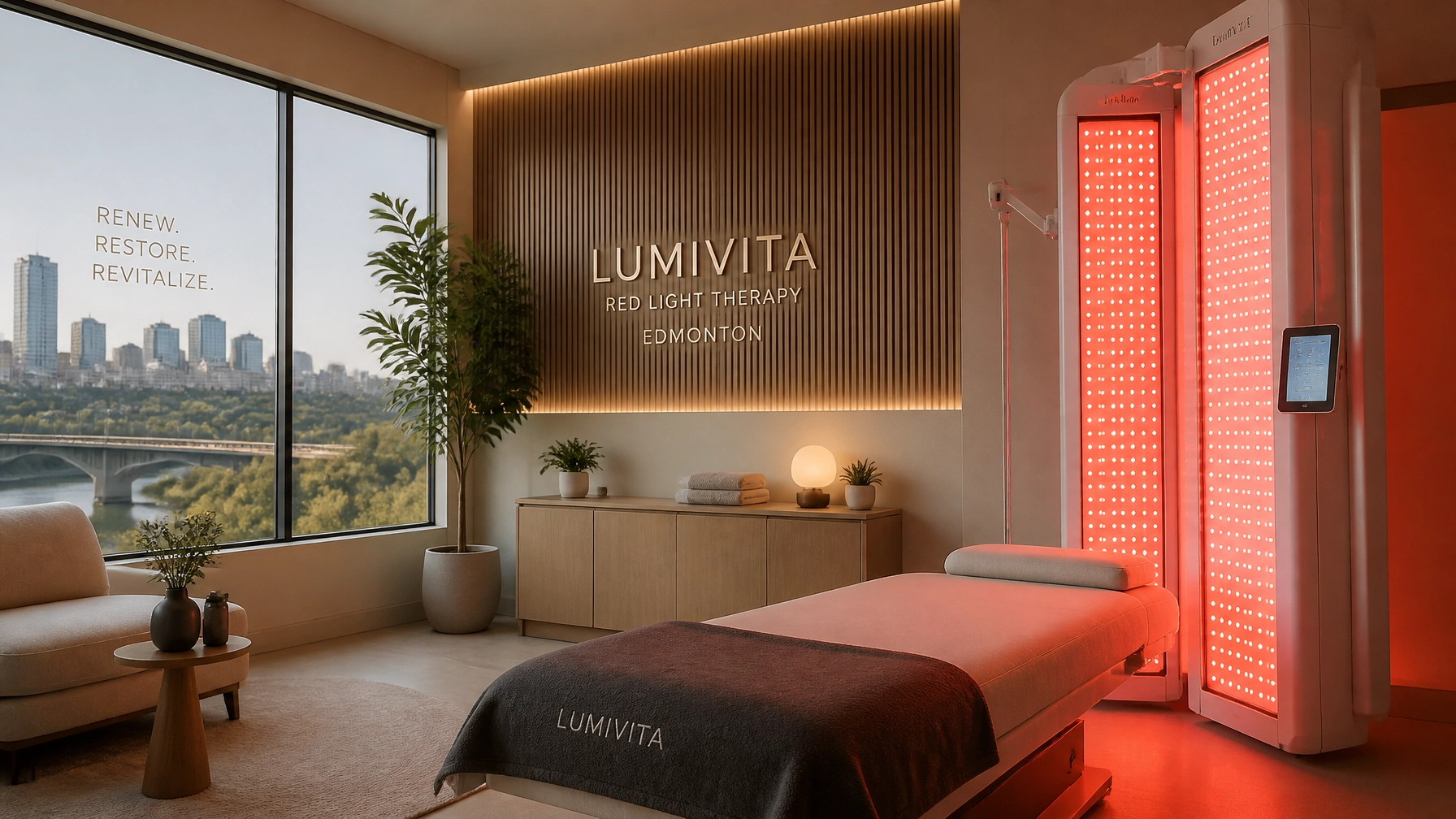
If you are curious about experiencing evidence-based photobiomodulation in a calm, professional setting, our Edmonton studio is designed for comfort and results. We utilize advanced, high-output full-body systems engineered for optimal wavelength delivery.
Whether you are managing joint stiffness from our Edmonton winters, wanting to support post-workout recovery, or seeking natural skin rejuvenation, our non-invasive sessions fit easily into a busy routine. To make your wellness routine even more comprehensive, many of our clients pair light therapy with restorative bodywork: such as booking complementary recovery sessions through our trusted partner networks like Book a Therapy or exploring integrative wellness at Massage Quest.
Curious to see how it feels for yourself? You can review our session options and get started directly through our Wave Therapy Checkout Page.

Frequently Asked Questions
Is red light therapy backed by real science?
Yes. Known medically as photobiomodulation (PBM), it has a well-documented cellular mechanism involving mitochondrial cytochrome c oxidase and ATP production. While some commercial marketing claims are exaggerated, specific applications like skin rejuvenation, hair growth, and joint pain relief are supported by peer-reviewed randomized controlled trials.
How soon will I see results from red light therapy?
While individual responses vary depending on the target condition, most clients notice initial improvements in skin texture, muscle recovery, or joint comfort within 4 to 8 consistent sessions.
Is red light therapy safe? Does it emit UV rays?
Red light therapy is completely free of harmful ultraviolet (UV) radiation. It is a non-invasive, gentle modality with no known downtime or harsh side effects when used according to professional guidelines.
Can red light therapy help with weight loss?
Current clinical evidence does not support red light therapy as a proven standalone solution for weight loss or cellulite removal. While it excels at cellular recovery and skin tightening, broad metabolic fat-loss claims lack rigorous scientific consensus.
Ready to experience the science of cellular rejuvenation firsthand? Explore our session packages and Book Your Edmonton Session Today.
Leave a Reply