Many people are searching for natural ways to sleep better in 2026. Red light therapy has become part of that conversation, especially among people interested in wellness, recovery, and non-invasive treatments.
But does red light therapy work for sleep?
The honest answer is: possibly, for some people — but the evidence is still emerging and mixed. Red light therapy may support sleep quality as part of a broader wellness routine. It is not a proven cure for insomnia, and it should not replace medical care or established sleep strategies.
Can red light therapy help you sleep better?
A 2026 systematic review and meta-analysis published in Lasers in Medical Science examined five randomized controlled trials involving 240 participants. Overall, photobiomodulation produced a modest improvement in subjective sleep quality compared with sham treatment, measured using the Pittsburgh Sleep Quality Index.
The researchers found that studies using shorter interventions of four weeks or less showed a measurable benefit. However, the included studies were considered at high risk of bias, the confidence intervals were wide, and the effect may not be large enough to be clinically meaningful for everyone. Longer-term benefits still need more research.
This is an encouraging signal, not a final answer.
Earlier research has also been promising but small. Healthline describes a 2012 study involving 20 female athletes who received 30 minutes of red light therapy each night for 14 days. The participants reported improved sleep quality and melatonin levels compared with the placebo group. However, a study this small cannot tell us how red light therapy will affect the wider population.
So, if you are wondering does red light therapy work for sleep, the most accurate answer is that it may help support sleep quality in some people, but more high-quality research is needed.
What is red light therapy?
Red light therapy is also called photobiomodulation. It uses low levels of visible red light and near-infrared light to interact with cells.
In simple terms, certain wavelengths of light may be absorbed by cellular structures, including the mitochondria. Mitochondria help produce energy for the body’s cells. Researchers are studying whether photobiomodulation may influence cellular energy, circulation, inflammation, and tissue repair.
The red light therapy science around sleep is less established than the research involving skin health, pain, and wound healing. The possible sleep connection may involve several overlapping effects:
- Supporting relaxation before bed.
- Reducing evening muscle tension or soreness.
- Providing gentle warmth without ultraviolet exposure.
- Limiting exposure to blue light from phones, televisions, and computers.
- Potentially influencing melatonin or circadian signals.
- Supporting recovery when discomfort makes it difficult to settle down.
These are plausible explanations, but they should not be presented as proven outcomes for every person.

Does red light therapy make you sleepy?
Not necessarily.
Red light therapy does not work like a sedative, and many people do not feel suddenly sleepy during a session. Instead, some clients describe feeling calm, warm, or relaxed afterward.
That distinction matters. Red light therapy may help create conditions that are more comfortable for winding down, but it does not force the brain into sleep. Your response may also depend on the timing, brightness, treatment area, personal sensitivity, and what else you do during the evening.
A dim red light in a bedroom is also different from a professional photobiomodulation session. A red-tinted bulb may feel soothing, but it may not provide the same wavelength or intensity used in therapeutic systems.
Can it help if muscle soreness keeps you awake?
It may be useful as part of a recovery routine.
Muscle soreness, joint stiffness, or post-exercise tension can make it harder to find a comfortable sleeping position. Red and near-infrared light are being studied for their potential effects on inflammation, circulation, and tissue recovery.
This is one reason people interested in red light therapy for pain may also report better rest. The benefit may not come from directly treating insomnia. Instead, reducing discomfort may make it easier to relax and sleep.
A 2025 PubMed systematic review of whole-body photobiomodulation found that two of the included studies reported better sleep quality, along with higher melatonin or lower nighttime heart rate. However, only five studies involving 105 physically active participants were included, and the review found no consistent improvement in exercise performance or recovery biomarkers.
For additional context, see Wave Therapy’s guide to joint pain relief and red light therapy.
Should you use red light therapy in the morning or evening?
It depends on your goal and how your body responds.
Evening use
Evening sessions may make sense if your goal is relaxation, recovery, or reducing muscle tension before bed. A session earlier in the evening may fit better than using bright screens late at night.
However, there is no universally proven bedtime schedule for full-body red light therapy. Some people may feel relaxed, while others may feel more alert after light exposure.
Morning or daytime use
Morning use may be more appropriate if you are using red light therapy for general wellness, skin support, muscle recovery, or pain management. It can also be easier to maintain as part of a consistent routine.
If you are unsure, start at a time when you can observe your response. Avoid changing several sleep habits at once, so you can better understand what is helping.
Most importantly, do not confuse red light therapy with bright-light therapy used for certain circadian rhythm conditions. Bright-light therapy has different wavelengths, intensity, timing, and clinical applications.
How often should you use red light therapy for wellness?
There is no single schedule that works for every goal.
For general wellness, many people begin with two to three sessions per week, following the instructions of the provider and equipment manufacturer. The appropriate frequency may differ depending on whether your goal is relaxation, skin rejuvenation, pain support, or muscle recovery.
Consistency is usually more practical than very long or very frequent sessions. More light does not automatically mean better results. Overuse may cause temporary skin warmth, redness, eye discomfort, or headaches in some people.
For a more detailed framework, read How Often Should You Use Red Light Therapy?.
It is also helpful to track your sleep for a few weeks. Notice:
- How long it takes you to fall asleep.
- Whether you wake during the night.
- How rested you feel in the morning.
- Whether soreness or stiffness is affecting your sleep.
- Whether evening sessions make you relaxed or more alert.
What other red light therapy benefits are being studied?
Sleep is only one area of interest. Red light therapy is also being studied and used as a supportive wellness treatment for:
- Joint pain and inflammation.
- Muscle recovery after exercise.
- Skin tone and texture.
- Collagen support and signs of aging.
- Minor wound healing.
- Hair growth support.
- Cellulite and skin tightening.
- General relaxation and recovery.
The strength of evidence varies by condition. Cleveland Clinic describes red light therapy as an emerging treatment and notes that more clinical trials are needed to confirm its effectiveness for many promoted uses.
You can also read Wave Therapy’s guide to realistic red light therapy results and timelines.
Who should be cautious with red light therapy?
Red light therapy appears to be low risk for many people when used as directed, but it is not appropriate for everyone without medical guidance.
Speak with a healthcare professional before treatment if you:
- Take medication that increases sensitivity to light.
- Have a photosensitivity disorder.
- Have an eye condition or a history of light-triggered seizures.
- Are pregnant or trying to become pregnant.
- Have active cancer or unexplained skin changes.
- Have chronic insomnia, severe daytime sleepiness, or ongoing sleep disruption.
- Are managing a medical condition that may be affected by light exposure.
Protective eyewear should be used when recommended. Avoid looking directly into bright LEDs, and follow the provider’s instructions rather than extending sessions on your own.
If sleep problems continue for several weeks, affect your work or mood, or involve loud snoring or breathing interruptions, speak with your doctor. Chronic insomnia may require specific assessment and treatment, including cognitive behavioural therapy for insomnia.

What can you expect from a session at Wave Therapy in Edmonton?
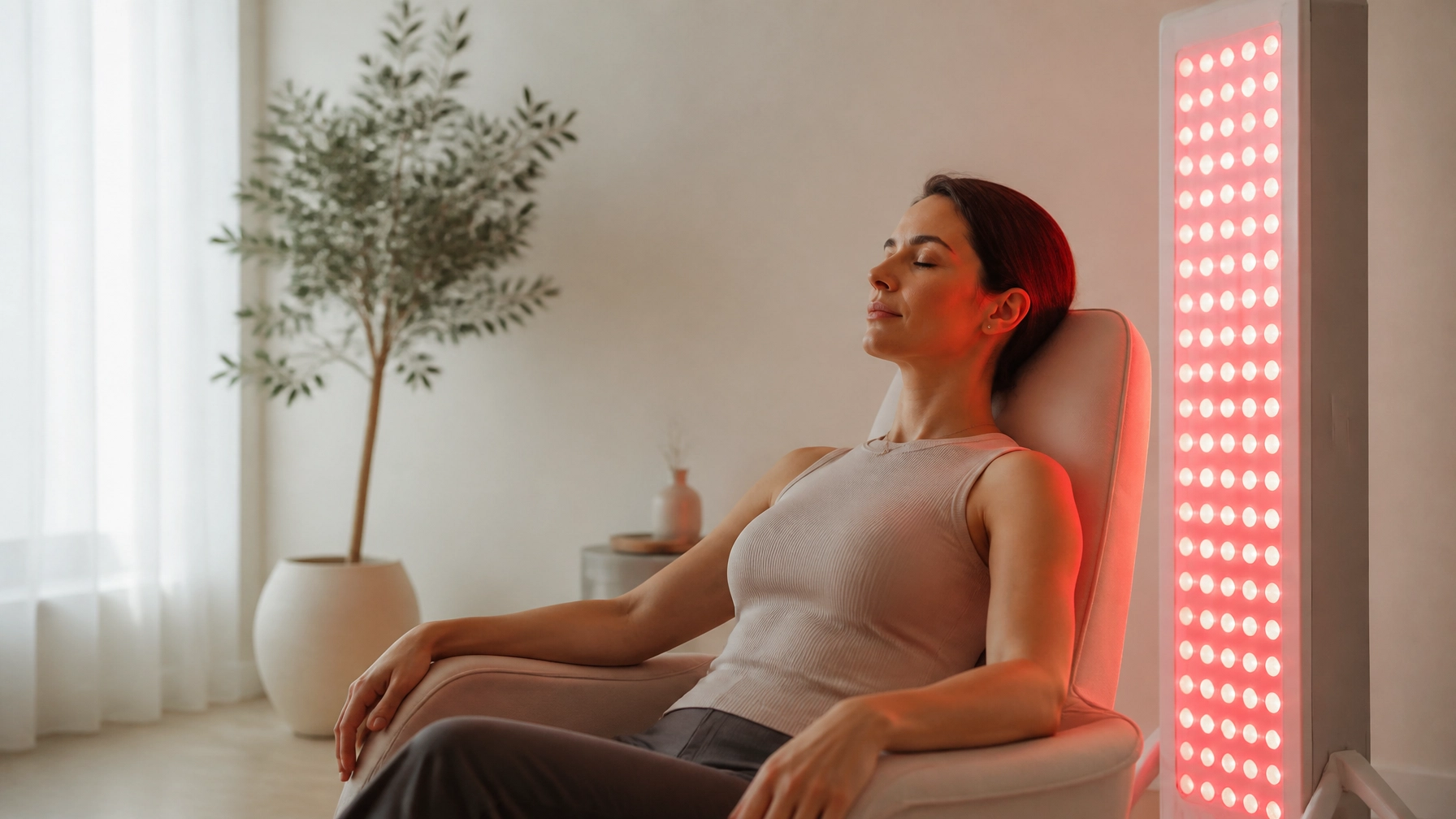
At Wave Therapy, a full-body session typically takes about 15 to 20 minutes. You remain clothed and stand or sit near the professional red and near-infrared light system, depending on the treatment setup.
Most clients notice:
- Gentle warmth.
- Bright red light.
- A quiet, relaxing environment.
- No needles or invasive procedures.
- No required downtime afterward.
Some people use the time to breathe quietly, listen to a podcast, or simply disconnect from their screens. A session can be part of a broader evening routine, but it should not be treated as a replacement for sleep hygiene.
If relaxation is your main goal, some clients choose to combine light therapy with massage. You can learn more about local massage options through Massage Quest or explore massage services through Wave Therapy’s sister company, Book-a-Therapy.
Practical takeaways
Red light therapy may help some people sleep better, particularly when sleep is affected by muscle tension, soreness, or difficulty winding down. The newest research suggests a modest improvement in subjective sleep quality, especially with shorter treatment periods, but the evidence remains limited.
For best results:
- Keep expectations realistic.
- Follow a consistent schedule.
- Use red light therapy alongside healthy sleep habits.
- Reduce bright screens and blue light before bed.
- Track your response over several weeks.
- Speak with a healthcare professional about chronic sleep concerns.
Wave Therapy offers non-invasive full-body red and near-infrared light therapy in Edmonton. Learn more about Wave Therapy, explore available sessions, or book when you feel ready.
Sources
- Vital de Azevedo WM, de Souza K, Defante ML, et al. “Photobiomodulation and sleep quality: systematic review and meta-analysis.” Lasers in Medical Science, 2026. Read the systematic review.
- “Does Red Light at Night Help or Hinder Your Sleep?” Healthline, medically reviewed by Alana Biggers, M.D., MPH. Read the overview.
- “Red Light Therapy.” Cleveland Clinic. Read the medical overview.
- “Whole-body photobiomodulation for exercise performance, recovery, and sleep.” PubMed systematic review. View the PubMed record.
Leave a Reply