Wrist tingling can interrupt sleep, make typing uncomfortable, or affect how securely you hold a mug or tool. If you’re searching for red light therapy carpal tunnel options, the first thing to know is that wrist pain has different possible causes, and red light therapy is not a replacement for diagnosis or established care.
Here’s what current evidence says about red light therapy for pain related to carpal tunnel syndrome (CTS), how sessions may work, and when it makes sense to seek professional advice.
What is carpal tunnel syndrome, and why does the wrist hurt?
Carpal tunnel syndrome occurs when the median nerve is compressed as it passes through a narrow space in the wrist called the carpal tunnel. The pressure can cause numbness, tingling, pain, or weakness in the hand. Symptoms commonly affect the thumb, index finger, middle finger, and part of the ring finger. They may be more noticeable at night and can interfere with grip or fine hand movements. Cleveland Clinic explains CTS symptoms and treatment.
Risk can be higher with repetitive hand work, keyboard or mouse use, vibrating tools, pregnancy, diabetes, or thyroid conditions. But wrist pain doesn’t automatically mean CTS. Tendon irritation, arthritis, and other nerve problems can feel similar, so a healthcare professional is best placed to assess persistent symptoms.
Can red light therapy actually help carpal tunnel syndrome, or is it just marketing?
The honest answer: it may help some people, but it isn’t a proven cure. Photobiomodulation (PBM), often called red light therapy or low-level light/laser therapy, is being studied for CTS. Results depend on factors such as the device, wavelength, dose, and treatment schedule.
Some studies report improved hand function, but findings are mixed. Red light therapy does not mechanically widen the carpal tunnel or reliably remove pressure from the median nerve. Think of it as a possible supportive option, not a stand-alone treatment. For more on the broader evidence, read Wave Therapy’s guide to what the 2026 research says about red light therapy.

What does the 2026 science say?
A 2025 systematic review and meta-analysis of photobiomodulation for CTS found improvement in hand functionality, but no statistically significant advantage over control treatments for pain reduction or grip strength. The researchers also called for more standardized treatment dosing. You can read the review and its findings on PubMed.
That makes the current picture mixed, not a basis for promising that red light therapy will resolve wrist pain. The review studied specific PBM protocols; its results don’t automatically apply to every red-light panel or home device. This is why claims that red light therapy “heals a compressed nerve” or works the same way for everyone go beyond what the evidence supports.
How could red and near-infrared light affect a compressed nerve and nearby tissue?
PBM uses light energy that cells can absorb. Researchers are studying how this may affect cellular energy processes, inflammation, pain signalling, circulation, and tissue repair. These are proposed ways light may influence the tissues being treated; they do not mean a treatment has been shown to release a compressed nerve.
Near-infrared light generally penetrates deeper into tissue than visible red light, though the actual effect depends on the wavelength, dose, device, and treatment area. The Cleveland Clinic’s red light therapy overview notes that evidence varies by use and that more research is needed for many applications.
How many sessions, and how often should I use red light therapy?
There is no universal protocol for CTS. Research protocols differ, and the review called for more consistent dosing. Repeated sessions over several weeks are common in studies. Some clinics begin with two to three visits per week and reassess after roughly four to eight sessions, but this is a general practice pattern, not a proven prescription for carpal tunnel.
If you try a course, track practical changes rather than appearance: fewer night-time tingles, better sleep, easier gripping, or improved comfort during daily tasks. Visible results reported for some other treatment goals do not guarantee improvement in nerve-related symptoms. For related reading, see Wave Therapy’s guides to tendonitis and tendon pain and joint pain relief.
What should I expect during a clinic session?
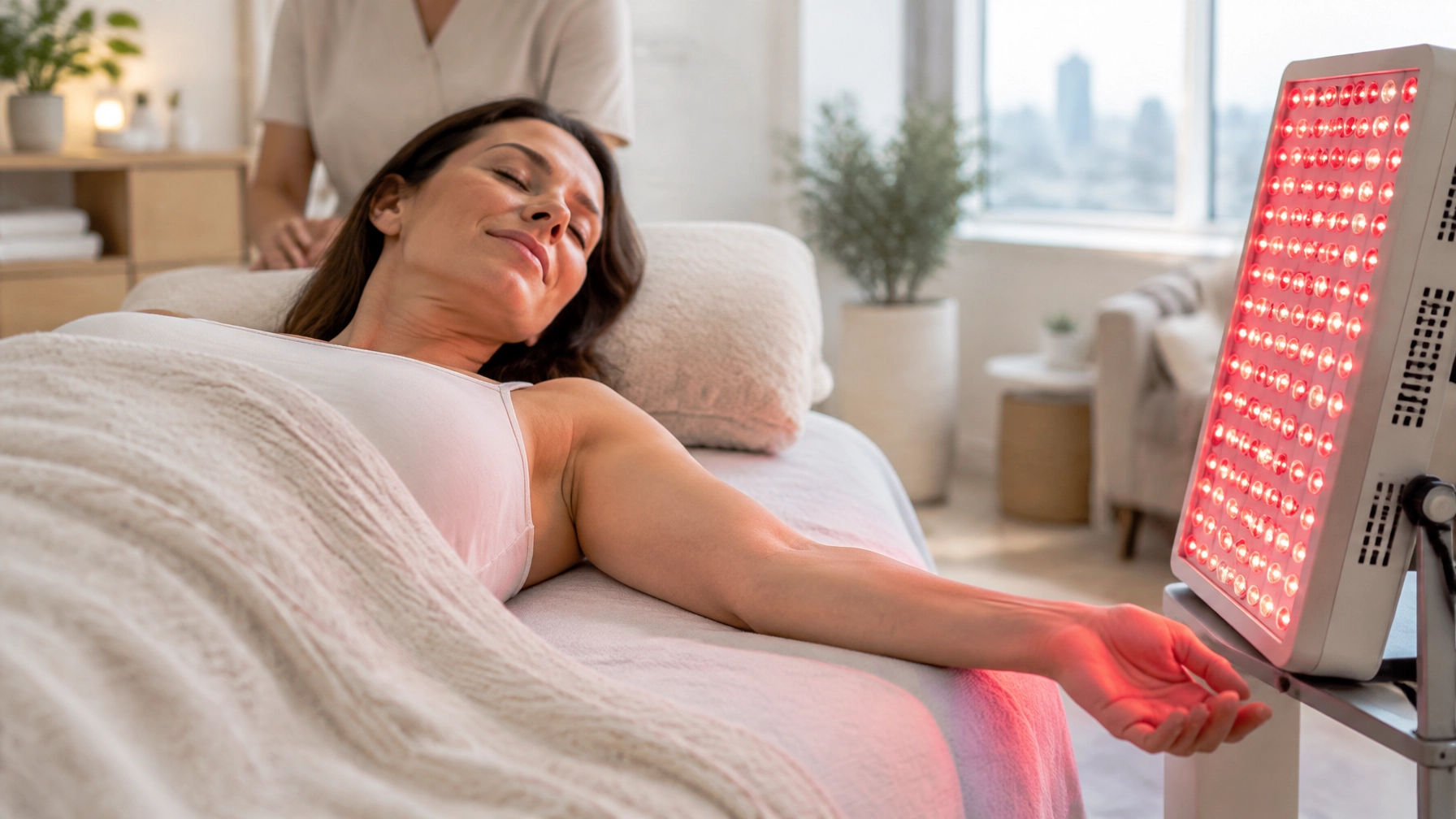
A session generally includes a brief intake, comfortable positioning, and appropriate eye protection. The treatment itself may feel gently warm or produce no noticeable sensation. Many appointments take around 15–20 minutes, depending on the area and clinic protocol, and there is typically no downtime.
Before booking, ask whether the clinic’s equipment and protocol are appropriate for treating the wrist specifically. Red light therapy Edmonton clients can learn about Wave Therapy’s services at wavetherapy.ca or explore booking options.

Is red light therapy safe, and what are the side effects?
Red light therapy is generally well tolerated when used as directed. Possible problems can arise from misuse, including skin or eye harm. Use the recommended eye protection and follow the device’s instructions. Safety and regulatory status depend on the specific device and its intended use; don’t assume that one device’s clearance proves another device is effective for CTS.
Check with a healthcare professional before treatment if you are pregnant, have cancer or active cancer treatment, epilepsy or light-triggered seizures, an eye condition, take photosensitizing medication, or have an open or infected wound near the treatment area. If you are unsure whether light treatment is appropriate for you, get advice before starting.
Does red light therapy replace physiotherapy, wrist splints, injections, or surgery?
No. It should be considered supportive only. Cleveland Clinic’s CTS guidance describes options such as night splints, activity changes, physical therapy, and corticosteroid injections; surgery may be considered for more severe cases or when conservative care isn’t enough.
See a healthcare professional for persistent numbness, worsening symptoms, weakness, dropping objects, or visible muscle wasting in the hand. Timely assessment matters because untreated nerve compression can lead to lasting problems.
Can I combine red light therapy with massage?
It may fit into a broader wellness or recovery routine, but massage should not be treated as a way to decompress the median nerve or cure CTS. Tell both providers about your symptoms and health history, and coordinate with your clinician if you’re receiving care.
For massage services in Edmonton, explore Massage Quest or Wave Therapy’s sister company, BookaTherapy.
Who is it for, and who should skip it or check first?
Red light therapy may be worth discussing with a healthcare professional if you have mild symptoms, have been assessed, and are considering an additional supportive approach. It is not a substitute for diagnosis, and should not delay care for worsening numbness, weakness, or reduced hand function. Check with a doctor first if any of the safety concerns above apply.
Wave Therapy offers red and near-infrared sessions for a range of wellness goals. The evidence varies by goal, and availability of a service does not mean it is an established treatment for CTS. Treatment areas include:
- Joint discomfort and inflammation support
- Tendon and muscle recovery support
- Skin rejuvenation and collagen support
- Fat reduction and body-contouring goals
- Cellulite and skin-tightening goals
- Wound-healing support
- Hair-growth support

Quick FAQ
Does red light therapy work for carpal tunnel?
It may improve hand function for some people, but evidence is mixed and pain or grip benefits are not established.
How often should I use red light therapy?
There is no standardized CTS schedule. Ask a clinician or qualified provider about an appropriate protocol and reassess based on function.
Can red light therapy cause side effects?
It is generally well tolerated when used as directed, but misuse can harm skin or eyes. Follow safety instructions and use eye protection.
Should I stop wearing my wrist splint if I try it?
No. Don’t replace recommended care with light therapy without discussing changes with your healthcare professional.
Practical takeaway
Red light therapy for carpal tunnel may be an optional supportive approach, but the science is still developing. A proper assessment, established care, and attention to worsening symptoms should come first. If you’re curious about a session, learn more about Wave Therapy in Edmonton or explore booking when you’re ready.
Sources and further reading
- Photobiomodulation in carpal tunnel syndrome with pain, strength, and functionality analysis: a systematic review and meta-analysis, Lasers in Medical Science (2025).
- Cleveland Clinic: Carpal Tunnel Syndrome.
- Cleveland Clinic: Red Light Therapy, Benefits, Side Effects & Uses.
- Healthline: Carpal Tunnel Syndrome.
Leave a Reply