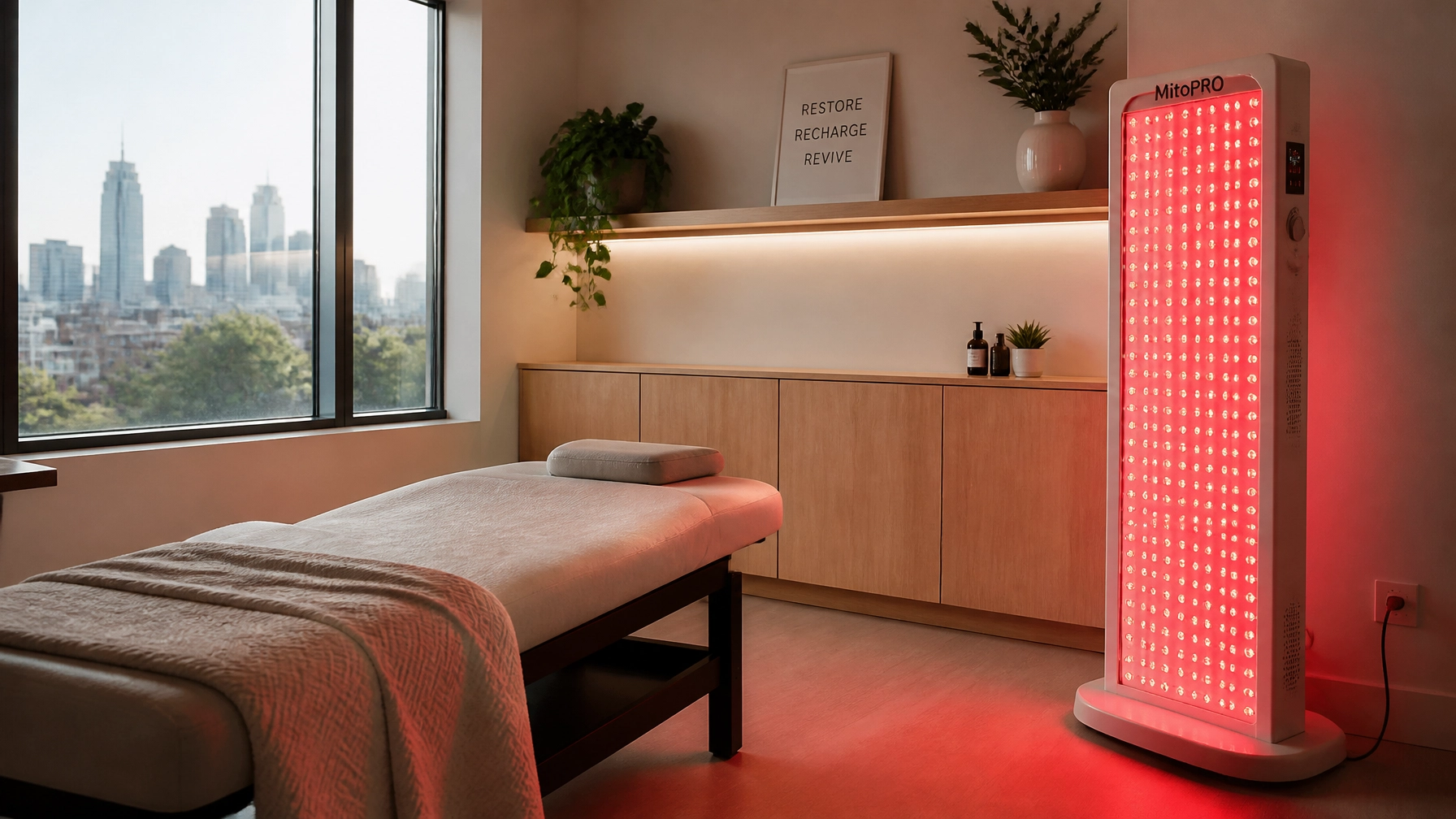
Red light therapy (RLT) has officially moved from the fringes of "biohacking" into the mainstream of Canadian wellness. If you’ve spent any time looking for natural ways to manage joint pain, improve your skin, or recover faster from a workout at the gym, you’ve likely come across those glowing red panels.
But as the trend grows, so does the skepticism. People in Edmonton are asking the same important question: Does red light therapy actually work, or is it just expensive mood lighting?
As we move through 2026, the scientific community has provided more clarity than ever before. New research has moved past "preliminary findings" to offer concrete evidence on what this technology can, and cannot, do. At Wave Therapy, we believe in education first.
Here is what the latest 2026 clinical research and expert consensus tell us about the efficacy of red light therapy.
Does Red Light Therapy Actually Work?
In short: Yes, but it depends on what you are trying to achieve.
Red light therapy, scientifically known as photobiomodulation (PBM), works by using specific wavelengths of light (typically between 630nm and 850nm) to penetrate the skin. Unlike UV rays from the sun, these wavelengths do not cause damage. Instead, they interact with a light-sensitive enzyme in our mitochondria, the powerhouses of our cells.
When these cells absorb red and near-infrared light, they produce more adenosine triphosphate (ATP), which is essentially cellular energy. Think of it like "charging" your cells, allowing them to repair themselves and function more efficiently.
The Biological Mechanism
Recent studies published in journals like Nature (2026) have highlighted that this isn't just a surface-level effect. The light triggers a cascade of biological responses that reduce oxidative stress and inflammation throughout the body. This is why a treatment applied to one area can sometimes feel like it’s providing systemic benefits.

What Does the 2026 Research Say?
The year 2026 has been a turning point for RLT research. Major health organizations and scientific journals have released comprehensive reviews that distinguish between marketing hype and medical reality.
1. The Expert Consensus
A major 2025-2026 consensus review led by over 20 medical specialists concluded that red light therapy is both safe and effective for a specific set of clinical conditions, including pattern hair loss, peripheral neuropathy, and certain types of chronic ulcers. This report, widely cited by NPR in early 2026, marks a significant shift toward the medical acceptance of light-based treatments.
2. Mitochondrial Health
Research from the Cleveland Clinic and recent university studies continue to emphasize the role of RLT in mitochondrial "rejuvenation." The 2026 data shows that regular exposure to these wavelengths can help cells maintain higher energy levels as we age, which has massive implications for anti-aging and long-term vitality.
3. The "Broad Wellness" Caveat
While the evidence for skin and pain is robust, researchers caution that RLT is not a "miracle cure" for everything. Claims regarding massive weight loss or "fat melting" are still being studied. While some 2025 trials showed a ~9% increase in resting energy expenditure in specific groups, it is best viewed as a supportive tool rather than a standalone solution for metabolic health.
What Conditions Have the Strongest Evidence?
If you are considering booking a session at Wave Therapy, it’s helpful to know where the science is strongest. According to 2026 clinical guidelines, the following areas show the most significant results:
Skin Rejuvenation and Anti-Aging
This remains the most popular use for RLT. Controlled trials have shown that LED red-light treatments can progressively improve wrinkles, skin firmness, and dermal density.
- The Result: A 2025 study found that twice-weekly sessions over 12 weeks led to measurable increases in intradermal collagen, reducing wrinkle depth by up to 38%.
- Who it’s for: Anyone looking for a non-invasive alternative to fillers or aggressive chemical peels.

Chronic Pain and Inflammation
For those in Edmonton dealing with the aches of a long winter or sports-related injuries, RLT offers a drug-free path to relief.
- Strongest Evidence: Fibromyalgia, osteoarthritis, and joint inflammation.
- How it works: By reducing inflammatory markers and increasing blood flow to the affected area, RLT helps the body heal at the source of the pain. Curious about the difference between red and infrared light for pain? Our comparison guide breaks it down. If you are already managing pain through massage, you might find that RLT at Wave Therapy complements the work you do at Massage Quest or with our partners at Book a Therapy.
Hair Growth (Androgenetic Alopecia)
The 2026 expert consensus now lists pattern hair loss as a condition with "high-level evidence" for RLT. FDA-cleared devices and professional-grade panels help stimulate hair follicles that have become dormant, promoting natural regrowth.
How Long Until You See Results?
One of the most common mistakes people make with red light therapy is expecting "instant" results after a single 10-minute session. While some people report feeling a "wellness glow" or immediate minor pain relief, the real magic happens over time.
- Skin Improvement: Expect to see visible changes in 4 to 8 weeks of consistent use (2-3 sessions per week).
- Muscle Recovery: Most athletes notice a difference in soreness levels within 24 hours of a post-workout session.
- Pain Management: Chronic conditions typically require a "loading phase" of 6-10 sessions over three weeks to significantly lower inflammation levels.
For a deeper dive on session timing and frequency, check out our recent post on red light therapy and how long and how often you should use red light therapy.
At Wave Therapy, we typically recommend a series of sessions to allow the cumulative cellular effects to take hold. You can explore our session options and packages to find a rhythm that works for your schedule.
Is It Safe?
Safety is the biggest advantage of red light therapy. Unlike tanning beds (which use DNA-damaging UV light) or laser resurfacing (which involves controlled injury to the skin), RLT is entirely non-invasive.
Key Safety Facts for 2026:
- No Down Time: You can have a session during your lunch break and go straight back to work.
- Non-Thermal: The light doesn't burn the skin; it’s a "cool" light therapy.
- FDA Cleared: Many professional systems are FDA-cleared for pain relief and skin rejuvenation.
- Contraindications: While safe for most, we recommend consulting a doctor if you are pregnant, have active cancer, or are taking photosensitizing medications.

The Verdict: A Grounded Approach to Wellness
Does red light therapy actually work? The 2026 research says a resounding yes: provided your expectations are aligned with the science. It is an incredible tool for cellular health, skin integrity, and inflammation management.
It isn't a magic wand, but it is a powerful, science-backed way to support your body’s natural ability to heal and rejuvenate. Whether you’re a fitness enthusiast looking for faster recovery or someone wanting to maintain a youthful glow naturally, RLT is a practical addition to a healthy lifestyle.
If you’re curious about how this might feel for yourself, we invite you to experience it in a professional, relaxing environment.
Ready to see what the glow is all about?
Learn more about our services or explore our sessions when you’re ready to begin your journey.
Leave a Reply