
Alt: Close-up of healthy hair strands representing natural hair growth and scalp wellness
Hair loss is one of those things nobody warns you about until it happens. And when it does, the internet throws a million solutions at you, some legit, some questionable, and some that sound like they belong in a fantasy novel.
So let's cut through the noise.
If you've been curious about natural hair growth treatments and whether they actually work, you're in the right place. We'll walk through what 2025 science is showing us, what's still being tested, and where treatments like red light therapy fit into the picture.
No hype. Just the facts.
Why Hair Loss Happens in the First Place
Before we dive into solutions, it helps to understand the problem.
Hair loss can happen for a bunch of reasons:
- Genetics (the most common culprit)
- Hormonal changes
- Stress
- Nutritional deficiencies
- Scalp inflammation
- Aging
Your hair follicles go through growth cycles. When something disrupts that cycle, or when follicles shrink over time, you start noticing thinning, shedding, or bald spots.
The good news? Many follicles don't die off completely. They just go dormant. And that's where natural treatments come in, they aim to wake those follicles back up.
What Counts as a "Natural" Hair Growth Treatment?
When we say natural, we're talking about non-pharmaceutical approaches. Things that work with your body's own biology rather than relying solely on drugs like minoxidil or finasteride.
Here's what's currently getting attention:
- Red light therapy (also called low-level laser therapy)
- Collagen stimulation therapy
- Stem cell-derived treatments
- Exosome-based therapies
- Topical fatty acid treatments
- Scalp massage and microcirculation techniques
Some of these are well-studied. Others are still in early stages. Let's break them down.
Red Light Therapy: What the Research Shows

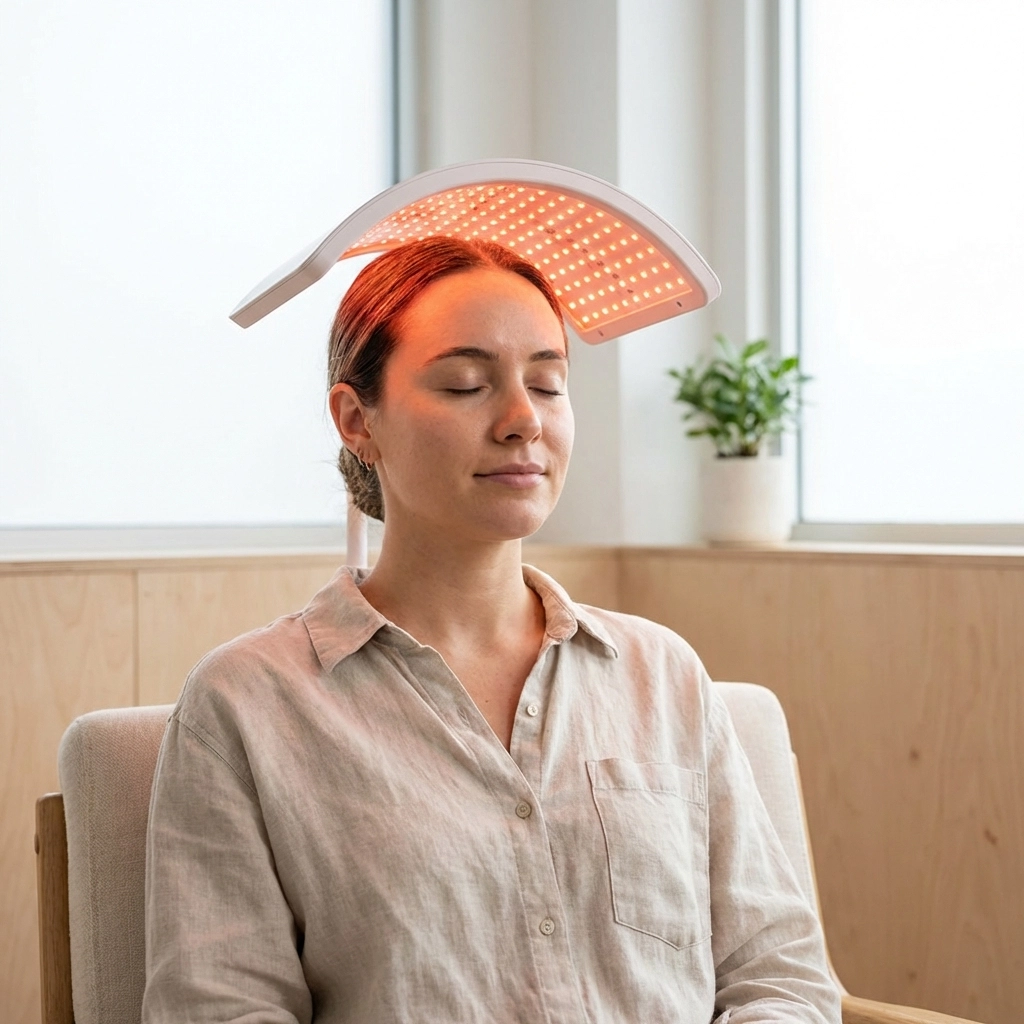
Alt: Red light therapy device emitting wavelengths to stimulate hair follicles
Red light therapy has become one of the more promising natural options for hair regrowth. It uses specific wavelengths of light (typically 630-670nm) to penetrate the scalp and stimulate cellular activity.
Here's how it works:
- Light energy reaches the hair follicles
- It boosts ATP production (cellular energy)
- Blood flow to the scalp increases
- Dormant follicles get a wake-up call
Multiple clinical studies have shown measurable increases in hair density and thickness with consistent use. It's non-invasive, painless, and has virtually no side effects.
For people in Edmonton exploring hair regrowth options, red light therapy offers a drug-free alternative worth considering. At Wave Therapy, we offer sessions specifically designed to support scalp health and hair wellness.
Collagen Stimulation Therapy and Hair Growth
You might know collagen stimulation therapy from its skin benefits, reducing fine lines, improving texture. But it's also showing promise for hair.
The idea is simple: by encouraging collagen production in the scalp, you create a healthier environment for hair follicles to thrive.
Collagen supports:
- Scalp elasticity
- Follicle anchoring
- Nutrient delivery to hair roots
When combined with red light therapy, collagen stimulation can amplify results. It's a one-two punch for scalp health.
Emerging Treatments: Stem Cells, Exosomes, and More
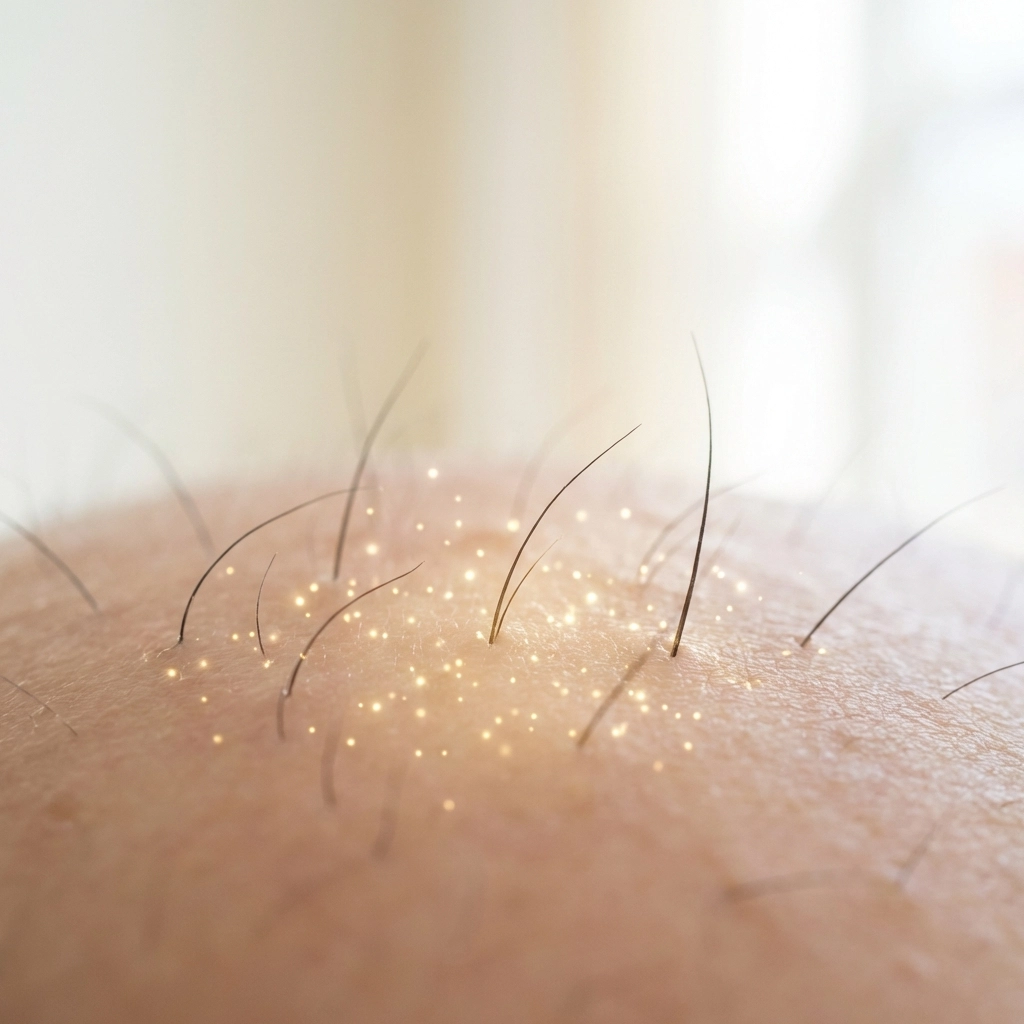
Alt: Scientific representation of stem cell secretions used in hair regeneration research
Science is moving fast. Here are some newer approaches making headlines:
Stem Cell Secretions
Researchers have found that secretions from stem cells (called "secretome") can influence hair growth pathways. In clinical trials combining laser therapy with stem cell-derived preparations, patients grew an extra 14 hairs per cm² compared to just 2 per cm² with placebo.
These aren't full stem cell transplants, they use the beneficial molecules stem cells produce. More practical, fewer complications.
Exosome-Based Treatments
Exosomes derived from umbilical cord lining (like Calecim®) are being studied for their ability to activate dormant follicles and reduce scalp inflammation. Early results are encouraging, and they're drug-free.
Fat-Based Topicals
Researchers in Taiwan discovered that monounsaturated fatty acids, naturally occurring in the body, can promote hair regrowth when applied topically. In mice studies, regrowth appeared within 20 days. Human trials are still needed, but it's an interesting avenue.
The AMP-303 and UCLA PP405 Molecules
These experimental treatments have shown measurable improvements in clinical trials. AMP-303 produced more than 15% increase in thick, dark hair after just one treatment cycle. UCLA's PP405 molecule is expected to generate full "terminal" hair rather than fine peach fuzz.
Both are still awaiting broader approval, but they hint at what's coming.
What's Realistic to Expect
Let's be honest: no treatment works overnight. And not every treatment works for everyone.
Here's what you should know:
- Red light therapy typically requires consistent sessions over several months to see results
- Emerging treatments like exosomes and stem cell secretions are promising but still early-stage
- Traditional options like minoxidil and finasteride remain the most established, though they come with potential side effects
- Combination approaches (like red light + collagen stimulation) often yield better outcomes than single treatments
The best approach? Start with well-studied, low-risk options. Give them time. Track your progress.
Who Might Benefit Most
Natural hair growth treatments tend to work best for:
- People with early-stage thinning
- Those looking to avoid pharmaceuticals
- Anyone wanting to complement existing treatments
- People focused on overall scalp health
If you're dealing with advanced hair loss or specific medical conditions, it's worth chatting with a dermatologist first.
Frequently Asked Questions About Red Light Therapy for Hair Growth
Does red light therapy actually work for hair loss?
Yes, multiple studies show it can increase hair density and thickness. It works by stimulating cellular energy in hair follicles and improving blood flow to the scalp.
How long does it take to see results?
Most people start noticing changes after 12-26 weeks of consistent sessions. Patience is key.
Is it safe?
Red light therapy is considered very safe. It's non-invasive, painless, and has no known serious side effects.
Can I combine it with other treatments?
Absolutely. Many people combine red light therapy with collagen stimulation therapy or topical treatments for enhanced results.
How often should I do sessions?
Typically 2-3 times per week is recommended. Your provider can help tailor a schedule based on your goals.
Is red light therapy available in Edmonton?
Yes. Wave Therapy offers red light therapy sessions designed to support hair and scalp wellness right here in Edmonton.
The Bottom Line
Natural hair growth treatments have come a long way. Red light therapy, collagen stimulation therapy, and emerging options like exosomes are giving people real alternatives to pharmaceuticals.
Is there a magic bullet? No. But there are legitimate, science-backed options worth exploring: especially if you're early in your hair loss journey or prefer a gentler approach.
If you're curious about what might work for you, explore our sessions or learn more about Wave Therapy. We're happy to answer questions and help you find the right fit.
Your hair. Your pace. Your call.
Leave a Reply