Red light therapy is now a common topic in wellness clinics, dermatology discussions, fitness communities, and online searches. But two questions continue to matter most:
- How does red light therapy actually work at a cellular level?
- Is red light therapy really safe, and can it cause side effects?
The short answer is that red light therapy, also called photobiomodulation, uses specific wavelengths of red and near-infrared light to influence cellular activity. It is generally well tolerated when used correctly, although mild side effects are possible and certain people should consult a healthcare professional first.
Here is what the current science tells us in 2026.
What Is Red Light Therapy?
Red light therapy uses low-intensity, non-UV light. Common treatment wavelengths include visible red light in the approximate red and near-infrared ranges.
Unlike ultraviolet light, red and near-infrared light are non-ionizing. They are not intended to burn, remove, or damage the skin. Instead, the goal is to encourage biological activity in cells and tissues.
The medical term, photobiomodulation, reflects this process:
- Photo means light.
- Bio refers to biological systems.
- Modulation means influencing or adjusting activity.
Depending on the treatment goal, people may explore red light therapy for joint comfort, inflammation support, muscle recovery, skin rejuvenation, collagen production, hair growth, or body-contouring support. The strength of the evidence varies by application, so it is best viewed as a supportive wellness treatment rather than a cure-all.
How Does Red Light Therapy Work at a Cellular Level?
1. Light reaches cellular targets
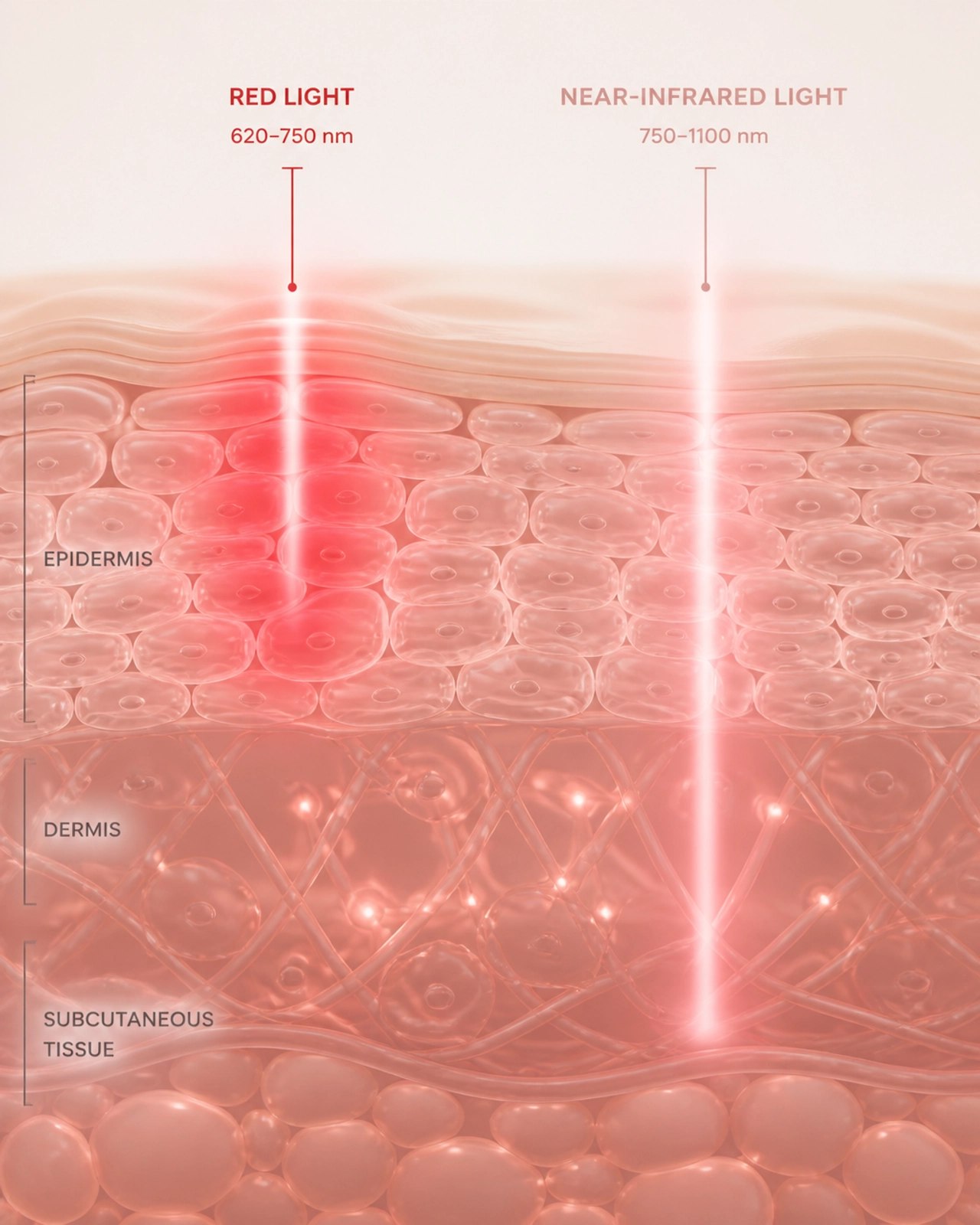
When red or near-infrared light reaches the skin, some of the photons are absorbed by molecules within cells. Near-infrared wavelengths may travel deeper into tissue than visible red light, although penetration depends on wavelength, dose, skin characteristics, and the tissue being treated.
The leading biological model focuses on the mitochondria.
Mitochondria are often described as the cell’s energy-producing structures. They help create adenosine triphosphate, or ATP. ATP provides energy for many cellular processes, including movement, repair, communication, and regeneration.
2. Mitochondria and cytochrome c oxidase respond
A major proposed target is cytochrome c oxidase, an enzyme within the mitochondrial electron transport chain.
According to Michael R. Hamblin’s 2018 review, red and near-infrared light may interact with cytochrome c oxidase and influence mitochondrial respiration. The proposed result is improved electron transport, changes in mitochondrial membrane potential, and increased ATP production.
You can read the full paper, “Mechanisms and Mitochondrial Redox Signaling in Photobiomodulation,” on PubMed, or access the full article through PubMed Central.
In plain language, red light may help cells manage energy production more effectively. This does not mean the light “forces” the body to heal. Rather, it may support the cells involved in the body’s existing repair and maintenance processes.
3. Nitric oxide may influence circulation
Another proposed mechanism involves nitric oxide, a signalling molecule that also affects blood vessels.
Under some conditions, nitric oxide can bind to cytochrome c oxidase and reduce the efficiency of mitochondrial respiration. Photobiomodulation may help release nitric oxide from that enzyme. Once released, nitric oxide can contribute to blood-vessel relaxation and local circulation.
Improved local blood flow may support the delivery of oxygen and nutrients to tissues. It may also help remove metabolic waste. This is one reason red and near-infrared light are often explored as part of muscle recovery and tissue-repair routines.
4. Cells respond through redox and signalling pathways
Red light therapy may also create small, temporary changes in reactive oxygen species, or ROS.
High levels of ROS can be harmful. However, small changes can act as cellular signals. These signals may influence antioxidant defences, inflammation pathways, cell survival, and repair-related gene activity.
The response is not identical in every cell. Healthy, stressed, injured, or inflamed cells may respond differently. This is one reason treatment dose matters.
Photobiomodulation is often described as having a biphasic dose response. A dose that is too low may have little effect. A dose within an appropriate range may be beneficial. A dose that is too high or too frequent may reduce benefits or increase irritation.
More time under the light is not automatically better.

What May Happen at the Tissue Level?
Cellular changes can influence larger tissue processes. Depending on the condition and treatment protocol, red light therapy may support:
- Cellular energy production
- Inflammation regulation
- Collagen production and skin structure
- Muscle recovery after exercise
- Local circulation
- Tissue repair and wound-healing processes
- Hair follicle activity in some forms of pattern hair loss
The research is not equally strong for every claim. There is more encouraging evidence for some skin, hair, wound-healing, and recovery applications than for broad claims about rapid fat loss or whole-body weight reduction.
For a broader explanation of what current research supports, see Wave Therapy’s article on whether red light therapy is scientifically proven.
Is Red Light Therapy Really Safe?
For most healthy adults, red light therapy appears to have a favourable safety profile when the device is appropriate and the recommended dose is followed.
It does not use UV radiation, and it is generally considered non-thermal at standard photobiomodulation doses. However, “generally safe” does not mean “risk-free.”
Safety depends on:
- Wavelength
- Irradiance, or power density
- Session length
- Distance from the device
- Treatment frequency
- Whether the face or eyes are exposed
- Individual health history and medications
A systematic review of randomized controlled trials examining LED treatments in dermatology found that LED therapy was generally well tolerated, with relatively few adverse events reported. The authors also noted that treatment parameters varied between studies. You can review the study by Jagdeo and colleagues through PubMed or PubMed Central.
What Are the Common Red Light Therapy Side Effects?
Most people experience no significant reaction or only mild, temporary effects. Possible red light therapy side effects include:
- Temporary redness: The treated area may look slightly pink for a short time.
- Warmth: Gentle warmth is common. Burning or intense heat is not expected.
- Tingling: Some people notice mild tingling during or shortly after treatment.
- Dryness or tightness: This may occur, especially in sensitive skin.
- Mild headache or eye strain: These reactions are more likely when bright light is directed toward the face without suitable protection.
- Temporary skin sensitivity: A reactive skin condition may become temporarily irritated.
These effects should be mild and short-lived. They should not be confused with the stronger burning, peeling, or pain that can occur with some other dermatology treatments, such as photodynamic therapy involving a photosensitizing product.
Rare reactions, including blistering or prolonged redness, are more likely to be associated with excessive exposure, very high doses, equipment problems, or inappropriate use.
Do You Need Eye Protection?
Eye safety deserves special attention during facial or scalp treatments. Red light is bright, and near-infrared light is invisible. Because you cannot see near-infrared light, you should not rely only on your blink reflex.
A reputable provider should explain whether eye protection is required for the particular device and treatment position. Wave Therapy’s 2026 eye protection and safety guide explains why distance, device output, and wavelength matter.
As a general precaution:
- Avoid staring directly at high-output LEDs.
- Follow the provider’s instructions.
- Use wavelength-appropriate protective eyewear when recommended.
- Stop treatment if you experience eye pain, visual changes, or persistent discomfort.

Who Should Use Extra Caution?
Red light therapy may not be appropriate for everyone. Speak with a physician, dermatologist, or pharmacist before treatment if you:
- Have a photosensitive condition, such as some forms of lupus.
- Take medication or use topical products that increase light sensitivity.
- Have active skin cancer, an unexplained lesion, or an infection in the treatment area.
- Have a history of light-triggered seizures.
- Have a significant eye condition or are concerned about facial light exposure.
- Are pregnant and considering full-body or abdominal treatment.
- Are receiving cancer treatment or have questions about treating areas near a tumour.
Do not use red light therapy to delay assessment of sudden pain, unexplained wounds, rapid hair loss, or changing skin lesions.
What Can You Expect During a Session?
At Wave Therapy Edmonton, a typical session may include:
- A discussion about your goals and relevant health considerations.
- Guidance on positioning and eye safety.
- Exposure to red and near-infrared light from a professional system.
- Gentle warmth and a relaxed, non-invasive experience.
- Recommendations for a consistent schedule based on your goals.
Many clients can return to normal activities immediately. Results, when they occur, are usually gradual. Skin and recovery goals may be reviewed after several sessions, while hair-related goals often require several months. Body-contouring and fat-loss claims should be approached with realistic expectations because the evidence is more limited.
Some people also combine light therapy with other wellness services. Massage may support relaxation and soft-tissue comfort through a different mechanism. Edmonton clients can explore local provider options through MassageQuest or massage bookings through Book a Therapy.
The Practical Takeaway
So, how does red light therapy work?
At a cellular level, red and near-infrared light may interact with mitochondrial cytochrome c oxidase and related signalling pathways. This can influence ATP production, nitric oxide, reactive oxygen species, calcium activity, inflammation, and tissue-repair processes.
Is it really safe?
For most people, yes, when used correctly. The most common red light therapy side effects are mild and temporary, such as warmth, redness, dryness, tingling, or occasional eye discomfort. Correct dosing, eye protection, equipment quality, and health screening all matter.
If you are curious about red light therapy in Edmonton, you can learn more about Wave Therapy or explore available sessions when you feel ready.
Scientific References
- Hamblin MR. “Mechanisms and Mitochondrial Redox Signaling in Photobiomodulation.” Photochemistry and Photobiology. 2018. PubMed PMID 29164625.
- Jagdeo J, et al. “Light-emitting diodes in dermatology: A systematic review of randomized controlled trials.” Lasers in Surgery and Medicine. 2018. PubMed PMID 29356026.
- Full-text version of the LED dermatology systematic review on PubMed Central.
Leave a Reply