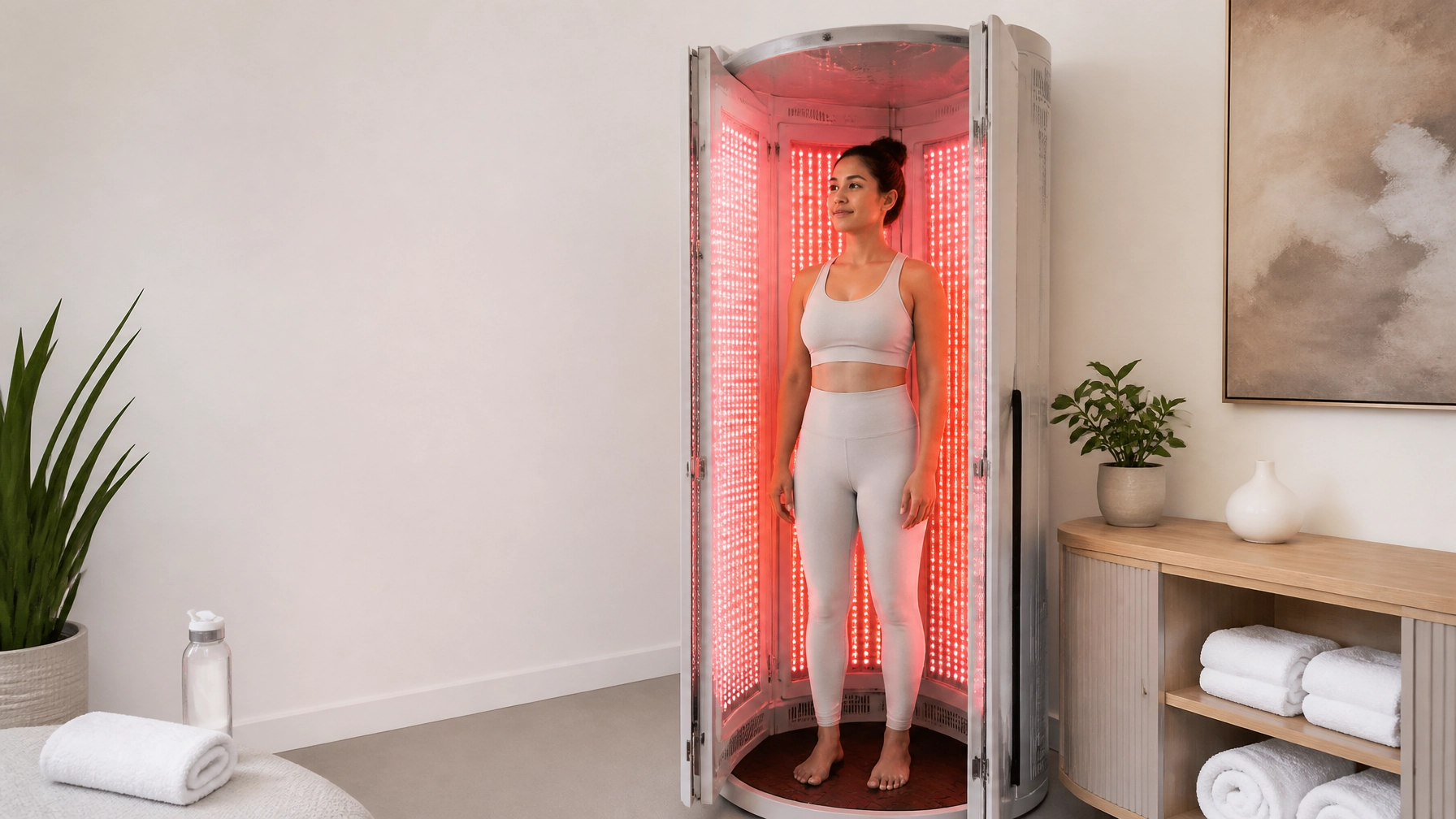
If you have searched for red light therapy in 2026, you have probably seen claims about fat reduction, body contouring, and weight loss. That naturally raises an important question:
Can red light therapy actually help with weight loss and fat reduction?
The honest answer is: possibly, but only modestly and as a supportive tool. Red light therapy is not a replacement for nutrition, movement, sleep, stress management, or medical weight-management care. The research is promising in some areas, but it is still limited, inconsistent, and not strong enough to call red light therapy a proven standalone weight-loss method.
Why do people ask whether red light therapy can reduce fat?
Red light therapy is often marketed as a non-invasive body-contouring treatment. It uses low-level red and near-infrared wavelengths to interact with cells beneath the skin.
Some providers promote it for:
- Localized fat reduction
- Waist, hip, or thigh circumference changes
- Cellulite appearance
- Skin tightening
- Metabolic support
- General body contouring
The appeal is understandable. Many people have areas of stubborn fat that do not seem to change easily, even when they are active and following a balanced eating pattern. A non-invasive option with no needles, surgery, or downtime can sound attractive.
However, advertising claims and scientific evidence are not always the same. The most responsible approach is to separate localized contouring support from long-term weight loss.
Does red light therapy help with weight loss?
Short answer: it may help modestly, but it is not a proven weight-loss treatment
Earlier studies found small reductions in waist, hip, or thigh measurements after several sessions. However, results have not been consistent across studies. Some trials used small groups, short follow-up periods, or different devices and treatment protocols.
Healthline’s review of red light therapy for weight loss describes the possible benefits as modest at best. It also notes that larger and longer-term studies are needed. A healthy diet and regular exercise remain better-supported approaches for sustainable weight management.
Cleveland Clinic is more cautious, stating that there is currently no solid scientific evidence to support red light therapy for weight loss.
So, what should you take from this?
- Red light therapy may support small, localized circumference changes in some people.
- It should not be expected to cause dramatic weight loss.
- It may be more appropriate to describe it as body-contouring or wellness support.
- Results are individual and cannot be guaranteed.
- Long-term maintenance and overall health still depend on broader lifestyle habits.

What does newer research from 2025 and 2026 show?
Recent research has made the conversation more interesting, but it has not changed the basic conclusion that red light therapy should be viewed as an adjunct rather than a primary weight-loss method.
A 2025 systematic review and meta-analysis
A 2025 BMC Complementary Medicine and Therapies systematic review and meta-analysis examined 11 randomized controlled trials involving 569 participants.
The pooled results suggested that photobiomodulation may improve some measurements compared with control groups. These included:
- Body weight
- BMI
- Waist circumference
- C-reactive protein
- Total cholesterol
- HOMA-IR, a measure related to insulin resistance
The analysis reported average differences of approximately 3.5 kilograms in weight and 7.3 centimetres in waist circumference compared with control groups. These numbers should not be interpreted as typical results for every client.
The researchers also identified important limitations:
- The studies used different wavelengths, doses, and treatment schedules.
- Most trials were relatively small.
- Follow-up periods were short, with none extending beyond six months.
- The overall quality of evidence ranged from very low to moderate.
- Results for body-fat percentage were not statistically significant.
- More diverse, long-term, multi-centre studies are needed.
In other words, the review suggests potential, but it does not establish red light therapy as a reliable standalone treatment for obesity or long-term weight loss.
A 2025 study on resting energy expenditure
A separate study published in Nutrients, “Photobiomodulation Acutely Augments Resting Metabolism in Women with Obesity,” examined the immediate effect of one 12-minute whole-body red and near-infrared light exposure.
In women with obesity, resting energy expenditure increased by approximately 9% immediately after the session. This is a noteworthy finding, but it needs to be interpreted carefully.
The study showed an acute response, not long-term weight loss. It did not prove that repeated treatments produce a sustained increase in metabolism, nor did it demonstrate that participants lost a meaningful amount of weight over time. The study also found no change in respiratory exchange ratio, meaning it did not show a clear shift toward burning more fat rather than carbohydrates.
This is best understood as an early signal that photobiomodulation may influence energy metabolism under controlled conditions. More research is needed to determine whether that short-term response has a meaningful effect on long-term health or body composition.
How might red light therapy influence fat and metabolism?
Researchers are still studying the biological mechanisms. Proposed explanations include:
- Changes in cellular energy production
- Effects on mitochondrial activity
- Temporary changes in fat-cell membranes
- Support for circulation and cellular signalling
- Possible effects on inflammation and insulin sensitivity
These mechanisms are biologically plausible, but they do not automatically translate into significant weight loss. A cellular effect in a laboratory or short-term study is not the same as losing and maintaining a large amount of body weight in everyday life.
That distinction is important when evaluating any wellness treatment.
How should red light therapy fit into a weight-management plan?
The most realistic approach is to use red light therapy as one part of a broader health routine.
A balanced weight-management plan may include:
- Eating patterns that provide adequate protein, fibre, and nutrients
- Regular walking, resistance training, or other enjoyable movement
- Consistent sleep
- Stress-management strategies
- Medical support when appropriate
- Progress tracking using more than the scale alone
- Support for pain or recovery that makes movement easier
Red light therapy may be useful for someone who wants a non-invasive wellness session alongside these habits. It may also appeal to people interested in localized body contouring or skin appearance.
It should not replace treatment for diabetes, insulin resistance, obesity, or another medical condition. If you are managing a chronic disease, speak with your physician or qualified healthcare provider before making changes to your care plan.

Who may be a good candidate?
Red light therapy may be worth discussing if you are:
- An adult interested in non-invasive wellness support
- Already working on nutrition and movement habits
- Seeking gradual body-contouring support
- Interested in supporting muscle recovery after exercise
- Looking for a comfortable treatment with no needles or surgical recovery
- Comfortable with modest, individual results rather than guaranteed weight loss
It may not be appropriate for everyone. Speak with a healthcare professional before treatment if you:
- Have a photosensitive medical condition
- Take medication that increases light sensitivity
- Have an active infection or open wound in the treatment area
- Have active cancer or a concerning unexplained growth
- Are pregnant and considering full-body treatment
- Have a condition that requires medical weight-management support
A responsible provider should review your goals and relevant health information before beginning a treatment plan.
What can you expect at Wave Therapy?
Wave Therapy offers full-body red light therapy and near-infrared sessions in Edmonton. Depending on your goals, a session may be used as supportive care for recovery, skin rejuvenation, joint comfort, or body-contouring goals.
During a typical visit, you can expect:
- A conversation about your goals and any relevant safety considerations.
- Guidance on positioning and eye protection.
- Exposure to red and near-infrared light from a full-body system.
- Gentle warmth and a calm, relaxing environment.
- No needles, surgery, or required recovery time.
- A recommendation to assess progress over multiple sessions rather than judging results after one visit.
For body-contouring goals, gradual progress is more realistic than an immediate transformation. Wave Therapy’s existing guide on how long it takes to see red light therapy results explains why different goals require different timelines. You can also read Red Light Therapy Before and After: What Edmonton Clients Can Really Expect in 2026 for practical guidance on measurements, lighting, and realistic comparisons.
Some clients also pair light therapy with massage as part of a broader recovery and wellness routine. Edmonton residents can explore Massage Quest for registered massage therapy services or visit Book a Therapy to learn more about massage options.
Frequently asked questions
Can red light therapy cause large amounts of weight loss?
There is no strong evidence that red light therapy causes large or sustained weight loss on its own. Current research points to modest and inconsistent changes, particularly in waist circumference and localized body contouring.
Can red light therapy reduce belly fat?
Some studies have reported reductions in waist or abdominal circumference after multiple treatments. However, results vary, and research has not consistently shown a meaningful reduction in total body fat. It should not be considered a substitute for an overall weight-management plan.
Does red light therapy increase metabolism?
A 2025 study found that one 12-minute whole-body photobiomodulation session acutely increased resting energy expenditure by approximately 9% in women with obesity. This was a short-term finding. It does not prove that repeated sessions cause lasting metabolic changes or long-term weight loss.
How many sessions are needed?
There is no universal number. For many red light therapy goals, four to eight sessions may be a reasonable point to review early progress. Body-contouring goals may require a longer series, and evidence remains limited. Your provider should help set a schedule based on your goals and response.
Is red light therapy a replacement for diet and exercise?
No. Nutrition, movement, sleep, stress management, and medical care when appropriate remain the foundation of healthy weight management. Red light therapy may be considered an optional supportive tool.
Is red light therapy safe?
It is generally well tolerated when used correctly, but it is not suitable for everyone. Discuss treatment with a healthcare professional if you have photosensitivity, take photosensitizing medication, are pregnant, or have a medical condition requiring specialized care.
The practical takeaway
Can red light therapy help with weight loss and fat reduction? The most accurate 2026 answer is:
It may provide modest, localized support for body contouring and may influence certain metabolic measures, but the evidence is still limited. It is not a proven standalone weight-loss treatment.
If you are curious about adding red light therapy to a balanced wellness routine, learn more about Wave Therapy or explore Edmonton sessions and checkout options when you are ready.
Leave a Reply