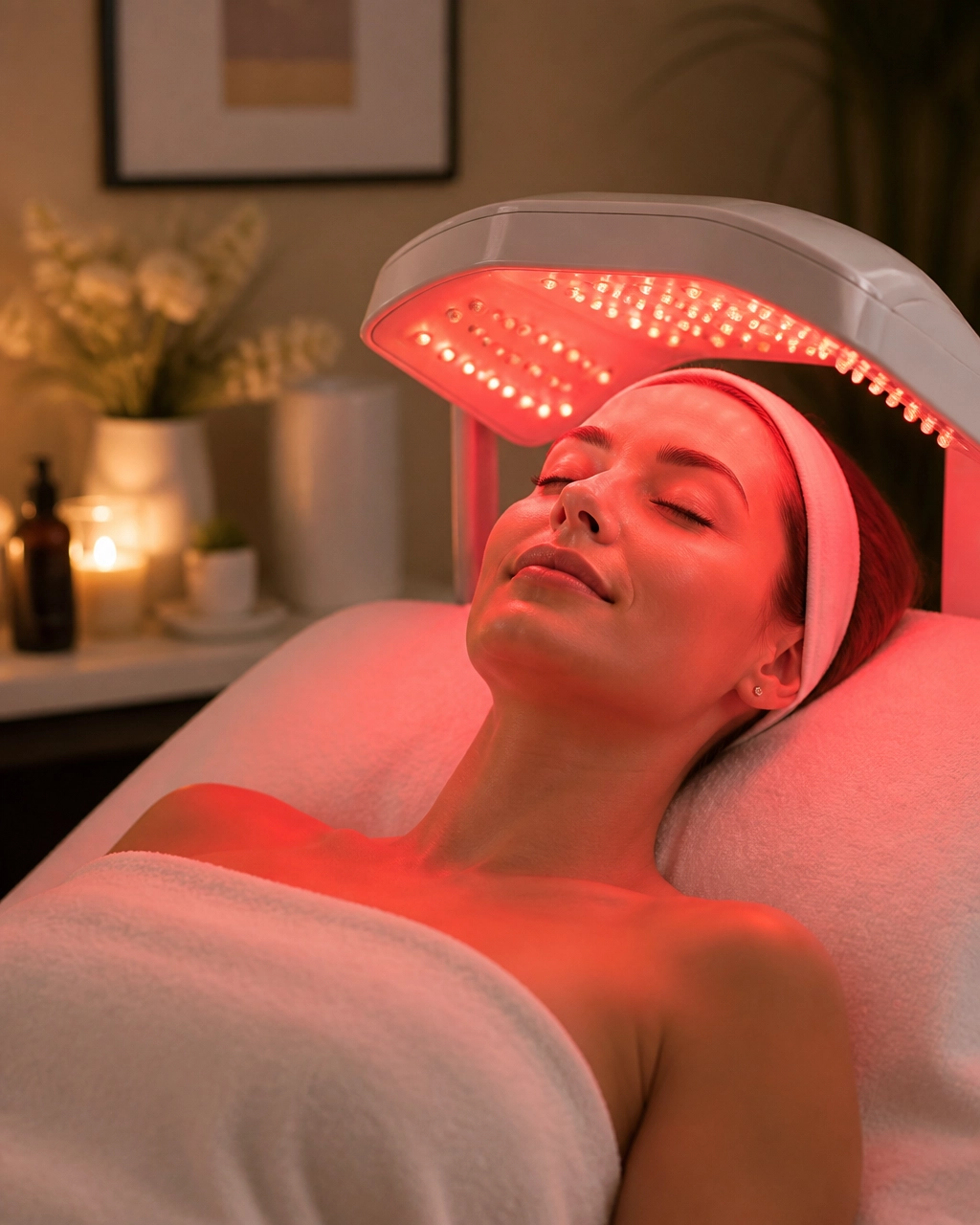
If you have searched “red light therapy side effects,” you are not alone. Many Edmonton residents are interested in red light therapy for joint discomfort, skin rejuvenation, muscle recovery, hair growth, or general wellness. At the same time, it is reasonable to ask whether sitting in front of bright red and near-infrared light can affect your skin, eyes, or overall health.
The short answer is that red light therapy is generally considered low-risk when the correct device is used as directed. Most reported side effects are mild and temporary. However, the treatment is not completely risk-free, and more light or longer sessions do not automatically mean better results.
Here is what current safety information suggests in 2026.
Is red light therapy safe?
Red light therapy, also called photobiomodulation, uses low levels of visible red and near-infrared light. Unlike tanning beds and many laser treatments, it does not use ultraviolet radiation.
When used within appropriate treatment parameters, red light therapy is:
- Non-invasive
- Typically comfortable
- Not associated with UV-related skin damage
- Usually performed without downtime
- Generally well tolerated in short-term studies
Many red light therapy devices are FDA-cleared for specific uses. It is important to understand what that means. FDA clearance generally indicates that a device is considered low risk and substantially equivalent to an existing legally marketed device. It does not guarantee that every advertised benefit has been proven, and “FDA-cleared” is not the same as “FDA-approved.”
The evidence for effectiveness also varies by goal. Research is promising for some skin, hair, pain, and recovery applications, but outcomes depend on the wavelength, dose, treatment schedule, device quality, and the individual. The American Academy of Dermatology’s overview of red light therapy notes that more research is still needed to understand the best treatment parameters.
So, does red light therapy work? It may help support specific goals for some people, but it should be viewed as a complementary wellness treatment rather than a guaranteed cure.
What are the possible side effects of red light therapy?
Most side effects are mild and resolve on their own. They may include:
Temporary skin redness
Some people notice mild redness or warmth in the treated area immediately after a session. This is usually short-lived and may be related to increased circulation or individual skin sensitivity.
Mild skin sensitivity or dryness
The skin may feel slightly tight, dry, tingly, or sensitive, particularly during the first few sessions. This may be more noticeable if you are also using exfoliating acids, retinoids, or other strong skincare products.
Eye glare, eye strain, or afterimages
Bright red light can be uncomfortable for some people. You may notice mild glare, a headache, eye fatigue, or temporary afterimages after looking toward a bright panel.
Closing your eyes is not always a complete substitute for protective eyewear, especially during close facial treatments or when near-infrared light is involved. Near-infrared light is invisible, so you cannot rely on brightness or your blink reflex to tell you when exposure is too high.
Wave Therapy explains this in more detail in its guide: Do You Need Eye Protection for Red Light Therapy?
Temporary changes in how you feel
A small number of people report feeling tired, lightly stimulated, or experiencing a temporary increase in soreness after an early session. These reactions are not necessarily dangerous, but they are a reason to reduce exposure and monitor how your body responds.
Irritation from overuse
Using a device too often, for too long, or too close to the body can increase the chance of prolonged redness, discomfort, swelling, or skin irritation. At very high doses, studies have reported more serious skin reactions such as blistering.
Why more red light is not always better
Red light therapy has what is often called a biphasic dose response. In plain language, the body may respond best within a certain dose range.
- Too little light may not create a noticeable effect.
- An appropriate dose may support the intended response.
- Too much light may reduce the benefit or cause irritation.
This is why extending a 15-minute session to 45 minutes is not necessarily more effective. The same applies to using multiple devices on the same area in one day.
A practical red light therapy plan should consider:
- Wavelength
- Light intensity
- Distance from the device
- Treatment duration
- Frequency of sessions
- The treatment area and your individual sensitivity
Respecting the recommended protocol is one of the simplest ways to reduce red light therapy side effects.
How common are red light therapy side effects?
For most healthy adults using a suitable device properly, significant side effects appear to be uncommon. Clinical reviews generally describe adverse reactions as mild, temporary, and reversible.
A PubMed-indexed randomized controlled trial evaluated the safety of repeated low-level red light therapy over 12 months in children using it for myopia and found no evidence of harm to retinal structure or function. The Cleveland Clinic’s red light therapy guidance also describes the treatment as generally safe when used short-term and according to instructions.
Still, “generally safe” does not mean “safe for everyone” or “impossible to misuse.” Device output, distance, exposure time, eye protection, medications, and existing health conditions all matter.
Stop treatment and seek medical advice if you experience:
- Persistent or intense burning
- Blistering or swelling
- A rash that does not settle
- Significant eye pain
- Ongoing visual changes or loss of vision
- A severe or unusual headache
- Worsening of an existing condition
Who should be cautious or avoid red light therapy?
Speak with your doctor, dermatologist, or eye-care professional before starting red light therapy if you have any of the following:
Photosensitive skin conditions
Conditions such as lupus, porphyria, or a history of severe light reactions may make light-based treatment unsuitable without medical supervision.
Photosensitizing medications
Some medications can increase sensitivity to light. Examples may include certain antibiotics, isotretinoin, amiodarone, some anti-inflammatory drugs, and certain cancer treatments. The complete list depends on the medication and your health history.
Do not stop taking prescribed medication. Instead, ask your pharmacist or doctor whether red light exposure is appropriate.
Pregnancy
There is limited research on routine cosmetic or full-body red light therapy during pregnancy. A precautionary approach is sensible. If you are pregnant or breastfeeding, ask your healthcare provider before beginning treatment, particularly if the treatment would involve the abdomen or lower back.
Eye conditions
People with retinal disorders, macular degeneration, unexplained visual symptoms, or other eye conditions should obtain professional advice before facial or eye-area exposure. Protective eyewear does not replace an eye-care assessment.
Active cancer in the treatment area
Red light therapy is not known to cause cancer, and photobiomodulation has been studied in some supportive-care settings. However, it is generally sensible to avoid directing treatment over an active tumour unless your oncology team specifically recommends it.
What did the 2026 JAMA Ophthalmology study find?
A 2026 laboratory study in JAMA Ophthalmology raised important questions about certain home-use devices designed for myopia management.
The researchers evaluated four commercially available red light therapy devices using optical measurements and ANSI safety standards. Two laser-based devices reached the study’s retinal safety limits in very short exposure times under a large-pupil testing condition. The LED-based device produced diffuse illumination and had a much larger calculated safety margin.
The study does not mean that every red light therapy panel or LED wellness device is dangerous. It focused on eye-directed myopia devices, some of which require users to look directly into a light source. That is different from a professional full-body panel used for the skin, muscles, or joints.
However, the findings reinforce an important point: device design matters. You should not assume that every product labelled “low-level” or “red light” has the same eye-safety profile.
Read the study on PubMed. If a device is intended for direct eye viewing, especially for children, it should be prescribed and monitored by an eye-care professional.
Professional full-body devices vs. cheap home devices
Home devices are not automatically unsafe, and professional systems are not automatically risk-free. The main difference is often the level of information, consistency, and supervision available.
A professional full-body system may offer:
- More consistent light output
- Broader treatment coverage
- Clearly defined wavelengths
- Established distance and timing protocols
- Routine equipment checks
- Guidance from trained staff
- Appropriate eye protection when needed
Lower-cost home devices may have less consistent output, limited treatment coverage, unclear irradiance specifications, or instructions that are difficult to interpret. Some products may also use lasers or focused light sources rather than diffuse LEDs.
Before purchasing a home device, look for:
- FDA clearance for the specific intended use
- Clearly stated wavelengths
- Irradiance and treatment-time information
- Reliable eye-protection instructions
- A reputable manufacturer
- Clear warnings and contraindications
- Independent safety testing when available
What should you expect during a professional session?
At Wave Therapy in Edmonton, a typical full-body session is designed to be simple and relaxing. You may stand or sit in front of professional panels for approximately 15 to 20 minutes, depending on the treatment plan.
Most people feel gentle warmth rather than pain. There is generally no recovery period, so you can return to normal activities afterward. Staff can explain the positioning, timing, and eye-protection requirements before the session begins.
Red light therapy may be used as part of a broader wellness routine for goals such as:
- Joint comfort and inflammation support
- Muscle recovery
- Skin tone and collagen support
- Hair-growth support
- Wound-healing support
- Non-invasive body-contouring goals
For more background, see Wave Therapy’s guide on red light therapy and joint pain relief.
Some clients also combine light therapy with other recovery-focused services. Wave Therapy can refer clients to Massage Quest for provider and referral-partner support, or to its sister company, Book a Therapy, for massage services.
Practical takeaways
- Red light therapy is generally safe when used correctly, but side effects are possible.
- Mild redness, warmth, sensitivity, glare, eye strain, and afterimages can occur.
- More exposure is not always better because red light follows a biphasic dose response.
- Use extra caution with photosensitive conditions, certain medications, pregnancy, and eye disease.
- Avoid staring directly into bright LEDs or lasers.
- Use wavelength-appropriate eye protection for close facial treatments when recommended.
- FDA clearance indicates a device’s safety classification, not a guarantee of every advertised result.
- Professional systems and guidance can help reduce dosing and equipment-related mistakes.
- Stop treatment if you develop persistent skin reactions or visual symptoms.
If you are curious about red light therapy in Edmonton, you can learn more about Wave Therapy or explore Edmonton session options when you are ready.
Leave a Reply