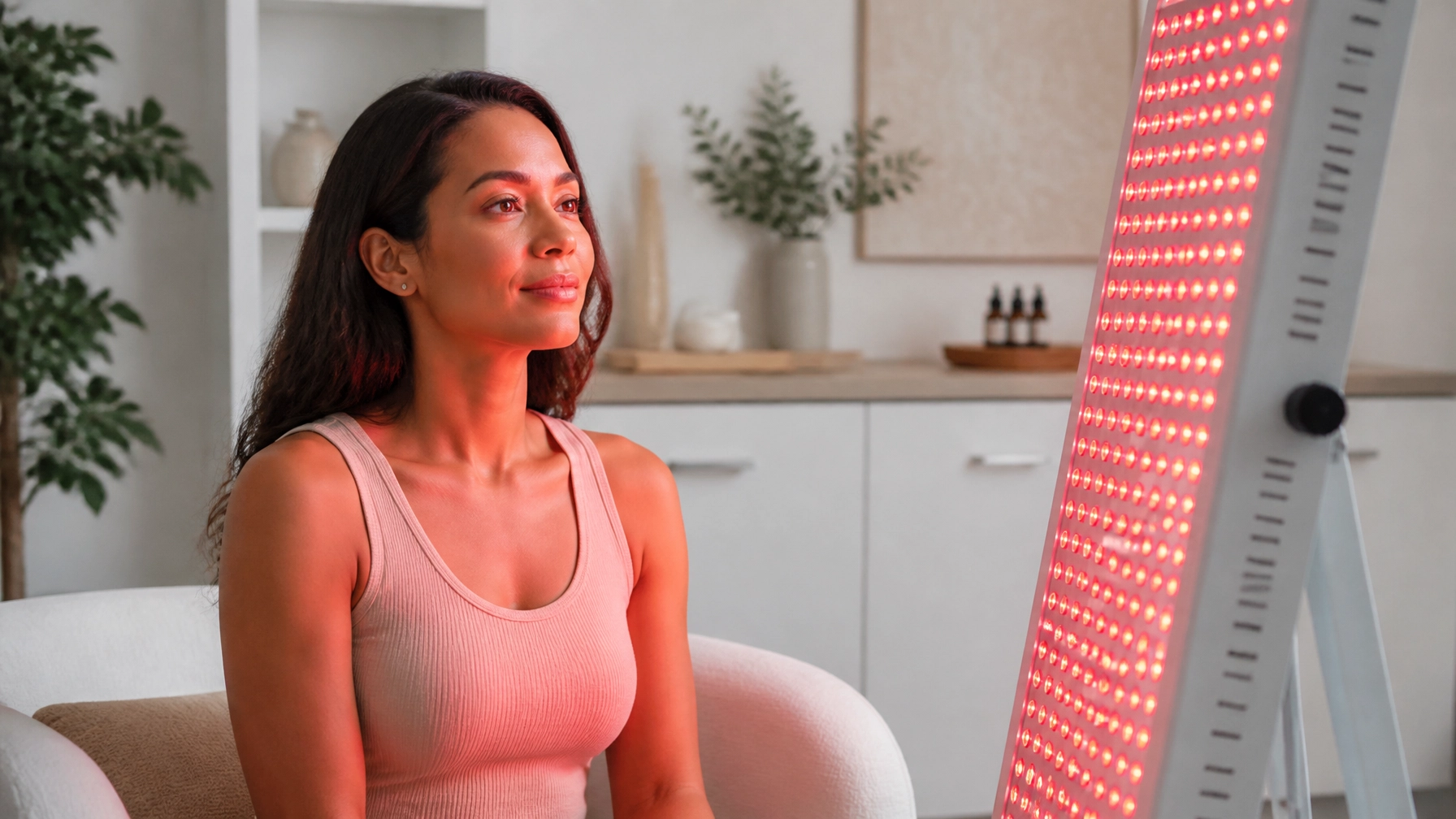
Red light therapy continues to attract attention in 2026, especially from people searching for natural ways to support healthier-looking skin and fuller hair. But does red light therapy work, and what can you realistically expect?
The short answer is: it may help with some skin concerns and certain types of hair loss, but results are gradual, modest, and dependent on consistent treatment. It is not a miracle cure or a replacement for medical care.
This guide answers the most common public questions about red light therapy benefits, results, side effects, treatment frequency, and candidacy.
What is red light therapy?
Red light therapy, also called photobiomodulation or low-level light therapy, uses specific red and near-infrared wavelengths to interact with cells.
In simple terms, the light may support cellular energy production and help regulate processes involved in tissue repair, inflammation, and circulation. For skin, researchers are interested in how light may support fibroblast activity, collagen production, and skin recovery. For hair, the focus is on how light may stimulate follicles and support the active growth phase.
Red light is different from ultraviolet light. It does not tan the skin and does not use the UV wavelengths associated with sun damage.
At Wave Therapy in Edmonton, red and near-infrared light are used in non-invasive wellness sessions designed to support skin rejuvenation, recovery, and overall cellular wellness. You can learn more about Wave Therapy before deciding whether a session is right for you.
Does red light therapy really work for skin?
Research suggests that red light therapy can produce subtle to noticeable improvements in some signs of skin aging.
The most commonly studied skin-related benefits include:
- A smoother-feeling skin texture
- Mild improvement in fine lines
- Support for collagen and elasticity
- Reduced appearance of redness
- More even-looking skin tone
- Support for skin recovery and healing
The American Academy of Dermatology notes that some studies have found improvements in fine lines, wrinkles, rough skin, discoloration, and loose skin. However, it also emphasizes that results vary between devices and individuals. At-home devices are generally less powerful than professional systems, and research protocols are not identical.
A review published through the National Library of Medicine explains that photobiomodulation may influence cellular activity involved in skin repair and regeneration. That does not mean every device or treatment produces the same result. Wavelength, intensity, treatment distance, and consistency all matter.

What does red light therapy do for collagen?
Collagen is a protein that helps support skin structure and firmness. As we age, collagen production naturally declines.
Red light therapy is being studied because it may support fibroblasts, the cells responsible for producing collagen and other structural proteins. Over time, this may contribute to a gradual improvement in firmness, texture, and the appearance of fine lines.
It is important to keep expectations realistic. Red light therapy is not equivalent to surgery, laser resurfacing, or injectable treatments. The changes are usually more natural-looking and incremental.
How long until you see results?
The timeline depends on the concern being treated, your skin or hair cycle, the equipment used, and how consistently you attend sessions.
For skin, some people notice a fresher appearance or smoother feel after several sessions. More meaningful changes in texture, tone, or fine lines generally require weeks to months of regular treatment.
For hair, the timeline is usually longer because hair grows slowly. Research on low-level light therapy for pattern hair loss commonly evaluates outcomes after approximately 16 to 26 weeks or longer.
A practical expectation may look like this:
- After a few sessions: You may notice temporary skin brightness or a relaxed, refreshed feeling.
- Around 6–12 weeks: Early changes in skin texture or tone may become easier to notice.
- Around 3–6 months: Hair density or thickness may begin to show measurable changes for some people.
- Beyond 6 months: Continued consistency may be needed to maintain or build on results.
Before-and-after photos can be useful, but they need to be interpreted carefully. Lighting, hydration, camera angle, facial expression, hair styling, and the time between photos can all change how results appear. For a balanced overview, read Wave Therapy’s guide to realistic red light therapy before-and-after results.
Can red light therapy help hair growth?
It may help support hair growth in people with pattern hair loss, also known as androgenetic alopecia.
Clinical research has reported increases in hair density, terminal hair count, or hair shaft thickness after repeated low-level light treatments. A review in the Journal of Cutaneous and Aesthetic Surgery found that low-level light therapy may be a safe and potentially effective option for androgenetic alopecia, although it also noted that more high-quality research is needed.
A separate study published in Annals of Dermatology found that 650-nanometre red light promoted growth activity and delayed the transition to a resting phase in cultured human hair follicles. This is useful scientific evidence, but laboratory findings do not guarantee the same response in every person.

Red light therapy is more likely to help when hair follicles are still active but becoming thinner. It is less likely to restore hair in areas where follicles have been inactive for a long time.
It also does not treat every cause of hair loss. Hair shedding may be related to genetics, hormonal changes, nutritional deficiencies, stress, medications, autoimmune conditions, infection, or scarring. Sudden, patchy, painful, or rapidly progressing hair loss should be assessed by a healthcare professional.
You can also read Wave Therapy’s Edmonton-focused guide to natural hair growth treatments using red light therapy.
What are the red light therapy side effects?
Red light therapy is generally well tolerated when used correctly. Reported side effects are usually mild and temporary.
Some people may experience:
- Temporary redness
- Mild warmth
- Minor skin irritation
- Eye strain or discomfort from bright light
- Headache in people who are sensitive to bright light
Red light therapy is not UV therapy, and current research has not found that red light causes the same type of DNA damage or skin-cancer risk associated with UV exposure. Still, “FDA-cleared” does not mean a device is guaranteed to work for everyone. It indicates that the device has met a particular safety and regulatory standard.
Avoid staring directly into bright LEDs. Follow the equipment instructions regarding eye protection, and stop treatment if you experience persistent discomfort or visual symptoms.
For more practical guidance, see Wave Therapy’s 2026 safety guide to side effects and daily use.
How often should you use red light therapy?
There is no single schedule that applies to every device. Treatment frequency depends on the light’s wavelength, intensity, dose, distance, and the goal of treatment.
Many clinical and professional protocols use several sessions per week. A common starting range for skin and general wellness may be two to four sessions per week, while hair-growth protocols are often designed around repeated sessions over several months.
More is not always better. Photobiomodulation can have a dose-dependent response, which means excessive exposure may not improve results and can sometimes irritate sensitive skin.
The safest approach is to:
- Follow the instructions for the specific system.
- Avoid increasing session length without guidance.
- Track changes with consistent photos if monitoring skin or hair.
- Allow enough time for gradual results.
- Ask a qualified provider to adjust your schedule if needed.
Wave Therapy’s article on how often to use red light therapy provides additional information about frequency and consistency.
Who should skip it or speak with a professional first?
Red light therapy may not be suitable for everyone. Speak with a physician, dermatologist, or other qualified healthcare professional before treatment if you:
- Have a condition that causes photosensitivity
- Take medication that increases light sensitivity
- Have active skin cancer or a suspicious skin lesion in the treatment area
- Have a history of unusual reactions to light
- Have a significant eye condition or recent eye surgery
- Are pregnant and are considering treatment over the abdomen
- Have sudden, patchy, or scarring hair loss
- Have a chronic skin condition that worsens with visible light
People with darker skin tones should also be mindful that visible light can contribute to hyperpigmentation in some circumstances. The American Academy of Dermatology recommends discussing at-home red light use with a dermatologist, especially if you have a history of pigmentation concerns.
What should you expect from a session?
A professional session is usually straightforward:
- You discuss your goals and relevant health information.
- The treatment area is exposed to red or near-infrared light.
- You may feel gentle warmth, but treatment should not be painful.
- Sessions generally involve no injections, incisions, or recovery period.
- You can usually return to your normal day afterward.

Red light therapy can be part of a broader wellness routine. If you also use massage for relaxation or muscle recovery, Wave Therapy can naturally complement services from Massage Quest, a provider and referral partner, or Book a Therapy, the sister massage company.
The practical takeaway
So, can red light therapy improve skin and hair growth in 2026?
For skin: It may support collagen, smoother texture, more even tone, and a gradual reduction in the appearance of fine lines.
For hair: It may help increase density or thickness in some people with pattern hair loss, particularly when follicles are still active.
For both: Consistency matters more than a single session. Results are usually gradual, and not everyone responds in the same way.
Red light therapy is best viewed as a supportive, non-invasive option: not a guaranteed transformation. If you are exploring red light therapy in Edmonton, you can explore Wave Therapy sessions and book when you feel ready.
Sources
- American Academy of Dermatology: Is red light therapy right for your skin?
- Yang et al., Hair Growth Promoting Effects of 650 nm Red Light Stimulation on Human Hair Follicles, PubMed Central
- Pillai and Mysore, Role of Low-Level Light Therapy in Androgenetic Alopecia, PubMed Central
- Avci et al., Low-Level Laser Light Therapy for Treatment of Hair Loss, PubMed
Leave a Reply