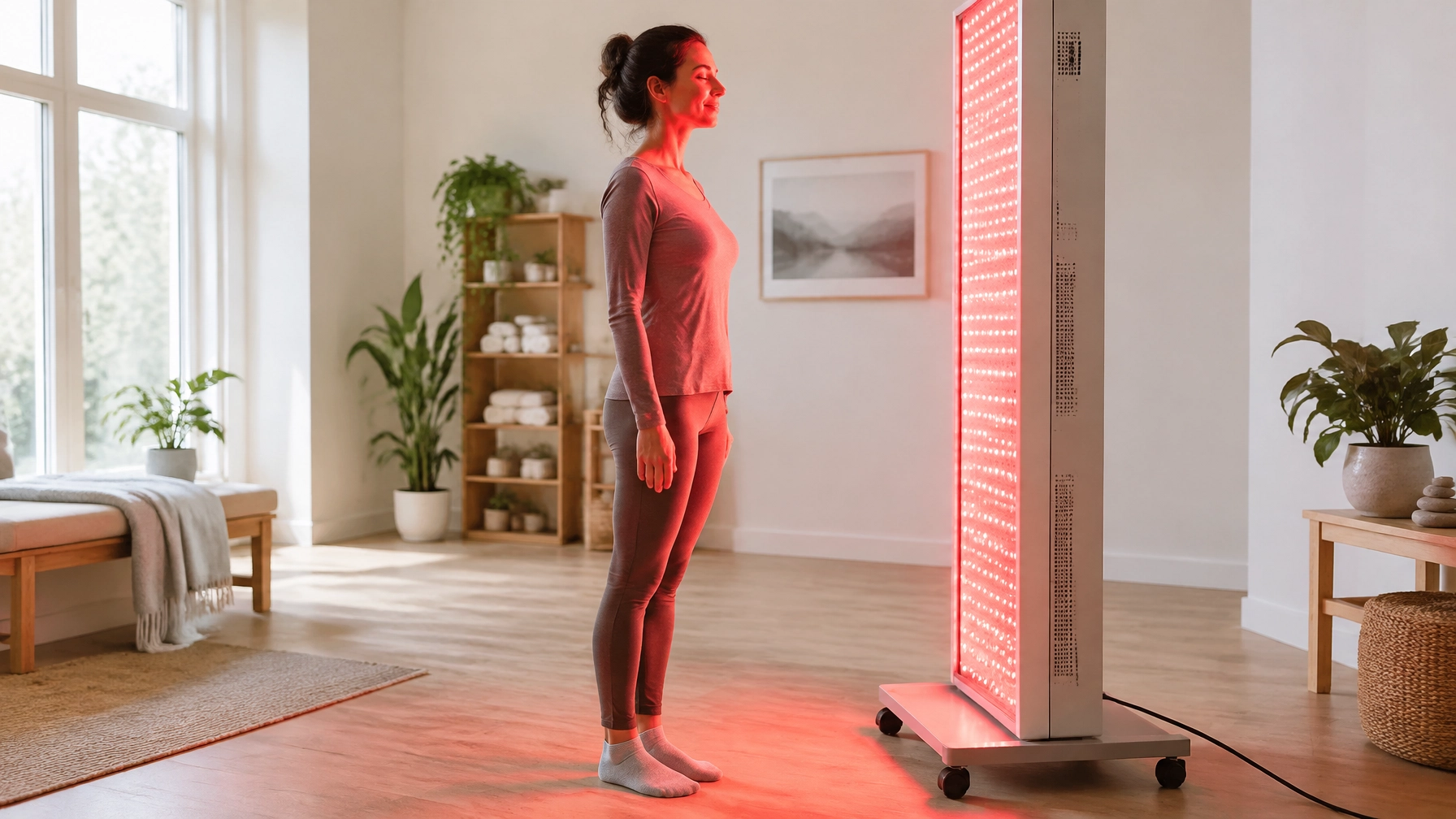
If you’ve been using red light therapy at home or in a studio and aren’t seeing a change, it’s understandable to wonder whether it’s worth continuing. Often, it’s useful to review the routine, the device and the goal before deciding. Results aren’t guaranteed, and they can take time, but small practical details can affect your experience.
So… why am I not seeing results yet?
The first question is whether enough time has passed for the change you’re looking for. Different goals have different timelines, and there isn’t one schedule that applies to every person or device.
For post-workout muscle soreness, a meta-analysis on delayed-onset muscle soreness and strength, published October 1, 2026, reported measurable effects in the period roughly 72–96 hours after exercise. That’s a different outcome from a gradual skin change: a 2026 Cureus product guide describes clinical skin studies that commonly assess results over about 4 to 12 weeks. Hair goals may require a longer trial; think months, not days, and consider checking in with a dermatologist about ongoing hair loss.
So if you expected a major skin change after two weeks, the timeline may be the issue, not necessarily the therapy. To make your own red light therapy before and after comparison more useful, take photos in similar lighting, at the same distance, and on a consistent schedule.
Is your routine actually consistent?
A scattered schedule is one of the first things to review. A few sessions followed by a skipped week make it difficult to judge a routine, especially when the outcome takes time to appear.
Dermatologists interviewed by Real Simple emphasize consistency over simply increasing intensity. Try choosing a realistic schedule based on your device’s instructions, then keep it steady for an appropriate trial period.
A simple session log can help you spot gaps:
- Date and treatment area
- Session length and distance from the device
- Any missed sessions or changes to your routine

Wave Therapy’s guide to how often to use red light therapy explains why a steady routine matters. The right frequency depends on the device and your goal, so follow its directions rather than copying a schedule that was designed for different equipment.
Are you accidentally blocking the light?
Light needs a clear path to the area you want to expose. Before a session, check for things between the device and your skin:
- Makeup or other products on the treatment area
- Opaque clothing or a towel covering the area
- Thick hair over the target area
- A panel cover that needs cleaning, according to the manufacturer’s instructions
- A treatment position or distance that doesn’t match the device guidance
For facial use, clean skin can make it easier to keep your routine consistent. You don’t need to overhaul your skincare routine, but consider whether products or coverings are in the way. Keep using sun protection as part of your usual daytime skin care.

Is your device powerful enough for your goal?
A device’s colour or advertised wattage alone doesn’t tell you how much light reaches your skin. Irradiance describes the power reaching an area; fluence describes the energy delivered over a session. Both depend on how and where a device is used.
In a 2026 Healio prescribing feature, dermatology experts recommend checking power and irradiance information. The Cureus product guide also discusses device specifications, such as wavelength, irradiance, fluence and session guidance.
When checking your device, look for:
- The wavelengths it uses
- Irradiance information, ideally for the stated treatment distance
- Fluence or a clear, manufacturer-supported session protocol
- Safety and use instructions, including eye protection if applicable
If the manufacturer doesn’t disclose irradiance or fluence, that’s useful information when assessing how transparent the device specifications are. It doesn’t prove a device cannot work, but it makes the delivered dose harder to evaluate. Also, FDA clearance is not a guarantee that a device will produce a particular result; the American Academy of Dermatology explains that clearance doesn’t tell you how effective a device will be for you.

Are you doing too much instead of too little?
It can be tempting to add extra minutes or sessions when progress feels slow. But more light isn’t automatically better. Photobiomodulation is associated with a biphasic dose response: the response can vary with dose, and higher exposure may not mean greater benefit.
Don’t increase session length or frequency beyond the device’s instructions just to speed things up. If you’re unsure whether the schedule fits your goal, ask the device provider or a qualified health professional. Our frequency guide covers the importance of matching a routine to the equipment rather than guessing.
Is the goal realistic for what light can do?
Red light therapy is a supportive wellness option, not a fix for every cause of pain, skin change or hair loss. The evidence varies by use, and results can differ with a person’s age, baseline skin, health and the severity or cause of the concern.
With an appropriate device and protocol, red light therapy may support:
- Joint comfort and inflammation management
- Skin tone and collagen production
- Muscle recovery after workouts
- Fat-loss goals as a complement to diet and exercise, not a replacement
- Hair growth for some people, depending on the cause of hair loss
Look beyond light therapy when you have:
- Sudden or severe symptoms that need medical assessment
- A skin condition, changing spot or pigment concern that a dermatologist should evaluate
- A goal that depends mainly on sleep, nutrition, training or another part of your health routine
If you’re concerned about a skin change or pigmentation, consult a dermatologist before experimenting with light devices. The American Academy of Dermatology’s red light guidance notes that people with darker skin tones may be more sensitive to visible light and should speak with a dermatologist before using an at-home device. Follow device instructions, including eye-protection guidance, and ask a healthcare professional if you have concerns about whether light exposure is appropriate for you.
Some people also include massage in a broader recovery routine. Wave Therapy’s massage partner, Massage Quest, offers massage services in Edmonton, and our sister company Book a Therapy can help you explore massage options. Massage and light therapy are separate services; pairing them is a personal wellness choice, not a guarantee of better results.
What should I check first? A five-point stall checklist
Before adding more sessions or minutes, run through these basics:
- Timeline: Has enough time passed for your specific goal?
- Consistency: Have you followed a steady routine?
- Barriers: Is anything covering the treatment area or interrupting the light?
- Device specs: Can you find wavelength, irradiance and use instructions?
- Dose: Are you following the recommended schedule rather than simply increasing exposure?
If you’ve followed the device instructions consistently for a reasonable period and still see no change, it may be time to reconsider the goal, the device or whether another approach is more suitable. For more context on what outcomes may look like, see Wave Therapy’s guide to red light therapy before and after results.
Considering red light therapy in Edmonton?
At Wave Therapy, we offer full-body red and near-infrared light sessions in Edmonton. If you’d like to learn more about the experience and whether a session fits your wellness goals, explore Wave Therapy and book a session when you’re ready.
Leave a Reply