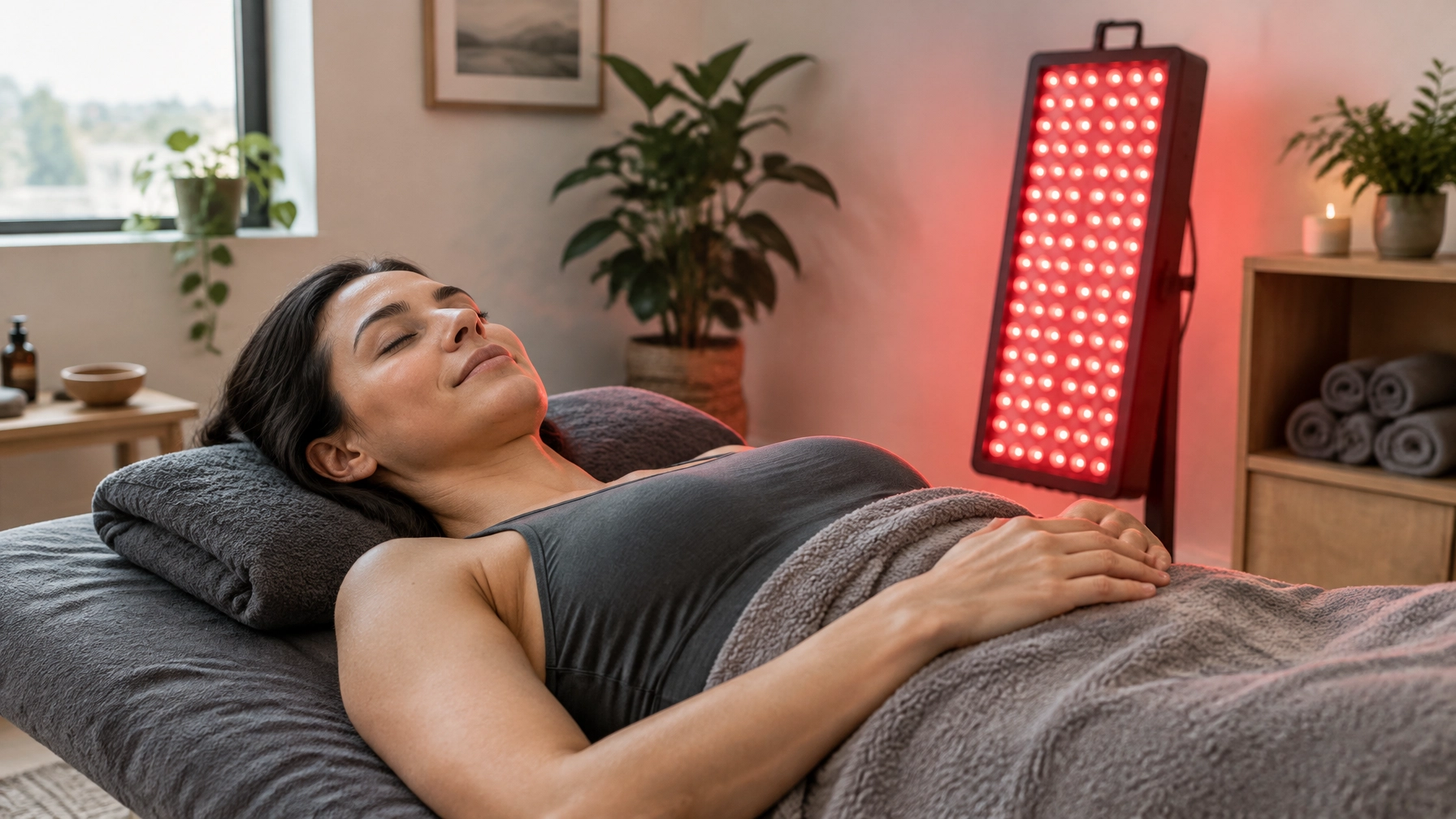
If you’re looking into red light therapy in Edmonton and massage as part of your recovery routine, you may be wondering whether to book both, and, if so, which one should come first. They’re distinct wellness services, and using them in the same routine doesn’t mean they work in the same way.
This guide focuses on how to think about pairing them, what each may contribute, and what to ask before booking. It takes a different angle from our articles on red light therapy versus massage and red light therapy for Edmonton athletes: here, the focus is building a practical routine without assuming the combination is proven to work better.
What’s the difference between red light therapy and massage?
Red and near-infrared light therapy, also called photobiomodulation (PBM), uses specific wavelengths of light. Researchers are studying how this light interacts with cells and whether it may support certain recovery-related outcomes. Massage uses hands-on pressure and movement of soft tissue. People may choose it for relaxation, perceived tension, or post-exercise comfort.
In other words, red light therapy and massage are not interchangeable. A red light session is not a massage, and massage is not part of a Wave Therapy light session. Each service has its own process, provider, and considerations.
Is there evidence that doing both together improves recovery?
There is limited direct evidence on combining red light therapy and massage specifically. Research on the two services separately does not show that doing them together creates an added or “synergistic” benefit.
A 2025 umbrella review of randomized trials on photobiomodulation assessed a range of health outcomes. The authors found that certainty was low or very low for most outcomes and noted variation in treatment protocols. It does not establish that combining a full-body light session with massage improves exercise recovery.
A 2025 review of whole-body photobiomodulation for exercise performance and recovery also describes an emerging area of research. Whole-body protocols and outcomes vary, so findings from one approach should not automatically be applied to every system or person.
Massage research has its own limits. A systematic review and meta-analysis of sports massage found small improvements in delayed-onset muscle soreness and flexibility, but no evidence of improvement in strength, jumping, sprinting, endurance, or fatigue. These results don’t prove what will happen for an individual, or what a massage-plus-light combination will do.

Which service might fit my recovery goal?
The best starting point is the experience you’re looking for, not a promise of a particular result.
- Consider massage if you want hands-on bodywork and a chance to discuss pressure, comfort, and the areas you’d like the practitioner to focus on.
- Consider red light therapy if you’re curious about a non-invasive light session as one possible part of a broader wellness routine.
- Consider trying one at a time if you haven’t had either before. It can make it easier to notice how you respond to each service.
- Ask about clinical assessment if you have persistent, worsening, or unexplained pain. Wellness services aren’t a substitute for appropriate medical care.
Potential, modest benefits reported in research or sought by clients include:
- Temporary relief in perceived muscle soreness or tension.
- A sense of relaxation or comfort after massage.
- Possible changes in soreness or other recovery-related outcomes with PBM, though results vary and evidence depends on the protocol.
- An opportunity to set aside time for rest and recovery.
These are possibilities, not guaranteed outcomes. Neither service should be presented as a cure or as a replacement for sleep, gradual training, nutrition, or professional care when needed.
Should I do red light therapy or massage first?
There isn’t a well-established evidence-based order for pairing them. No general rule says light therapy must come before massage, or that massage should come first. Nor is there a universal waiting period that applies to everyone.
A practical way to decide:
- If you’re new to either service, start with one. Notice how you feel during and afterward before adding another variable.
- If you already know you tolerate both, ask each provider about timing. Your schedule, comfort, and reason for booking may influence what feels practical.
- Keep the first combined routine gentle. Let the massage practitioner know if you’ve had a light session, and let the light-session provider know about recent bodywork or soreness.
- Pay attention to your response. If you feel unusual discomfort or symptoms worsen, stop and seek appropriate advice.
This is a comfort-focused way to organize appointments, not a proven recovery protocol. Don’t use either service to push through pain or return to training before you’re ready.

What should I book in Edmonton?
At Wave Therapy, Edmonton clients can explore full-body red and near-infrared light sessions. If you’re unsure what to choose, review the available options and ask about the equipment, session process, eye protection, and any health screening before booking. Our Edmonton session information can help you explore what’s available.
For massage, look at massage providers and booking resources separately. Massage Quest is a massage provider and referral resource, while Book a Therapy is a separate massage booking resource and Wave Therapy’s sister company. These are distinct from Wave Therapy’s red light sessions; confirm service details, practitioner credentials, and availability directly with the massage provider.
If you’re comparing massage options, ask whether the practitioner can adapt pressure to your comfort and whether your goals are appropriate for massage. For light therapy, ask how the session works and what safety instructions apply. You can read our guide to red light therapy for muscle recovery for more context on the evidence and recovery expectations.
What does a red light session feel like?
The experience can depend on the device and setup. You may see red light and notice some warmth, but you shouldn’t assume every system feels the same. Ask the provider what to expect, how to position yourself, and what to do if you feel uncomfortable. Follow the device instructions, including any eye-protection guidance.
Massage feels different: it involves hands-on pressure, which should be discussed with the practitioner. You can ask to adjust or stop the pressure at any time.
Who should avoid these services or seek advice first?
Check with a healthcare professional and tell the provider about relevant health concerns before booking. This is especially important if you:
- Are pregnant.
- Have a photosensitivity condition or take medication that may increase sensitivity to light.
- Have an active or cancer-related medical concern in the area being considered.
- Have a recent injury, significant swelling, bruising, or symptoms you can’t explain.
- Are unsure whether massage or light exposure is appropriate for your health situation.
Follow the device and provider instructions, and don’t look directly at a bright light source unless specifically advised it is safe. For acute or worsening symptoms, seek qualified medical advice rather than relying on a wellness session.
Practical takeaway: how can I pair them realistically?
Think of light therapy and massage as separate options you can choose based on comfort, preference, and practical scheduling, not as a proven two-part treatment. There’s no established best order or required frequency for the combination. If you want to explore both, start with one service, learn how you respond, and discuss the plan with the relevant providers. Keep expectations measured and seek clinical advice for pain, injury, or unclear symptoms.
When you’re ready, book a red light therapy session in Edmonton or visit Wave Therapy to learn more.
Leave a Reply