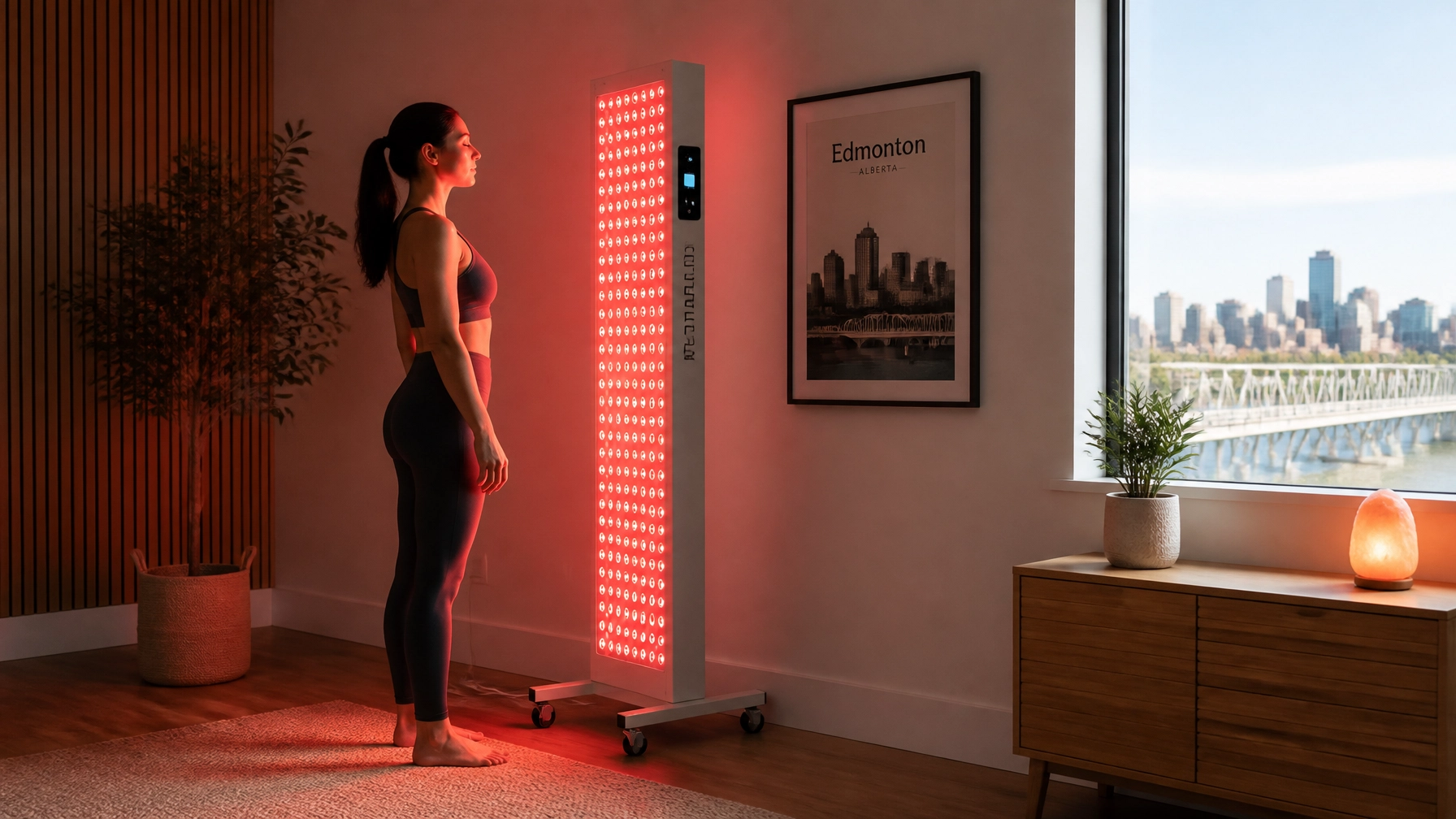
So, you finally took the plunge. Maybe you visited us at Wave Therapy in Edmonton, or perhaps you invested in a device for your home. You’ve heard the buzz about how red light therapy (RLT) can do everything from erasing fine lines to soothing that stubborn lower back pain. You’ve been standing in front of those glowing red LEDs, waiting for the magic to happen.
But after a week or two, you’re looking in the mirror or checking your recovery stats and thinking, “Is this even doing anything?”
Don’t pack up the panel just yet. Red light therapy is backed by a massive body of scientific research, but it isn’t a magic wand. It’s a biological trigger. If you aren't seeing results, it’s rarely because the technology doesn't work: it’s usually because of a small tweak needed in your routine.
As a local Edmonton brand, we’ve helped hundreds of people navigate the "biohacking" world. We’ve seen the common pitfalls and the "aha!" moments. Here are the top 10 reasons your red light therapy might be stalling, and exactly how you can fix it to start seeing the results you deserve.
1. You Aren’t Being Consistent Enough
The number one reason red light therapy “fails” is the same reason most gym memberships do: lack of consistency.
Red light therapy works through a process called photobiomodulation. It essentially "charges" the batteries of your cells (the mitochondria). Just like you can’t charge your phone for five minutes and expect it to last all day, you can’t use RLT once a week and expect long-term biological changes.
The Fix: Think of RLT like a supplement, not a surgery. Aim for 3 to 5 sessions per week. Most of our clients at Wave Therapy see the best results when they make it a part of their daily ritual: whether that’s during a morning meditation or a post-workout cool-down.
2. You’re Using the Wrong Wavelengths
Not all red lights are created equal. That "red light" bulb you bought at the hardware store? It’s just a red-tinted lightbulb. It creates heat, but it doesn't have the specific wavelengths required to penetrate the skin and trigger cellular repair.
Effective red light therapy requires very specific wavelengths:
- 630–660 nm (Red Light): Ideal for skin health, surface-level wound healing, and hair growth.
- 810–850 nm (Near-Infrared Light): These invisible waves penetrate deeper into muscles, joints, and even bone.
The Fix: Check your device specs. If it doesn't explicitly list these wavelengths, it might just be a fancy lamp. At Wave Therapy, we use professional-grade systems that deliver both red and near-infrared light simultaneously to ensure every layer of tissue is reached.

3. The "Distance" Dilemma
In the world of physics, there’s something called the "Inverse Square Law." In plain English: the further you are from the light source, the weaker the energy becomes.
If you are standing three feet away from a small panel, the light might look bright, but the actual "irradiance" (the amount of energy hitting your skin) is likely too low to do much. Conversely, if you're too close to a high-powered panel, you might actually be over-stimulating the area, leading to diminishing returns.
The Fix: For deep tissue or joint pain, stay between 6 and 12 inches from the device. For skin rejuvenation and anti-aging, you can step back to 12–24 inches. Always follow the manufacturer's specific irradiance guides.
4. You’re Wearing Clothes (or Heavy Skincare)
Light cannot travel through fabric. Even a thin white t-shirt will block a significant portion of the therapeutic light. Similarly, heavy sunscreens, makeup, or thick lotions can reflect the light away before it hits your cells.
The Fix: Red light therapy needs to be applied to clean, bare skin. If you’re targeting your face for skin rejuvenation, wash off your makeup first. If you’re treating a sore knee, make sure that knee is exposed. Save the moisturizers and serums for after your session: they actually absorb better when your skin is warm and the circulation is boosted from the light.
5. Your Sessions are Too Short (or Too Long)
There is a "sweet spot" for dosage in photobiomodulation. Scientists call this the biphasic dose response. Too little light won't trigger a response, but too much light can actually "max out" the cells, causing the benefits to plateau or even reverse temporarily.
The Fix: Most effective sessions last between 10 and 20 minutes per treatment area. If you’re doing 2-minute "quickies," you aren't giving your mitochondria enough time to react. If you’re sitting there for an hour, you’re likely just wasting time. Stick to the 10-20 minute window for optimal results.

6. Unrealistic Timelines
We live in an age of instant gratification, but biology takes time. While some people feel an immediate "glow" or a slight reduction in inflammation after one session, the most significant changes: like collagen production or deep tissue repair: happen on a cellular level over weeks.
According to research published in Photomedicine and Laser Surgery, significant results in skin texture and joint health usually require a consistent 8 to 12-week window.
The Fix: Give yourself a 30-day "Commitment Challenge." Don't judge the results until you've completed at least 15–20 sessions.
7. Using a Low-Power Device
The market is currently flooded with cheap, handheld "red light" wands and masks. While some are decent, many lack the power (irradiance) to actually penetrate deep enough to make a difference. If the power output is weak, you would need to stand in front of it for hours to get the same dose you'd get in 10 minutes from a professional panel.
The Fix: Look for the irradiance rating (measured in mW/cm²). A quality device should offer at least 50mW/cm² at a 6-inch distance. This is why many Edmontonians choose professional sessions: our full-body systems provide a level of power that home devices often can't match.
8. You're Trying to Treat Too Much at Once
If you have a small panel and you’re trying to treat your face, your back, and your knees all in one session, you might be spreading the "dose" too thin. By moving the light around too much, no single area gets the concentrated energy it needs to actually heal.
The Fix: Focus. Pick one or two "priority zones" and give them the full 10-minute treatment. Once those areas start feeling better, you can rotate your focus to other parts of the body.
9. You’re Dehydrated or Sleep Deprived
Red light therapy works by stimulating your body’s natural healing systems. But if your body is running on "empty": meaning you’re dehydrated, poorly nourished, or chronically sleep-deprived: your cells won't have the raw materials they need to carry out the repairs the light is "ordering" them to do.
The Fix: Hydrate before and after your sessions. Light therapy can actually be slightly dehydrating as it increases metabolic activity. Ensure you’re supporting your RLT routine with a decent diet and enough rest. As we often say here in Edmonton, you can't out-biohack a bad lifestyle!
10. You Aren’t Tracking Your Progress
Sometimes RLT is working, but the changes are so gradual you don't notice them. You might forget how much your shoulder used to ache or how dull your skin looked a month ago.
The Fix: Take "Before" photos. Use a 1-10 pain scale to track your discomfort. When you have objective data, you’ll likely realize that you’ve made much more progress than you thought.

Final Thoughts: The Road to Rejuvenation
Red light therapy is one of the most exciting, non-invasive wellness tools available today. Whether you're a fitness enthusiast looking to bounce back from a grueling workout at the Kinsmen Sports Centre or someone just looking to reclaim their youthful glow, the science is on your side.
According to Healthline, RLT is a safe and promising treatment for a variety of conditions, provided you use the right equipment and technique.
If you’ve tried it and felt underwhelmed, try applying these "fixes" for the next three weeks. Most of the time, it’s just a matter of adjusting your distance, cleaning your skin, or staying a little more consistent.
Ready to see what professional-grade red light therapy can do?
If you're in the Edmonton area and want to skip the guesswork, we invite you to experience our advanced systems. We take care of the wavelengths, the distance, and the timing so you can just relax and recharge.
Explore our sessions or book a visit when you're ready to start your journey toward natural healing.
Practical Takeaways
- Consistency is Key: Aim for 3–5 sessions a week for at least 4 weeks.
- Bare is Best: Always treat clean, dry, bare skin.
- Mind the Gap: Stay 6–12 inches away for deep tissue, and up to 24 inches for skin.
- Quality Matters: Ensure your device uses 660nm and 850nm wavelengths.

Leave a Reply