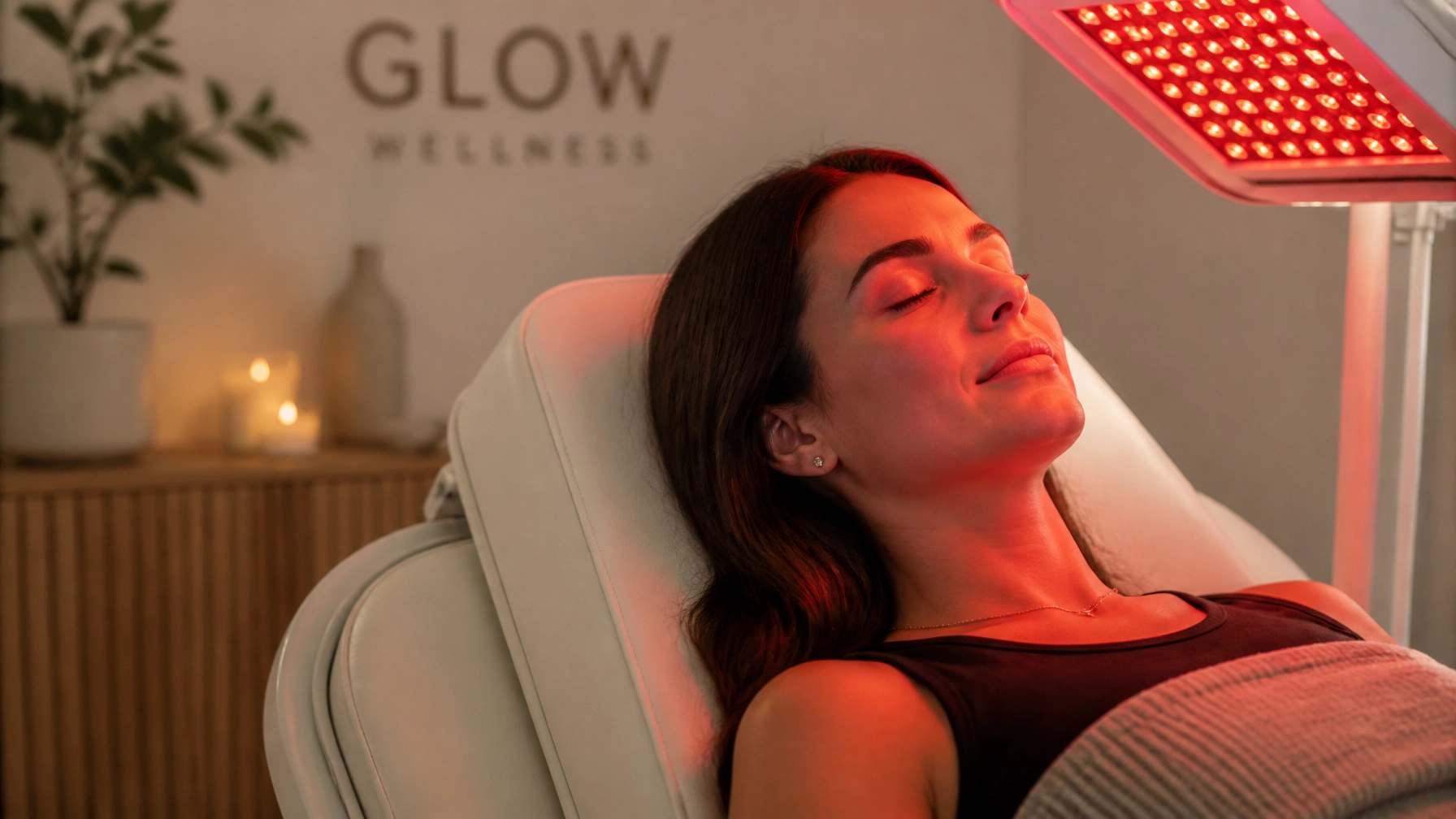
If you’ve ever stepped into a wellness studio or unboxed a home red light device, your first instinct was likely to squint. It’s bright, really bright. And naturally, that triggers a protective response. We’ve spent years being told to "never look directly into a laser" or "wear sunglasses in the sun," so when we see deep crimson LEDs, we have to ask: Is red light therapy bad for your eyes?
The short answer is no, red light therapy is generally not bad for your eyes when used correctly. In fact, emerging science suggests it might actually be quite the opposite. However, like anything in the world of wellness, the "how" matters just as much as the "what."
At Wave Therapy here in Edmonton, we get this question all the time. Whether you’re coming in for muscle recovery or skin rejuvenation, eye safety is a top priority. Let’s pull back the curtain on the science of light, the role of those little black goggles, and what the research actually says about your vision.
How Red Light Therapy Actually Works
To understand eye safety, we have to understand what red light therapy (RLT) actually is. It’s not a "laser" in the way we think of high-powered surgical lasers that cut through tissue. Instead, RLT uses low-level light-emitting diodes (LEDs) to deliver specific wavelengths of light, typically between 630 to 670 nanometers (nm) for red light and 810 to 850 nm for near-infrared light.
These wavelengths are part of the natural spectrum of sunlight, but without the harmful UV rays that cause sunburns and cataracts. When these photons hit your cells, they interact with the mitochondria (the powerhouses of your cells) to produce more ATP (energy). This process, called photobiomodulation, is what triggers the healing, anti-inflammatory, and collagen-boosting benefits we love.

The Big Question: Is it Bad for Your Eyes?
The fear surrounding red light and eye damage usually comes from a misunderstanding of intensity. If you stare at a high-intensity industrial laser, you will damage your retina. But LEDs used in therapy are diffused.
Research published in the National Library of Medicine indicates that light therapy is generally safe for the eyes of healthy individuals. Most clinical trials involving red and near-infrared light have reported no evidence of structural damage to the eyes. In many cases, participants in these studies didn’t even wear goggles, they simply kept their eyes closed.
That said, "safe" doesn't mean "ignore the rules." The safety of RLT for your eyes depends on three main factors:
- Intensity: Medical-grade panels are much stronger than a cheap beauty wand from a random online marketplace.
- Distance: The closer you are to the light source, the more intense the exposure.
- Wavelength: Red light (visible) is different from near-infrared (invisible). Because you can't "see" near-infrared, your blink reflex won't kick in, which is why proper guidance is essential.
Why We Use Goggles: Comfort vs. Safety
If the research says it’s generally safe, why do we provide goggles at Wave Therapy?
The primary reason for goggles is comfort. Even if the light isn’t damaging your retina, looking at a bright red panel is similar to looking at the sun, it’s uncomfortable and can cause temporary "after-images" or glare. If you’re trying to relax during a session, the last thing you want is to be squinting against a bright glow.

Goggles also provide a "fail-safe." While low-level light is safe, we don't always know the specific history of every client's eye health. For individuals with certain conditions, like light-induced migraines or those taking photosensitizing medications, the goggles are a necessary layer of protection.
The Surprising Flip Side: Can Red Light Benefit Your Eyes?
While we often worry about damage, some of the most exciting research in the wellness world is actually about using red light to improve vision.
As we age, the mitochondria in our retinas begin to decline. Since the retina is one of the most energy-demanding tissues in the body, this decline leads to age-related vision loss. A landmark study from University College London found that a few minutes of exposure to deep red light (670nm) in the morning could significantly improve vision in people over 40.
According to Healthline, red light therapy is being studied as a potential treatment for:
- Age-related Macular Degeneration (AMD): Helping to protect retinal cells from further decay.
- Glaucoma: Reducing pressure and protecting the optic nerve.
- Myopia (Nearsightedness): Especially in children, where specific red light treatments are showing promise in slowing the progression of vision loss.
Note: You should never attempt to treat an eye condition yourself using a general-purpose red light panel. These benefits were found using very specific, low-intensity protocols under medical supervision.
Best Practices for Eye Safety
If you’re using red light therapy at home or visiting us in Edmonton, here are the gold-standard rules for keeping your peepers protected:
- Close Your Eyes: Even with goggles, keeping your eyes closed is the simplest way to add a layer of protection.
- Wear the Goggles: If the device is bright enough to be distracting, put the goggles on. They are designed to block the specific wavelengths that cause glare.
- Don't Stare Directly: Treat the LEDs like the sun. You don't need to look at them to get the benefits; the light will reach your skin and tissues just fine while you look away or keep your eyes shut.
- Morning is Best: Some studies suggest that the eyes are more receptive to red light in the morning, and it may even help regulate your circadian rhythm.
- Check Your Meds: Some medications (like certain antibiotics or acne treatments) can make your eyes and skin more sensitive to light. If you're unsure, check with your doctor first.

What to Expect at Wave Therapy Edmonton
When you walk into Wave Therapy, we want you to feel completely at ease. Our systems are professional-grade, and we provide a controlled, calm environment.
During your first session, we’ll talk you through the equipment. We offer high-quality eye protection for every client, and our team is always here to answer questions about intensity and distance. Whether you’re here for full-body recovery or a targeted skin session, we ensure the experience is as soothing as it is effective.
We believe wellness shouldn't be stressful. You shouldn't have to wonder if you're doing it "right" or if you're safe. By following the science and using the right equipment, red light therapy becomes a powerful tool in your health arsenal, not a cause for concern.
Practical Takeaways
- Is it safe? Yes, for most people, red light LEDs are non-damaging to the eyes.
- Do I need goggles? Recommended for comfort and as a precaution, especially with high-intensity panels.
- Can it help vision? Early research is very positive, particularly for age-related decline, but don't DIY eye treatments.
- The Edmonton Standard: At Wave Therapy, we prioritize safety, providing goggles and guided sessions to ensure you get the best results without the worry.
If you’re ready to see (pun intended) what red light therapy can do for your energy levels, skin, and recovery, we’re here to help. You don’t need to be a scientist to get the benefits: you just need to show up and relax.
Explore our sessions or read more about our technology when you're ready to start your journey.
Leave a Reply