If you’ve spent any time running the stairs at the Wolf Willow ravine or training for the Edmonton Marathon, you know that recovery isn't just an "extra", it’s a necessity. In a city where we push ourselves through frozen winter runs and high-intensity summer cycles, the quest for faster muscle recovery is never-ending.
Enter Red Light Therapy (RLT). You’ve likely seen the ads for handheld wands, face masks, and small desktop panels promising "clinical results" from your couch. But as you walk past professional wellness centers, you see massive, full-body systems that look like something out of a high-tech lab.
It raises the question: Do you really need professional red light therapy, or will a $100 device from the internet do the trick?
Today, we’re stripping away the marketing hype to look at the science, the power, and the reality of red light therapy for muscle recovery.
The Science: How Red Light "Heals" a Muscle
Before we compare devices, we need to understand what we’re trying to achieve. When you crush a workout at your local Edmonton gym, you create microscopic tears in your muscle fibers. This leads to inflammation and that familiar stiffness known as Delayed Onset Muscle Soreness (DOMS).
Red light therapy, specifically Photobiomodulation (PBM), uses specific wavelengths of light (usually between 660nm and 850nm) to penetrate the skin and reach the muscle tissue.

It all starts in the Mitochondria
Think of your mitochondria as the "batteries" of your cells. When red and near-infrared light hits these cells, it triggers a reaction that helps the mitochondria produce more Adenosine Triphosphate (ATP). ATP is the primary energy source for your cells.
When your muscle cells have more energy, they can:
- Repair damage faster.
- Reduce oxidative stress (which causes that "burning" feeling).
- Increase blood flow to the area, bringing in much-needed nutrients.
According to a study published on PubMed, photobiomodulation can significantly improve muscular performance and accelerate recovery when applied correctly. But "correctly" is the keyword here.
The Power Gap: Professional vs. At-Home Devices
This is where the debate gets interesting. Can a small home device really compete with a professional system? To answer that, we have to look at three factors: Irradiance, Coverage, and Dosing.
1. Irradiance (The "Punch" of the Light)
Irradiance is the measurement of how much light energy is actually hitting your skin. Imagine a garden hose versus a fire hose. Both use water, but one has significantly more pressure and volume.
Most at-home devices are underpowered. They might use the right wavelengths, but they don't have the "punch" required to penetrate deep into thick muscle groups like your quads or glutes. Professional systems, like those used at Wave Therapy, are designed with high-output LEDs that ensure the light reaches the deep tissue where recovery happens.
2. Coverage (The Full-Body Advantage)
If you just finished a full-body HIIT class, your entire body is inflamed. Using a small handheld device to treat your calves, then your quads, then your back, then your shoulders would take hours.
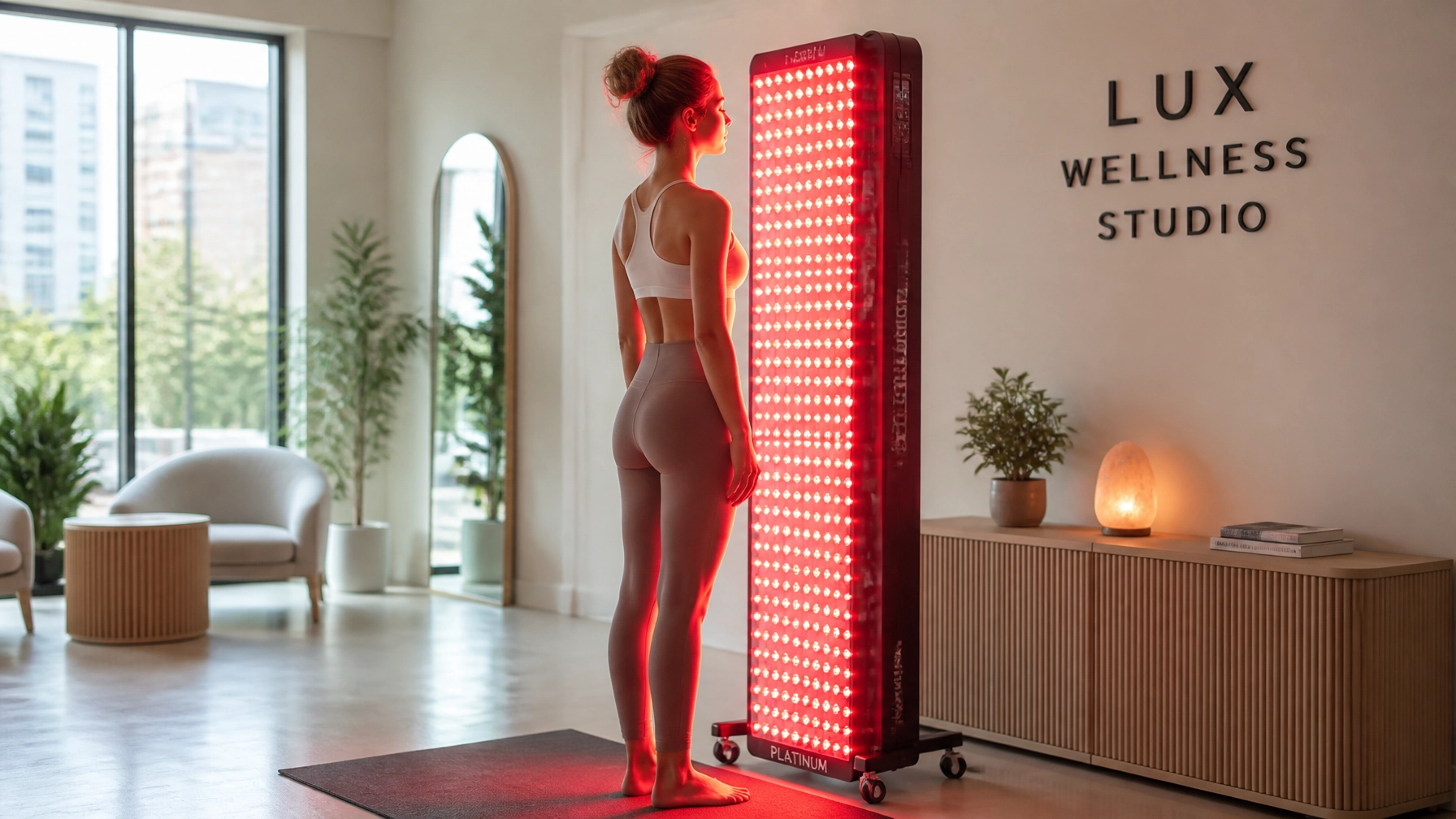
Professional red light therapy usually involves full-body panels or beds. You get a consistent, even dose across your entire body in 10 to 15 minutes. This systemic approach is far more effective for overall recovery than "spot-treating" with a small wand.

3. Dosing Precision
Science shows there is a "sweet spot" for red light therapy. Too little light does nothing; too much light can actually be counterproductive. Professional systems are calibrated to deliver the exact joules of energy needed for therapeutic results. At home, it’s often guesswork.
3 Reasons Professional Therapy Wins for Athletes
1. Reduced Recovery Time
For many Edmonton athletes, the goal is to get back to training as soon as possible. Professional-grade RLT has been shown to reduce DOMS by up to 50%. This means instead of hobbling around for three days after leg day, you’re ready to hit the River Valley trails by day two.
2. Better Performance
Research suggests that using red light therapy before a workout can actually prime the muscles, leading to increased endurance and strength. Because professional systems cover the whole body, you can prime all your major muscle groups simultaneously. Healthline notes that RLT is increasingly used by elite athletes to gain a non-invasive edge in performance.
3. Consistency and Ease
The biggest hurdle with at-home recovery tools (like foam rollers or small light panels) is that we stop using them because they are tedious. A professional session is a passive, relaxing experience. You simply stand or lay in the light, let it do the work, and walk out feeling rejuvenated.
How It Works at a Cellular Level

When you step into a professional red light session, two specific "magic numbers" are at play:
- 660nm (Red Light): This is absorbed primarily by the skin and superficial tissue. It’s great for skin rejuvenation and surface-level inflammation.
- 850nm (Near-Infrared Light): This wavelength is invisible to the human eye but penetrates deep, up to several centimeters, into the muscle and even the bone.
By combining these, professional systems offer a "one-two punch" that handles both skin health and deep muscle repair. This is why many clients at Wave Therapy notice not just better recovery, but also improved skin tone and reduced joint pain.
Is At-Home Red Light Therapy "Good Enough"?
We aren't saying home devices are useless. If you have a specific, small area of concern, like a nagging finger joint or a small skin blemish, a high-quality (keyword: high-quality) home panel can be a great maintenance tool.
However, if your goal is athletic recovery, systemic inflammation reduction, or fat loss support, at-home devices rarely provide the power density needed to move the needle significantly.
Think of it like this: A home coffee maker is great for your daily cup, but if you're hosting a massive event, you need a professional espresso machine to get the job done right.
What to Expect at Wave Therapy
If you’re ready to see what professional-grade light can do, your first session is easier than you think.
At Wave Therapy, we focus on providing a calm, modern environment where Edmontonians can focus on their wellness.
- The Session: Most sessions last between 10-20 minutes.
- The Feeling: You’ll feel a gentle, soothing warmth (though the light itself is "cold" and won't burn you).
- The Results: Most people feel an immediate sense of relaxation, with muscle soreness beginning to fade within a few hours.
Whether you’re a professional athlete, a weekend warrior, or someone just looking to manage the daily aches and pains of life, full body red light therapy in Edmonton offers a science-backed path to feeling your best.
Frequently Asked Questions
How often should I use professional red light therapy for recovery?
For best results, most athletes find 3 sessions per week to be the "sweet spot." However, even a single session after an unusually intense workout can significantly reduce stiffness.
Is it safe?
Yes. Red light therapy is FDA-approved and non-invasive. Unlike UV light from the sun or tanning beds, RLT does not damage the skin or increase the risk of cancer. It is "cool" light that works with your body's natural biology.
Can I use it if I have an injury?
While RLT is excellent for supporting the healing of strains and sprains, we always recommend consulting with your doctor for acute injuries.
The Verdict: Do You Need It?
If you are serious about your fitness and recovery, the "truth" is that professional red light therapy offers a level of power, coverage, and scientific precision that home devices simply can’t match. It’s an investment in your body’s ability to heal itself faster and perform better.
Recovery shouldn't be a chore. It should be the part of your routine that you look forward to.
Ready to see the difference for yourself?
Explore sessions at Wave Therapy and discover how professional red light therapy can change your recovery game.
Leave a Reply