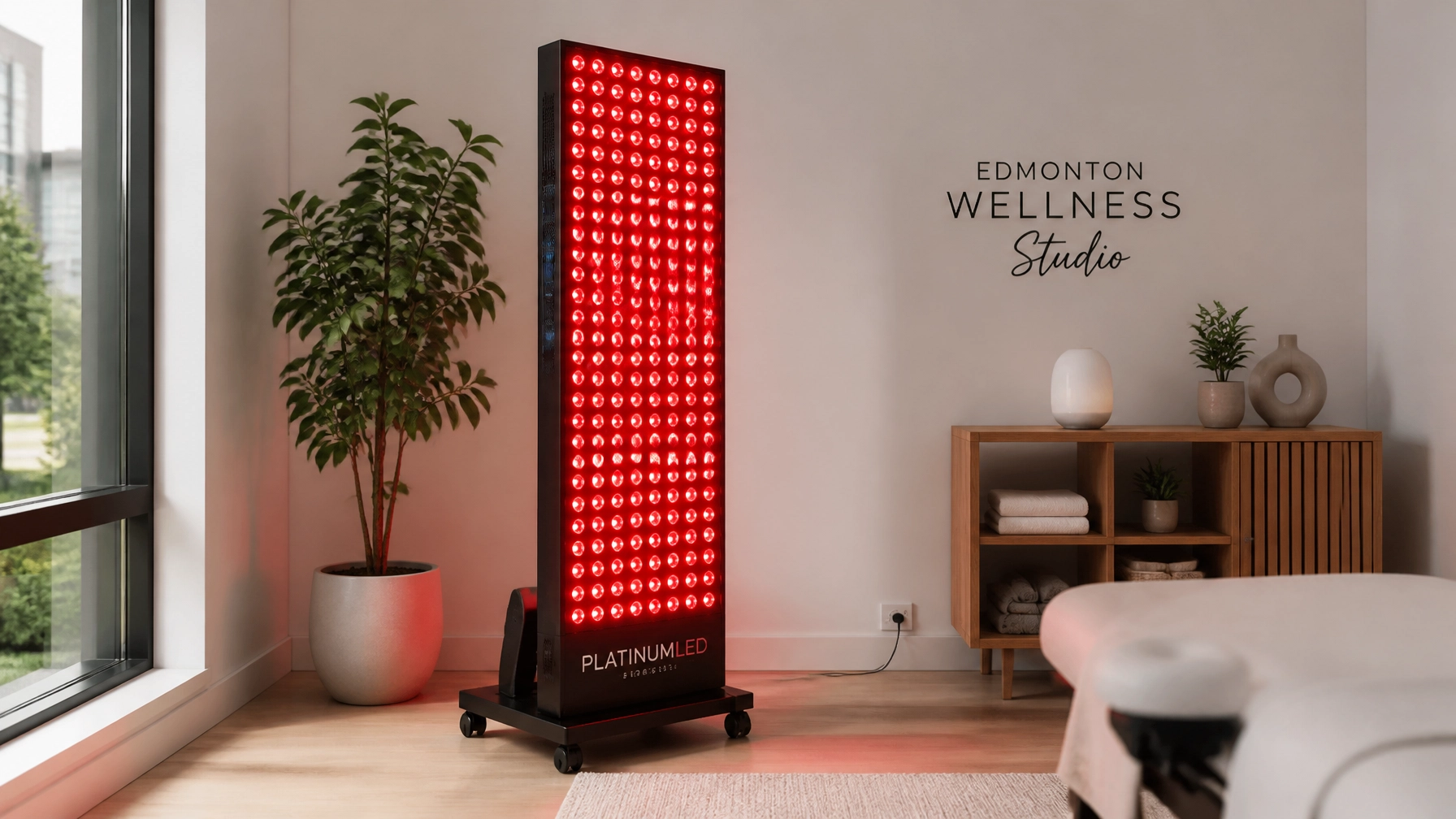
If you’ve been living with chronic pain, you know that the "Edmonton ache" is a very real thing. Whether it’s a stiff back from a long commute on the Whitemud, sore knees after a weekend hiking in Elk Island, or just the general inflammation that seems to flare up when the temperature drops, finding relief is a top priority.
Lately, there’s been a lot of buzz around light therapy. But as you start your research, you’ll likely run into two main terms: Red Light Therapy and Near-Infrared (NIR) Light Therapy.
At first glance, they look the same, a warm, comforting glow. But for someone dealing with chronic pain, the difference between these two wavelengths is the difference between treating the surface and reaching the source.
Let’s break down which one is better for your chronic pain and why the best approach often involves a little bit of both.
What’s the Difference, Anyway?
To understand how these therapies work, we have to talk about wavelengths. Light is measured in nanometers (nm).
- Red Light (typically 630–700 nm) is visible to the human eye. It’s that bright, deep red color you see in the panels.
- Near-Infrared Light (typically 750–1,000 nm) is mostly invisible to us. You can’t see it, but your body can certainly feel its effects.
The most important distinction for pain management is penetration depth.

Red Light: The Surface Specialist
Red light has a shorter wavelength, which means it doesn’t travel very deep into the body. It’s primarily absorbed by the skin’s surface and the very top layers of tissue.
If your "pain" is related to skin rejuvenation, minor surface wounds, or superficial inflammation (like a fresh scrape or a shallow tendon strain), red light is your best friend. It’s excellent for boosting collagen and helping the skin look its best, but it doesn't quite have the "reach" needed for deep-seated joint issues.
Near-Infrared (NIR): The Deep Recovery Expert
NIR light has a longer wavelength, allowing it to bypass the skin and travel deep into your muscles, tendons, ligaments, and even your bones.
When it comes to chronic pain: the kind that feels like it’s "stuck" in your lower back, your hips, or deep inside your shoulder: NIR is the heavy lifter. Research published in PubMed suggests that near-infrared wavelengths are particularly effective at reaching deeper tissues to reduce neuroinflammation and promote cellular repair.
How Light Actually Heals Your Pain
You might be wondering, "How can light stop my back from hurting?" It sounds a bit like science fiction, but the biology is actually quite grounded.
Both red and near-infrared light work through a process called photobiomodulation. Inside almost every cell in your body are tiny "power plants" called mitochondria. These mitochondria absorb the light energy and use it to produce Adenosine Triphosphate (ATP).
ATP is the fuel your cells use to repair themselves. By increasing ATP production, light therapy:
- Reduces Inflammation: It helps clear out the biological markers that cause swelling and pain.
- Improves Blood Flow: It encourages the release of nitric oxide, which dilates blood vessels and brings fresh, oxygenated blood to the painful area.
- Speeds Up Repair: It tells your cells to get to work fixing damaged tissue.
For a deeper dive into the general benefits, Healthline offers a great overview of how this process works across the body.
Which One Is Better for Your Pain?
The "better" choice depends entirely on where your pain is located. Here’s a quick guide to help you decide:
Use Red Light (660nm) if:
- You have superficial skin inflammation or redness.
- You are treating a surface-level injury like a minor cut or burn.
- You want to improve skin tone and reduce signs of aging while managing mild discomfort.
- Your pain is located in very shallow tendons (like the top of the hand or foot).
Use Near-Infrared Light (850nm) if:
- You have deep muscle soreness or "knots."
- You suffer from chronic joint pain (arthritis, bursitis, etc.).
- You are recovering from a deep tissue injury or a sports-related strain.
- You have nerve-related pain or neuropathy.
- You deal with chronic low back or neck pain.

The "Secret Sauce": Using Both Together
At Wave Therapy, we don’t make you choose. Our advanced red light therapy systems utilize a combination of both red and near-infrared wavelengths simultaneously.
Why? Because chronic pain is rarely just "one thing."
If you have a sore knee, you likely have inflammation at the skin level and deep within the joint. By using both wavelengths, you get the superficial benefits of red light along with the deep, restorative power of NIR. This synergistic approach ensures that every layer of tissue: from your skin to your bone: is receiving the energy it needs to heal.
What to Expect During a Session
If you’re new to the world of light therapy in Edmonton, don’t worry: it’s one of the most relaxing wellness treatments available.
Unlike a tanning bed (which uses harmful UV rays), red light therapy is completely non-invasive and heat-free (though you might feel a very gentle, soothing warmth). You simply relax in front of the panel for 10 to 20 minutes. Most of our clients at Wave Therapy use this time to meditate, listen to a podcast, or just breathe.
There’s no downtime. You can head straight from your session to a meeting downtown or a grocery run at the Italian Centre without feeling "wiped out." In fact, most people report feeling a boost in energy and a significant reduction in stiffness immediately after.
Leveling Up Your Recovery
While red light therapy is a powerhouse for chronic pain, it works even better when paired with other holistic approaches.
If your pain is caused by structural issues or extreme muscle tension, we often recommend combining your light therapy with professional massage. Our partners at Massage Quest and Book A Therapy offer incredible deep-tissue and therapeutic treatments that can help "unlock" the muscles while the red light works on the cellular level.
Think of it as a two-pronged attack on pain: massage handles the physical tension, and light therapy handles the biological recovery.

Final Thoughts: Ready to Feel Better?
Living with chronic pain is exhausting. It drains your energy and keeps you from enjoying everything Edmonton has to offer. Whether you choose red light for its skin-deep benefits or near-infrared for its deep-tissue power, the goal is the same: getting you back to living your life comfortably.
If you’re tired of the "quick fix" solutions that don't last, it might be time to look at the science of light.
Want to see if it's right for you?
Explore our sessions at Wave Therapy and see how the right wavelengths can make all the difference in your recovery journey.
Leave a Reply