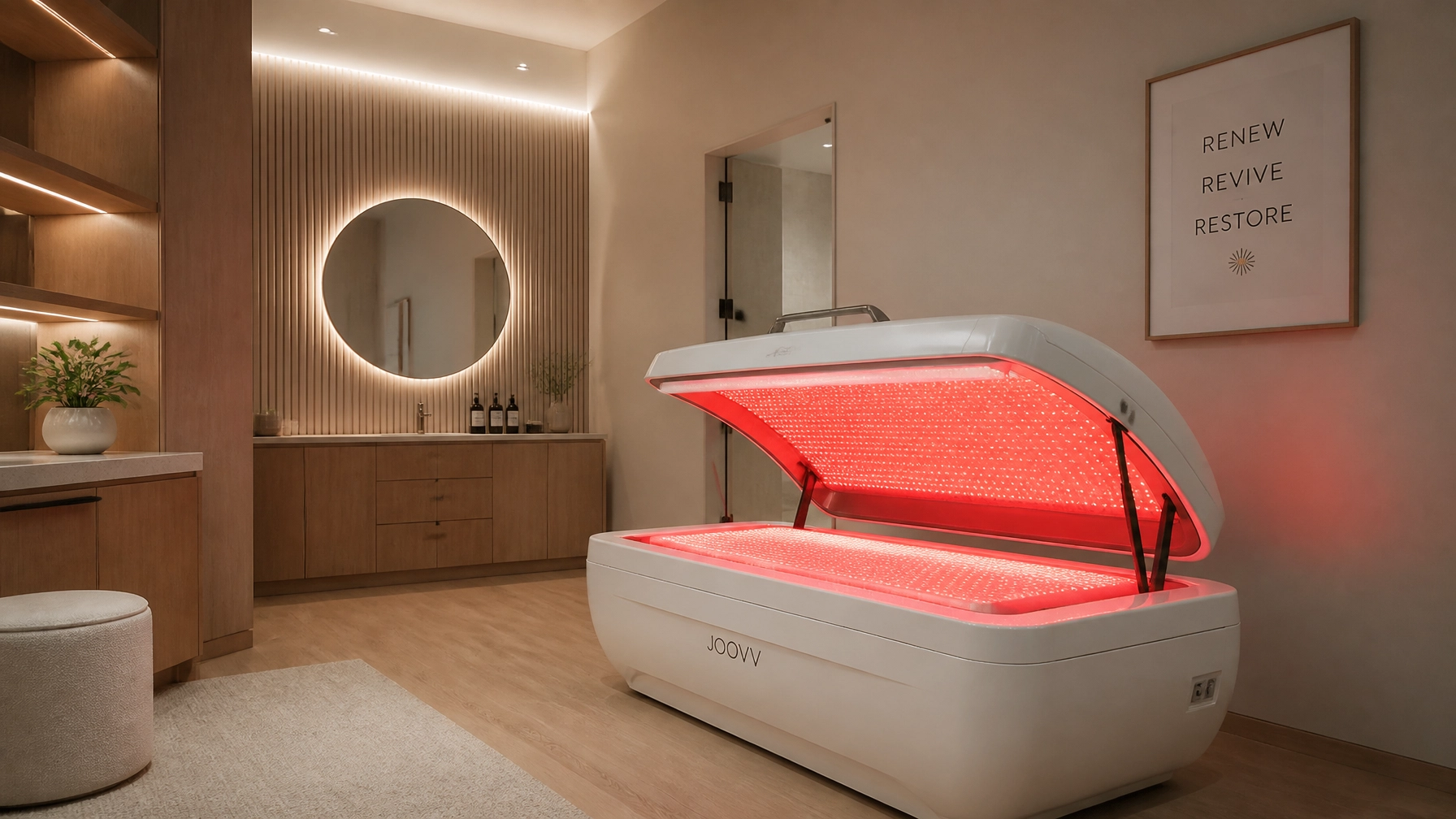
If you’ve started looking into red light therapy (RLT) for your wellness routine here in Edmonton, you’ve likely run into a lot of numbers. 630nm, 660nm, 810nm, 850nm, it can feel a bit like you’re back in high school physics class.
The good news? You don’t need a degree in light science to reap the benefits. Choosing the right wavelength simply comes down to what you’re trying to achieve. Whether you want to smooth out fine lines, recover from a tough workout at the gym, or manage stubborn joint pain, the "color" of the light, or the wavelength, determines how deep it goes and what it does for your body.
In this guide, we’ll break down the differences between the two most popular wavelengths, 660nm and 850nm, so you can choose the best approach for your health goals.
What Exactly is a Wavelength?
Before we dive into the comparison, let’s simplify the science. Red light therapy uses specific "colors" of light from the visible and near-infrared spectrum. These are measured in nanometers (nm).
Think of wavelengths like different types of delivery drivers. Some drivers (shorter wavelengths like red light) are great at delivering packages to the front porch (your skin). Others (longer wavelengths like near-infrared) are specialized in getting those packages into the backyard or even the basement (your muscles and joints).
The goal of red light therapy is to deliver energy to your cells. When your cells absorb this light, the mitochondria (the powerhouses of your cells) produce more ATP, basically the fuel your body needs to heal, repair, and thrive.
660nm Red Light: The "Skin Hero"
If your primary goal is looking refreshed and keeping your skin healthy, 660nm is your best friend. This visible red light is strongly absorbed by the surface layers of your skin, the epidermis and the dermis.

Why 660nm Matters for Skin
According to research, visible red light in the 660nm range is the "gold standard" for skin rejuvenation. It stimulates fibroblasts, which are the cells responsible for producing collagen and elastin.
- Anti-Aging: It helps reduce the appearance of fine lines and wrinkles by naturally boosting collagen production.
- Acne and Redness: It has a calming effect on superficial inflammation, making it a popular choice for those dealing with acne or rosacea.
- Healing Scars and Wounds: By increasing microcirculation at the surface, 660nm accelerates the healing of cuts, burns, and post-procedure skin (like after a chemical peel).
- Glowing Complexion: Regular sessions can improve overall skin tone and texture, giving you that healthy "wellness glow."
Studies published in journals like the Journal of the American Academy of Dermatology have consistently shown that these red wavelengths are effective at improving skin thickness and elasticity without any downtime.
850nm Near-Infrared: The "Recovery Specialist"
While 660nm stays closer to the surface, 850nm near-infrared (NIR) light is invisible to the human eye and has the power to penetrate much deeper, sometimes several centimeters into your tissue.

Why 850nm Matters for Recovery
If you’re an athlete, a weekend warrior, or someone living with chronic pain, 850nm is likely where you’ll see the most impact. It bypasses the skin to reach your muscles, tendons, ligaments, and even your bones.
- Muscle Recovery: It helps reduce muscle soreness after a heavy lifting session or a long run in the river valley.
- Joint Pain and Arthritis: Near-infrared light is widely studied for its ability to reduce deep-seated inflammation in joints, providing relief for those with arthritis or back pain.
- Faster Healing: By reaching the deeper tissue beds, it supports the repair of damaged ligaments and tendons.
- Systemic Benefits: Because it penetrates so deep, NIR can improve blood flow throughout the body, supporting overall cellular health and metabolism.
A study indexed on PubMed highlights how near-infrared light is particularly effective for musculoskeletal pain and deep tissue repair, making it a staple in sports medicine.
Comparing the Two: Which One Do You Need?
Most people don't need to choose just one. In fact, the most effective red light therapy systems, like those we use at Wave Therapy, combine these wavelengths to give you the best of both worlds.
| Feature | 660nm (Red Light) | 850nm (Near-Infrared) |
|---|---|---|
| Visibility | Visible bright red | Invisible to the eye |
| Penetration | Superficial (Skin layers) | Deep (Muscle, joints, bone) |
| Best For | Collagen, acne, wrinkles, hair | Muscle recovery, pain, inflammation |
| The Result | Glowing, youthful skin | Faster recovery, less pain |
Why the Combination is the "Secret Sauce"
While you can target specific issues with one wavelength, using them together creates a synergistic effect. Think of it as a "full-body recharge."
At Wave Therapy, our advanced systems utilize a blend of wavelengths to ensure your body is receiving benefits at every level. While the 660nm light is working on your skin’s texture and surface inflammation, the 850nm light is diving deep to soothe your muscles and boost your overall energy.
This dual-action approach is what makes professional red light therapy so much more effective than small, single-wavelength home devices. When you step into a session at our Edmonton clinic, you’re not just getting a surface treatment; you’re getting deep-tissue support that can improve how you feel from the inside out.
What to Expect from a Session in Edmonton
If you’ve never tried red light therapy before, you might be wondering what a visit to Wave Therapy actually looks like. It’s a very different experience than, say, a tanning bed or a medical procedure.
- A Calm Environment: You’ll be in a private, modern room designed for relaxation. It’s a chance to unplug for 10–20 minutes.
- No Heat or Pain: Unlike lasers or traditional infrared saunas, red light therapy is non-thermal. You won’t get hot, and there is no pain. It’s simply a bright, warm glow.
- Quick and Convenient: There’s no cleanup or downtime. You can come in on your lunch break or after a workout and head right back to your day.
- Cumulative Results: While many people feel a sense of relaxation and "glow" after one session, the real magic happens over 4–8 sessions as your cells begin to repair and regenerate.
For those looking to pair their recovery with other wellness modalities, we often recommend looking into restorative movement or professional bodywork. Local partners like Massage Quest offer excellent therapeutic massage that complements the anti-inflammatory effects of red light therapy perfectly. You can also easily book various wellness sessions through Book A Therapy to keep your health routine streamlined.
Is Red Light Therapy Right for You?
Red light therapy is a safe, FDA-approved treatment with virtually no side effects. It’s suitable for almost everyone, though we always recommend a quick chat with your healthcare provider if you are pregnant, have a history of skin cancer, or are taking medications that make you sensitive to light.
Whether you are looking to turn back the clock on your skin or simply want to move without pain, understanding the difference between 660nm and 850nm helps you make an informed choice for your wellness journey.

Ready to Experience the Difference?
You don't have to navigate the science of light on your own. Our team at Wave Therapy is here to help you tailor a plan that fits your specific needs, whether that’s skin rejuvenation, pain relief, or overall vitality.
Learn more about our services or explore our session options when you’re ready to see what red light therapy can do for you.
Living your best, healthiest life in Edmonton starts with taking care of yourself at the cellular level. We look forward to helping you get there.
Leave a Reply