Shoulder pain can make ordinary activities feel difficult. Reaching overhead, sleeping on one side, putting on a jacket, or lifting a bag may become uncomfortable.
Rotator cuff problems are especially common among active adults, people who work with their arms, and anyone recovering from repetitive strain or injury. This has led many people to ask: Can red light therapy help shoulder pain or rotator cuff issues?
The short answer is: it may help reduce pain and support rehabilitation for some shoulder conditions, but it is not a replacement for diagnosis, physiotherapy, exercise, or surgery when those treatments are needed.
Here is what the current evidence suggests in 2026.
What is red light therapy for shoulder pain?
Red light therapy is also called photobiomodulation, or PBM. It uses low-level red and near-infrared light to interact with cells.
Red wavelengths are generally used for more superficial tissues. Near-infrared wavelengths can travel somewhat farther into soft tissue and are often included in protocols for muscles, tendons, and joints.
At the cellular level, PBM may:
- Support mitochondrial activity and cellular energy production
- Influence local circulation
- Help regulate inflammatory signals
- Support tissue repair
- Reduce some forms of pain and soreness
- Make exercise-based rehabilitation more comfortable
The exact response depends on the wavelength, dose, treatment area, device, and individual.
The Cleveland Clinic’s overview of red light therapy describes the treatment as generally low-risk when used correctly, while also noting that more research is needed for many of its advertised uses.

Does red light therapy work for rotator cuff tendinopathy?
It may help, especially when combined with exercise or physiotherapy.
Rotator cuff tendinopathy involves irritation or degeneration of one or more tendons around the shoulder. It is not always the same as a tear. Symptoms may include pain when lifting the arm, weakness, tenderness, or discomfort when sleeping.
Research on low-level light therapy for tendinopathy is promising but not perfect. A systematic review published in PubMed found very-low to moderate-quality evidence that photobiomodulation may help reduce pain and improve function in tendinopathies.
Shoulder-specific reviews have reported that appropriately dosed light therapy may provide additional pain relief when combined with exercise. Some clinical trials have also reported improvements in shoulder movement and daily function.
The important point is that PBM appears most useful as an adjunct. It may help a person tolerate strengthening, stretching, and physiotherapy more comfortably. It does not replace progressive tendon loading or correct the underlying cause by itself.
Can red light therapy help shoulder impingement?
Shoulder impingement, sometimes described as subacromial pain, can cause pain when reaching overhead or moving the arm through certain positions.
Evidence is reasonably encouraging for combining PBM with exercise-based rehabilitation. Reviews have reported improvements in pain, range of motion, and function compared with exercise or standard care alone in some studies.
However, “impingement” is a broad clinical description. Shoulder pain can also involve bursitis, tendon changes, neck-related nerve irritation, arthritis, instability, or a partial tear. A treatment that helps one cause may not be appropriate for another.
If you have a diagnosis of shoulder impingement, red light therapy may be worth discussing as part of a broader rehabilitation plan. It should not be used to avoid an assessment if symptoms are new, severe, or worsening.
What about a rotator cuff tear?
Red light therapy may support comfort and recovery around an injury, but it does not repair a full-thickness rotator cuff tear.
A partial tear, tendinopathy, or post-surgical recovery plan may involve a combination of:
- Activity modification
- Physiotherapy
- Gradual strengthening
- Mobility exercises
- Pain management
- Medical follow-up
- Surgery in selected cases
A small randomized study of PBM after rotator cuff repair found improvements in pain, disability, and quality of life compared with sham treatment. That supports PBM as a possible post-operative adjunct, not as a replacement for the rehabilitation program prescribed by the surgical or physiotherapy team. You can review the PubMed record for the rotator cuff study here.
Can red light therapy help frozen shoulder?
Frozen shoulder, or adhesive capsulitis, causes pain and progressive stiffness. Many people find it difficult to raise the arm, reach behind the back, or perform everyday tasks.
The evidence for red light therapy and frozen shoulder is less developed than the evidence for shoulder tendinopathy and impingement. Some reports suggest possible improvements in pain and range of motion, but the studies are generally smaller and less consistent.
For frozen shoulder, PBM should be viewed as a supportive option alongside:
- Physiotherapy
- Gentle mobility work
- Stretching within your tolerance
- Joint mobilization when appropriate
- Medical treatment when recommended
If the shoulder is becoming increasingly stiff, an assessment is important. Frozen shoulder can progress through different phases, and early guidance may help you manage movement safely.
How might red and near-infrared light support tissue repair?
The science is still developing, but the basic idea is straightforward.
Cells use mitochondria to produce energy. Specific red and near-infrared wavelengths may interact with cellular structures involved in this process. Researchers are also studying possible effects on nitric oxide signalling, oxidative stress, circulation, and inflammatory pathways.
For shoulder pain, these effects may help create a more supportive environment for recovery. Reduced discomfort may also make it easier to complete the exercises that improve strength and movement.
This does not mean light therapy “heals” every shoulder injury. PBM cannot reattach a torn tendon, remove a bone spur, or restore a frozen joint on its own.
Should red light therapy be used with physiotherapy and exercise?
Yes. In most cases, the best-supported approach is to use it alongside, rather than instead of, active rehabilitation.
A physiotherapist may recommend exercises for:
- Rotator cuff strength
- Shoulder blade control
- Range of motion
- Posture and movement habits
- Gradual return to work or sport
Red light therapy may be scheduled before or after exercise, depending on the provider’s approach and your response. Some people find that reducing soreness makes movement easier. Others may prefer a session after rehabilitation as part of their recovery routine.
Wave Therapy’s guide to red light therapy for joint pain offers additional information about using photobiomodulation as a supportive wellness treatment.
How long does red light therapy take to help shoulder pain?
There is no guaranteed timeline. A practical way to assess your response is to track symptoms over several sessions rather than judging the result after one visit.
Some people may notice:
- Temporary comfort or relaxation after the first few sessions
- Less soreness during daily activities after several sessions
- Gradual improvements in movement tolerance over two to six weeks
- More meaningful changes after a consistent series, often around four to eight sessions
These are general expectations, not promises. The cause and duration of your shoulder problem matter. A recent muscle strain may respond differently from long-standing tendon degeneration or frozen shoulder.
For a broader explanation of realistic red light therapy before and after timelines, see Wave Therapy’s results guide. For shoulder pain, function and comfort are usually more useful measures than photographs.
What should you expect from a session in Edmonton?
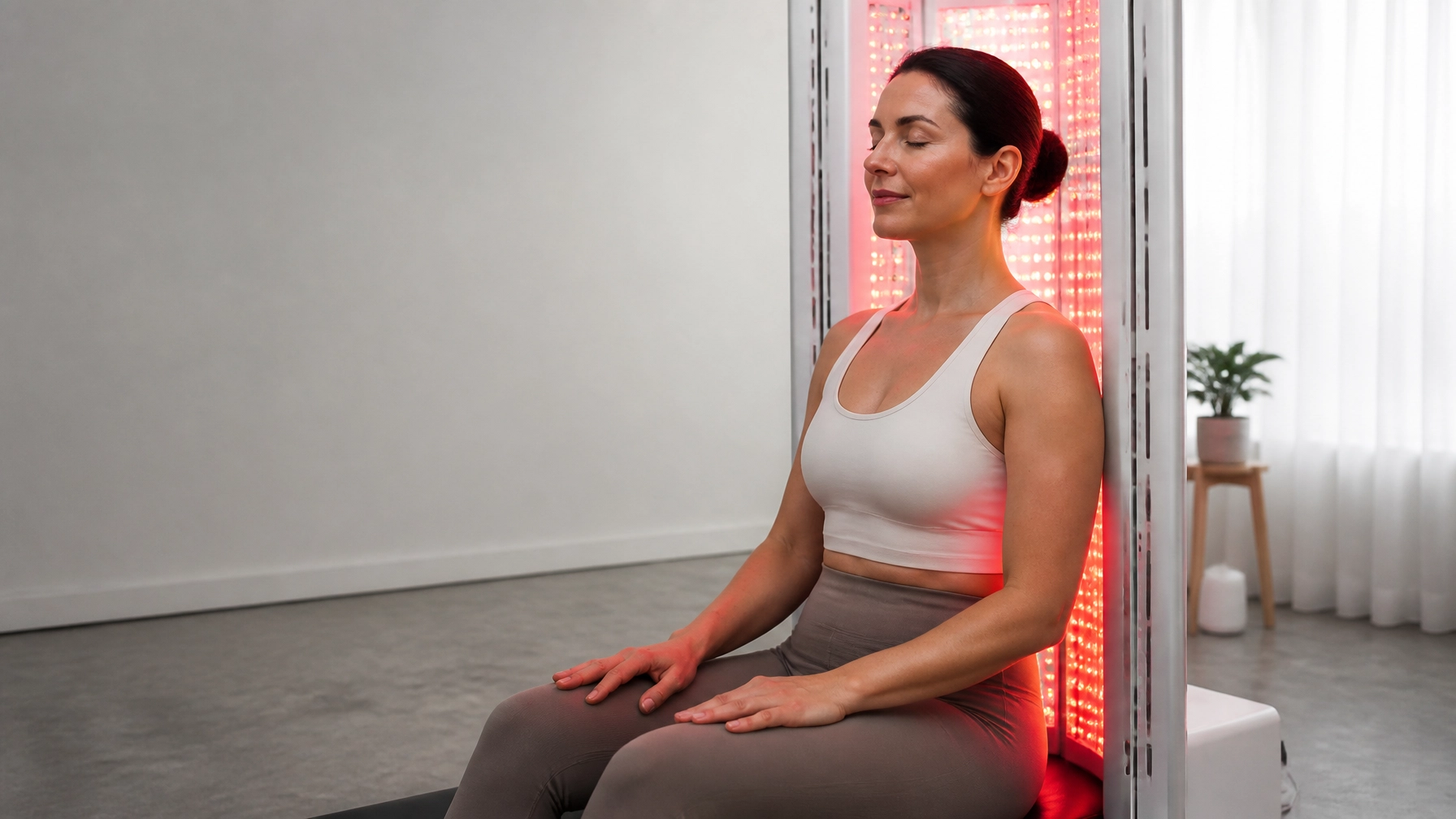
At a professional studio such as Wave Therapy, a full-body red and near-infrared session is generally quiet and non-invasive.
You can typically expect:
- A short discussion about your goals and relevant health information.
- Instructions about positioning, clothing, and eye protection.
- Exposure to red and near-infrared light from a professional system.
- Gentle warmth and a bright red glow.
- No injections, incisions, or required downtime for most people.
A session may take approximately 15 to 20 minutes, depending on the system and protocol. Full-body exposure may be convenient when shoulder discomfort is also accompanied by general muscle soreness or recovery needs.
Some clients also include massage in a broader recovery routine. For massage provider and referral options, visit Massage Quest. You can also explore services through Book a Therapy, Wave Therapy’s sister company for massage.

Who should be cautious with red light therapy?
Speak with a healthcare professional before treatment if you:
- Have a photosensitive condition
- Take medication that increases sensitivity to light
- Have an eye condition or recent eye procedure
- Are pregnant or breastfeeding
- Have active cancer or an unexplained lesion near the treatment area
- Recently had shoulder surgery
- Have an open, infected, or poorly healing wound
- Are being treated for a significant medical condition
Protective eyewear should be used when recommended. Follow the provider’s instructions rather than extending sessions or adding extra treatments.
You should see a doctor or qualified healthcare professional promptly if shoulder pain follows a major injury, causes sudden weakness, includes numbness or tingling, or prevents you from lifting the arm. Seek urgent care for chest pain, shortness of breath, fever, a visibly deformed shoulder, or severe swelling.
Red light therapy should not delay an assessment for persistent or unexplained pain.
The practical answer: can red light therapy help shoulder pain?
It may help reduce pain and support function in some cases of rotator cuff tendinopathy, shoulder impingement, and post-operative recovery. The evidence is less certain for frozen shoulder, and results depend on the device, dose, diagnosis, and consistency.
The most realistic approach is to use red light therapy as one part of a complete plan that may include physiotherapy, exercise, rest, and medical care.
If you are exploring red light therapy in Edmonton, you can learn more about Wave Therapy’s full-body red and near-infrared sessions or review Edmonton booking options when you are ready.
Sources and further reading
- Cleveland Clinic: Red Light Therapy
- Healthline: What Is Red Light Therapy and Is It Safe?
- PubMed: Photobiomodulation for tendinopathy ; systematic review and meta-analysis
- PubMed: Infrared LED and ultrasound for rotator cuff tendinopathy
- PubMed Central: Red and infrared LED therapy for rotator cuff tendinopathy
Health note: This article is for general education only. It does not diagnose shoulder pain or replace medical advice, physiotherapy, or prescribed treatment.

Leave a Reply