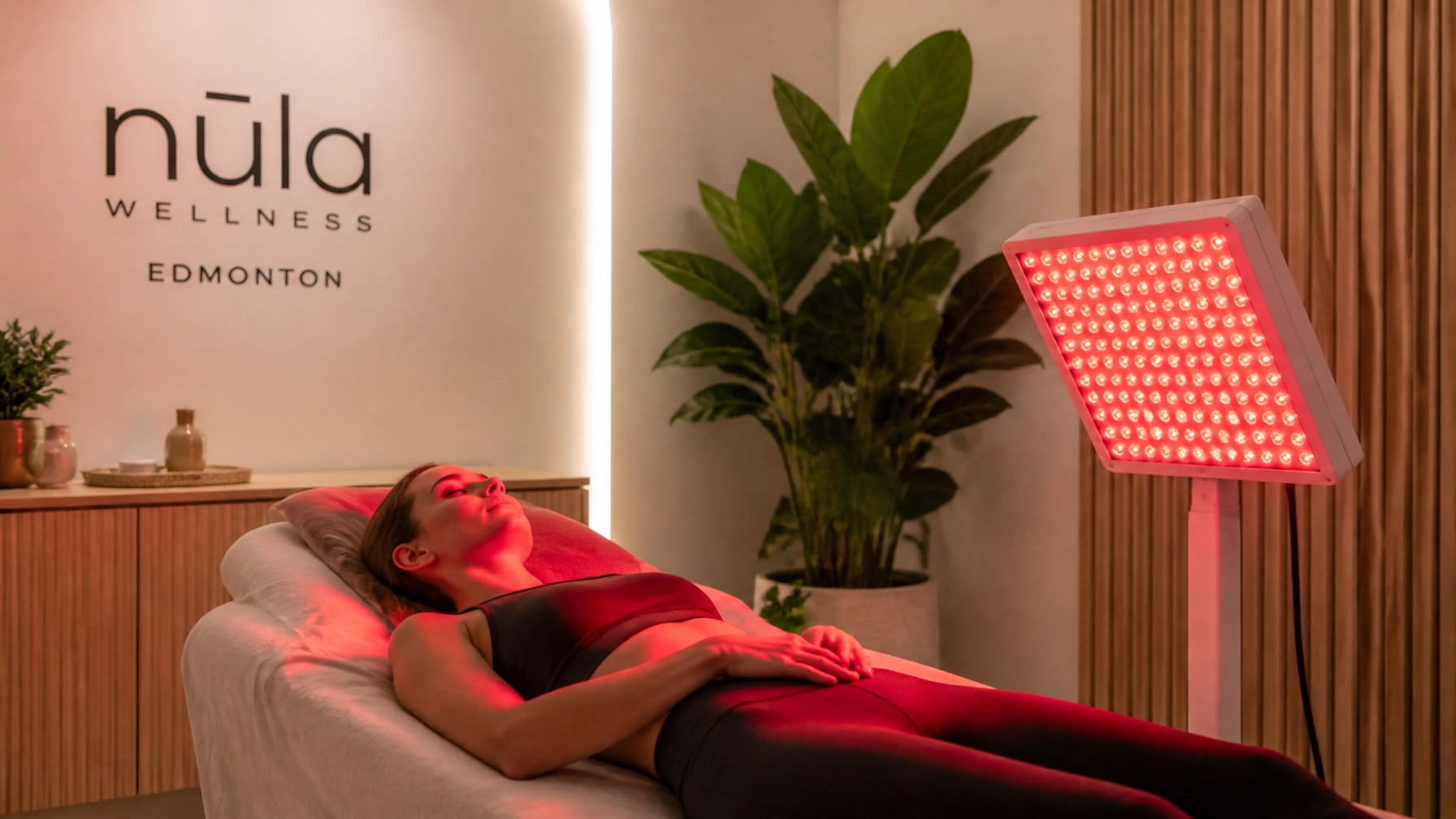
If you’ve spent any time in the Edmonton wellness scene lately, you’ve likely seen the crimson glow of red light therapy (RLT). It’s in boutique spas, professional athletic recovery centers, and even popping up in home offices across Alberta. But with all the buzz comes a fair share of skepticism. Is this just another wellness trend that looks great on Instagram, or is there real science behind the light?
At Wave Therapy, we believe in making wellness accessible and understandable. We know you’re busy, and you want solutions that actually work without the fluff. To help you cut through the noise, we’ve rounded up the top 10 most-searched questions about red light therapy, backed by the latest 2025–2026 research and clinical insights.
1. What exactly is red light therapy?
In plain language, red light therapy, also known as photobiomodulation or low-level laser therapy, uses specific wavelengths of red and near-infrared (NIR) light to help your cells work more efficiently.
Think of it like photosynthesis for humans. While plants use sunlight to create energy, our cells (specifically the mitochondria) absorb these light wavelengths and use them to produce more adenosine triphosphate (ATP). ATP is the "energy currency" of your cells. When your cells have more energy, they can repair themselves faster, reduce inflammation, and function at their best.
2. Is there scientific evidence that it works?
Yes, but it’s important to know where the science stands today. As of 2026, the scientific community has moved past the "hype" phase into rigorous clinical application. According to a 2025 expert consensus review, red light therapy is now considered an evidence-based treatment for several specific conditions, including skin rejuvenation, wound healing, and certain types of chronic pain.
While it isn't a "miracle cure" for everything, researchers have found high-quality evidence for its impact on cellular energy and inflammatory signaling. It’s no longer a question of if it works, but rather how well it works for your specific goals.
3. Can it really help with wrinkles and acne?
Dermatology is one of the areas where red light therapy shines the brightest. By stimulating fibroblasts: the cells responsible for producing collagen: RLT helps improve skin elasticity and reduce the appearance of fine lines.

Recent studies have shown that consistent use can:
- Boost Collagen: Leading to smoother texture and fewer wrinkles.
- Reduce Redness: Great for those dealing with rosacea or general skin sensitivity.
- Clear Acne: When combined with blue light, red light helps reduce the inflammation and sebum production that lead to breakouts.
Many of our clients at Wave Therapy report a noticeable "glow" after just a few sessions, as the light improves circulation and brings a fresh supply of oxygen to the skin's surface.
4. Does it help with muscle recovery and joint pain?
If you’re an athlete at a local Edmonton gym or someone dealing with the stiffness of an Alberta winter, this is for you. Near-infrared light (NIR) penetrates deeper than visible red light, reaching into muscles, nerves, and even bone.
A study featured on Healthline highlights how RLT can reduce oxidative stress in muscle tissue, allowing for faster recovery after a workout. For those with chronic issues like osteoarthritis or fibromyalgia, the anti-inflammatory effects can provide a significant reduction in daily pain levels without the need for invasive procedures.
5. Can red light therapy help with fat loss?
This is one of the most common questions we get, and it’s important to be honest. While RLT is often marketed for "fat melting," the science suggests it is most effective as a supportive tool rather than a standalone weight-loss method.
Some research indicates that red light may temporarily create small openings in fat cells, allowing the contents to be released and processed by the body. However, for visible results in body contouring, it must be paired with a healthy diet and regular movement. At Wave Therapy, we view it as a way to boost your metabolism and support your existing wellness routine.
6. Is it true that it can help with hair growth?
Yes! Low-level light therapy is actually one of the few non-drug treatments for androgenetic alopecia (pattern hair loss) that has solid backing. The light increases blood flow to the scalp and encourages hair follicles to stay in the "growth phase" longer. It won't bring back hair where the follicles have completely died, but for thinning hair, it can lead to measurable increases in hair count and thickness.

7. Is red light therapy safe for my eyes?
When used correctly, RLT is incredibly safe and non-invasive. Unlike tanning beds, it uses no UV light, so there is no risk of skin cancer or burning.
Regarding your eyes: while the light is not "harmful" in the way a laser is, it is very bright. We always recommend wearing the provided protective goggles or simply keeping your eyes closed during a session to avoid eye strain. Interestingly, some emerging research is even looking at low-dose red light for treating age-related macular degeneration, but for general wellness sessions, protection is the standard.
8. How often do I need to do it to see results?
Consistency is the secret sauce. You wouldn't expect a six-pack after one sit-up, and red light therapy works similarly.
- For Skin: Most people see changes in 4–8 weeks with 3 sessions per week.
- For Pain: Some feel relief immediately, but long-term inflammation reduction usually takes about a month of regular use.
- Maintenance: Once you achieve your goals, 1–2 sessions a week is usually enough to maintain the benefits.
9. Professional sessions vs. at-home devices: What’s the difference?
You can certainly buy red light panels for your home, but there are two main reasons people choose professional sessions in a studio:
- Power (Irradiance): Professional-grade systems, like those we use at Wave Therapy, deliver much higher light intensity (irradiance) over a larger area. This means more photons reaching your cells in less time.
- Full-Body Coverage: Most home devices are small panels. A professional session often involves full-body coverage, ensuring you get the systemic benefits (like improved sleep and mood) while targeting specific areas like your face or a sore knee.

10. Who should not use red light therapy?
While RLT is safe for most, there are a few exceptions. You should consult a doctor before starting if you:
- Are pregnant.
- Have active skin cancer in the treatment area.
- Are taking medications that make you highly sensitive to light (like certain antibiotics or Accutane).
- Have a history of seizures triggered by light.
For the vast majority of Edmontonians, red light therapy is a relaxing, warm, and highly effective way to support your body's natural healing processes.
Ready to experience the glow?
Red light therapy isn't magic: it's biology. Whether you’re looking to rejuvenate your skin, bounce back faster from your workouts, or simply find a moment of calm in your week, the science is here to back you up.
If you're in the Edmonton area and curious to see what full-body red light therapy can do for you, we’d love to welcome you. You can learn more about our services or book your first session whenever you’re ready to start your journey.
Leave a Reply