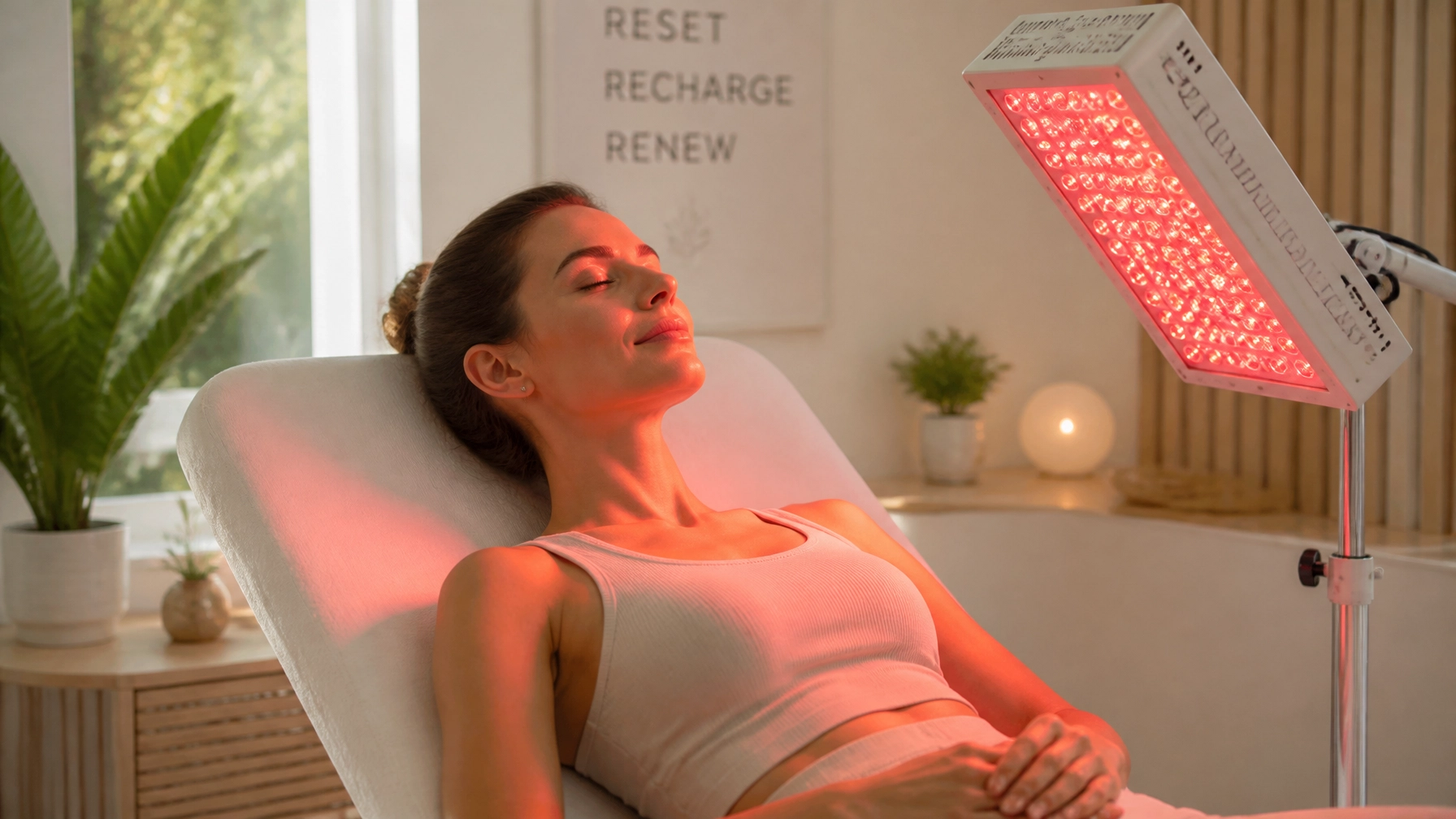
If you have searched for a red light therapy device in 2026, you have probably noticed two very different options: buy a panel or mask for home use, or book sessions at a professional studio in Edmonton.
So, which option is more effective? Is one safer? Which offers better value? And, most importantly, does red light therapy work outside a clinic?
The honest answer is that both options can be useful. The better choice depends on your goal, the quality of the equipment, treatment dose, consistency, and whether you need professional guidance.
The short answer
For many cosmetic, recovery, and general wellness goals, a well-designed home device may be practical and effective when used consistently. However, research on consumer devices is uneven, and not every product delivers clinically relevant wavelengths or doses.
Professional studio sessions may offer:
- Larger treatment areas
- Higher or more consistent output
- Professional positioning and dosing guidance
- Eye-safety screening
- A simpler way to try red light therapy before buying equipment
Home use may offer:
- Greater convenience
- More frequent sessions
- Lower long-term cost for regular users
- Easy maintenance between professional visits
There is no universal winner. The right question is: Which option can deliver an appropriate treatment safely and consistently for your specific goal?
How red light therapy works
Red light therapy, also called photobiomodulation, uses low-level red and near-infrared light. These wavelengths may interact with cellular structures, including mitochondria, which help cells produce energy.
In plain language, the light may support processes involved in:
- Cellular energy production
- Inflammation regulation
- Collagen production
- Local circulation
- Muscle recovery
- Skin repair and rejuvenation
Visible red light is commonly used for more superficial goals, such as skin tone and texture. Near-infrared light is often included in protocols focused on muscles, joints, and deeper tissues.
The biological response depends on more than the colour of the light. Wavelength, irradiance, dose, distance, treatment time, and frequency all matter. A 2026 product guide published through PubMed Central emphasizes that consumers should look for clearly disclosed specifications rather than relying on broad marketing claims.

Does red light therapy work better in a studio?
Professional equipment is often larger and more powerful than consumer equipment. This can be valuable when treating the back, legs, multiple joints, or much of the body at once.
A studio may also reduce some of the guesswork. Staff can help with:
- Positioning
- Treatment distance
- Session duration
- Eye protection
- Frequency
- Whether the treatment is appropriate for your goal
However, “professional” does not automatically mean guaranteed results. Stanford Medicine notes that the effectiveness of red light therapy depends on factors such as wavelength, strength, treatment duration, and frequency. It also points out that clinic treatments are usually more powerful than at-home tools, but that outcomes can still vary.
There is limited direct research comparing the same person using a studio system and a home device under perfectly matched conditions. Instead, studies have examined different devices and protocols separately.
For example, clinical research has reported benefits from both professional and home-use LED systems for skin rejuvenation:
- A controlled trial of red and near-infrared light reported improvements in wrinkles, skin roughness, and collagen density after a structured treatment series. View the study on PubMed.
- A 2025 randomized, sham-controlled study found that a home-use LED and infrared mask improved crow’s-feet measures over 16 weeks. View the study on PubMed.
- A 2020 split-face study of a home-use 637/854 nm LED device reported improvements in facial rejuvenation measures. View the study on PubMed.
These studies are encouraging, but they do not mean every home device performs like a professional system. They show that properly designed home treatments can produce measurable results for some goals.
Is red light therapy at home safer?
Both home and studio treatments can have a favourable safety profile when used correctly. Red light therapy does not use ultraviolet light, and standard photobiomodulation is generally non-invasive.
The main difference is how much responsibility falls on the user.
At home, you need to understand:
- The device’s wavelengths
- Irradiance at the recommended distance
- Session duration
- How often to use it
- Whether eye protection is required
- Any medication or health-related precautions
The 2026 PMC product guide also warns that many consumer products do not clearly disclose irradiance or fluence. Without those details, it is difficult to know whether a product is delivering too little, too much, or an untested dose.
In a studio, the provider can screen for common concerns and help control the treatment parameters. That can be especially helpful when using a high-output system or treating the face and scalp.
Eye safety deserves particular attention. Red light can be very bright, while near-infrared light is invisible. You cannot rely on discomfort or blinking to warn you about invisible light exposure. Read Wave Therapy’s guide to eye protection during red light therapy before using a device near your face.
Speak with a healthcare professional before treatment if you:
- Take photosensitizing medication
- Have a photosensitive condition
- Have an active skin infection or unexplained lesion
- Have significant eye disease
- Are pregnant and considering full-body treatment
- Are receiving cancer treatment
- Have sudden or unexplained pain
Red light therapy should not delay medical assessment for a changing mole, persistent wound, serious injury, or worsening symptoms.
Which option is better value?
The value comparison depends on how often you plan to use red light therapy.
A home device usually involves a larger upfront purchase but little ongoing cost. A studio involves a smaller initial commitment but a fee for every session.
A simple calculation is:
Home device cost ÷ studio session price = approximate break-even point
For example, if a device costs $600 and a studio session costs $60, the basic break-even point is 10 sessions. That does not include electricity, maintenance, warranties, or the value of your time.
Home use may be better value if you:
- Plan to use red light therapy several times per week
- Have a targeted goal, such as facial skin support or one joint
- Have space for a suitable device
- Are comfortable following instructions
- Want long-term maintenance
Studio sessions may be better value if you:
- Are trying red light therapy for the first time
- Want to avoid buying and maintaining equipment
- Need full-body coverage
- Prefer professional support
- Have a more complex goal that requires careful dosing
- Are unlikely to use a home device consistently
A consumer-focused 2026 comparison from Red Light Finder offers additional cost and convenience considerations. Because it is an independent consumer guide rather than a peer-reviewed clinical trial, use it alongside scientific sources and device documentation.

Who is home use best for?
A home red light therapy device may suit an adult who wants to support:
- Skin texture and the appearance of fine lines
- Mild muscle soreness or joint stiffness
- Workout recovery
- Ongoing wellness and maintenance
- Some forms of pattern hair thinning, with appropriate medical guidance
The most important requirement is consistency. A device used three or four times a week is more useful than an expensive device that stays in a cupboard.
Home use may not be the best starting point if you are unsure what is causing your pain, hair loss, skin changes, or inflammation. It is also not ideal if you are tempted to increase treatment time because you want faster results. Photobiomodulation has a dose-response relationship, and more exposure is not automatically better.
What to expect from an Edmonton studio session
At Wave Therapy in Edmonton, a typical session may include:
- A discussion of your goals and relevant health considerations.
- Guidance on positioning and treatment distance.
- Instructions about eye protection.
- Comfortable exposure to red and near-infrared light.
- Gentle warmth and a relaxing, non-invasive experience.
- Recommendations for a consistent treatment schedule.
There are no needles or incisions, and most people can return to their regular activities afterward. Results are usually gradual rather than immediate. Depending on your goal, you may review early changes after several sessions, while skin and hair-related goals generally require longer periods.
For more detail, read Wave Therapy’s guide on how often to use red light therapy and what results timelines may look like.
Could a hybrid approach make sense?
For some people, the best plan is a combination.
You might use professional studio sessions to:
- Understand the treatment
- Establish a suitable routine
- Treat larger areas
- Receive guidance on safety and positioning
Then, you might use a home device for maintenance or targeted areas.
Red light therapy can also complement, rather than replace, other recovery practices. Massage works through hands-on pressure and soft-tissue manipulation, while red light therapy works through light exposure and cellular signalling. If massage is part of your wellness routine, explore MassageQuest or massage services through Wave Therapy’s sister company, Book a Therapy.
The practical takeaway
A quality red light therapy device can be a reasonable home wellness investment, especially for targeted goals and regular users. Professional Edmonton studio sessions may be the better choice when you want larger coverage, calibrated equipment, guidance, or a chance to try the treatment before buying.
The evidence supports cautious optimism: red light therapy may help with selected skin, hair, pain, and recovery goals. But results depend on the device and protocol, and the evidence is not equally strong for every claim.
Before choosing, ask:
- What wavelengths does the device use?
- Is irradiance measured at a clear treatment distance?
- Is the recommended dose disclosed?
- What eye protection is required?
- How many sessions are realistic for my goal?
- How will progress be measured?
If you are curious about red light therapy in Edmonton, you can learn more about Wave Therapy or explore available sessions when you feel ready.
Sources and further reading
- What to Look for in Red Light Therapy: A Product Guide Backed by Science : PubMed Central, 2026
- At-Home Red Light Therapy Devices: Promotion and Recommendation Patterns on Social Media : PubMed Central, 2026
- Red Light Therapy: What the Science Says : Stanford Medicine
- Controlled trial of red and near-infrared light for photoaged skin : PubMed
- Home-use LED and infrared mask for facial rejuvenation : PubMed
- Home-use 637/854 nm LED device for facial rejuvenation : PubMed
- At-Home vs. Studio Red Light Therapy Guide for 2026 ( Red Light Finder)
Leave a Reply