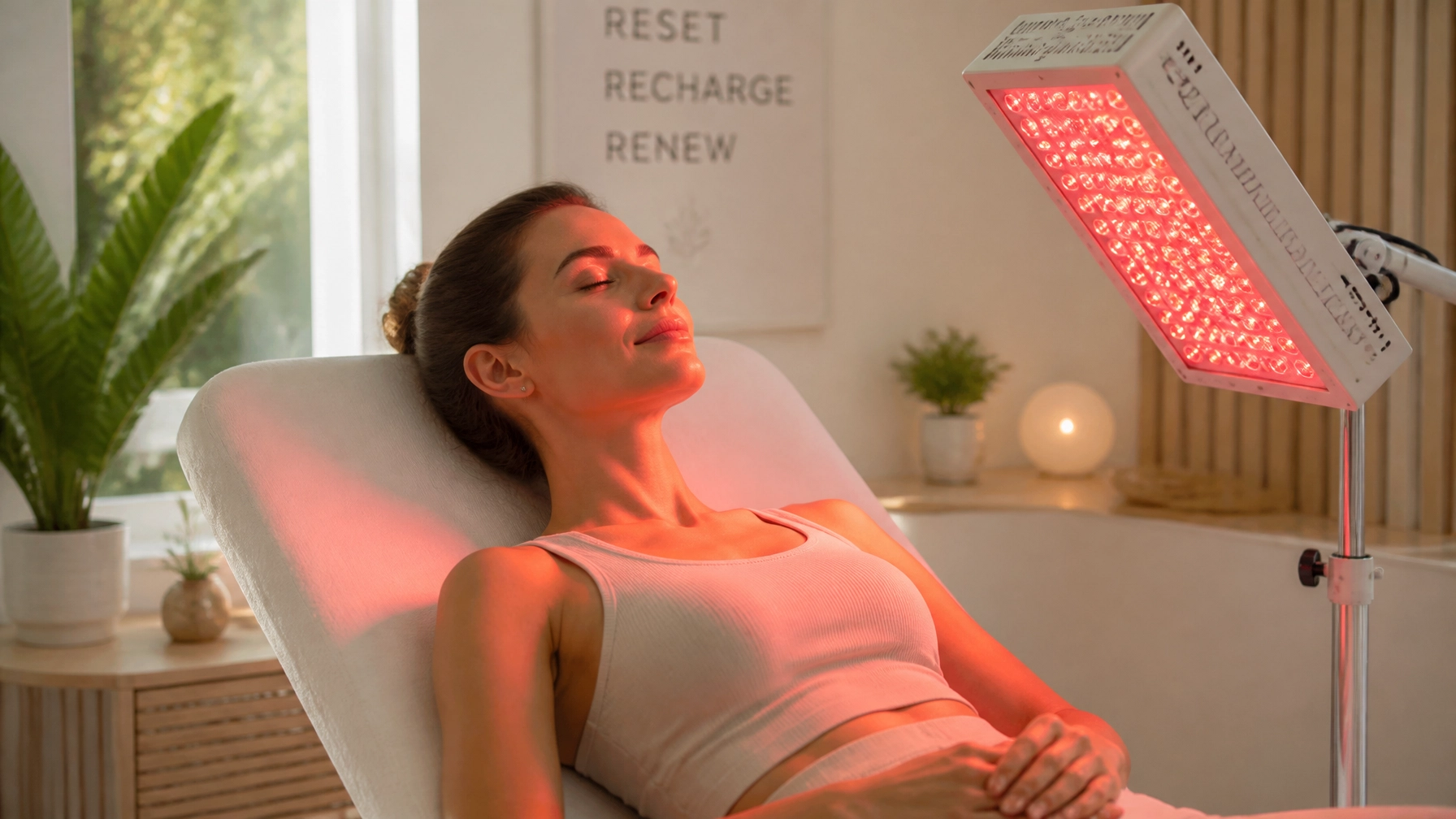
If you are researching red light therapy before and after photos, one question usually comes next: How long does it take to see red light therapy results?
The honest answer depends on your goal. Some people notice changes in comfort or muscle soreness within a few sessions. Skin improvements usually take several weeks. Hair growth and body-contouring goals require more patience.
Red light therapy is not an overnight treatment. It uses low-level red and near-infrared wavelengths to support natural cellular processes. Results tend to build gradually with consistent sessions, realistic expectations, and a treatment plan suited to your needs.
The short answer: expect gradual results
For many clients, 4–8 sessions is a reasonable point to review early progress. This does not mean everyone will see a dramatic transformation by session eight. It means you may begin noticing changes, depending on what you are treating.
A general timeline looks like this:
| Goal | Possible early changes | More meaningful timeline |
|---|---|---|
| Pain and joint comfort | A few sessions to several weeks | 4–8 weeks or longer for chronic concerns |
| Skin and anti-aging | Glow or calmness within a few weeks | 8–12 weeks for collagen-related changes |
| Muscle recovery | Less soreness after several sessions | 2–6 weeks of consistent use |
| Fat loss and body contouring | Subtle changes may take several weeks | Usually 8–12+ sessions; evidence is limited |
| Hair growth | Usually no visible change at first | About 3–6 months, when appropriate |
These are general ranges, not promises. As Cleveland Clinic explains, red light therapy is still an emerging treatment for many uses, and more research is needed to confirm how effective it is for different conditions.
Why red light therapy results are gradual
Red light therapy supports the body’s existing repair and renewal processes. It does not remove damaged tissue or change your appearance instantly.
At a cellular level, red and near-infrared light may interact with mitochondria, which help cells produce energy. This may support processes such as tissue repair, inflammation regulation, circulation, and collagen production.
The timeline depends on the process involved:
- Pain relief may happen sooner because inflammation and nerve signalling can change relatively quickly.
- Skin rejuvenation takes longer because collagen formation and skin remodeling happen over time.
- Muscle recovery depends on the amount of stress placed on the tissue and how well you recover between workouts.
- Hair growth follows a natural growth cycle, so visible changes cannot usually happen within a few days.
- Body contouring is influenced by lifestyle, fluid balance, measurement methods, and the limitations of current evidence.
This is why a single before-and-after photo can be misleading. Lighting, posture, camera angle, hydration, and recent exercise can all affect how results appear.
How long for pain and joint relief?
Pain and joint comfort are among the goals where some people notice early changes.
For mild muscle soreness or stiffness, a person may feel more comfortable after a few sessions. For ongoing joint discomfort, tendon concerns, or chronic pain, results are more likely to develop over several weeks.
A realistic pattern may look like this:
- Sessions 1–3: You may notice temporary relaxation, warmth, or a small improvement in stiffness.
- Sessions 4–8: Changes may become more consistent, such as easier movement or fewer discomfort spikes.
- Weeks 4–8 and beyond: Chronic concerns may require continued treatment and other forms of care, such as exercise, physiotherapy, or massage.
The evidence is promising in some musculoskeletal applications but is not uniform. A systematic review of photobiomodulation for tendinopathy found low to moderate-quality evidence, with outcomes varying between conditions and treatment protocols. You can review the research through PubMed.
Red light therapy should support: not replace: medical assessment for severe, unexplained, or worsening pain.
How long for skin and anti-aging results?
Skin changes are often what people look for when searching red light therapy before and after results.
Some clients report a fresher-looking complexion or temporary glow within the first few weeks. However, changes related to collagen, firmness, fine lines, and texture usually take longer.
A practical expectation is:
- Sessions 1–4: Skin may feel calm, comfortable, or refreshed. Any visible glow may be subtle.
- Sessions 4–8: Some people notice more even-looking tone or improved skin texture.
- Weeks 8–12: Collagen-related changes may become easier to evaluate, especially when sessions are consistent.
Collagen production is not immediate. The skin must produce and organize new structural proteins before changes in firmness or fine lines become visible.
A 2018 systematic review of randomized controlled trials found that LED treatments showed potential for several dermatological uses, while also noting differences in devices and protocols. The review is available through PubMed.
For additional context, see Wave Therapy’s guide to red light therapy for skin rejuvenation and anti-aging.

How long for muscle recovery?
Fitness enthusiasts may notice recovery-related benefits sooner than cosmetic changes.
Red light and near-infrared therapy are commonly explored as part of a recovery routine after strength training, running, sports, or physically demanding work. Some people report less next-day soreness after a few sessions, while others need several weeks before noticing a consistent difference.
Your experience may depend on:
- Workout intensity and frequency.
- Sleep and nutrition.
- The muscle group being treated.
- Whether you use the therapy before or after exercise.
- How consistently you attend sessions.
A 2018 systematic review and meta-analysis examined photobiomodulation for muscular performance and exercise-related fatigue. It found potential benefits, but also highlighted the importance of treatment parameters and study quality. Read the research on PubMed.
If you combine red light therapy with massage, allow each treatment to serve a different purpose. Red light therapy may support cellular recovery, while hands-on massage can help with soft-tissue tension and relaxation. For local options, Edmonton clients can explore Massage Quest or the sister massage company Book a Therapy.
How long for fat loss and body contouring?
This is the area where careful expectations matter most.
Some clinics promote red light therapy for localized body contouring, cellulite, or fat reduction. However, red light therapy should not be considered a replacement for nutrition, exercise, medical weight-management care, or surgical procedures.
Cleveland Clinic notes that there is not enough scientific evidence to support red light therapy for weight loss or cellulite removal. This does not mean every person will see no change. It means the research is more limited and less predictable than it is for some skin or recovery applications.
For body-contouring goals:
- 4–8 sessions: May be too early to judge meaningful changes.
- 8–12 or more sessions: Some protocols use a longer series before evaluating circumference or skin appearance.
- After the series: Results should be assessed with consistent measurements, photographs, and lifestyle context.
Wave Therapy offers Edmonton session and checkout options, but a responsible provider should never promise a specific number of inches or pounds. The goal should be informed, non-invasive support: not a shortcut or miracle result.
How long for hair growth?
Hair growth usually takes the longest to evaluate.
Hair follicles move through growth, resting, and shedding phases. Even if a follicle responds biologically to light, visible changes may not appear until new hair has had time to grow.
A realistic timeline may be:
- First 4–8 sessions: Usually too soon to see visible new growth.
- Weeks 8–16: Early changes may include less shedding or subtle density differences.
- Months 3–6: This is a more realistic window for assessing visible thickening when red light therapy is appropriate.
Low-level light therapy has been studied for certain forms of pattern hair loss. For example, research comparing low-level light approaches for androgenetic alopecia is indexed on PubMed. Results vary, and red light therapy cannot restore follicles that are no longer viable.
If hair loss is sudden, patchy, painful, or accompanied by scalp changes, seek medical advice before starting a cosmetic or wellness treatment.

What affects how quickly you see results?
Two people can follow the same schedule and have different outcomes. Factors that may influence your timeline include:
- Your starting point: A minor strain may respond differently from long-standing joint pain.
- Your goal: Pain, skin, hair, and body contouring follow different biological timelines.
- Treatment consistency: Regular sessions are generally more useful than occasional visits.
- Wavelength and dose: Device output, distance, treatment time, and wavelength all matter.
- Lifestyle: Sleep, nutrition, movement, hydration, stress, and sun protection can influence progress.
- Medical history: Certain conditions and medications may affect suitability or skin sensitivity.
- How you measure progress: Use the same lighting, angle, clothing, and measurement method for before-and-after comparisons.
More time under the light is not automatically better. Photobiomodulation has a dose-response relationship, so follow the provider’s recommended schedule rather than adding extra sessions independently.
What to expect during a Wave Therapy session
At Wave Therapy, clients explore full-body red and near-infrared light sessions for goals such as joint comfort, skin rejuvenation, muscle recovery, and body-contouring support.
A typical visit is:
- A discussion of your goals and any relevant health considerations.
- Guidance on positioning and eye protection when needed.
- Comfortable exposure to the red and near-infrared light system.
- Gentle warmth and relaxation, with no needles or invasive procedures.
- A suggested schedule based on your goal and response.
Red light therapy is generally considered low-risk when used correctly, but it is not appropriate for everyone. Speak with a healthcare professional before treatment if you have a photosensitive condition, take photosensitizing medication, have an active infection or cancer in the treatment area, or are pregnant and considering full-body treatment. Wave Therapy also provides more safety information in its guide on eye protection during red light therapy.
The practical takeaway
So, how long does it take to see red light therapy results?
For many people, 4–8 consistent sessions is a reasonable time to look for early changes. Pain and muscle recovery may be noticed sooner. Skin rejuvenation often needs several weeks. Hair growth usually requires months. Fat loss and body contouring have more limited evidence and should be approached as supportive: not standalone: treatments.
The best before-and-after result is an honest one: measured consistently, reviewed over a realistic timeline, and understood as individual rather than guaranteed.
If you are curious about red light therapy in Edmonton, you can learn more about Wave Therapy or explore available sessions when you are ready.
Sources
- Cleveland Clinic: Red Light Therapy
- Healthline: Red Light Therapy
- Tripodi et al. Systematic review of photobiomodulation for tendinopathy : PubMed
- De Oliveira et al. Photobiomodulation for musculoskeletal pain : PubMed Central
- Jagdeo et al. Systematic review of LED treatments in dermatology : PubMed
- Barikbin et al. Low-level light therapy and hair growth : PubMed
Leave a Reply