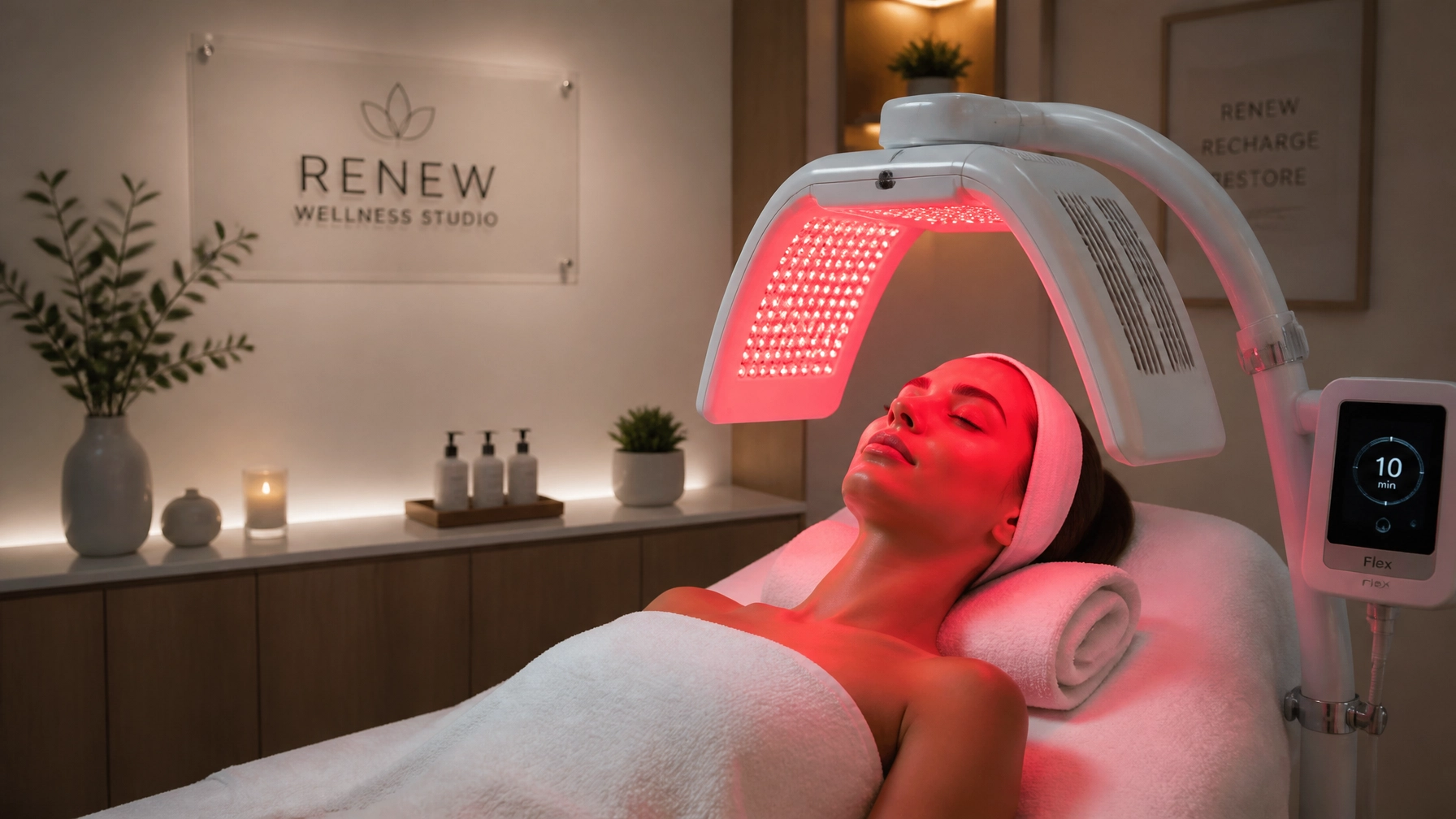
If you have spent any time exploring modern skincare trends, you have likely encountered red light therapy. From at-home LED masks to specialized treatments at local wellness clinics right here in Edmonton, this non-invasive modality has captured the attention of beauty and health enthusiasts alike.
But beneath the wellness industry buzzwords, what does the science actually say in 2026? Are the anti-aging and skin rejuvenation benefits of red light therapy backed by clinical research, or is it just another passing trend?
Let’s examine what current peer-reviewed research, major medical organizations, and dermatological reviews reveal about red light therapy benefits for skin health, how it works at a cellular level, and what you can realistically expect from sessions.
What Is Red Light Therapy?
Medically referred to as photobiomodulation (PBM) or low-level light therapy (LLLT), red light therapy uses specific low-intensity wavelengths of red light (typically between 620 to 700 nm) and near-infrared light (700 to 1100 nm).
Unlike ultraviolet (UV) light: which can damage skin cells, cause sunburns, and increase skin cancer risk: red and near-infrared light are non-thermal and non-ablative. They penetrate the skin without heating or damaging surface tissue, triggering natural biological responses at a cellular level.
At Wave Therapy, clients often explore these treatments as part of a holistic wellness routine designed to support skin vitality, reduce inflammation, and encourage natural cellular repair.

How Red Light Therapy Works: The Cellular Science
To understand why red light therapy is effective for skin rejuvenation, we have to look inside our cells: specifically at the mitochondria.
Mitochondria are often called the powerhouses of our cells because they produce adenosine triphosphate (ATP), the energy currency that drives cellular function and repair. As we age, mitochondrial efficiency declines, leading to slower cell turnover, reduced structural protein production, and visible signs of aging.
When red and near-infrared wavelengths penetrate the skin:
- Cellular Energy Boost: They are absorbed by mitochondrial enzymes (particularly cytochrome c oxidase), significantly increasing ATP production.
- Fibroblast Activation: This surge in cellular energy stimulates fibroblasts: the specialized cells responsible for producing collagen, elastin, and hyaluronic acid.
- Reduced Oxidative Stress: The process decreases free radicals and inflammatory markers, protecting existing collagen from degradation.
As noted by Harvard Health, this biological mechanism helps stimulate cellular repair, reduce inflammation, and boost collagen production, making skin appear stronger, firmer, and more supple over time.
What the 2026 Clinical Evidence Shows
Clinical research into photobiomodulation has matured significantly, moving away from anecdotal claims toward rigorous, placebo-controlled trials. Review data highlights several key benefits for aging and stressed skin:
1. Reduction of Fine Lines and Wrinkles
Multiple clinical trials and dermatological reviews show that consistent exposure to red and near-infrared light leads to measurable reductions in wrinkle depth and facial roughness. By encouraging the synthesis of Type I and Type III collagen, red light therapy helps smooth out expression lines and improve skin laxity.
2. Improved Skin Texture and Tone
Controlled studies report statistically significant improvements in overall skin texture, pore size, and tactile smoothness. Patients dealing with rough-feeling skin or uneven pigmentation often notice a more refined complexion after a structured series of sessions.
3. Enhanced Elasticity and Firmness
Because red light stimulates both collagen and elastin fibers, it supports the skin’s extracellular matrix. This results in better skin elasticity and a firmer, more resilient appearance.
4. Decreased Redness and Inflammation
PBM possesses well-documented anti-inflammatory properties. It can calm erythema (redness), support wound healing, and assist in managing chronic inflammatory skin conditions like mild acne or rosacea.
According to updates from the American Academy of Dermatology (AAD), clinical studies consistently demonstrate subtle to noticeable improvements in fine lines, dark spots, rough texture, and overall radiance with short-term, regular use.

Perspectives From Major Medical Centers
While the clinical data is encouraging, mainstream medical institutions maintain a balanced, objective perspective.
- Cleveland Clinic: The Cleveland Clinic describes red light therapy as an emerging, promising treatment for wrinkles, acne scars, and redness. They emphasize that while cellular mechanisms are well-understood, ongoing research continues to optimize protocols for specific skin conditions.
- Adjunct, Not a Replacement: Major medical bodies agree that red light therapy should be viewed as a valuable complement to: rather than a replacement for: established dermatologic care, medical-grade topicals, and diligent daily sun protection.
What to Expect From a Red Light Therapy Session
If you are considering adding red light therapy to your wellness regimen, understanding the practical workflow can help set realistic expectations:
- Session Duration: Most professional treatments last between 10 to 20 minutes per session.
- Frequency: Clinical protocols typically recommend sessions 2 to 3 times per week over a 4 to 12-week course to achieve optimal cellular remodeling.
- The Sensation: The experience is entirely comfortable, non-invasive, and relaxing. You will feel a gentle, soothing warmth from the light panels, with zero downtime required afterward.
- Visible Results: Because collagen synthesis and cellular repair happen gradually, most individuals notice subtle improvements in skin glow and texture within 4 to 8 sessions, with deeper structural changes manifesting over several months.
For those looking to combine skin rejuvenation with full-body relaxation, pairing light therapy with complementary holistic treatments: such as professional massage therapy coordinated through partners like Book a Therapy or explored via wellness resources at Massage Quest: can provide a comprehensive approach to stress relief and physical well-being.

Safety and Who It Is For
One of the greatest advantages of red light therapy is its exceptional safety profile. Because the wavelengths used are non-ionizing and free of harmful UV rays, there is no risk of skin burns or photo-carcinogenesis under normal operating conditions.
- Who It’s For: Health-conscious adults looking for a natural, non-invasive way to support anti-aging, boost skin elasticity, diminish mild redness, and enhance overall skin vitality.
- Who Should Exercise Caution: Individuals with photosensitivity disorders, those taking photosensitizing medications (such as certain antibiotics or retinoids), or anyone undergoing active treatment for skin cancer should consult a dermatologist or healthcare provider before starting therapy.
Practical Takeaways for Your Skin Health
Red light therapy bridges the gap between relaxation and evidence-based wellness. While it is not a magical cure-all, its ability to stimulate mitochondrial ATP production and boost collagen synthesis makes it a scientifically grounded tool for natural skin rejuvenation.
To maximize your results:
- Prioritize Consistency: Stick to a regular schedule rather than sporadic visits.
- Combine with Healthy Habits: Pair your sessions with adequate hydration, a nutrient-rich diet, and daily broad-spectrum sunscreen use.
- Choose Quality: Ensure you use well-calibrated devices or visit reputable local providers who understand proper dosing and wavelength specificity.
To learn more about how targeted wellness treatments can fit into your routine, or to explore session options tailored to your goals, visit Wave Therapy or check out our latest wellness guides on the Wave Therapy Blog.
Leave a Reply