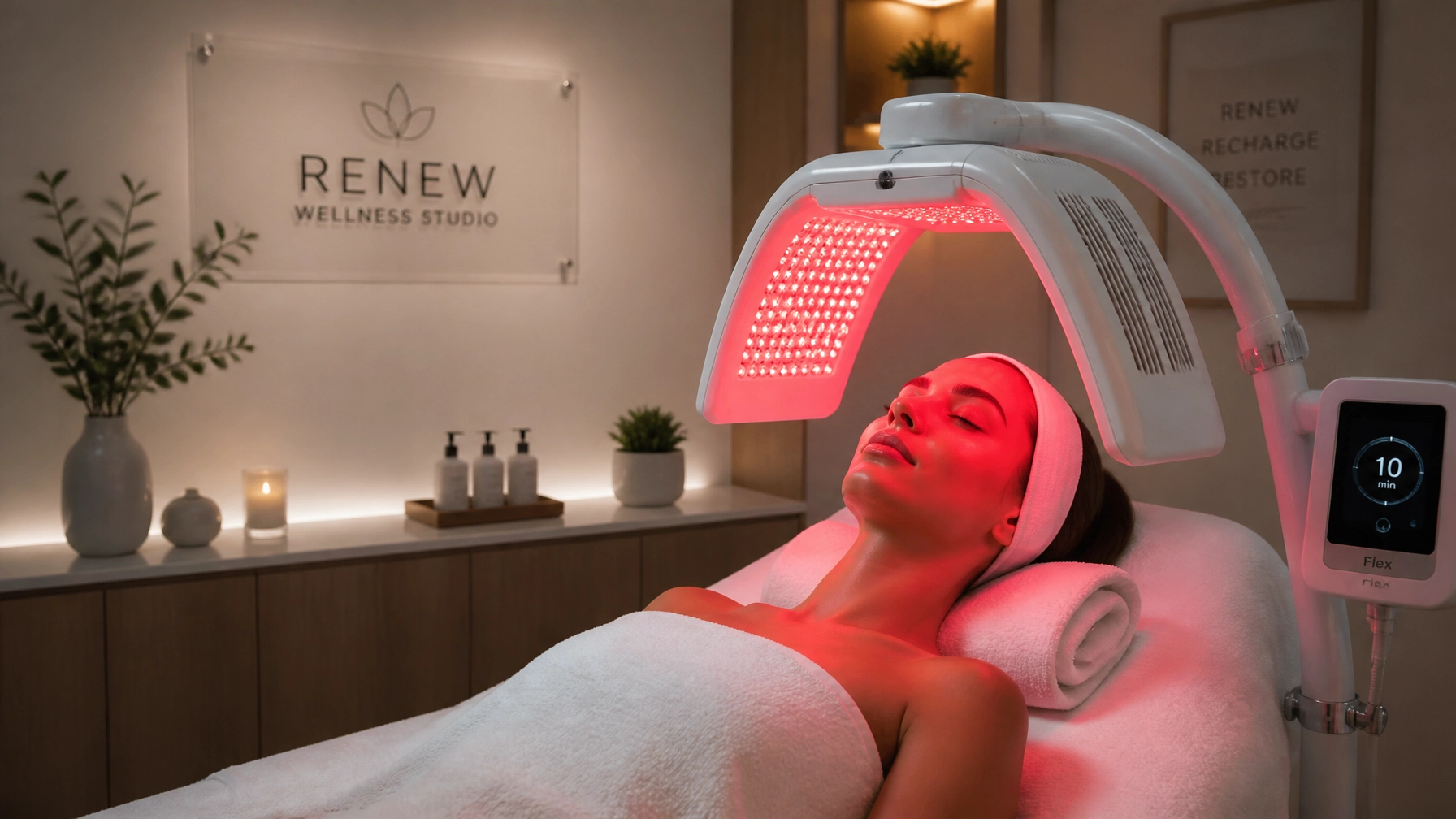
If you are searching for red light therapy for wrinkles, the short answer is: it may help reduce the appearance of fine lines and improve skin texture, but results are gradual and usually modest.
Red light therapy, also called photobiomodulation, uses low-level red and near-infrared light to support cellular activity. It does not resurface the skin like a laser or peel. Instead, it may help your skin’s natural repair processes, including collagen production and inflammation control.
The evidence is promising in 2026, particularly for mild photoaging and crow’s feet. However, red light therapy is best viewed as a consistent skin-support treatment: not a replacement for sunscreen, medical skincare, or professional dermatology care.
How can red light therapy reduce wrinkles?
Wrinkles develop as collagen, elastin, and skin density gradually decline. Sun exposure, inflammation, repetitive facial movement, dryness, and natural aging can all contribute.
Red and near-infrared light may support the skin in several ways:
- Supporting mitochondrial energy: Light is absorbed by cellular structures called mitochondria, which help produce ATP, the energy cells use to function and repair.
- Stimulating fibroblasts: Fibroblasts are skin cells involved in producing collagen and elastin.
- Encouraging collagen production: New collagen can support skin structure, firmness, and elasticity.
- Reducing inflammation: Lower inflammation may help improve redness and support a healthier skin barrier.
- Supporting circulation and repair: Better cellular activity may contribute to improved tone and texture over time.
Cleveland Clinic explains that red light therapy may stimulate collagen, increase fibroblast activity, improve circulation, and reduce inflammation. It also notes that research is still ongoing and that results can vary. Read the full Cleveland Clinic overview of red light therapy.

What does the 2026 clinical evidence show?
Recent research adds useful detail to the conversation.
A multi-centre, randomized, sham-controlled study evaluated a home mask using 630 nm red LED light and 850 nm near-infrared light. Participants used the mask consistently over a 12-week treatment period, with follow-up assessments continuing to 16 weeks.
The researchers reported significant improvements in crow’s feet compared with the sham device. At 12 weeks, independent assessors found improvement in approximately 86% of participants in the treatment group, compared with approximately 17% in the control group.
The study was published in 2025, but it remains particularly relevant to the 2026 discussion because it is one of the more recent controlled studies of a home LED and near-infrared mask. You can review the full paper in PMC’s clinical study of LED and IRED therapy for crow’s feet.
Another randomized controlled trial of photobiomodulation reported an approximately 30% reduction in periocular wrinkle volume in treated areas. This type of result suggests that red light may help with fine lines around the eyes, although the outcome depends on the device, dose, treatment schedule, and individual skin characteristics. The study is available through this peer-reviewed periocular wrinkle RCT.
These findings are encouraging, but they do not mean every red light device will produce the same results.
What does Cleveland Clinic say about red light therapy for the face?
Cleveland Clinic describes LED light therapy as a non-invasive treatment used for concerns such as fine lines, wrinkles, acne, redness, and wound healing.
For facial skin:
- Red light generally penetrates deeper than blue light.
- Near-infrared light penetrates deeper than visible red light.
- Red light may reduce inflammation and stimulate collagen production.
- In-office systems are typically stronger than many home devices.
- A common professional approach involves weekly treatments for about a month, followed by maintenance sessions.
Cleveland Clinic also emphasizes that regular treatments are usually needed. One session may leave the skin looking temporarily refreshed, but collagen remodeling takes longer.
Learn more in its guide to LED light therapy.
What red light therapy may help with
Red light therapy is being used or studied as supportive care for several wellness and skin concerns. The strength of evidence varies by condition and treatment protocol.
- Fine lines and wrinkles
- Crow’s feet and periocular wrinkles
- Uneven skin texture
- Dull-looking skin
- Mild redness and inflammation
- Acne support
- The appearance of acne scars
- Skin rejuvenation and anti-aging
- Collagen and elastin support
- Skin firmness and elasticity
- Wound and tissue healing support
- Muscle recovery after exercise
- Joint discomfort and inflammation
- General muscle soreness
- Cellulite appearance and skin tightening
- Hair growth support in some types of hair loss
- Localized body contouring and fat reduction support
Red light therapy should not be presented as a guaranteed treatment for weight loss, cellulite removal, hair loss, or any medical condition. Cleveland Clinic notes that evidence is not strong enough to support several widely advertised uses, including weight loss and cellulite removal.
When should you expect results?
Wrinkle reduction is not immediate because collagen production and skin remodeling take time.
A realistic general timeline may look like this:
- After one to two sessions: Some people notice temporary warmth, freshness, or a mild glow.
- After four to eight sessions: Subtle improvements in skin tone, hydration, and texture may become easier to notice.
- After six to 12 weeks: Fine lines and firmness may show more meaningful changes with consistent treatment.
- After 12 to 16 weeks: Some clinical studies have reported clearer improvements in crow’s feet and periocular wrinkles.
- After the initial series: Maintenance sessions may help support ongoing results.
Wave Therapy commonly discusses visible changes within four to eight sessions, but this is a general guide rather than a promise. Your age, skin condition, sun exposure, treatment consistency, wavelength, and overall skincare routine all matter.
For more guidance, read our articles on red light therapy for skin rejuvenation and anti-aging, collagen stimulation, and how often to use red light therapy.
Who is red light therapy for?
Red light therapy may be appropriate for adults who want a non-invasive way to support:
- Early or moderate signs of skin aging
- Fine lines and mild wrinkles
- Dull or uneven-looking skin
- Skin firmness and texture
- A low-downtime wellness routine
- Recovery and relaxation alongside other healthy habits
It may be especially appealing to people who prefer gradual, non-surgical approaches. However, it cannot replace an assessment for a changing mole, unexplained rash, persistent wound, sudden skin change, or other medical concern.
Who should be cautious?
Red light therapy is generally considered safe for short-term use when performed correctly. Still, Healthline recommends speaking with a doctor or dermatologist before treatment if you are photosensitive, pregnant, taking medication that increases sensitivity to light, or have another condition that could affect your response. Review Healthline’s current safety guidance on red light therapy.
You should also seek medical advice before treatment if you:
- Have a history of skin cancer or an unexplained skin lesion
- Have an inherited eye disease or recent eye surgery
- Take photosensitizing medication, including some acne treatments or antibiotics
- Have a light-triggered seizure disorder
- Have an active infection or significant skin irritation
- Are pregnant and considering full-body treatment
- Have persistent pain or another symptom that has not been medically assessed
Eye protection and correct device instructions matter. “FDA-cleared” and “FDA-approved” are not interchangeable terms, so check the exact status of any device you use.
What to expect at a Wave Therapy session

At Wave Therapy, a red light therapy session is designed to be calm, comfortable, and non-invasive.
For a skin-focused session, you can generally expect:
- A conversation about your goals and relevant health considerations.
- Clean, makeup-free skin before treatment.
- Guidance on positioning and eye protection.
- Exposure to red and near-infrared light for a scheduled period.
- Gentle warmth without needles, injections, or peeling.
- The ability to return to normal activities afterward for most people.
Many facial sessions take approximately 10 to 20 minutes, depending on the treatment system and plan. Full-body sessions may follow a different schedule.
Red light therapy can also fit into a broader self-care routine. Some clients combine wellness treatments with massage for relaxation or post-workout recovery. Wave Therapy clients can explore Massage Quest, a provider and referral partner, or Book a Therapy, our sister company for massage services.
Practical skincare tips to support wrinkle reduction
Red light therapy works best as one part of a consistent routine.
- Apply broad-spectrum sunscreen every day, including during Edmonton’s bright winter months.
- Use a gentle cleanser and avoid over-exfoliating.
- Keep the skin moisturized, especially in Alberta’s dry climate.
- Follow the recommended treatment schedule rather than adding extra sessions.
- Take progress photos in similar lighting and at similar angles.
- Avoid comparing a professional panel with an unrelated home mask.
- Ask a healthcare professional before combining light therapy with prescription skincare or recent cosmetic procedures.
- Prioritize sleep, hydration, balanced nutrition, and stress management.

The practical answer
So, can red light therapy reduce wrinkles in 2026?
It may reduce the appearance of fine lines and wrinkles, particularly around the eyes, when the right wavelength and dose are used consistently over several weeks. Current research supports a gradual benefit, but results are not guaranteed and are unlikely to match the dramatic claims sometimes seen online.
For people in Edmonton looking for a comfortable, non-invasive addition to their skincare routine, red light therapy may be worth exploring. You can learn more about Wave Therapy or explore available sessions when you are ready.
Leave a Reply