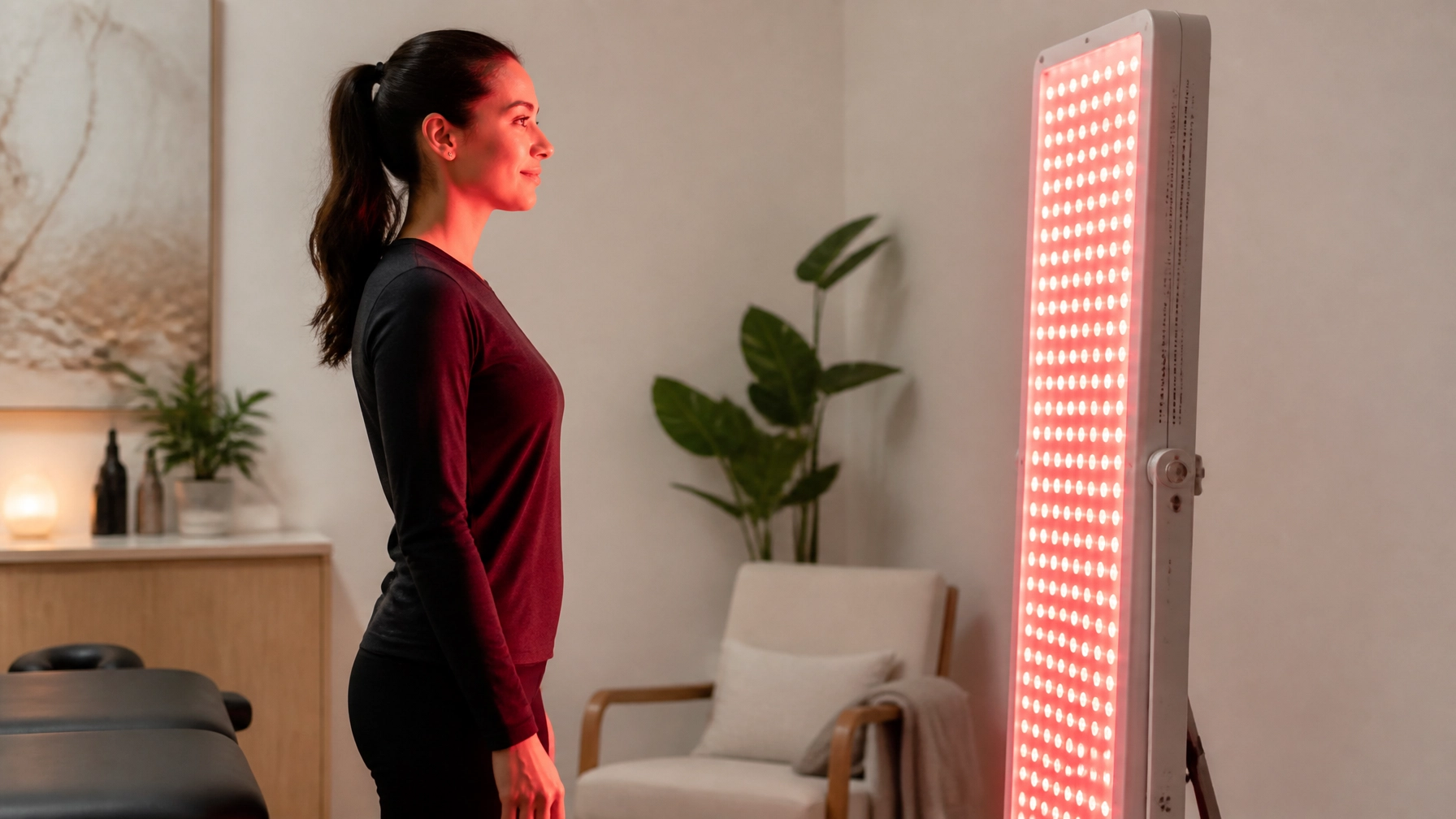
If you are considering red light therapy in Edmonton, one of the first questions to ask is simple: How often should you use red light therapy?
The honest answer is that there is no universal schedule. Frequency depends on your goal, the device being used, treatment intensity, your health history, and how your body responds.
In general, red light therapy works through consistent, repeated exposure rather than occasional visits or cramming several sessions into a short period. Cleveland Clinic notes that treatment is often ongoing, with people typically attending one to three sessions per week for weeks or even months.[^1]
Wave Therapy clients typically begin reviewing visible changes within four to eight sessions, although individual timelines vary.
Is there a one-size-fits-all red light therapy schedule?
No.
Red light therapy, also called photobiomodulation, uses low-level red and near-infrared light to influence cellular activity. Red light is often used for more superficial goals such as skin rejuvenation, while near-infrared light may reach deeper tissues involved in muscle and joint concerns.
However, not every red light therapy system delivers the same:
- Wavelengths.
- Light intensity.
- Treatment area.
- Session duration.
- Distance from the body.
- Recommended frequency.
Healthline also emphasizes that there is no universal prescription for red light therapy. A healthcare professional or qualified provider should help tailor the plan, especially if you are treating pain, a skin condition, hair loss, or another specific concern.[^2]
A schedule that is appropriate for a low-powered home mask may not be suitable for a professional full-body panel. More time under the light is not automatically better.
What do clinics typically recommend?
Across many clinical protocols and wellness settings, a common starting range is:
- Two to three sessions per week.
- Approximately 10 to 20 minutes per treatment area.
- Four to 12 weeks of consistent use.
- A maintenance schedule afterward if you want to support ongoing results.
Some protocols use once-weekly treatment, while others may recommend more frequent sessions. The correct schedule depends on the device and the goal.
The light exposure itself may last 10 to 20 minutes, but a full clinic appointment can take longer because of check-in, positioning, safety instructions, and treatment setup.
Published studies also vary. For example, a controlled study of red and near-infrared light for photoaged skin used treatments twice weekly over approximately 15 weeks.[^3] Other clinical studies use schedules of two or three sessions per week for four to 12 weeks.
This variation is why it is best to follow the instructions provided for the specific system rather than copying a schedule from an unrelated device.

Does frequency differ by goal?
Yes. Different goals often require different timelines and treatment approaches.
How often should you use red light therapy for pain?
For mild muscle soreness or occasional joint stiffness, some people begin with two to three sessions per week.
Red light therapy for pain may be explored as supportive care for:
- Joint stiffness.
- Muscle soreness.
- Tendon discomfort.
- Exercise-related inflammation.
- Some chronic musculoskeletal concerns.
Pain-related protocols vary widely. Some clinical research uses more frequent treatment during an acute phase, while chronic concerns may be treated several times per week over a longer period.
The important point is that red light therapy should not mask a serious or worsening problem. If your pain is severe, unexplained, associated with weakness or numbness, or follows an injury, seek medical advice.
For more information about expected timelines, read Wave Therapy’s guide to how long it takes to see red light therapy results.
How often should you use red light therapy for skin rejuvenation?
For skin tone, texture, fine lines, and collagen support, many professional protocols use two to three sessions per week for at least eight to 12 weeks.
Skin changes are gradual because collagen production and skin remodeling take time. You may notice that your skin feels refreshed or looks slightly more radiant after several sessions. More meaningful changes in texture and firmness usually require a longer series.
The evidence is promising but not uniform. A PubMed-indexed meta-analysis of red light therapy for acne found that results were mixed and that more research is needed to determine how it compares with conventional treatments.[^4]
You can learn more in Wave Therapy’s article about red light therapy for skin rejuvenation and anti-aging.
How often should you use red light therapy for muscle recovery?
Active adults often use red and near-infrared light therapy two to five times per week during demanding training periods, depending on the treatment system and provider guidance.
It may be used:
- Before exercise as part of a broader preparation routine.
- After exercise to support recovery.
- During the following days when delayed-onset muscle soreness develops.
- As part of an ongoing training and recovery plan.
Some people notice less soreness within a few sessions. More consistent recovery support may take several weeks.
Red light therapy should complement, not replace:
- Sleep.
- Hydration.
- Adequate nutrition.
- Progressive training.
- Rest days.
- Physiotherapy or medical care when needed.
Read Wave Therapy’s Edmonton guide to red light therapy for muscle recovery for more detail.

How often should you use red light therapy for fat loss or body contouring?
Body-contouring programs commonly use two to three sessions per week during an initial series, followed by less frequent maintenance sessions.
This goal requires especially realistic expectations. Red light therapy may support localized contouring or the appearance of skin, but it should not be treated as a guaranteed weight-loss solution.
Cleveland Clinic states that there is not enough scientific evidence to support red light therapy as a treatment for weight loss or cellulite removal.[^1] Any changes in circumference should be interpreted carefully and measured consistently.
Red light therapy should not replace nutrition, movement, sleep, or medical weight-management care. For a balanced overview, read Wave Therapy’s weight loss and fat reduction FAQ.
How many sessions before seeing results?
Wave Therapy clients typically see visible results within four to eight sessions, but that is a general guide rather than a guarantee.
The timeline may look different depending on the goal:
| Goal | Possible early changes | More realistic review period |
|---|---|---|
| Muscle soreness | A few sessions | Two to six weeks |
| Joint comfort | Several sessions to a few weeks | Four to eight weeks or longer |
| Skin rejuvenation | Subtle glow or calmness | Eight to 12 weeks |
| Body contouring | Gradual measurement changes | Often eight to 12 or more sessions |
| Hair support | Usually no immediate change | Several months |
Before-and-after photos can be helpful, but lighting, posture, hydration, and camera angle can create misleading comparisons. Use consistent photos, measurements, and symptom tracking when possible.
The most important factor is usually consistency rather than intensity. A regular schedule is more useful than attending several sessions close together and then stopping.
What happens if you use red light therapy too much?
Using red light therapy more often or for longer periods does not necessarily speed up results.
Overuse or incorrect use may increase the chance of:
- Skin irritation.
- Excessive warmth.
- Dryness or redness.
- Headaches.
- Eye discomfort.
- Temporary sensitivity.
- Burns or blistering in cases of significant misuse or equipment problems.
Cleveland Clinic notes that red light therapy appears to be safe when used short-term and as directed, but misuse may damage the skin or eyes.[^1] Healthline also reports that burns and lesions have occurred when devices were used incorrectly, for too long, or while someone fell asleep during treatment.[^2]
Do not double your session length to make up for a missed appointment. Do not add extra daily sessions unless the provider or device manufacturer specifically recommends it.
If you develop persistent redness, pain, swelling, eye symptoms, or unusual skin changes, stop treatment and seek appropriate advice.
When should you not use red light therapy?
Speak with a healthcare professional before starting treatment if you:
- Have a photosensitive medical condition.
- Take medication that increases sensitivity to light.
- Have an active infection, severe rash, or unexplained skin lesion.
- Have cancer or a suspicious lesion in the treatment area.
- Are pregnant and considering full-body treatment.
- Have a significant eye condition or recent eye surgery.
- Have a seizure disorder triggered by light.
- Recently had surgery or have a wound that has not been assessed.
Red light therapy should not delay medical care for sudden pain, a changing mole, a persistent wound, rapid hair loss, or another unexplained symptom.
What should you expect from a Wave Therapy session?
A typical session is comfortable and non-invasive. You may begin with a discussion about your goals and relevant health considerations. The provider can then guide your positioning, treatment distance, session length, and eye-safety precautions.
During treatment, you may notice:
- A visible red glow.
- Gentle warmth.
- A quiet, relaxing environment.
- No needles or incisions.
- No expected recovery period for most people.
Some Edmonton clients also pair red light therapy with massage as part of a broader recovery routine. Red light therapy and massage work differently, but they may complement each other for relaxation and post-workout comfort. You can explore Massage Quest as a provider and referral partner or visit Book a Therapy, Wave Therapy’s sister company for massage.
The practical answer
So, how often should you use red light therapy?
For many people, a reasonable starting point is two to three sessions per week for four to 12 weeks, with session duration and frequency adjusted for the device and goal. Cleveland Clinic’s broader guidance of one to three sessions weekly reflects the fact that treatment plans vary.
Pain, skin, muscle recovery, and body-contouring goals do not follow the same timeline. Results are usually gradual, and consistency matters more than cramming in extra sessions.
If you are exploring red light therapy in Edmonton, learn more about Wave Therapy or explore available sessions when you are ready.
Leave a Reply