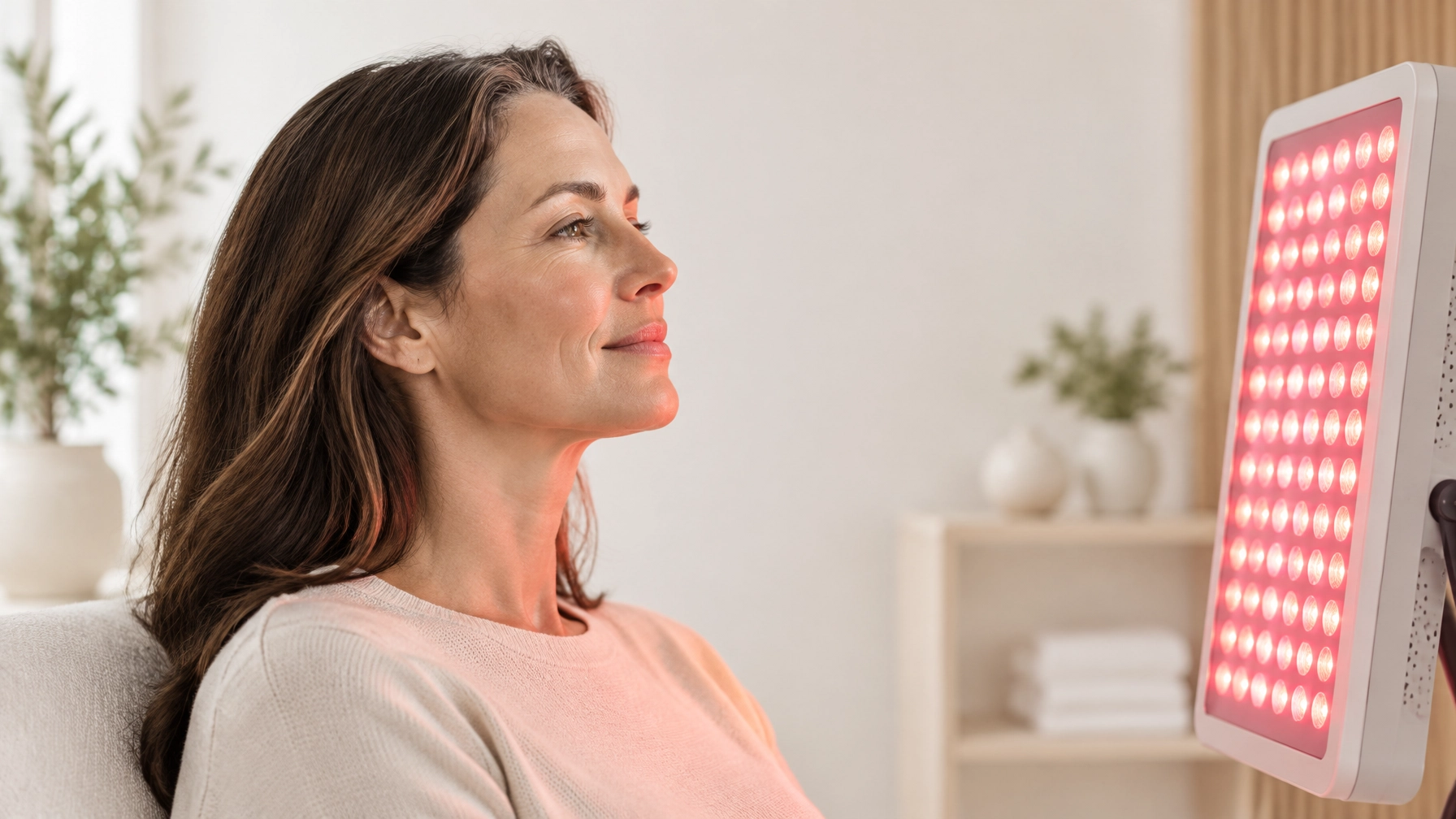
GLP-1 medications such as Ozempic, Wegovy and Zepbound have changed how many people approach weight management. They have also created new questions about loose skin, facial volume, muscle loss and recovery.
Can red light therapy help?
The honest answer is that it may support skin quality, collagen production and post-exercise recovery. It cannot prevent every change that comes with weight loss, replace surgery or restore facial fat that has already been lost.
This guide explains what people are asking in 2026 and where red light therapy may fit into a broader, medically supervised wellness plan.
Important: This is general wellness information, not medical advice. If you take or are considering a GLP-1 medication, speak with your prescribing clinician about nutrition, exercise, side effects and treatment suitability.
Why can rapid weight loss cause loose skin?
When body fat decreases quickly, the skin may not retract at the same pace. This can be more noticeable after significant weight loss.
Skin firmness depends partly on collagen and elastin:
- Collagen provides structure, strength and support.
- Elastin helps skin stretch and return toward its original shape.
- Age, genetics, sun exposure, smoking, nutrition and the amount and speed of weight loss can affect how well skin adapts.
For a plain-language overview, Cleveland Clinic explains that collagen helps give skin its structure and support, and natural collagen production declines with age.
Healthline explains that rapid weight loss while taking Zepbound does not directly “cause” loose skin. Rather, the reduction in fat beneath the skin can leave the skin with less volume to cover. Collagen and elastin fibres may also have difficulty reorganizing quickly. Read Healthline’s guide to preventing loose skin while taking Zepbound.
Strength training, adequate protein, hydration and a steady approach to weight loss may help support body composition. They cannot guarantee that loose skin will not occur.
What is “Ozempic face”?
“Ozempic face” is an informal term for facial changes that may happen after significant or rapid weight loss. People may notice:
- Less fullness in the cheeks or temples
- A more hollow or gaunt appearance
- Fine lines appearing more visible
- Skin that looks looser over the new facial contours
The key point is that this is not only a skin problem. It can involve loss of the fat volume that previously supported the face.
Healthline’s overview of Ozempic face notes that facial volume may improve somewhat as weight stabilizes and skin gradually adapts. However, red light therapy cannot replace lost facial fat. It cannot recreate cheek volume, correct deep hollows or provide the same result as fillers, fat transfer or a surgical lift.
A PubMed-indexed discussion of nonsurgical aesthetic treatment for GLP-1-related weight loss changes provides additional context for people considering professional cosmetic options.
Can red light therapy tighten skin after GLP-1 weight loss?
Red light therapy, also called photobiomodulation, uses low-level red and near-infrared light. These wavelengths may influence cellular activity and support natural repair processes.
For skin, the proposed benefits include:
- Supporting fibroblast activity
- Encouraging collagen production
- Helping reduce local inflammation
- Improving the appearance of fine lines and texture
- Supporting skin elasticity and overall tone
Cleveland Clinic’s red light therapy overview describes the treatment as promising but still an emerging therapy. It also notes that more clinical research is needed for many of the uses promoted online.
Red light therapy may make mildly lax or crepey skin look healthier and somewhat firmer over time. It is less likely to create a meaningful change when there is a large amount of hanging excess skin. In those cases, a consultation with a dermatologist or plastic surgeon may be more appropriate.
What red light therapy may help support
The strength of evidence varies by condition, device and treatment plan. Red light therapy may support:
- Fine lines and wrinkles
- Mild skin laxity
- Uneven skin texture
- Dull-looking skin
- Mild redness and inflammation
- Acne support
- The appearance of acne scars
- Skin rejuvenation and anti-aging care
- Collagen and elastin support
- Skin firmness and elasticity
- Wound and tissue healing support
- Muscle recovery after exercise
- General muscle soreness
- Joint discomfort and inflammation
- Localized pain and recovery support
- The appearance of cellulite
- Skin tightening as part of body-contouring care
- Localized body-contouring and fat-reduction support
- Hair-growth support in some types of hair loss
These uses should not be confused with guaranteed cures or systemic weight loss. For balanced discussions of body contouring, see Wave Therapy’s posts on red light therapy and weight loss, red light therapy for fat loss and body contouring, and whether red light therapy can reduce cellulite.

Can red light therapy preserve muscle while taking a GLP-1?
This is an important distinction: red light therapy may support muscle recovery, but it has not been proven to preserve muscle mass on its own during GLP-1 weight loss.
Muscle retention depends more directly on:
- Sufficient protein and overall nutrition
- Progressive resistance training
- Appropriate calorie reduction
- Hydration
- Sleep and recovery
- Medical monitoring when needed
GLP-1 medications can reduce appetite significantly. That may make it harder for some people to consume enough protein and nutrients. The Cleveland Clinic’s GLP-1 question-and-answer podcast discusses the importance of nutrition and strength training, as well as the risk of losing lean muscle when someone eats too little or becomes inactive.
Red light therapy may still be useful as a recovery tool. Some people use it after strength training to support comfort, reduce the feeling of soreness and help them stay consistent with movement. However, current evidence is not strong enough to say that it prevents GLP-1-associated muscle loss or improves strength gains.
For a practical comparison, read Wave Therapy’s guide to red light therapy versus massage for muscle recovery.
Should you wait until you reach your goal weight?
Not necessarily.
Some people choose to begin red light therapy during weight loss to support skin quality and exercise recovery. Others prefer to wait until their weight is stable so they can better evaluate the final appearance of their skin.
A reasonable approach is:
- Discuss the plan with your prescribing clinician.
- Begin only if your health history and medications make light therapy appropriate.
- Think of treatment as skin and recovery support, not loose-skin prevention.
- Reassess your goals as your weight and body composition change.
- Consider waiting on major cosmetic decisions until your weight has been stable for a period recommended by your healthcare team.
Starting early does not guarantee that loose skin will be avoided. Starting later does not mean red light therapy cannot support skin quality.
What should you expect from a session?
At Wave Therapy in Edmonton, red light sessions are designed to be non-invasive and comfortable. Depending on the treatment area and system, you may experience:
- A short consultation about your goals
- Guidance on positioning and eye protection
- Exposure to red and near-infrared light
- Gentle warmth or relaxation
- No needles, injections or peeling
- Little or no downtime for most clients
Skin changes and recovery benefits are gradual. Some people notice a temporary glow or relaxed feeling early on. More meaningful changes in texture, firmness or comfort generally require consistent sessions over weeks to months.
A practical expectation is to consider an initial series, then review how your skin and recovery feel. Wave Therapy commonly discusses visible changes within several sessions, but individual outcomes vary.
For more context, explore the Wave Therapy article on red light therapy for wrinkles and the broader Wave Therapy blog.
Who should avoid or postpone red light therapy?
Red light therapy is generally considered low risk when used correctly, but it is not suitable for everyone.
Speak with a healthcare professional before treatment if you:
- Take medication that increases sensitivity to light
- Have a photosensitive condition
- Have a history of skin cancer or an unexplained lesion
- Have an inherited eye condition or recent eye surgery
- Have an active infection or significant skin irritation
- Are pregnant and considering full-body treatment
- Have a light-triggered seizure disorder
- Have persistent pain that has not been medically assessed
Cleveland Clinic’s LED light therapy guidance recommends following device instructions and protecting the eyes when appropriate. The same source notes that long-term safety data remain limited.
If you are dealing with significant post-weight-loss tightness, discomfort or body-image concerns, red light therapy should not delay medical, dermatological or surgical advice.
How does massage fit into a post-weight-loss plan?
Massage and red light therapy work differently. Light therapy may support cellular recovery and skin quality, while massage can help with relaxation, muscle tension and the sensation of stiffness.
Some people choose to combine both as part of a broader recovery routine. For post-workout or post-weight-loss bodywork, MassageQuest is a provider and referral partner. You can also explore massage services through Book a Therapy, Wave Therapy’s sister company.
The goal is not to stack every treatment. It is to choose supportive options that fit your health needs, budget and schedule.

The practical answer
Red light therapy may help improve skin texture, collagen support and mild laxity after GLP-1 weight loss. It may also help some people manage post-exercise soreness and stay comfortable while building a resistance-training routine.
It cannot:
- Guarantee prevention of loose skin
- Remove large amounts of hanging excess skin
- Restore lost facial fat or volume
- Replace fillers, surgery or medical care
- Preserve muscle without adequate protein and resistance training
- Replace your prescribing clinician’s advice
The most realistic plan combines medical supervision, steady weight management, adequate nutrition, strength training, sleep and consistent skin and recovery care.
If you are in Edmonton and curious about a non-invasive option, you can learn more about Wave Therapy or explore available sessions when you are ready.
Sources and further reading
- Cleveland Clinic: Red Light Therapy
- Cleveland Clinic: LED Light Therapy
- Cleveland Clinic: Collagen
- Cleveland Clinic Health Essentials: Answering Your Questions About GLP-1s
- Healthline: Preventing Loose Skin While Taking Zepbound
- Healthline: Ozempic Face
- PubMed: Nonsurgical Aesthetic Treatment of the Face and Neck in GLP-1 Receptor Agonist Weight Loss Patients
- PubMed: Skin Changes Due to Massive Weight Loss — Histological Changes and the Causes of the Limited Results of Contouring Surgeries
Leave a Reply