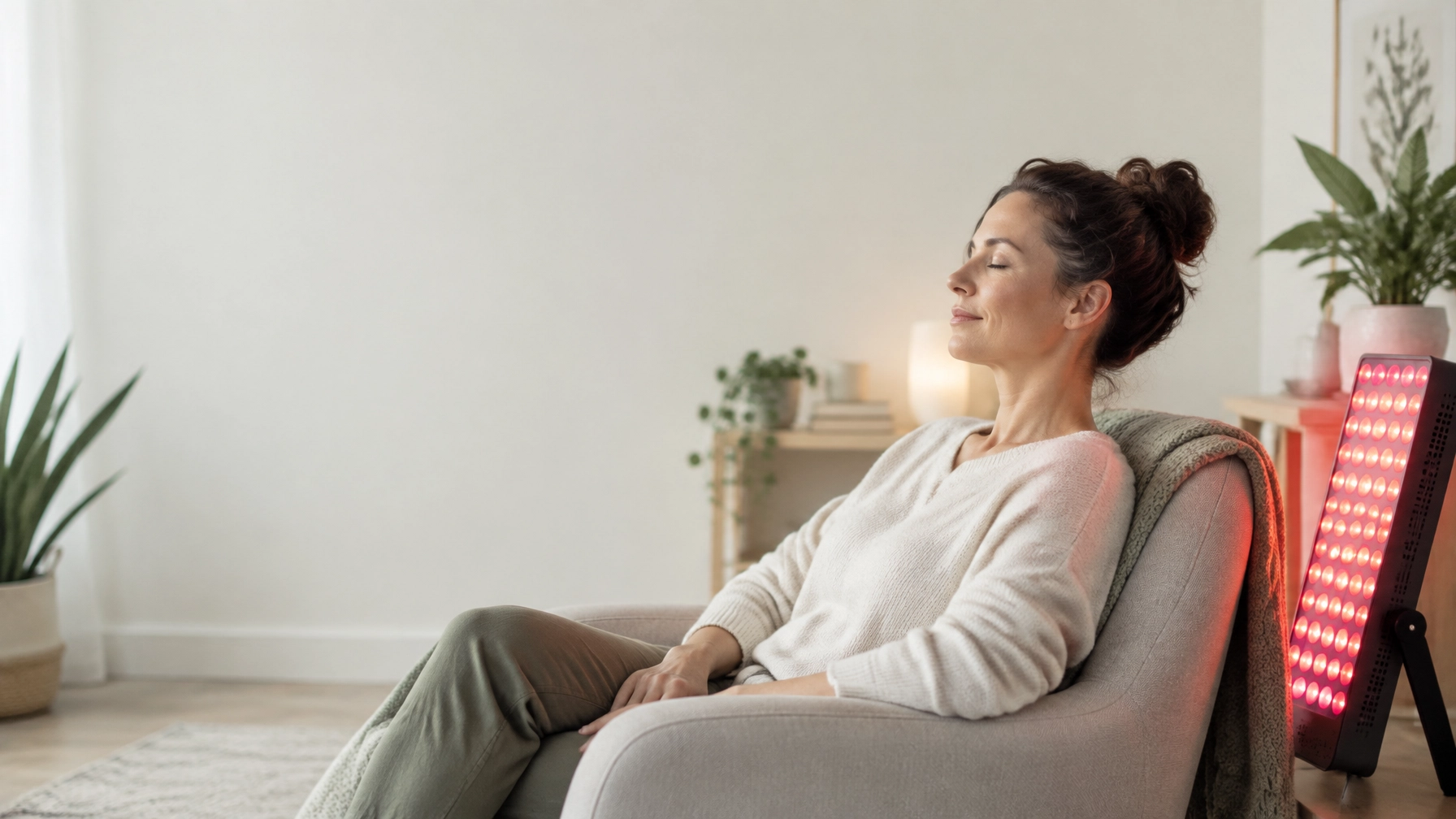
As Edmonton moves from fall into winter, many people notice more neck tension, screen-related strain, disrupted sleep, and recurring headaches. Cold weather, indoor work, reduced daylight, stress, and long hours at a computer can all contribute.
So, can red light therapy help migraines or tension headaches?
The honest answer is that red light therapy is not an acute migraine treatment, and it should not be used during an active migraine attack. Light sensitivity, or photophobia, is a common migraine symptom. Bright or unfamiliar light may worsen symptoms when an attack is already underway.
For tension-type or cervicogenic headaches linked to tight neck and shoulder muscles, red light therapy may be a reasonable complementary option. However, headache-specific research is still preliminary and mixed.
What is the difference between a migraine and a tension-type headache?
A migraine is a neurological condition, not simply a headache caused by tight muscles. It may involve:
- Throbbing or pulsing pain
- Nausea or vomiting
- Sensitivity to light, sound, or smells
- Visual changes or aura
- Pain lasting several hours or even days
The Cleveland Clinic migraine overview explains that migraines can last from four to 72 hours and may become worse with movement, bright light, noise, or strong odours.
A tension-type headache is often described as pressure, tightness, or a band-like sensation around the head. It may be associated with:
- Tight neck and shoulder muscles
- Jaw clenching
- Poor desk posture
- Stress
- Prolonged screen use
- Reduced movement
A cervicogenic headache begins in the neck or upper spine and refers pain into the head. It may be connected to restricted neck movement, irritated joints, or muscular trigger points.
This distinction matters. Red light therapy cannot diagnose the cause of a headache. Its potential role is more plausible when neck, shoulder, or jaw tension is part of the problem.

Can red light therapy treat an active migraine?
No. Red light therapy should not be presented as a way to stop an active migraine.
If you are currently experiencing a migraine, the safer approach is to follow your healthcare provider’s migraine plan. This may include prescribed medication, rest in a dark and quiet room, hydration, and other strategies recommended for you.
Do not use a red light panel, light mask, or similar device during an attack simply because it is marketed for pain relief. The light itself may be uncomfortable or aggravate photophobia.
Red light therapy may be considered, if appropriate, between attacks as part of a broader wellness or pain-management plan. It should not replace prescribed migraine medication or medical care.
What does the red light therapy science say about headaches?
Research into photobiomodulation for primary headaches is still developing.
The systematic review, “Photobiomodulation for the Treatment of Primary Headache: Systematic Review of Randomized Clinical Trials”, examined randomized clinical trials involving conditions such as migraine and tension-type headache.
Some trials reported improvements in headache pain, frequency, or duration. Other trials found no clear advantage over sham treatment or standard care. The review identified important limitations, including:
- Small study groups
- Different wavelengths and treatment doses
- Different treatment locations
- Short follow-up periods
- Risk of bias in several studies
- Inconsistent outcome measures
Overall, the evidence was considered low certainty. More high-quality, adequately powered trials are needed before photobiomodulation can be considered a routine headache treatment.
A 2026 peer-reviewed study published in Lasers in Medical Science also reported a measurable effect in a wearable low-level laser therapy protocol. In that small study, 650-nanometre light was applied at the GV20 and EX-HN1 acupoints and was associated with reduced deep pressure pain on the temporal head compared with sham treatment. The result is interesting, but it was a small study and still needs replication before broader conclusions can be made.
(Lasers in Medical Science study)
How might red light therapy help neck-related headaches?
The proposed mechanism is called photobiomodulation. In simple terms, red and near-infrared wavelengths may influence how cells produce and use energy.
Researchers are studying whether light may:
- Support mitochondrial energy production
- Influence local inflammation
- Modulate neuroinflammation
- Improve circulation around treated tissue
- Affect pain-signalling pathways
- Relax tight neck and shoulder muscles
- Support recovery in irritated soft tissue
These effects may be more relevant to muscular neck pain and cervicogenic headache than to migraine itself.
The evidence for red light therapy for neck pain is stronger in some musculoskeletal conditions than it is for primary headache disorders. If you want to compare modalities, you can also read our article on red light vs infrared light therapy. Even there, results depend on the condition, wavelength, dose, treatment area, and the person receiving care.
What conditions and treatments may red light therapy help with?
The following are general areas where red light or near-infrared therapy may provide wellness or supportive benefits. They are not a promise of migraine relief or a substitute for diagnosis.
- Joint pain
- Muscle soreness
- Neck pain
- Back pain
- Inflammation
- Muscle recovery
- Sports recovery
- Wound healing support
- Skin rejuvenation
- Collagen production
- Uneven skin tone
- Fine lines and wrinkles
- Cellulite appearance
- Skin tightening
- Fat reduction support
- Metabolism support
- Hair growth support
- Mild surface-level skin irritation
- Recovery after physical activity
For headaches specifically, the most reasonable complementary use may be for associated neck, shoulder, or jaw tension rather than for treating the neurological migraine process itself.
If jaw clenching is part of your pattern, you may also want to read about red light therapy and TMJ or jaw pain. Massage may be another useful part of a broader plan for neck and shoulder tension. Wave Therapy clients can explore headache-adjacent massage support through Massage Quest or Book A Therapy.
How often should you use red light therapy for headache-related tension?
There is no universally proven schedule for migraines or tension headaches. Research protocols vary, and a treatment plan should be based on the condition being addressed.
As a practical starting point, many evidence-based photobiomodulation protocols use approximately three to five sessions per week. Results, when they occur, usually develop gradually over four to 12 weeks, rather than after one session.
A reasonable way to assess progress is to track:
- Number of headache days
- Pain intensity
- Neck stiffness
- Jaw tension
- Use of rescue medication
- Sleep quality
- Screen time and posture
- Possible weather or stress triggers
If nothing changes after approximately eight to 12 weeks, reassess the plan with a healthcare professional rather than simply increasing the dose or session length.
At Wave Therapy, a session is designed to be calm and non-invasive. Our full-body systems use red and near-infrared wavelengths, and treatment plans should be followed according to the equipment guidance and individual suitability. A session is not intended to replace neurological assessment or migraine care.

What are the red light therapy side effects and safety concerns?
Red light therapy is generally well tolerated when used correctly, but it is not risk-free. Possible side effects may include:
- Temporary redness
- Mild irritation
- Eye strain
- Headache or nausea after overexposure
- Skin darkening or pigmentation changes
- Burns or blistering from misuse or faulty equipment
Healthline’s red light therapy safety overview notes that eye protection may be needed and that “FDA-cleared” does not automatically mean a device has been proven effective for every condition.
Speak with a healthcare professional before treatment if you:
- Are pregnant or breastfeeding
- Take photosensitizing medications
- Have an active or recently treated cancer
- Have a light-sensitive condition
- Have an eye condition
- Have a seizure history or photosensitive epilepsy
- Plan to use light therapy alongside prescribed migraine medication
Do not stop, change, or delay prescribed migraine treatment without speaking with the prescribing clinician.
When does a headache require medical assessment?
Seek urgent medical help for:
- A sudden, severe “worst ever” headache
- A headache with fever and a stiff neck
- A headache after a head injury
- A new headache that begins after age 50
- A headache with weakness, numbness, vision changes, confusion, or trouble speaking
- A progressively worsening headache or a significant change in your usual pattern
- A headache during pregnancy, especially with high blood pressure
These symptoms should not be managed with red light therapy or massage first. They require medical evaluation.
What should Edmonton residents take away?
Red light therapy may be worth discussing as a complementary option for neck tension, muscle soreness, or cervicogenic headache patterns. It is not an acute migraine treatment, and it should not be used during an active migraine attack, particularly when light sensitivity is present.
The most realistic approach is to:
- Get recurring or changing headaches assessed
- Continue your prescribed migraine plan
- Avoid light therapy during an active attack
- Address posture, screen breaks, hydration, sleep, and stress
- Consider physiotherapy, exercise, or massage for muscular tension
- Use red light therapy consistently and cautiously if medically appropriate
- Reassess after eight to 12 weeks if symptoms do not improve
You can learn more about Wave Therapy in Edmonton and explore sessions when ready. There is no pressure to start treatment, and a healthcare professional should remain part of the plan for migraine care.
Sources
- Gomes, A. O., et al. “Photobiomodulation for the Treatment of Primary Headache: Systematic Review of Randomized Clinical Trials.” Life, 2022. PubMed
- “Wearable low-level laser therapy at GV20 and EX-HN1 for headache-related pain sensitivity.” Lasers in Medical Science, 2026. Springer
- Cleveland Clinic. “Migraine Headaches.” Medical overview
- Healthline. “What Is Red Light Therapy and Is It Safe?” Safety overview
Leave a Reply