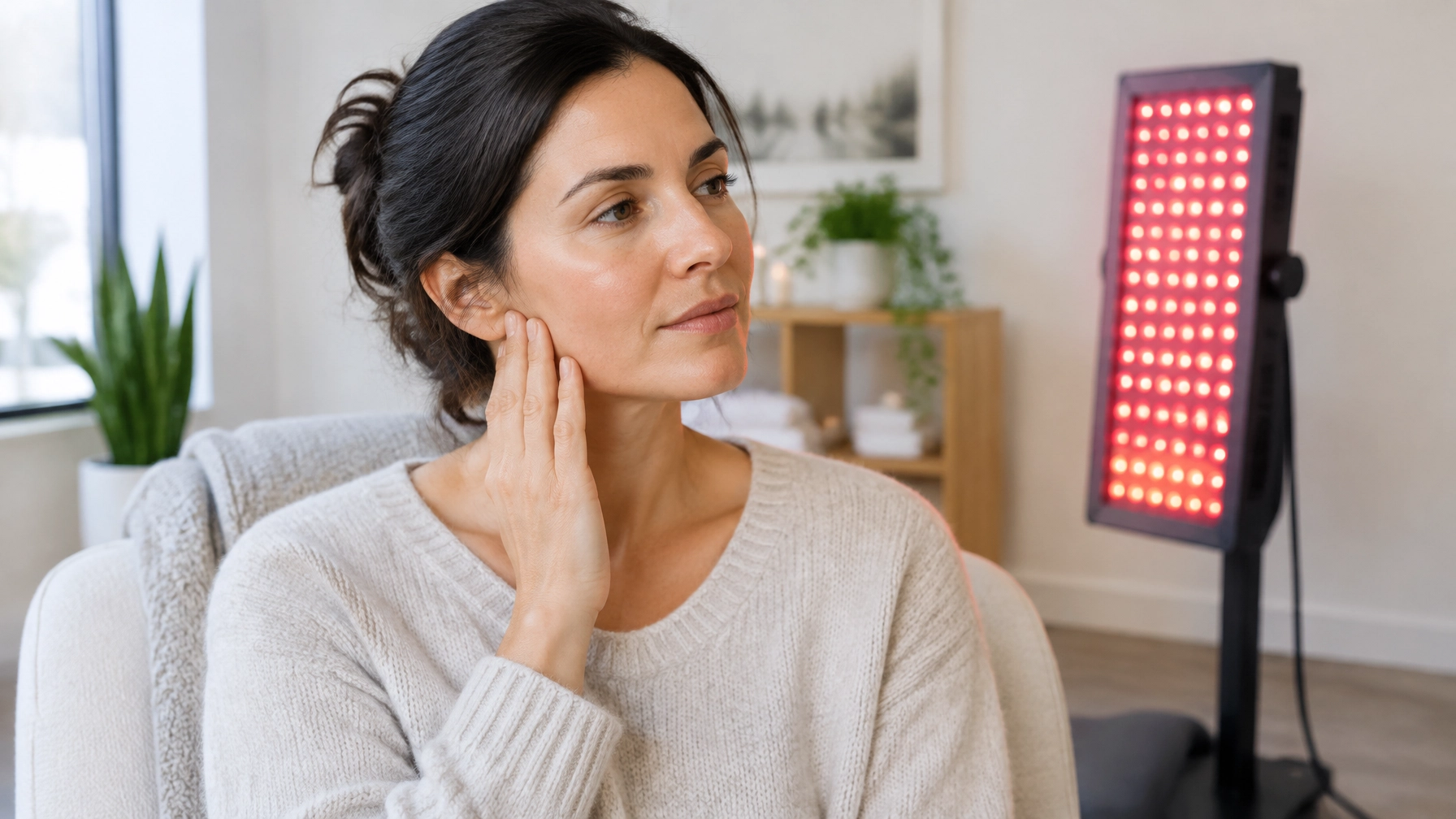
If you wake up with a sore jaw, notice clicking when you chew, or catch yourself clenching during a stressful day, you may wonder: Can red light therapy help TMJ or jaw pain?
The balanced answer is possibly, especially when jaw pain is related to tight or overworked muscles. Research on targeted low-level laser therapy for temporomandibular disorders suggests short-term improvements in pain and mouth opening. However, a full-body red and near-infrared light panel is a broader wellness application. It should not replace a dental or medical assessment.
This guide explains what TMJ disorders are, what the research says, who may benefit, and what to expect from red light therapy in Edmonton.
What is TMJ disorder or TMD?
The temporomandibular joints, or TMJs, are the two joints connecting your lower jaw to your skull. They help you speak, chew, swallow, and open your mouth.
“TMD” refers to temporomandibular disorders. These conditions affect the jaw joints, the muscles around them, or both.
According to the Cleveland Clinic’s TMJ disorder overview, symptoms may include:
- Jaw or facial pain
- Clicking, popping, or grinding
- Jaw stiffness or locking
- Difficulty opening or closing the mouth
- Earaches or ringing in the ears
- Headaches
- Tooth pain
- Neck and shoulder pain
The Healthline guide to TMJ disorder symptoms also describes pain that may spread toward the temples, cheeks, ears, teeth, neck, and face.
Common contributors include:
- Teeth grinding or clenching, also called bruxism
- Stress-related jaw tension
- Jaw injury, fracture, or dislocation
- Arthritis
- Poor posture
- Gum chewing or other repetitive jaw habits
Not every click means there is a serious problem. Clicking without pain or restricted movement can be harmless. Painful clicking, locking, or limited opening deserves professional attention.
Can red light therapy help TMJ and jaw pain?
It may help reduce discomfort associated with muscular jaw tension, but it is not a proven standalone treatment for every type of TMD.
Red light therapy, also called photobiomodulation, uses low-level red and near-infrared wavelengths. These wavelengths may influence cellular energy production, local circulation, inflammatory signalling, and pain sensitivity.
The most relevant evidence comes from targeted low-level laser or LED treatments applied directly to the jaw joint and chewing muscles, such as the masseter. A 2025 systematic review of randomized clinical trials evaluated low-level laser therapy for TMD and reported improvements in short-term pain and maximum mouth opening. The review included numerous trials, but the treatment settings varied significantly.
You can review the study through PubMed: Effectiveness of low-level laser therapy on temporomandibular disorders, published in Photodiagnosis and Photodynamic Therapy, 2025, DOI: 10.1016/j.pdpdt.2025.104558.
The important limitations are:
- Wavelengths and doses differed between studies.
- Session schedules were not consistent.
- Many studies focused on targeted laser or LED application, not full-body panels.
- Most findings relate to short-term pain and movement.
- Long-term advantages remain unclear.
So, does red light therapy work for jaw pain? It may provide supportive relief for some people, particularly when the main problem is muscular tightness or tenderness. It should be viewed as one part of a broader plan.

How is a full-body panel different from targeted TMD laser therapy?
A targeted clinical laser protocol places light directly over specific areas of the jaw joint or chewing muscles. A full-body red and near-infrared panel exposes a larger area of the body.
That broader treatment may support:
- Relaxation of tight muscles
- Local circulation
- Normal inflammatory regulation
- Muscle recovery
- A calming wellness routine
However, it does not precisely reproduce the dosing or placement used in every TMD research study. At Wave Therapy, full-body treatment is best understood as a wellness-level, supportive application, not a diagnosis or replacement for dental care.
If your jaw symptoms are connected to upper-body tension, our guides on red light therapy for neck pain and red light therapy for shoulder pain and rotator cuff issues may also be useful.
What can red light therapy help with?
Evidence and outcomes vary by condition, device, treatment area, and dose. Potential supportive uses include:
- Jaw muscle tightness and tenderness
- Jaw clicking or popping discomfort
- Bruxism-related muscle soreness
- Tension headaches
- Neck and shoulder tension
- Muscle recovery
- Joint pain and inflammation
- Wound-healing support
- Skin and collagen support
- Skin tone and texture concerns
- Anti-aging and skin rejuvenation goals
- Fat reduction and metabolism support
- Cellulite and skin-tightening goals
- Natural hair-growth support
- General relaxation and sleep routine
For more background on the wider research, see Wave Therapy’s guide to whether red light therapy really works.
How does clenching affect jaw pain?
Clenching and grinding can keep the jaw muscles working even when you are not eating or speaking. This may lead to morning soreness, headaches, facial tenderness, and fatigue when chewing.
Stress, poor sleep, and jaw tension can reinforce one another. Red light therapy may help some people relax tight muscles and create a calmer evening routine. It does not address every cause of bruxism.
If you grind your teeth, consider speaking with a dentist about:
- A properly fitted mouthguard or oral appliance
- Tooth wear and enamel damage
- Sleep-related grinding
- Jaw joint examination
- Stress and clenching habits
Other conservative options may include softer foods during a flare-up, gentle heat, posture changes, jaw exercises recommended by a professional, and avoiding gum chewing or very wide yawning.
Massage therapy can also complement care when muscle tension is a major factor. Edmonton residents can explore TMJ massage and registered massage therapy through Massage Quest. Wave Therapy’s sister company, Book a Therapy, is another massage resource. Massage is not appropriate for every jaw condition, but it can be a useful conservative option for muscular jaw, neck, and shoulder tension.

Who may be a good fit?
Red light therapy may be worth discussing if you are:
- Experiencing muscular jaw tightness or tenderness
- Aware that you clench during the day or at night
- Dealing with neck and jaw tension from desk work
- Recovering from mild muscle soreness after dental work, once your dentist approves it
- An athlete or runner who notices jaw clenching during exertion
- Looking for a non-invasive addition to a broader wellness or recovery routine
A full-body panel is less appropriate when the cause of jaw pain is unknown or may require direct treatment.
Who should check with a professional first?
Do not use red light therapy as a substitute for assessment if you have:
- Undiagnosed jaw locking or severe limitation in mouth opening
- A suspected jaw fracture or dislocation
- An active dental infection
- Recent jaw surgery without clearance
- Pregnancy
- A photosensitising medication or photosensitive condition
- An eye condition or recent eye procedure
- A history of light-triggered seizures
- Active cancer treatment in the treatment area
If jaw pain lasts for more than a week, Cleveland Clinic recommends speaking with a healthcare provider. Seek urgent medical care for jaw pain with chest pain, shortness of breath, faintness, sweating, or pain spreading from the chest into the jaw. Those symptoms should not be assumed to be TMJ.
For additional safety information, see Wave Therapy’s articles on red light therapy safety and common concerns and infrared light and eye safety.
What should you expect at a session?
A professional session may include:
- A quick intake conversation about your goals and health history.
- Positioning near the red and near-infrared light panel.
- Eye protection, especially when the face or upper body is near the light.
- Approximately 10–20 minutes of gentle warmth and red glow.
- No injections, incisions, or required downtime for most people.
Results build gradually rather than appearing after one session. Many clients assess their response over four to eight sessions. A practical schedule is usually two to three sessions per week, depending on your goals, tolerance, and the provider’s recommendations.
Consistency matters, but more treatment is not always better. Follow the session length and frequency provided by the clinic.
Wave Therapy offers red light therapy in Edmonton and Edmonton booking options for people who want to explore non-invasive wellness support.
Practical takeaways
- TMD affects the jaw joints, surrounding muscles, or both.
- Bruxism, stress, injury, and arthritis can all contribute to jaw symptoms.
- Targeted photobiomodulation has shown short-term improvements in pain and mouth opening in some TMD studies.
- A full-body panel is broader and should not be treated as identical to targeted jaw laser therapy.
- Red light therapy may support muscle relaxation and recovery, but it does not replace dental, medical, or physiotherapy care.
- Massage, stress management, sleep habits, and a dentist-recommended mouthguard may be important parts of a clenching plan.
- Stop and seek advice if symptoms worsen or if you experience unusual eye, skin, or neurological symptoms.
Red light therapy can be a reasonable supportive option for some people with jaw and upper-body muscle tension. If you are curious about red light therapy for pain, explore the evidence, address the likely cause, and book when ready.
Sources and further reading
- Cleveland Clinic: Temporomandibular Joint Disorders
- Cleveland Clinic: Jaw Pain
- Healthline: What Are the Symptoms of Temporomandibular Joint Disorders?
- 2025 systematic review: Effectiveness of low-level laser therapy on temporomandibular disorders
- National Institute of Dental and Craniofacial Research: TMD
Health note: This article is for general education only. It does not diagnose TMJ/TMD or replace advice from a dentist, physician, physiotherapist, or other qualified healthcare professional.
Leave a Reply