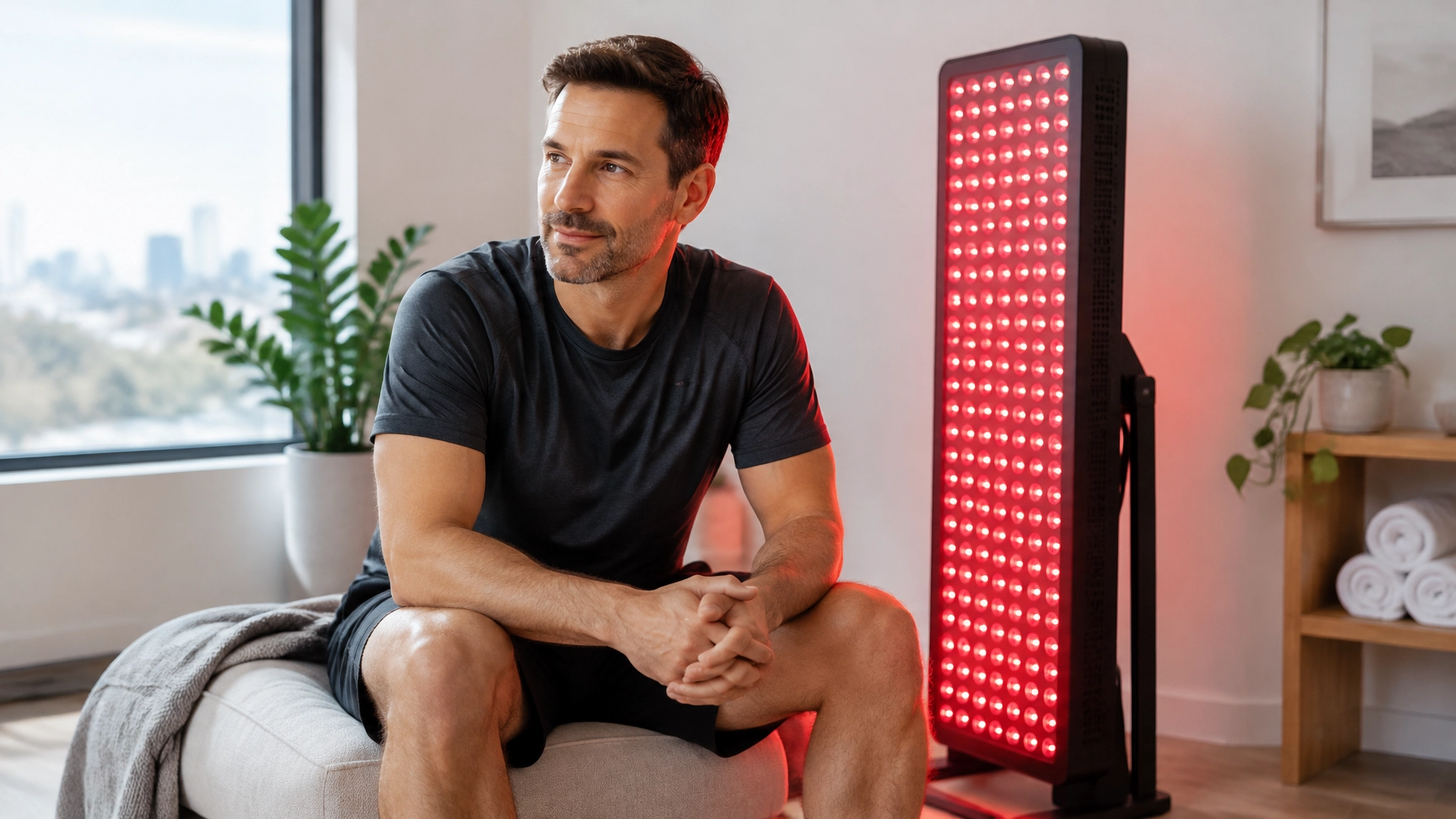
Red light therapy is getting attention online for everything from post-workout recovery to testosterone. One especially viral claim suggests shining red light directly on the testicles can raise testosterone. It’s a fair question, but the answer needs more nuance than social media usually allows.
Here’s what the red light therapy science says about men’s health, where the evidence is more promising, and why this isn’t a proven treatment for low testosterone.
Can red light therapy really boost testosterone?
There isn’t strong human evidence that red or near-infrared light therapy reliably raises testosterone. In particular, testicular red light therapy has not been established as a treatment for low testosterone, and it should not replace medical testing or care.
Claims often combine different kinds of light research. A small preliminary study in men, for example, looked at bright white light exposure in the morning, not red light directed at the testicles. That’s a different treatment, so its findings can’t confirm that red-light panels boost testosterone.
The distinction matters: promising biology, an early study, or a personal anecdote doesn’t show that a treatment reliably works for people. If you have symptoms that concern you, talk with a healthcare professional about appropriate assessment rather than trying to self-treat with a light device.
What does the science actually say?
Red and near-infrared light are studied as photobiomodulation, or PBM. The idea is that certain wavelengths may influence cell activity. But results depend on the wavelength, dose, exposure time, device, and the condition being studied. A protocol using a low-level laser isn’t automatically comparable to an at-home panel.
For testosterone specifically, evidence is limited and includes small animal studies with mixed findings. Some animal research reports changes in hormone or reproductive measures; other findings don’t show a consistent testosterone increase. Animal results can help researchers decide what to study next, but they do not establish an effective or safe treatment for men.
There is also a small human trial worth putting in context. In a 2024 randomized study of 60 people with chronic testicular pain, researchers used specific red or infrared low-level lasers and reported reduced pain and improved sexual-satisfaction scores. The study did not establish that treatment increases testosterone, improves fertility, or makes consumer light panels safe for use on the testicles. Momenzadeh et al., Journal of Lasers in Medical Sciences (2024).
A systematic review of PBM and male infertility found that most included research examined semen samples in a laboratory, with relatively few human participants in clinical trials. The authors noted that varied methods and study designs make it difficult to draw firm conclusions. Eghbaldoost et al., Journal of Lasers in Medical Sciences (2023).
This is why the online leap from “light may affect cells” to “testicular red light boosts testosterone” is too big. A helpful introduction to how wavelength and dose can affect treatment is in Wave Therapy’s guide to choosing red and near-infrared wavelengths. Dose matters, and research findings from one device or protocol shouldn’t be assumed to apply to another.
Is red light therapy for men's health safe?
Red light therapy used for general wellness is non-invasive, but “non-invasive” doesn’t mean every device, dose, or body area is automatically safe for everyone. Extra care is appropriate with sensitive areas.
The scrotum is temperature-sensitive, and home devices vary in their light output and heat. There isn’t enough evidence to recommend directing a consumer panel at the testicles for hormone or fertility purposes. Don’t use a device on that area without medical guidance. A clinician can also review your health history and any relevant reproductive concerns.
Before a session or home use:
- Ask a healthcare professional or pharmacist about medications that cause photosensitivity.
- Follow the device instructions, including eye-protection guidance.
- Avoid excessive heat and stop if you experience discomfort, persistent redness, or irritation.
- Talk with a clinician before using light therapy over an area affected by a medical condition.
A device being cleared for a specific use does not mean it is cleared or proven to raise testosterone or treat infertility. For more on general precautions, see Wave Therapy’s overview of red light therapy safety and side effects.
What red light therapy may support in men
Evidence varies by condition and treatment protocol. Red light therapy is not equally well studied for every item below, and individual results aren’t guaranteed. These are wellness goals for which PBM is used or studied, not promises of a cure:
- Muscle recovery after exercise.
- Temporary relief of some joint or musculoskeletal pain.
- Inflammation support in certain tissues and conditions.
- Skin rejuvenation, including support for skin tone and collagen.
- Hair growth in some hair-loss contexts.
- Wound-healing support in selected settings.
- Cellulite appearance and skin tightening as cosmetic goals; results can vary.
- Fat reduction or body contouring as a cosmetic goal; it is not a substitute for medical care or a weight-management plan.
- Sleep and general wellness as areas of ongoing interest, not established testosterone treatments.

For people focused on post-workout recovery or general aches, a light session may be one part of a broader routine that includes rest and appropriate movement. Some people also choose massage as part of recovery; Edmonton clients can explore Massage Quest or Book a Therapy for massage options.
What about fertility, sperm health, and the prostate?
Evidence for fertility and sperm health is limited. Some studies have examined light exposure in laboratory semen samples, and a few have explored clinical use. Those findings don’t establish that shining a consumer light panel on the testicles improves fertility, pregnancy rates, or the chance of a live birth.
If you’re trying to conceive, have concerns about semen quality, or have testicular pain, discuss them with a doctor or urologist. A medical assessment can help identify treatable causes and appropriate next steps.
There is also no established evidence that consumer red light therapy prevents or treats prostate conditions. If you have prostate cancer, urinary symptoms, a rising PSA, or another urological concern, speak with your healthcare team before trying a treatment on your own.
How do men in Edmonton use it, and what should they expect?
At a wellness studio, men may choose red light therapy for goals such as skin care, muscle recovery, or general musculoskeletal discomfort, not as a testosterone treatment. At Wave Therapy in Edmonton, a typical full-body session involves relaxing near a light panel for a short period. It’s non-invasive; some people notice gentle warmth, while others feel little.
Session length and frequency depend on the system and the goal. Follow the provider’s guidance rather than assuming more exposure is better. If you’re exploring how often to use red light therapy, ask about the device, intended treatment area, and recommended schedule.
After a series of 4–8 sessions, some clients may notice changes in the goal they came in for, but results vary. There’s no basis for expecting a specific testosterone change in that timeframe. You can explore Wave Therapy sessions in Edmonton to learn about available services.

Who is red light therapy for, and who should skip it?
It may be worth discussing with a provider if you’re an adult interested in a non-invasive wellness option for skin, exercise recovery, or certain aches and pains. It is not a proven solution for low testosterone, infertility, or prostate disease.
Check with a healthcare professional before use if you take photosensitizing medication or have a condition that could be affected by light. Avoid experimenting with direct testicular exposure (especially if you have fertility concerns or testicular symptoms) without medical supervision. If you suspect low testosterone, seek proper evaluation rather than delaying care.

Practical takeaways
- Does red light therapy work? It may support some wellness goals, but benefits depend on the condition, device, and dose.
- Does it boost testosterone? That has not been proven in robust human research.
- Does evidence for testicular pain or laboratory sperm samples prove fertility benefits? No. Those are different questions and need more research.
- What should you do if you have hormone or fertility concerns? Talk with a healthcare professional rather than relying on viral claims or self-treatment.
Red light therapy can be part of a wellness routine for certain goals, but it isn’t a shortcut or a substitute for medical care. If you’re curious about red light therapy in Edmonton for recovery, skin, or general wellness, you can learn more about Wave Therapy sessions when you’re ready.
Leave a Reply