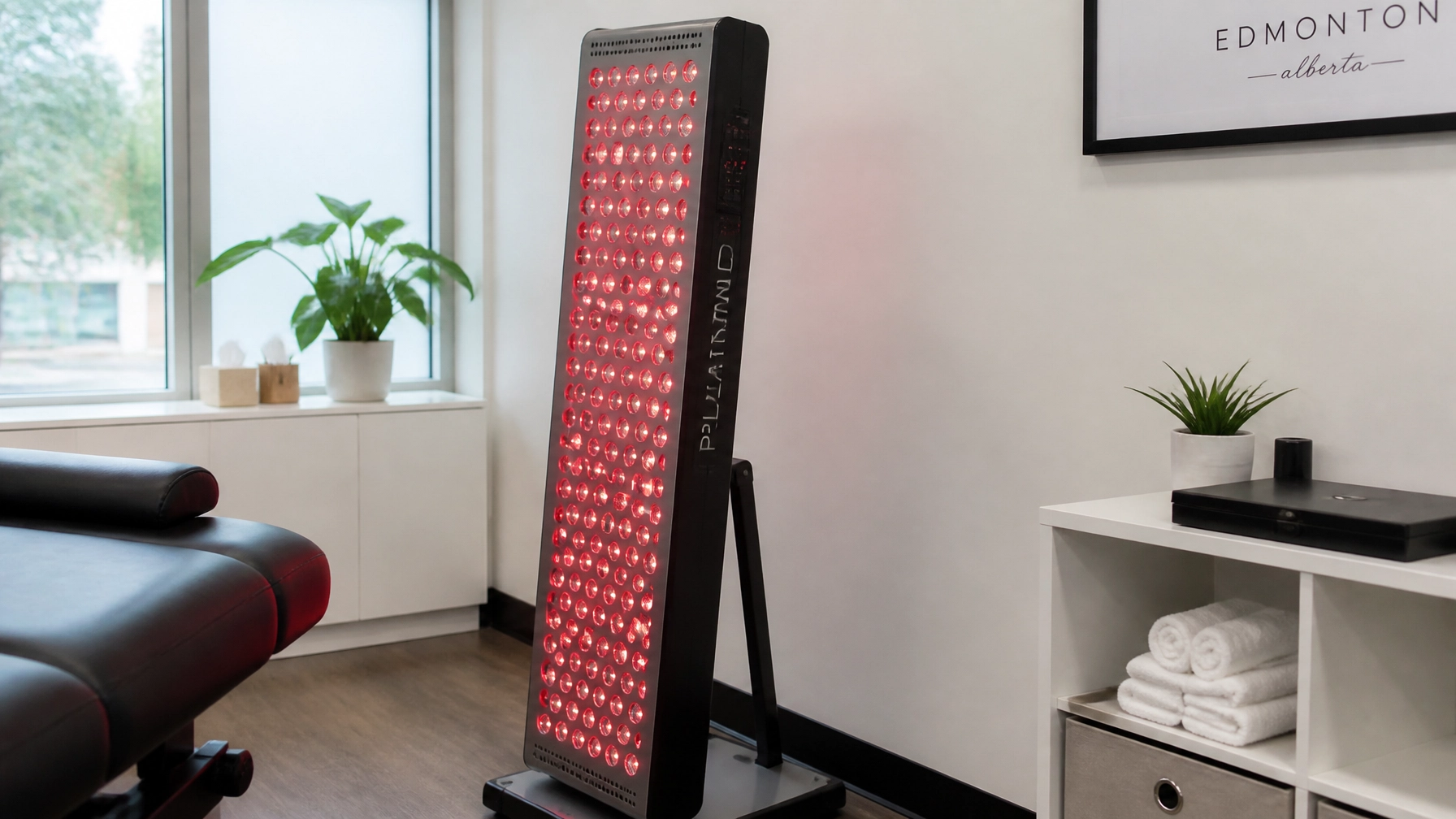
If you’ve started looking into red light therapy (RLT), you’ve probably noticed a lot of numbers being thrown around: 630nm, 660nm, 850nm. It can feel a bit like a high school physics class, but these numbers (wavelengths) are actually the secret to why red light therapy works so well for so many different things.
At Wave Therapy in Edmonton, we get asked all the time: "Which wavelength is the best?" The truth is, there isn't one "best" wavelength. Instead, there are different wavelengths for different goals. Whether you want to smooth out fine lines, recover from a tough workout at the gym, or manage chronic joint pain, the wavelength you choose determines how deep the light goes and what it does for your body.
In this guide, we’ll break down the most common wavelengths used in red light therapy so you can understand exactly what they do and how to choose the right one for your needs.
What Exactly Are Wavelengths?
Light travels in waves, and the distance between the peaks of those waves is called a wavelength. This is measured in nanometers (nm).
When it comes to therapy, we generally look at two main categories:
- Red Light (600nm to 700nm): This light is visible to the human eye. It’s excellent for treating things near the surface of the body, like your skin.
- Near-Infrared Light (700nm to 1100nm): This light is invisible to the naked eye. It has a longer wavelength, which allows it to penetrate deeper into your body: reaching muscles, nerves, and even bone.
Most high-quality systems, like the ones we use at Wave Therapy, use a combination of both to provide a "full-spectrum" experience.
The Skin Specialists: 630nm vs. 660nm
If your primary goal is anti-aging, acne, or general skin health, these are the wavelengths you want to look for. They focus their energy on the epidermis and dermis (the top layers of your skin).
630nm: The Surface Smoother
The 630nm wavelength is one of the more shallow options. It’s fantastic for targeting the very surface of the skin. Research published in the National Library of Medicine suggests that 630nm is highly effective for reducing fine lines, improving skin texture, and helping with superficial skin conditions like psoriasis.
660nm: The Collagen Booster
660nm is often called the "gold standard" for red light therapy. It penetrates slightly deeper than 630nm, reaching the fibroblasts that produce collagen and elastin. This makes it the go-to choice for anyone looking to firm up their skin, reduce the appearance of scars, or speed up the healing of minor wounds. It’s a core component of anti-aging treatments because it helps the skin look more resilient and youthful.

The Deep Tissue Workers: 810nm, 830nm, and 850nm
Near-infrared (NIR) light is where things get interesting for athletes and anyone dealing with chronic pain. Because these wavelengths are longer, they don't get absorbed as quickly by the skin, allowing them to travel deep into the body.
810nm: The Brain and Nerve Specialist
The 810nm wavelength is particularly unique because it has been shown to penetrate the skull and reach brain tissue. According to studies highlighted by Healthline, 810nm is being researched for its ability to support neurological health, improve recovery from traumatic brain injuries, and even boost cognitive performance. It’s also excellent for deep muscle recovery and nerve regeneration.
830nm: The Injury Healer
If you’ve recently had surgery or a sports injury, 830nm is a powerful ally. This wavelength is highly effective at speeding up the healing of deep wounds and bone repairs. It helps reduce the formation of scar tissue and ensures that the body’s natural repair processes are working at peak efficiency.
850nm: The Muscle and Joint Expert
850nm is perhaps the most popular near-infrared wavelength. It targets the muscles and joints directly, making it the favorite for fitness enthusiasts in Edmonton. It helps reduce inflammation, decreases oxidative stress in the muscles, and significantly speeds up recovery after a heavy lifting session or a long run.

Comparison Table: Which Wavelength Do You Need?
| Wavelength | Category | Best For… | Depth |
|---|---|---|---|
| 630nm | Red | Skin texture, surface inflammation, acne | Shallow (Skin surface) |
| 660nm | Red | Collagen, fine lines, hair growth, scar healing | Medium (Dermis) |
| 810nm | NIR | Brain health, nerve recovery, deep muscle | Deep (Nerves/Brain) |
| 830nm | NIR | Bone repair, deep wound healing, surgery recovery | Very Deep (Bone/Tissues) |
| 850nm | NIR | Muscle recovery, joint pain, chronic inflammation | Very Deep (Muscles/Joints) |
Why "Multi-Wave" is Usually the Better Choice
While you can find devices that only offer one wavelength, most people benefit more from a multi-wave approach. Why? Because most health goals overlap.
For example, if you are treating a sports injury, you likely want 850nm to help the deep muscle tissue, but you might also want 660nm to help heal any surface bruising or inflammation. Similarly, if you're using red light for fat reduction, a combination of wavelengths can help stimulate the fat cells while also tightening the skin in that area.
At Wave Therapy, we use advanced systems that deliver a balanced mix of red and near-infrared light. This ensures that every layer of tissue: from your skin down to your muscles: gets the energy it needs to heal and rejuvenate.
What to Expect From a Session in Edmonton
If you’re new to red light therapy, the process is incredibly simple and relaxing. Unlike a tanning bed, there is no UV radiation and no risk of burning. You won’t feel "hot": instead, you’ll just feel a gentle, soothing warmth.
A typical session lasts between 10 to 20 minutes. Most clients find it to be a great time to disconnect, meditate, or just breathe. Because it's non-invasive and has no downtime, you can pop in for a session at our Edmonton location during your lunch break and head right back to work feeling refreshed.
For best results, we usually recommend a series of sessions. While some people feel a difference in pain levels after just one visit, the most significant changes in skin tone and muscle recovery usually appear within 4 to 8 sessions.

Ready to Experience it Yourself?
Choosing the right wavelength doesn't have to be a solo mission. Our team is here to help you tailor your sessions to your specific goals, whether you're looking for pain relief, fat reduction, or just a natural glow.
If you're also looking for other ways to support your recovery, we highly recommend checking out our partners at Massage Quest for expert massage therapy, or booking a session through Book a Therapy to find a variety of wellness providers in the Edmonton area.
Red light therapy is a science-backed, gentle way to help your body perform its best. Whether you're a busy professional, an athlete, or just someone looking to feel a little better every day, there’s a wavelength (or two) that can help.
Explore sessions today and see how the right light can make a difference.
Book Your Session at Wave Therapy
Leave a Reply