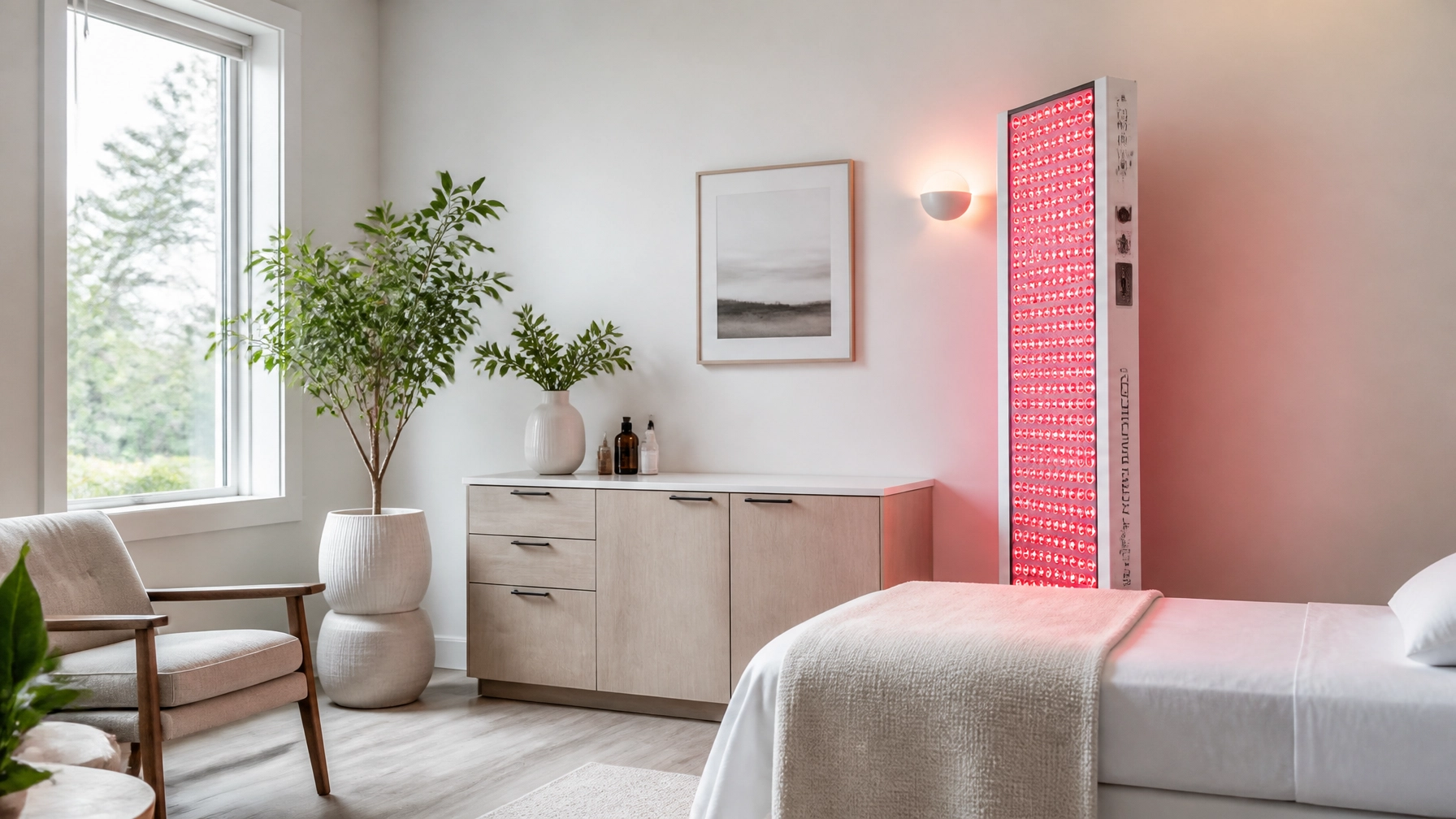
If you have spent any time looking into red light therapy (RLT), you have likely run into a sea of numbers: 630nm, 660nm, 810nm, 850nm. It can feel a bit like reading a radio frequency dial. But these numbers, wavelengths, are actually the secret sauce that determines whether your sessions help with fine lines or deep muscle recovery.
In Edmonton, where we face long winters and high-intensity lifestyles, finding the right "light recipe" can be a game-changer for your wellness routine. At Wave Therapy, we often get asked: “Does the specific wavelength really matter, or is red light just red light?”
The short answer? It matters a lot. Let’s dive into the science of wavelengths so you can choose the right one for your specific health goals.
What Exactly is a Wavelength?
To understand how light heals, we have to look at how it travels. Light travels in waves, and the distance between the peaks of those waves is called a wavelength. This is measured in nanometers (nm).
The human body reacts differently to different wavelengths because they penetrate our tissues at varying depths. Think of it like a sound system: some frequencies are high and crisp (surface-level), while others are deep bass that you can feel in your bones.

When we talk about Red Light Therapy, we are usually looking at two main "bands" of light:
- Visible Red Light (630nm – 660nm): This is the bright red glow you see. It primarily targets the skin.
- Near-Infrared Light (810nm – 850nm): This light is mostly invisible to the naked eye. It travels deeper into the body to reach muscles and joints.
The Most Popular Wavelengths: A Quick Comparison
When you are looking at professional-grade systems or high-quality home panels, these are the five wavelengths you will encounter most often.
630nm: The Skin Refiner
This wavelength is often called the "beauty wavelength." It is absorbed by the very top layers of the skin (the epidermis).
- Best For: Reducing redness, evening out skin tone, and dealing with superficial skin issues like mild acne or fine lines.
- Why it works: It stimulates the cells at the surface to boost circulation and reduce surface-level inflammation.
660nm: The Collagen Booster
This is perhaps the most well-researched wavelength in the red light spectrum. According to studies highlighted by the Cleveland Clinic, wavelengths in this range are excellent for stimulating fibroblasts, which are the cells responsible for collagen production.
- Best For: Anti-aging, wound healing, and improving skin elasticity.
- Why it works: It penetrates slightly deeper than 630nm, reaching the dermis to repair skin from the inside out.

810nm: The Brain and Nerve Specialist
This is where we move into the Near-Infrared (NIR) range. Because 810nm can penetrate through bone (like the skull), it is frequently used in research regarding cognitive health and nerve repair.
- Best For: Brain fog, nerve recovery, and deep tissue health.
- Why it works: It has a unique ability to reach deep structures that visible red light simply can't touch.
830nm: The Healing Accelerator
This wavelength is a powerhouse for tissue repair. It is often used in medical settings to help patients recover from surgery or injury.
- Best For: Faster healing of deep wounds, infection prevention, and reducing chronic inflammation.
- Why it works: It increases the energy (ATP) produced by the mitochondria in deeper tissues, giving them the fuel they need to repair themselves faster.
850nm: The Muscle and Joint Deep-Diver
If you are an athlete or someone dealing with chronic joint pain, 850nm is likely your best friend. This wavelength travels the deepest into the body, up to several centimeters.
- Best For: Muscle recovery, joint pain (like arthritis), and reducing deep inflammation after a hard workout.
- Why it works: It reaches the muscle fibers and connective tissues that are tucked away beneath layers of skin and fat.
Why Multi-Wavelength Systems Are Winning
You might be thinking, “Do I have to choose just one?”
Thankfully, no. The most effective treatments usually involve a combination of these wavelengths. When you visit a specialized studio like Wave Therapy, you are typically using a system that emits multiple wavelengths simultaneously.
Research published on PubMed suggests that combining red and near-infrared light can create a synergistic effect. While the 660nm light works on your skin's surface to reduce inflammation, the 850nm light is simultaneously working on the muscles underneath to help you recover. It’s a "top-to-bottom" approach to wellness.

Who Should Choose Which Wavelength?
Choosing the right light is all about your personal goals. Here is a quick guide to help you decide:
- The "Glow-Getter" (Skin Focus): Focus on 630nm and 660nm. If your main goal is to look refreshed, reduce wrinkles, and have that "lit from within" look, visible red light is your priority.
- The Athlete (Recovery Focus): Focus on 810nm and 850nm. If you’re training for an Edmonton marathon or just trying to stay mobile in the cold, near-infrared light will help your muscles bounce back faster.
- The All-Rounder (General Wellness): Go for a Combined System. This is what we recommend for most people in Edmonton. By getting a mix of red and NIR, you get the skin benefits and the recovery benefits in one session.
What to Expect During a Session
Many people are surprised by how relaxing red light therapy actually is. Unlike a tanning bed, there is no UV radiation, so there is no risk of burning. It feels like a very gentle, warm glow.
At Wave Therapy, our full-body systems ensure that these targeted wavelengths are delivered evenly across your body. Most people find that they feel a sense of calm during the session and a slight boost in energy afterward.
If you are already incorporating wellness practices like massage: which we highly recommend through our partners at Massage Quest or for easy booking via Book a Therapy: red light therapy acts as a perfect "pre-game" or "post-game" to your manual therapy. It helps relax the muscles, making the massage even more effective.

Practical Takeaways for Choosing Your Light
- Check the specs: If you are buying a home device, ensure it clearly lists the wavelengths. Avoid devices that just say "red light" without specifying the nanometers.
- Look for 660nm and 850nm: These are the "gold standard" duo for a reason: they cover the widest range of benefits.
- Intensity matters: The wavelength tells you where the light goes, but the "irradiance" tells you how strong it is. Professional systems are usually much more powerful than small hand-held units.
- Consistency is key: Whether you are targeting skin or muscles, light therapy works best when done regularly (usually 3-5 times a week initially).
Final Thoughts
Choosing the right wavelength doesn't have to be complicated. By understanding that "Red" is for the surface and "Near-Infrared" is for the depths, you can tailor your wellness routine to exactly what your body needs today.
Whether you're looking to rejuvenate your skin after a dry Edmonton winter or recover from a weekend of hiking, the right light can make all the difference.
Ready to see what the right wavelengths can do for you?
Explore our sessions or learn more about our technology when you're ready to take the next step.
Leave a Reply