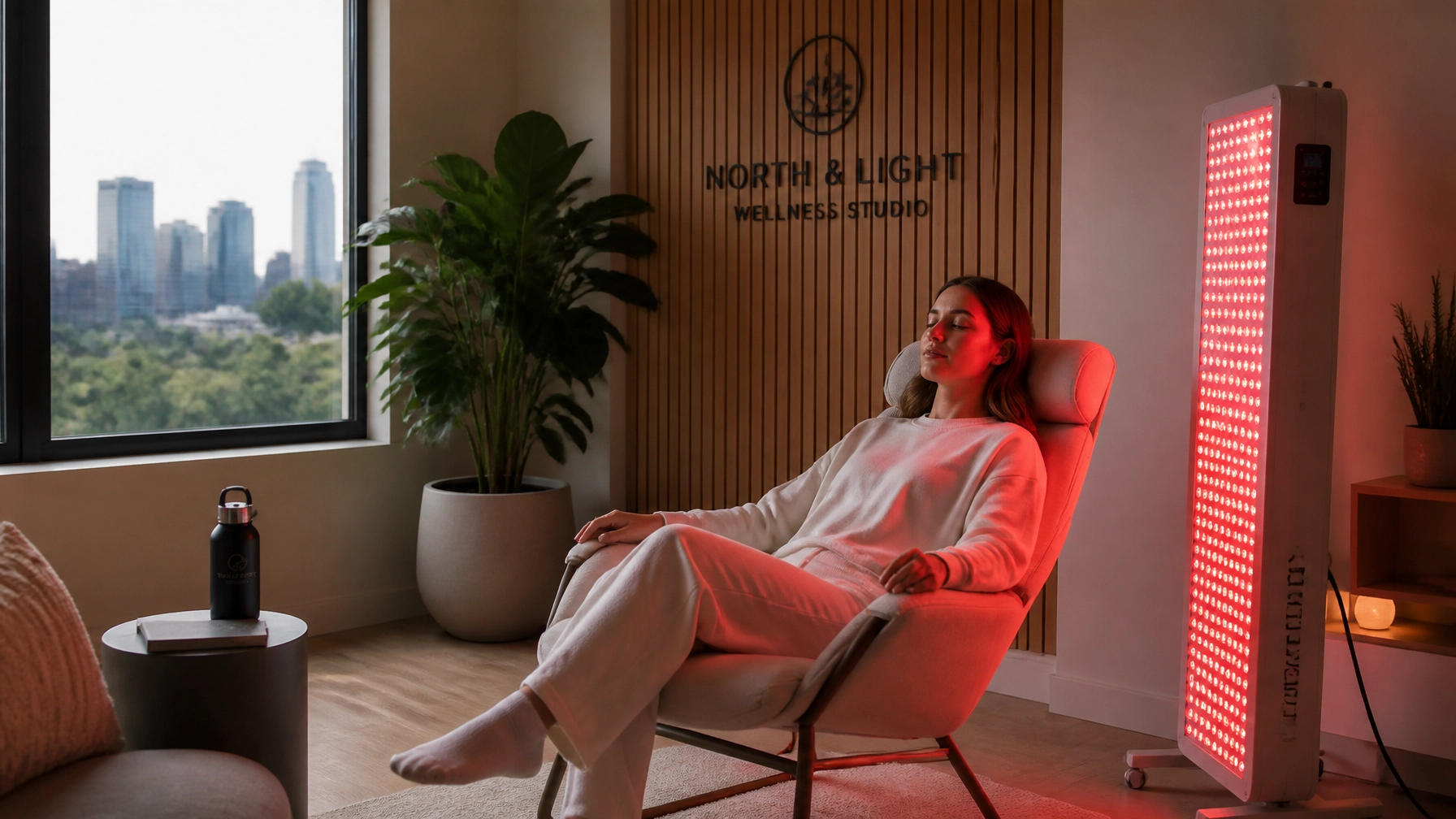
If you’ve spent any time looking into wellness trends in Edmonton lately, you’ve likely seen the red glow. Red light therapy (RLT) has moved from a niche biohacking secret to a staple of modern health. But as it becomes more popular, the questions keep piling up.
Is it just a fancy tanning bed? (No.) Does it actually melt fat? (It’s complicated.) How long do I have to stand in front of it?
At Wave Therapy, we believe in keeping things clear and science-backed. You don’t need a PhD to understand how light affects your body, but you do deserve the facts. Here is the ultimate 3-minute guide to everything you need to know about red light therapy in 2026.
The 60-Second Science: How Does It Actually Work?
Red light therapy, technically known as Photobiomodulation (PBM), doesn't work like a heat lamp or a laser that cuts tissue. Instead, it uses specific wavelengths of light: usually between 630nm and 850nm: to "talk" to your cells.
Think of your cells like a smartphone. When the battery is low, everything runs slowly. Red and near-infrared light act like a wireless charger for your mitochondria (the "powerhouses" of your cells). When these mitochondria absorb the light, they produce more ATP (cellular energy).
With more energy, your cells can:
- Repair damage faster.
- Reduce inflammation more effectively.
- Produce more collagen and elastin.
According to research published in PubMed, this process of photobiomodulation is a non-invasive way to trigger the body’s natural healing mechanisms at a systemic level.

Your Top 2026 FAQs Answered
1. Does red light therapy really help with fat loss?
This is one of our most common questions here in Edmonton. The honest answer: It is a powerful support tool, not a magic wand.
In 2026, the consensus among wellness experts, as noted by Healthline, is that RLT can help with "body contouring." Some studies suggest that red light can temporarily weaken the membranes of fat cells, allowing them to release their contents. However, for this to result in actual weight loss, you still need to burn that released energy through movement and a healthy diet.
At Wave Therapy, we view it as a way to boost your metabolism and support your fitness goals rather than a replacement for them.
2. How long until I see results for my skin?
We live in a world of instant gratification, but biology takes time.
- Immediate (1–2 sessions): Most people notice a "post-session glow" due to increased circulation.
- Intermediate (4–8 sessions): This is when clients often report reduced inflammation and faster healing of blemishes.
- Long-term (8–12 weeks): This is the "sweet spot" for collagen production. Significant improvements in fine lines, wrinkles, and skin elasticity usually require consistent sessions over a few months.
3. Is it safe for my eyes?
Yes, but with caveats. While red light is generally safe, the intensity of professional-grade panels is quite high. Most people find it comfortable to simply close their eyes during a session. However, if you are sensitive to light or have specific eye conditions, we provide darkened goggles to ensure you are fully protected.
4. Muscle recovery: Should I do it before or after a workout?
Both have benefits!
- Pre-workout: Some athletes use RLT to "prime" the muscles, increasing blood flow and potentially reducing the risk of injury.
- Post-workout: This is the most popular choice. Using red light after training helps clear out lactic acid and reduces the "Delayed Onset Muscle Soreness" (DOMS) that can keep you out of the gym for days.

5. Can I just use a cheap device at home?
You can, but there is a massive difference in "irradiance" (the strength of the light). Many small, battery-operated home devices don't have the power to penetrate deep into the muscle or joint tissue.
Professional systems, like the ones we use at Wave Therapy, provide full-body coverage with medical-grade intensity. This means you get a more effective dose in 10–15 minutes than you might get in hours of using a small handheld wand.
What to Expect During a Session at Wave Therapy
If you’ve never tried it, the experience is incredibly relaxing. You’ll enter a private, quiet room and stand or lie in front of the light panels.
- The Sensation: You won’t feel "hot," but you might feel a very gentle, soothing warmth.
- The Duration: Most sessions last between 10 and 20 minutes.
- The Aftermath: There is zero downtime. You can head straight back to work or your next errands around Edmonton feeling refreshed.
Who Is It For (And Who Should Skip It)?
It’s great for:
- People dealing with chronic joint pain or inflammation.
- Anyone looking to improve skin tone and reduce signs of aging naturally.
- Athletes wanting to bounce back faster from intense training.
- Busy professionals needing a non-invasive way to manage stress and boost energy.
Who should skip it (or consult a doctor first):
- Photosensitivity: If you are on medications that make you sensitive to light (like certain antibiotics or Accutane).
- Pregnancy: While there’s no evidence of harm, we always recommend checking with your healthcare provider first.
- Active Cancer: We suggest avoiding RLT over any known active tumors.

Practical Takeaways for Your First Session
- Hydrate: Drinking water helps your cells process the energy boost more efficiently.
- Clean Skin: For skin rejuvenation, it's best to have a clean face so the light can penetrate directly without being blocked by heavy makeup or SPF.
- Consistency is King: One session is a great pick-me-up, but the real transformation happens when you make it a regular part of your routine.
Red light therapy isn't a "miracle cure," but it is a scientifically backed way to help your body do what it already does: only better. Whether you’re looking to soothe aching joints or reclaim your skin’s natural glow, the light is here to help.
Ready to see the glow for yourself? You can explore our sessions or check out more deep dives on our wellness blog. We’re here whenever you’re ready to start your recovery journey.
Leave a Reply