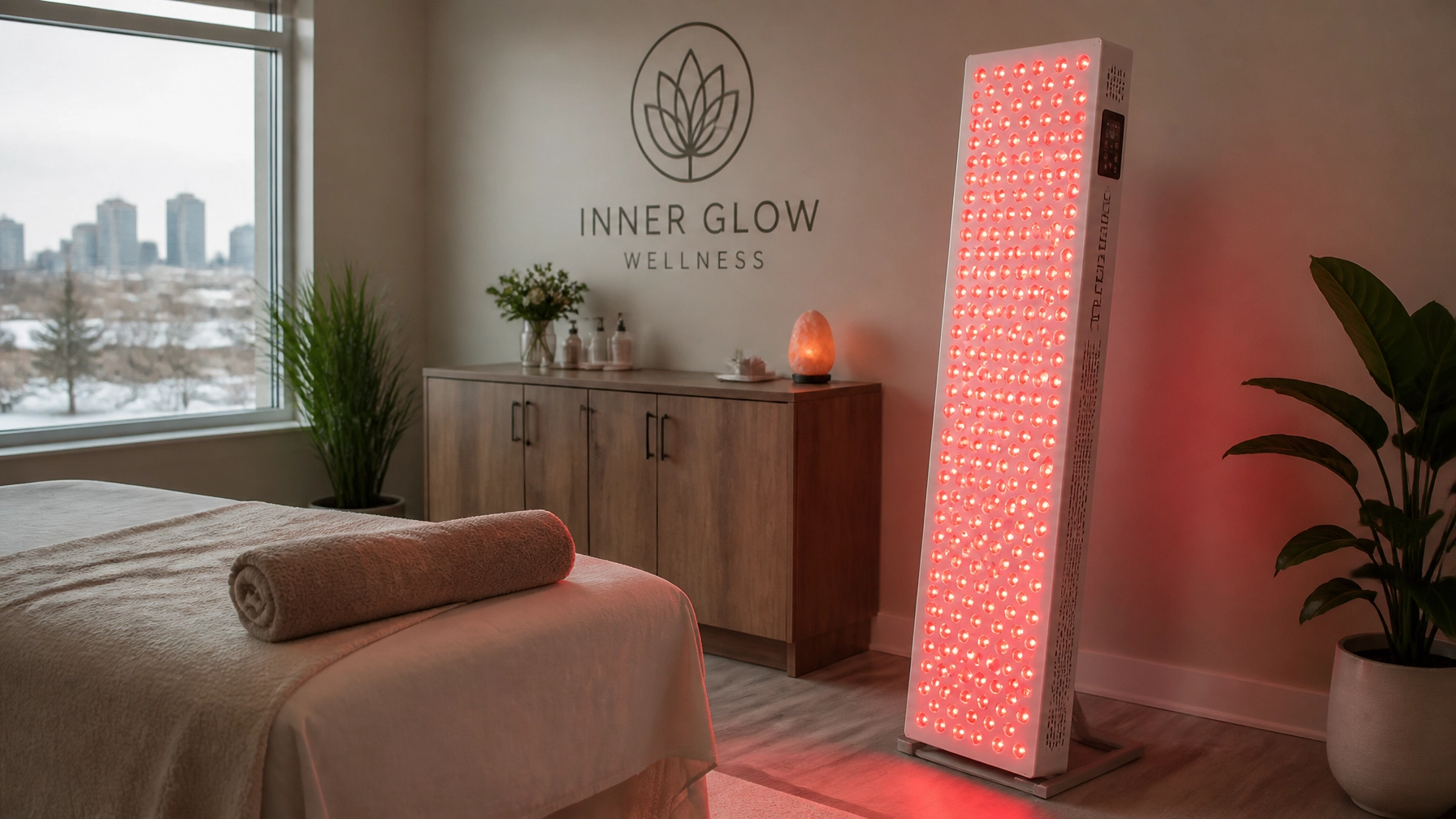
If you’ve spent any time on social media lately or walked past a high-end wellness clinic in Edmonton, you’ve likely seen it: a mysterious, soothing red glow. Red light therapy (RLT) is everywhere, and it’s being hailed as everything from a skin-clearing miracle to a professional athlete's secret weapon for recovery.
But what is it, really? Is it just a fancy heat lamp, or is there some serious science backing up that crimson light?
At Wave Therapy, we believe in keeping things simple and science-based. We know you’re busy, so we’ve distilled the most common questions into a quick, readable guide. Whether you’re looking to soothe aching joints after a hike in the River Valley or you’re ready to level up your skincare routine, here is everything you need to know about red light therapy.
What Exactly is Red Light Therapy? (The 60-Second Version)
Red light therapy: also known as photobiomodulation (PBM) or low-level laser therapy: is a non-invasive treatment that uses specific wavelengths of red and near-infrared (NIR) light.
Unlike the UV rays from the sun or a tanning bed, these wavelengths don’t burn your skin. Instead, they penetrate deep into your tissues to help your cells function better. Think of it like "photosynthesis for humans." Just as plants use sunlight to create energy, our bodies use specific light frequencies to power up our internal systems.
Most people use it for:
- Skin rejuvenation: Reducing wrinkles and boosting collagen.
- Muscle recovery: Speeding up the "repair" phase after a workout.
- Pain management: Reducing inflammation in joints and muscles.
- Wound healing: Helping the body repair itself faster.
How Does It Actually Work? (The Science Bit)

To understand why red light works, we have to look inside your cells: specifically, at the mitochondria. You might remember from high school biology that the mitochondria are the "powerhouses" of the cell. They produce a molecule called Adenosine Triphosphate (ATP), which is the energy currency our bodies use to do everything from breathing to repairing a cut.
When red and near-infrared light hits your skin, it is absorbed by a protein in the mitochondria. This "kickstarts" the production of ATP. According to the Cleveland Clinic, this boost in cellular energy allows the cell to repair itself more efficiently, replicate faster, and handle oxidative stress better.
By stimulating this natural process, red light therapy helps reduce inflammation and improves blood flow to the treated area. It isn't a "magic wand"; it’s more like a "battery charger" for your body’s own healing mechanisms.
Your Top FAQs Answered
1. Does it hurt?
Not at all. In fact, most people find it incredibly relaxing. You’ll feel a very slight, gentle warmth from the LEDs, but it isn’t hot like a sauna. There is no downtime, no "peeling," and no pain involved. Most of our clients at Wave Therapy use their sessions as a quiet time to meditate or simply unplug.
2. Is it safe for my eyes?
Red light is very bright. While it isn't "harmful" in the way UV light is, you should never stare directly into the LEDs. We always provide specialized eye protection during our sessions to ensure your comfort and safety. If you are using a device at home, goggles are a must!
3. How many sessions do I need to see results?
Red light therapy is a cumulative treatment. While some people feel a reduction in inflammation or a "glow" after one session, the real magic happens over time. For skin goals, a 2014 clinical study found that significant improvements in skin complexion and collagen density usually appear after 8 to 12 weeks of consistent use (about 2–3 times per week).
4. Can I just do this at home?
You certainly can! There are many masks and small panels available for home use. However, there is a big difference in power and precision. Professional-grade systems, like the ones we use in Edmonton, offer much higher irradiance (power) and cover the whole body at once. This means the light can penetrate deeper into the tissue than most portable home devices can manage.
5. What are the side effects?
RLT is generally considered very safe and low-risk. Some people might experience temporary redness or a slight "tingle" in the treated area, but this usually fades within minutes. It is important to note that RLT is not a UV treatment, so there is no risk of tanning or skin cancer from these specific wavelengths.

Who is Red Light Therapy For?
One of the reasons we love this technology is its versatility. Because it works at a cellular level, it can benefit a wide range of people:
- The Fitness Enthusiast: If you’re training for an Edmonton marathon or just hitting the gym hard, RLT can help reduce Delayed Onset Muscle Soreness (DOMS).
- The Skincare Lover: If you’re looking to address fine lines, sun damage, or acne scars without harsh chemicals or needles.
- The Weekend Warrior: Perfect for those dealing with chronic joint pain, arthritis, or old sports injuries that flare up.
- The Busy Professional: Sometimes, you just need 20 minutes of restorative light to reset your nervous system and boost your mood.
When Should You Be Cautious?
While RLT is non-invasive, it isn’t for everyone at every time. You should consult a doctor before starting if:
- You are pregnant.
- You have a history of skin cancer or eye cancer.
- You are taking photosensitizing medications (like certain antibiotics or Accutane).
- You have a history of seizures triggered by light.
As always, if you're unsure, it’s best to chat with a healthcare professional first. You can also read more about the general safety guidelines on Healthline.

What to Expect During Your First Session
If you’ve never tried red light therapy before, you might be wondering how it works. At Wave Therapy, we aim for a "modern wellness" vibe rather than a clinical one.
When you arrive, you’ll be shown to a private room. Depending on the treatment area, you’ll either sit or lie down in front of the light panels. Most sessions last between 10 and 20 minutes. You’ll wear your protective goggles, relax, and let the light do its work. Afterward, you can go right back to your day: no messy creams, no redness, just a refreshed feeling.
Practical Takeaways for Your Wellness Journey
If you're looking to dive into the world of red light, here are three simple tips to get the best results:
- Consistency is Key: Think of it like going to the gym. One session is great, but three sessions a week for a month is where you'll see the transformation.
- Clean Skin: For best penetration, ensure your skin is free of heavy lotions or sunscreens before your session.
- Hydrate: Boosting cellular energy can sometimes leave you feeling a bit thirsty. Drink plenty of water before and after your session.

Ready to Experience the Glow?
At Wave Therapy, we’re proud to be a local Edmonton brand helping our community feel better, naturally. We don't believe in "miracle cures," but we do believe in the power of giving your cells the energy they need to thrive.
If you have more questions or you’re curious about how red light therapy could fit into your specific lifestyle, we’re here to help. You can explore our sessions or even book your first visit whenever you're ready to see what the glow is all about.
Stay well, Edmonton!
Leave a Reply