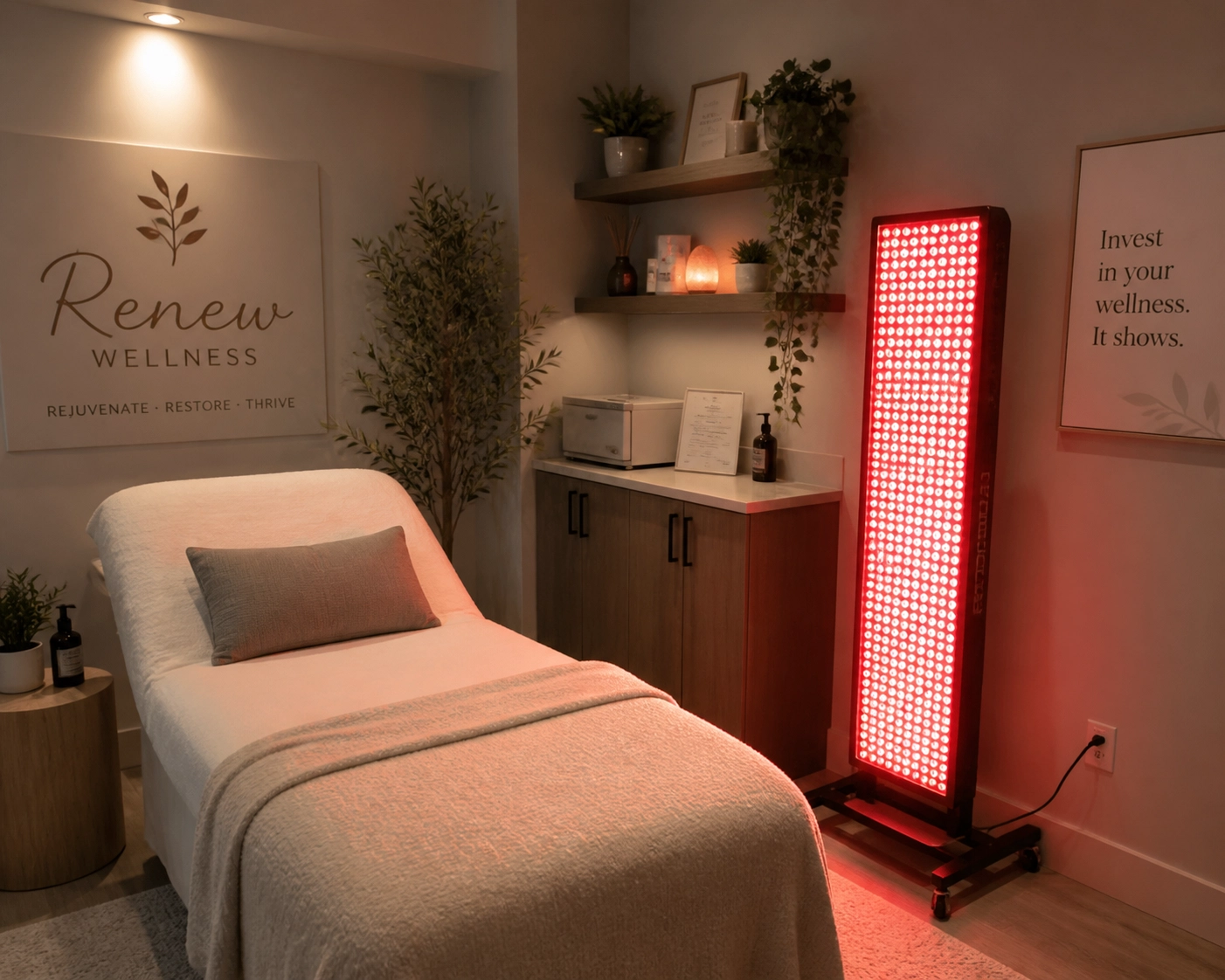
Red light therapy (RLT) has rapidly transitioned from specialized athletic training rooms to the mainstream wellness conversation. Walk into a modern wellness clinic in Edmonton, and you are likely to find professional red light and near-infrared systems being used for everything from skin rejuvenation to athletic recovery.
However, with popularity comes a wave of exaggerated claims. Social media feeds are full of promises about overnight hair restoration, instant arthritis cures, and effortless fat melting. At Wave Therapy, we believe in education first and sales second. When you strip away the marketing hype, what does actual clinical science say about red light therapy?
Let's dive into three of the most trending public questions about RLT, separating well-documented facts from popular myths.
1. Does Red Light Therapy Actually Stimulate Hair Growth?
Thinning hair and pattern hair loss affect millions of men and women, leading many to search for non-invasive solutions. Among all the aesthetic applications of RLT, hair stimulation is backed by some of the most robust clinical research.
The Science Behind the Light
Red light therapy: often referred to in clinical literature as low-level light therapy (LLLT) or photobiomodulation: uses specific low-level wavelengths, typically ranging between 620 nm and 670 nm for superficial skin and scalp applications.
When these precise wavelengths penetrate the scalp, they are absorbed by the mitochondria within hair follicle cells. This absorption boosts cellular energy production (ATP), enhances microcirculation around the hair root, and prolongs the growth phase (anagen phase) of the hair cycle. According to research published in journals like Lasers in Surgery and Medicine and indexed on PubMed, LLLT helps reactivate dormant follicles and increases both hair density and tensile strength in early-to-moderate androgenetic alopecia.

What is the Real Timeline?
Patience is required when working with biological hair cycles. Clinical trials demonstrate that visible improvements in thickness and scalp coverage typically require a consistent commitment of 16 to 26 weeks (roughly 4 to 6 months) of regular sessions.
Fact vs. Myth:
- Myth: Red light therapy creates brand new hair follicles on a completely slick, scarred scalp.
- Reality: RLT can only stimulate follicles that are still alive and dormant. It cannot resurrect dead tissue or reverse advanced, long-term baldness on its own. It serves as an exceptional non-invasive option when started early, as highlighted by expert reviews on platforms like Healthline.
2. Can Red Light Therapy Help with Knee Osteoarthritis and Joint Pain?
Joint discomfort, stiffness, and knee osteoarthritis can significantly limit daily life. For individuals seeking alternatives or complements to traditional pharmaceutical management, photobiomodulation offers a promising avenue.
Reducing Inflammation at a Cellular Level
Joint pain is frequently driven by localized inflammation and oxidative stress within joint tissues. When near-infrared and red light wavelengths penetrate deeper into soft tissues and joints, they trigger cellular signaling pathways that suppress pro-inflammatory cytokines.
Recent clinical findings on photobiomodulation highlight its effectiveness in modulating inflammatory responses, reducing joint stiffness, and providing meaningful short-term pain relief for conditions like knee osteoarthritis. By improving local blood flow and cellular oxygenation, RLT supports natural tissue recovery without pharmaceutical side effects.

What to Expect
While RLT is not a structural “cure” for advanced cartilage degeneration, clinical studies show that regular sessions can significantly ease pain scores and improve mobility. Most clients notice a gradual easing of stiffness and joint discomfort after a structured series of treatments.
To explore how these treatments fit into a comprehensive wellness routine, you can review our dedicated service options on the Wave Therapy Sessions Page.
3. How Many Sessions Are Needed for Non-Invasive Fat Loss and Body Contouring?
One of the most persistent myths in the wellness space is that red light therapy can magically "melt away" pounds of body fat without any lifestyle adjustments. Let's clear the air: RLT is not a weight-loss miracle. However, when utilized correctly, it can assist with targeted body contouring and skin tightening.
The 8–12 Session Protocol
Clinical observations and protocols for low-level laser body contouring typically revolve around a series of 8 to 12 sessions, spaced two to three times per week.
Instead of destroying fat cells like invasive surgical procedures (such as liposuction), red light therapy temporarily alters the permeability of fat cell membranes, allowing stored lipids to be released into the interstitial space where they are naturally metabolized and cleared by the lymphatic system.

Realistic Results
- What it does: Helps reduce localized inches around stubborn areas like the waist, hips, or thighs, while tightening the overlying skin and reducing the appearance of cellulite.
- What it doesn't do: It will not replace caloric balance, regular physical activity, or produce dramatic whole-body weight loss on the scale. Think of it as a localized refinement tool rather than a diet substitute.
Pairing Light Therapy with Comprehensive Wellness Care
Achieving optimal vitality often requires a multi-layered approach. While full-body red light therapy excels at cellular rejuvenation, inflammation reduction, and skin toning, pairing it with complementary bodywork amplifies your results.
For integrated physical care in our community, we recommend visiting MassageQuest for expert therapeutic bodywork providers. Additionally, for dedicated massage therapy and muscle recovery, our sister company Book a Therapy offers wonderful specialized treatments that pair seamlessly with your light therapy routine.
Summary: Your Takeaway on Red Light Therapy
Red light therapy is a safe, FDA-approved, non-invasive technology grounded in real cellular science: not magic.
- For hair thinning, expect modest, steady regrowth when you commit to a 16–26 week protocol.
- For joint pain and inflammation, expect meaningful short-term relief and improved mobility.
- For body contouring, expect subtle inch-loss and skin tightening across an 8–12 session protocol.
Curious to experience the benefits for yourself? Take a moment to explore our sessions at Wave Therapy and discover how science-backed light therapy can support your personal health journey right here in Edmonton.
Leave a Reply