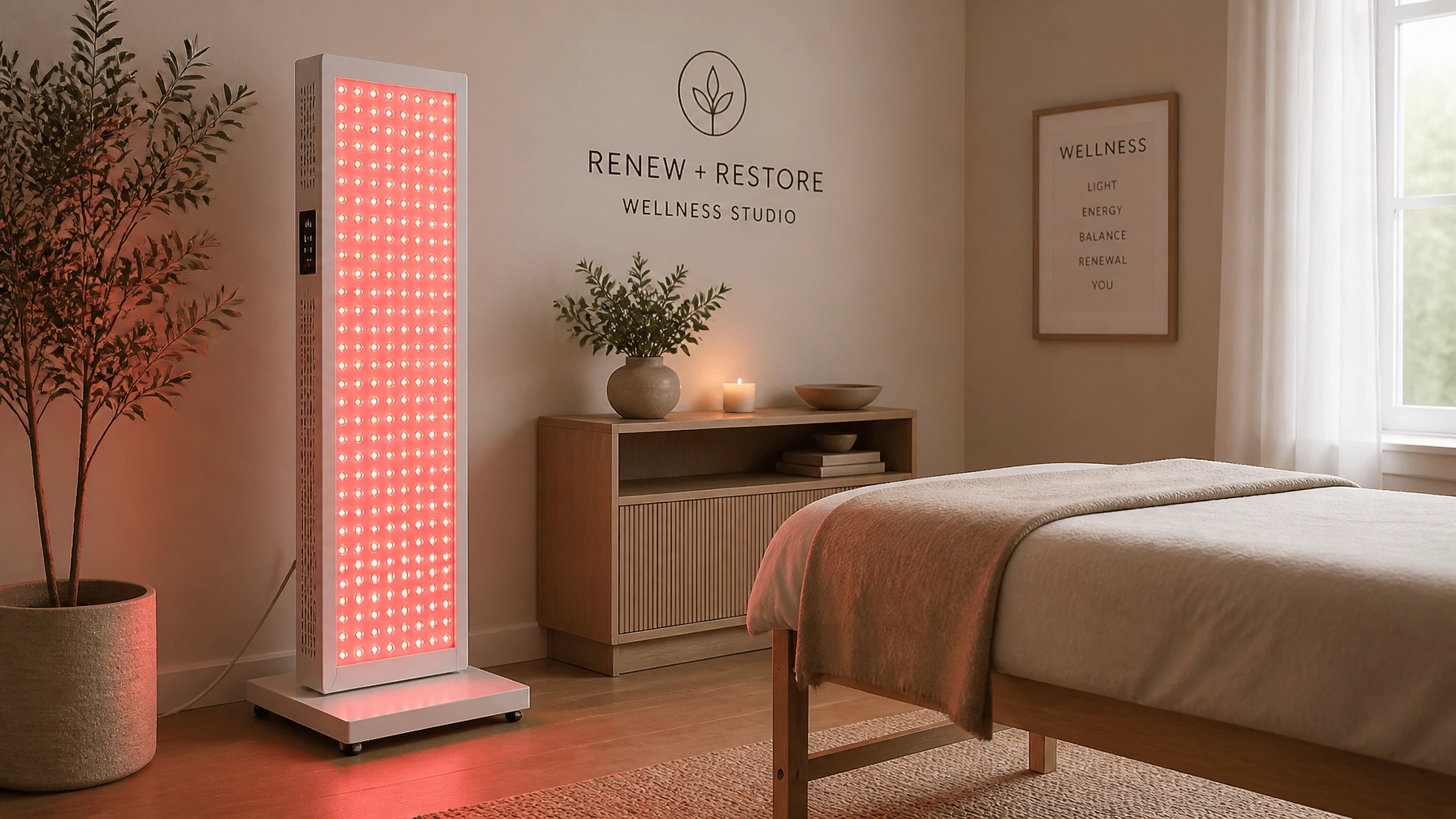
When people first discover Wave Therapy, they often have a flurry of questions. They want to know about red light therapy benefits, how often to use red light therapy, and what kind of physical sensations to expect. But one safety question frequently tops the list during consultations: Do I actually need to wear goggles, or is keeping my eyes closed enough?
It is a completely valid question. After all, photobiomodulation (the scientific term for red light therapy) uses gentle, low-level wavelengths of light designed to heal, rejuvenate, and energize cells. It is non-invasive, FDA-approved, and celebrated for having virtually no harmful side effects when used correctly. A recent low-level light safety review also supports photobiomodulation as generally safe for adults when used with proper clinical protocols and device guidance (PubMed PMID 38729232).
However, eye safety depends heavily on device power, distance, and wavelength. Whether you are visiting a dedicated clinic for red light therapy in Edmonton or setting up a panel at home, understanding how your eyes interact with light is essential for a safe, stress-free wellness routine.
When Are Goggles Necessary vs. When Is Closing Your Eyes Enough?

For many standard body treatments: such as targeting lower back stiffness, knee pain, or shoulder recovery: your eyes are far outside the direct beam. In these cases, no special eyewear is needed at all.
When your face is exposed to the light (like during facial rejuvenation or anti-aging sessions), the rule of thumb shifts based on irradiance (power output) and proximity:
- Low-Power & Greater Distance (Under ~50 mW/cm² at the eye): If you are standing 12 to 24 inches away from a modest panel, simply keeping your eyes closed is typically sufficient. The eyelids block a significant amount of visible light and mild thermal stress, provided you do not stare directly into the diodes.
- High-Power & Close Range (Over 50–100 mW/cm² within 2 feet): Modern, high-output professional panels deliver serious energy. If you are doing close-range facial treatments with high-density LEDs, medical wellness sources: including insights highlighted by publications like Healthline and the Cleveland Clinic: recommend wearing certified protective eyewear to prevent retinal photostress and eye fatigue. That caution is worth taking seriously because a PubMed-indexed safety study found that certain repeated low-level red light devices could exceed ANSI exposure limits under specific viewing conditions, reinforcing the importance of avoiding direct eye exposure with stronger systems (PubMed PMID 38180093).
Professional Clinic Systems vs. At-Home Devices: What’s the Difference?
Not all light sources are created equal. The equipment you encounter in a professional wellness environment differs significantly from consumer-grade gadgets bought online.
Professional Clinic Systems
Clinical-grade systems feature high-irradiance panels designed to deliver optimal therapeutic doses efficiently. Because of their concentrated power output, professional practitioners in Edmonton will almost always provide or mandate specialized eye protection during facial treatments. These systems cover a wider surface area and emit greater photon density per square centimeter, making proper eye shielding a standard best practice. If you want more background on practical safety questions, you can also browse the Wave Therapy Blog for related posts on red light therapy use and precautions.
At-Home Devices
Consumer devices: ranging from flexible LED face masks to handheld wands: generally operate at lower power densities. While LED masks are designed to sit directly against or very close to the face, their lower output means that keeping your eyes comfortably closed is usually adequate for most users. However, if you experience any dryness, temporary spots in your vision (afterimages), or headaches, adding lightweight blackout or wavelength-specific goggles is a simple fix.
Why Near-Infrared Wavelengths Pose Different Considerations
Red light therapy typically combines visible red light (around 660 nm) with invisible near-infrared (NIR) light (around 810 to 850 nm). This combination is fantastic for deep tissue repair, joint relief, and skin rejuvenation.
However, near-infrared light introduces a unique safety factor: you cannot see it.
Because NIR light is invisible to the human eye, your blink reflex: which naturally protects your eyes from glaring visible brightness: does not trigger. Your eyes might feel completely relaxed while absorbing invisible near-infrared energy at close range. Over prolonged exposure or at high intensities, this invisible energy can penetrate deeper into ocular structures, potentially causing thermal stress to the retina or lens over time.
This is why reputable manufacturers and wellness guides advise extra caution and proper eye shielding when high-output near-infrared diodes are positioned directly near the face. That general approach also matches guidance from the Cleveland Clinic, which notes LED light therapy is generally safe but still calls for eye protection and careful use instructions, especially for facial treatments.
What to Look for in Protective Eyewear

If you decide that goggles are right for your sessions, standard sunglasses or generic UV-blocking beach glasses won't cut it. UV rays operate at entirely different wavelengths (under 400 nm), whereas red and near-infrared therapy operates in the 600–900 nm range.
When shopping for protective eyewear, look for:
- Wavelength-Specific Blocking: Ensure the glasses are rated to attenuate or block the specific 600–900 nm red and NIR spectrum.
- Opaque or Tinted Design: Tanning-style blackout goggles or certified RLT-blocking glasses reduce both blinding brightness and cumulative retinal exposure.
- Comfort and Fit: A snug, comfortable fit ensures light doesn't leak in around the edges during longer sessions.
To learn more about how we curate our client experiences, you can explore our Wave Therapy Blog for additional tips on optimizing your wellness journey.
Tailoring Your Routine Safely in Edmonton
Finding the right balance for your wellness routine is all about listening to your body. If you are curious about scheduling your first session or want to explore our Edmonton checkout and session packages, our team is always happy to guide you through what to expect.
For those building a comprehensive self-care regimen, pairing red light therapy with complementary modalities can amplify your results. Many of our clients also enjoy professional bodywork with our trusted referral partners at Massage Quest or seek out specialized therapeutic massage through our sister company, Book a Therapy.
Practical Takeaways
- Assess the distance: If you are over 12–24 inches away from a low-to-moderate power panel for body treatments, closing your eyes or looking away is usually enough.
- Respect the NIR: Because near-infrared light is invisible, don't rely on your blink reflex to protect your eyes during close-up facial work.
- Use the evidence as a guide: Published safety reviews support red and near-infrared photobiomodulation as generally safe when used properly, but device output and exposure conditions still matter a lot (PubMed PMID 38729232).
- Listen to your eyes: If you experience eye fatigue, dryness, or a mild headache after a session, grab a pair of wavelength-specific goggles for your next visit.
- When in doubt, protect: There is zero downside to wearing comfortable eye protection during high-output sessions.

Ready to experience natural rejuvenation in a calm, professional environment? Explore our sessions and book when you are ready.
Leave a Reply