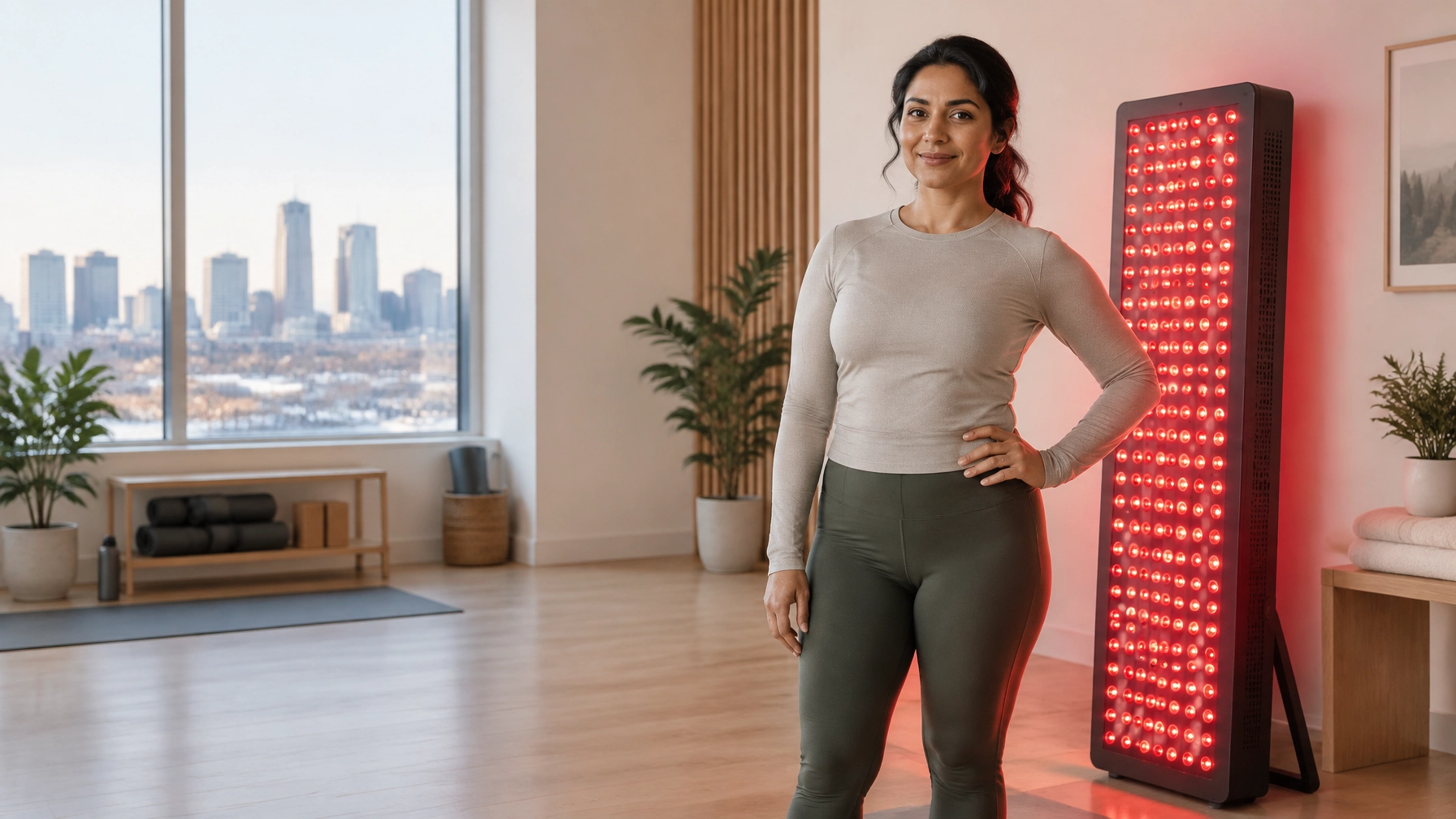
Cellulite is normal, common, and not a sign that anything is wrong with your body. It often appears on the thighs, hips, and buttocks, including in people who are active and at a healthy weight.
Still, many people want to know: Can red light therapy reduce cellulite?
The honest answer is that red light therapy may help soften the appearance of cellulite over time. It may support collagen production, skin firmness, circulation, and tissue recovery. However, it is not a cure, and it will not permanently remove cellulite. Results vary from person to person and depend on the type of cellulite, treatment consistency, and other lifestyle factors.
Can red light therapy reduce cellulite?
Red light therapy, also called photobiomodulation or low-level light therapy, may make cellulite-prone skin look smoother and firmer.
The treatment uses specific wavelengths of red and near-infrared light. These wavelengths reach the skin and some of the underlying tissue without damaging the surface. Over a series of treatments, the light may support cellular energy production, circulation, collagen activity, and the body’s natural recovery processes.
The expected result is a gradual improvement in appearance, not the complete elimination of cellulite.
Research on low-level light therapy is encouraging but limited. In one double-blind, placebo-controlled trial, participants receiving low-level laser treatment showed improvements in cellulite grading and thigh circumference compared with the sham-treatment group. The study involved a specific green-light device, so its results should not be assumed to apply identically to every red-light panel or treatment protocol. Read the study on PubMed.
A newer randomized, double-blind study using a 650 nm LED protocol in people with grade 2 to grade 4 cellulite found improvements in local skin temperature and pain sensitivity. This suggests that photobiomodulation may influence inflammatory and circulation-related factors, although the study does not prove that red light permanently removes cellulite. Read the 2024 PubMed study.
How does red light therapy work at a cellular level?
The science of red light therapy is still developing, but the proposed process is relatively simple.
Red and near-infrared wavelengths are absorbed by structures inside cells, including parts of the mitochondria. Mitochondria help cells produce energy. Photobiomodulation may support this process and influence cellular signaling involved in repair and inflammation.
For cellulite, the potential benefits may include:
- Supporting fibroblast activity, which is involved in collagen production
- Improving the appearance of skin firmness and elasticity
- Supporting local circulation
- Reducing some inflammation-related tissue changes
- Helping skin look smoother and more even
- Supporting normal tissue recovery after exercise or other wellness treatments
Cellulite is not caused by one issue alone. It involves fat beneath the skin, connective tissue bands, skin thickness, circulation, genetics, hormones, and age-related changes. Because red light therapy does not release deeper connective tissue bands, it is best viewed as a supportive treatment rather than a structural fix.

Does red light therapy really work for cellulite?
It can help some people, particularly with mild to moderate cellulite, but results are usually modest.
You may notice:
- Skin that feels smoother or looks more even
- A firmer appearance in treated areas
- Less noticeable dimpling in normal lighting
- Improvements in skin tone and texture
- Temporary changes in how the tissue feels or looks after treatment
A red light therapy before and after comparison can be useful, but photographs need to be taken under consistent conditions. Lighting, posture, hydration, camera angle, and muscle tension can all change how cellulite appears.
For a fair comparison:
- Take initial photos in the same room and lighting.
- Use the same distance and camera angle.
- Keep your posture consistent.
- Avoid comparing photos taken immediately after exercise or massage with relaxed-state photos.
- Review changes after several weeks rather than after one appointment.
Wave Therapy offers red and near-infrared treatments in Edmonton as part of a broader wellness approach. The goal is to support gradual, natural-looking improvements without promising that cellulite will disappear.
How many sessions are needed before seeing a change?
There is no universal number because treatment devices, wavelengths, schedules, and individual responses differ.
Many clients notice early changes in skin feel or texture after several sessions. Visible changes are typically assessed over about 4–8 sessions, with continued improvement when treatment is used consistently. If you want a deeper look at scheduling, our post on how often you should use red light therapy explains frequency in more detail. Cellulite-related changes may take longer, particularly when the dimpling is more pronounced.
A practical expectation is:
- After 1–3 sessions: You may notice warmth, relaxation, or temporary changes in skin appearance.
- After 4–8 sessions: Some people begin to see improved texture, firmness, or less noticeable dimpling.
- After 8–12 weeks: A more useful time to assess whether the treatment is helping your skin.
- After the initial series: Maintenance may help support the results.
Consistency matters more than trying to make one session do all the work. Your provider can recommend a schedule based on the treatment area, your goals, and the equipment being used.
Does red light therapy work for all cellulite grades?
Not equally.
Cellulite is sometimes described in grades based on how visible the dimpling is:
- Mild cellulite: Dimpling may be visible mainly when the skin is pinched or when the body is positioned a certain way.
- Moderate cellulite: Dimpling is visible while standing but may be less noticeable when lying down.
- More advanced cellulite: Deeper depressions may be visible in several positions and may involve stronger connective tissue tethering.
Red light therapy is more likely to provide a noticeable cosmetic benefit when the main concerns are skin texture, mild laxity, and superficial dimpling. More advanced cellulite may require a combination of approaches, such as professional body treatments, strength training, massage, or medical procedures.
No light-based treatment can guarantee the same result for every cellulite grade. A consultation is useful if you are unsure what type of treatment matches your goals.
What can red light therapy help with?
Red light therapy is used as a non-invasive wellness treatment for several concerns. It should support, rather than replace, appropriate medical care.
- Joint pain and inflammation
- Muscle recovery
- Fat loss and metabolism support
- Cellulite reduction
- Skin tightening and collagen production
- Anti-aging and skin tone
- Wound healing
- Hair growth
Fat loss support does not mean that red light therapy replaces nutrition, exercise, or medical weight-management care. Similarly, skin improvements are gradual and may be subtle.
Is red light therapy safe, and what are the side effects?
Red light therapy is generally considered low risk when appropriate equipment is used according to the manufacturer’s instructions. A session usually feels warm but painless. Most treatments take approximately 10–20 minutes, and there is typically no downtime.
Possible short-term effects may include:
- Mild warmth during treatment
- Temporary pinkness or redness
- Mild sensitivity in the treated area
- Eye discomfort if bright light is viewed directly
These effects are usually short-lived. Proper eye protection should be used when recommended by the equipment manufacturer or provider.
Red light therapy may not be appropriate for everyone. Speak with your doctor before treatment if you:
- Are pregnant or trying to become pregnant
- Are receiving active cancer treatment or have a suspicious skin lesion
- Take photosensitizing medications
- Have a condition that makes you unusually sensitive to light
- Have a recent injury, surgery, or unresolved skin problem in the treatment area
A wellness studio should also be told about your medications and relevant health history before your first session.
What else helps reduce the appearance of cellulite?
Red light therapy tends to work best as one part of a realistic, consistent routine.
Hydration
Drinking enough fluids supports normal skin function and overall wellness. Hydration will not remove cellulite, but dehydrated skin may look less smooth or supple.
Strength training
Building muscle in the legs and glutes may improve overall shape and support a firmer appearance. Exercise does not guarantee cellulite removal, but it can complement skin-focused treatments.

Massage and circulation-focused care
Massage may temporarily improve circulation, fluid movement, and the appearance of skin texture. It should not be described as a permanent cellulite cure, but it can be a comfortable addition to a self-care plan.
Wave Therapy clients may also explore massage through Massage Quest, our provider and referral partner, or Book A Therapy, our sister company for massage services.
Consistency
Cellulite is influenced by genetics, hormones, connective tissue, and aging. Short-term efforts may produce short-term changes. A consistent routine is more realistic than expecting a single treatment to create a permanent result. If skin texture is part of your goal, you can also read our related post on red light therapy for wrinkles and collagen support.
For a broader local overview, you can also explore the Wave Therapy Edmonton wellness blog.
FAQ: Can red light therapy reduce cellulite?
Can red light therapy reduce cellulite permanently?
No. It may soften the appearance of cellulite and support smoother-looking skin, but it does not permanently remove cellulite.
How quickly does red light therapy work for cellulite?
Some people notice changes after 4–8 sessions. More meaningful results may take 8–12 weeks, and maintenance may be needed.
Is red light therapy painful?
No. Sessions are generally warm and painless, with no expected downtime.
Does red light therapy work better for mild cellulite?
Mild to moderate cellulite may respond more noticeably. Deeper or more advanced cellulite can be less predictable and may benefit from a combined treatment plan.
Can exercise and massage improve the results?
They may complement red light therapy by supporting muscle tone, circulation, mobility, and overall skin appearance.
Is red light therapy suitable during pregnancy?
Elective cosmetic use during pregnancy is generally approached cautiously because safety data are limited. Speak with your doctor before treatment.
The practical takeaway
So, can red light therapy reduce cellulite?
It may reduce the appearance of cellulite by supporting collagen production, skin firmness, circulation, and normal cellular recovery. The most realistic goal is gradual smoothing rather than complete removal. Results vary, and red light therapy is usually most useful when combined with consistent sessions, strength training, hydration, and other appropriate wellness practices.
If you are in Edmonton and would like to learn more, visit the Wave Therapy homepage or explore sessions and booking options when you are ready.
Leave a Reply