Back pain is one of the most common reasons people look for non-invasive wellness options. Whether it comes from long hours at a desk, intense workouts, muscle tension, or ongoing inflammation, many people want support that does not involve medication or downtime.
So, can red light therapy help back pain?
The most accurate answer is: it may help some people manage pain, stiffness, and inflammation, but it should be viewed as a supportive therapy rather than a guaranteed cure or replacement for medical care.
Here are the most common questions about using red light therapy for back pain.
What is red light therapy for back pain?
Red light therapy, also called photobiomodulation or low-level light therapy, uses specific wavelengths of red and near-infrared light.
The light does not contain ultraviolet radiation and does not burn the skin. Instead, red and near-infrared wavelengths interact with cells and may support the body’s natural repair processes.
For back pain, the potential benefits may include:
- Supporting circulation in the treated area
- Helping calm inflammation
- Supporting cellular energy and tissue repair
- Reducing muscle tightness or soreness
- Supporting recovery after exercise or physical strain
Research on low-level light therapy for low back pain is mixed. A 2016 systematic review and meta-analysis indexed in PubMed reported meaningful short-term pain improvements in some people with chronic, non-specific low back pain.
However, other reviews have been more cautious. The American Academy of Orthopaedic Surgeons’ evidence summary notes that there is not yet enough consistent evidence to confirm low-level light therapy as a stand-alone treatment for low back pain.
That distinction matters. Red light therapy may be useful as part of a broader plan, especially when combined with movement, strengthening, sleep support, and appropriate clinical guidance.
How does red light therapy work for back pain?
Red and near-infrared light may be absorbed by structures inside cells called mitochondria. Mitochondria help produce the energy cells need to function and repair themselves.
In simple terms, red light therapy may give cells a gentle signal to work more efficiently.
For the back, this may support:
- Muscle recovery after activity
- The body’s response to inflammation
- Local tissue repair
- Normal circulation
- Reduced feelings of stiffness or soreness
Near-infrared light generally penetrates more deeply than visible red light, which is why it is often included in systems designed for muscle and joint support.
Still, red light therapy cannot correct every cause of back pain. It does not realign the spine, remove a herniated disc, or treat serious nerve compression. If your symptoms are caused by an underlying medical condition, diagnosis and treatment from a qualified healthcare professional are important.

How long does red light therapy take to help back pain?
The timeline is different for everyone.
Some people notice a relaxing warmth or temporary comfort after their first session. Others need several sessions before they notice changes in stiffness, soreness, or recovery.
For pain and inflammation, a practical starting point is to assess your response over four to eight sessions. Many people choose to attend two or three times per week during an initial trial period.
Results can depend on:
- The cause and duration of your back pain
- The treatment area and device used
- The wavelengths and dose delivered
- Your activity and exercise routine
- Sleep, stress, and general health
- Whether the pain is muscular, joint-related, nerve-related, or caused by another condition
Red light therapy is not usually a one-session solution. Consistency is more useful than spending excessive time under the lights. You can learn more in Wave Therapy’s guide to how often to use red light therapy.
How often should you use red light therapy for back pain?
A common wellness schedule is two to three sessions per week for several weeks, followed by a less frequent maintenance schedule if you find it helpful.
The appropriate frequency depends on the equipment and the treatment plan. More is not automatically better. Light therapy follows a dose-response pattern, meaning that the amount, distance, and duration all matter.
A typical professional session may last approximately 10 to 20 minutes, but your provider should explain the recommended settings for the system being used.
For the best chance of evaluating whether it helps, try to:
- Follow a consistent schedule
- Avoid increasing session length without guidance
- Track pain, stiffness, and mobility over time
- Continue appropriate movement and strengthening
- Stop or adjust sessions if you experience unusual discomfort
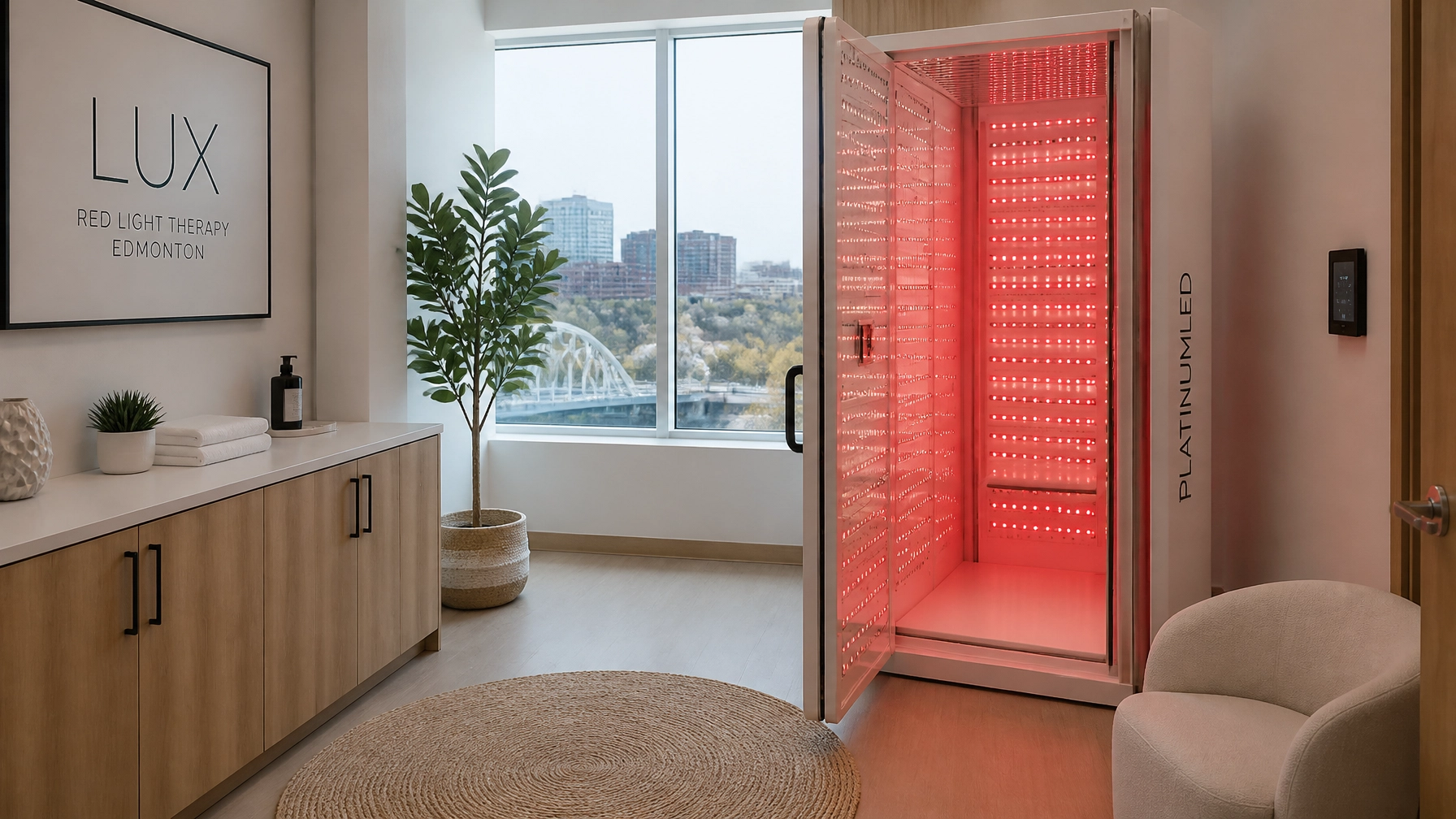
Wave Therapy’s Edmonton red light therapy sessions use full-body systems designed to provide broad exposure to red and near-infrared light. Full-body treatment may be convenient if you are managing back discomfort along with general muscle soreness or recovery needs.
Who may benefit from red light therapy for pain?
Red light therapy may be worth exploring for adults experiencing:
- General lower back muscle soreness
- Exercise-related tightness
- Occasional stiffness from prolonged sitting
- Mild joint discomfort
- Recovery-related inflammation
- Ongoing non-specific back pain that has already been assessed
It may also be useful for fitness enthusiasts who want to support recovery after strength training, running, cycling, or recreational activities.
The Cleveland Clinic’s overview of red light therapy describes it as generally well tolerated in the short term when used as directed, while also noting that more research is needed for many of its proposed uses.
Red light therapy is best considered an addition to — not a replacement for — professional care, physical therapy, exercise, or other recommendations from your healthcare provider.
Who should avoid it or speak with a healthcare provider first?
Red light therapy is not appropriate for every situation. Speak with a doctor, pharmacist, or qualified provider before treatment if you:
- Take medication that increases sensitivity to light
- Have a condition that causes light-triggered seizures
- Are pregnant or trying to become pregnant
- Have an active cancer or suspicious lesion in the treatment area
- Have a significant eye condition
- Have recently had surgery or a serious injury
- Have unexplained or rapidly worsening back pain
Seek urgent medical attention for back pain accompanied by symptoms such as loss of bladder or bowel control, severe weakness, numbness in the groin area, fever, unexplained weight loss, or pain following major trauma.
These symptoms require medical assessment rather than a wellness session.
What should you expect during a red light therapy session?
A red light therapy session is generally quiet, simple, and non-invasive.
At a professional studio such as Wave Therapy, you can expect:
- A brief intake or discussion: You may be asked about your goals, pain areas, medications, and relevant health history.
- Preparation: You will receive instructions on clothing, positioning, and eye protection. The treatment area may need to be accessible to the light.
- Light exposure: You stand or lie near the red and near-infrared light system for the recommended time.
- A warm, bright sensation: Most people feel gentle warmth. The session should not feel painful or intensely hot.
- No required downtime: You can usually return to normal activities afterward, unless your healthcare provider has given you other instructions.

You do not need to expect dramatic changes immediately. A more useful approach is to notice whether your movement, comfort, or recovery gradually improves over several sessions.
For additional context about realistic treatment timelines, read Wave Therapy’s guide to what red light therapy results may look like and when to expect them.
Can red light therapy be combined with massage?
Many people combine light therapy with other recovery-focused services.
Red light therapy may support cellular recovery, while massage can address muscle tension, mobility, and relaxation. If you are considering both, it may be helpful to schedule treatments in a way that feels comfortable and does not aggravate your symptoms.
You can explore massage options through Wave Therapy’s referral partner, Massage Quest, or through sister company Book-a-Therapy.
Massage and red light therapy are not substitutes for diagnosis when back pain is severe, persistent, or associated with neurological symptoms.
How much does red light therapy cost in Edmonton?
The cost of red light therapy in Edmonton depends on the provider, equipment, session length, and whether you purchase a package.
Publicly listed local examples show that:
- Short full-body sessions may be around $39 to $49
- A 30-minute full-body session may be approximately $75
- Packages often reduce the effective price per session
For current Wave Therapy pricing and availability, visit the official Edmonton session and checkout page. Promotions and package prices can change, so it is best to confirm the current cost before booking.
When comparing options, ask:
- Is the treatment full-body or targeted?
- What wavelengths are used?
- How long is each session?
- Is eye protection provided?
- Are packages refundable or transferable?
- Is there an intake process for pain-related goals?
The bottom line: Can red light therapy help back pain?
Red light therapy may provide modest support for some people with muscular back soreness, stiffness, or non-specific chronic pain. Some research suggests short-term pain relief, but the overall evidence remains mixed and does not support presenting red light therapy as a cure.
A sensible approach is to use it as one part of a broader wellness or recovery plan. Track how you feel, stay consistent, and speak with a healthcare professional if your pain is severe, persistent, or unexplained.
If you are curious about red light therapy in Edmonton, you can learn more about Wave Therapy’s approach and explore sessions when you are ready.
Leave a Reply