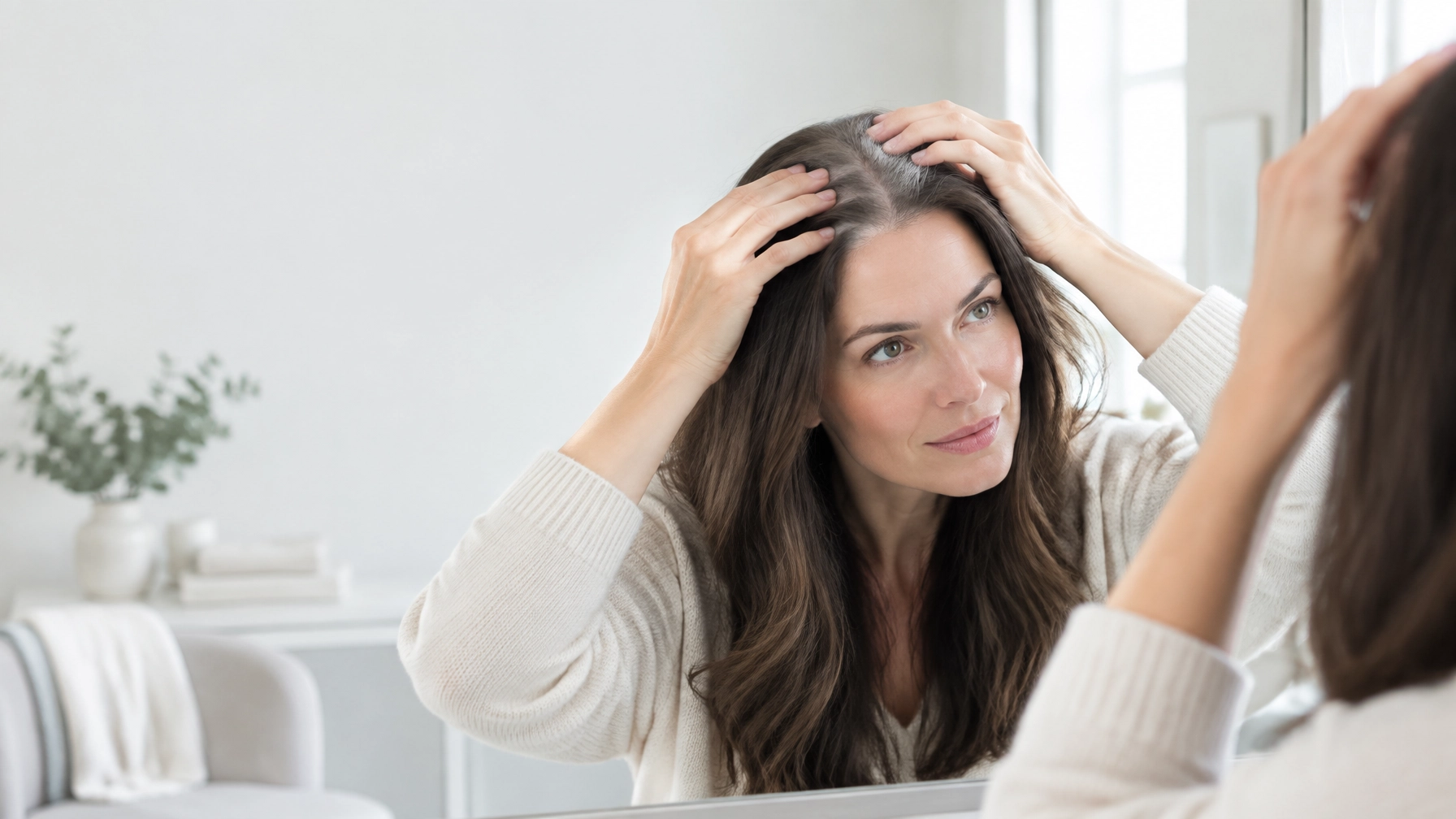
Hair thinning can be stressful, especially when the cause is unclear. In Edmonton, more people are asking whether red light therapy can support hair growth without medication, injections, or surgery.
The short answer is: it may help some people, especially those with early-to-moderate androgenetic alopecia, also called pattern hair loss. Results are usually gradual, modest, and dependent on consistent treatment.
Red light therapy is not a cure for every type of hair loss. It cannot reliably restore follicles that have been permanently destroyed or replaced by scar tissue.
Here are the most common questions people are asking in 2026.
What is red light therapy for hair loss?
Red light therapy, also called low-level light therapy or photobiomodulation, uses low-intensity red and sometimes near-infrared light.
For hair-growth research, many clinical devices use red light around 650 to 655 nanometres. The light is thought to interact with cellular structures in and around the hair follicle. In simple terms, it may support cellular energy, circulation, and the active growth phase of the follicle.
The wavelength is only one part of the treatment. Device quality, light intensity, distance, session length, treatment area, and consistency also matter.
Does red light therapy actually work for hair growth?
The evidence is strongest for androgenetic alopecia, commonly known as male- or female-pattern hair loss.
Several randomized studies have reported improved hair counts or hair density compared with sham treatment. For example:
- A 655 nm laser-comb study reported improved terminal hair density after 26 weeks of treatment. Read the study on PubMed.
- A randomized trial of a 650 nm helmet-style device found increased hair density after a 24-week treatment period. See the PubMed-indexed study.
- A systematic review found that low-level light therapy may improve hair density in people with androgenetic alopecia, although study sizes and devices varied. Review the evidence in PMC.
This does not mean everyone will regrow a full head of hair. A realistic goal is often slower progression, thicker-looking hair, or modest improvement in density.
For a broader explanation of what red light therapy can and cannot do, see the Cleveland Clinic’s red light therapy overview.
What can red light therapy help support?
The strength of evidence varies by condition. Red light therapy should be considered supportive care, not a guaranteed treatment.
- Androgenetic alopecia, or pattern hair loss
- Early male-pattern hair thinning
- Early female-pattern hair thinning
- Hair-growth support where follicles remain active
- Scalp circulation and cellular recovery support
- Skin rejuvenation
- Collagen production
- Fine lines and wrinkles
- Uneven skin tone and texture
- Acne support
- Scar appearance
- Stretch-mark appearance
- Joint discomfort and stiffness
- Inflammation-related discomfort
- Muscle soreness and exercise recovery
- Wound-healing support in appropriate clinical settings
- Cellulite appearance
- Skin tightening and firmness
- Non-invasive body-contouring support
- Fat-reduction support alongside healthy lifestyle habits
For body-contouring, fat loss, and cellulite, expectations should be particularly measured. Red light therapy does not replace nutrition, exercise, sleep, or medical weight-management care.
Does it work for androgenetic alopecia?
This is the hair-loss condition with the most supportive evidence.
Androgenetic alopecia develops when genetically sensitive follicles gradually become smaller. Red light therapy may help support these miniaturized follicles while they are still producing hair.
It may be more suitable when you notice:
- Gradual thinning at the crown
- A widening part
- A slowly receding hairline
- Reduced density over the top of the scalp
- Finer strands than you had previously
Red light therapy generally works better on follicles that are weakened but still active. It is less likely to help areas that have been completely bald for many years.
A dermatologist can help distinguish androgenetic alopecia from thyroid conditions, iron deficiency, alopecia areata, medication-related shedding, and other causes.

Can it help a receding hairline, or only a thinning crown?
It may help either area if viable follicles remain.
A receding hairline can be more difficult to improve because follicles may have been miniaturizing for a long time. However, red light therapy is not limited to the crown. Treatment can be directed toward areas of visible thinning, including the temples and frontal hairline.
The key question is not simply where the hair is thinning. It is whether the follicles are still capable of producing hair.
Red light therapy is not expected to regrow hair from fully bald, smooth areas where follicles are no longer functioning. It is also not a treatment for scarring alopecia, where inflammation or injury has permanently damaged the follicle.
Does red light therapy work for women?
Women with female-pattern hair loss may respond to red light therapy, and clinical research includes female participants.
However, women can experience several different forms of shedding. A widening part may be related to androgenetic alopecia, but sudden or diffuse shedding can also result from:
- Pregnancy or childbirth
- Low iron or other nutritional deficiencies
- Thyroid changes
- Hormonal changes
- Significant stress or illness
- Medication changes
- Scalp inflammation
A diagnosis matters before beginning treatment. Red light therapy may be a reasonable supportive option for some women, but it should not delay an assessment for an underlying medical cause.
Can it help with postpartum hair loss?
Postpartum shedding is often a form of temporary telogen effluvium. It commonly begins a few months after delivery and may improve naturally over six to 12 months.
There is limited direct research on red light therapy specifically for postpartum shedding. That means expectations should remain cautious.
If you are postpartum, consider speaking with your physician or dermatologist before treatment, particularly if:
- Shedding is severe or continues to worsen
- You have fatigue, dizziness, or other symptoms
- You are breastfeeding
- You take medications or supplements that may affect light sensitivity
- Your hair loss is patchy rather than diffuse
Red light therapy may be discussed as supportive care after the likely cause has been assessed.
Can red light therapy help after a hair transplant?
Some clinics use light-based therapy as part of post-transplant recovery or maintenance plans. It may support the healing environment and the activity of transplanted follicles, but the treatment should be coordinated with the transplant surgeon.
Do not use red light therapy over fresh wounds, scabs, or irritated skin unless your surgical team approves it. The correct timing depends on the procedure, healing progress, and device.
Red light therapy cannot replace the transplant itself. It may be considered an adjunct rather than a substitute.
How often should you use red light therapy for hair growth?
A typical research-informed schedule is:
- Approximately three sessions per week
- About 15 to 30 minutes per session, depending on the device
- A consistent course of 16 to 24 weeks before judging results
Some clinical studies use every-other-day treatment, while others use three weekly sessions. Follow the instructions for the specific system rather than copying a protocol from a different device.
Wave Therapy’s guide explains how often red light therapy is generally used. Hair growth usually requires a longer evaluation period than goals such as relaxation or temporary muscle recovery.
How long until you see red light therapy results?
Hair grows slowly, so visible change should not be expected after one or two sessions.
A practical timeline may look like this:
- First several weeks: You may notice little visible change.
- Around 8 to 12 weeks: Some people report reduced shedding or subtle changes in texture.
- Around 16 to 24 weeks: This is a more reasonable point to compare density and thickness.
- After six months: A provider or dermatologist can help assess whether continuing makes sense.
Take consistent photos in the same lighting, position, and hairstyle. Red light therapy before-and-after photos can be useful, but camera angle, hair length, styling, and lighting can create misleading impressions.

Is red light therapy safe for hair loss?
For many healthy adults, red light therapy is generally well tolerated when used correctly. It does not use ultraviolet light and is non-invasive.
Possible short-term effects include:
- Mild warmth
- Temporary scalp redness
- Dryness or irritation
- Itching or tenderness
- Headache or eye discomfort if the light is too bright
More exposure is not automatically better. Read Wave Therapy’s posts on red light therapy safety and possible side effects before starting.
Who is red light therapy not for?
Speak with a physician, dermatologist, pharmacist, or qualified provider before treatment if you:
- Have a photosensitive condition such as lupus or porphyria
- Take photosensitizing medication
- Have an active scalp infection
- Have an open scalp wound
- Have severe psoriasis, dermatitis, or another active scalp condition
- Have a suspicious lesion or active skin cancer in the treatment area
- Have light-triggered seizures
- Have a significant eye condition or recent eye surgery
- Are pregnant or breastfeeding and considering full-body treatment
- Have sudden, patchy, or rapidly worsening hair loss
- Have fully bald areas with no visible follicle activity
- Have scarring alopecia or permanent follicle damage
- Are receiving chemotherapy or cancer treatment without approval from your oncology team
Do not stop prescribed medication to use red light therapy. Ask your pharmacist or physician whether your medication increases sensitivity to light.
What should you expect in Edmonton?
A professional session should begin with a discussion of your goals, health history, medications, and any scalp concerns. You should receive clear instructions about positioning, treatment time, and eye protection.
At Wave Therapy in Edmonton, red and near-infrared light sessions are designed to be comfortable and non-invasive. If you are exploring hair-growth support, ask which wavelengths and treatment settings are appropriate for the scalp. A full-body system is not automatically the same as a hair-specific cap or comb.
Some clients also include massage in a broader wellness routine. Wave Therapy can point you toward Massage Quest as a provider and referral partner or Book a Therapy, its sister company for massage services.

The practical answer
So, does red light therapy work for hair growth and hair loss in 2026?
It may help support hair density and thickness, particularly in early-to-moderate androgenetic alopecia. The evidence is not equally strong for every form of shedding, and it is limited for postpartum hair loss.
The most reasonable approach is to:
- Confirm the likely cause of hair loss.
- Choose an appropriate, well-documented device.
- Look for a protocol near 650 nm when supported by the treatment system.
- Plan for about three sessions per week.
- Continue for 16 to 24 weeks before judging results.
- Avoid treatment over active scalp conditions or scarred follicles.
- Review medications and health conditions first.
- Keep expectations realistic.
If you are considering red light therapy in Edmonton, you can learn more about Wave Therapy or explore available sessions. There is no pressure to decide immediately. Book when you are ready.
Sources and further reading
- Cleveland Clinic: Red Light Therapy
- Healthline: What Is Red Light Therapy and Is It Safe?
- PubMed: 655 nm low-level light therapy for androgenetic alopecia
- PubMed: Randomized study of low-level light therapy for hair growth
- PMC: Systematic review of low-level light therapy for androgenetic alopecia
This article is for general education and is not a diagnosis or substitute for medical advice. See a qualified healthcare professional for sudden, severe, patchy, or unexplained hair loss.
Leave a Reply