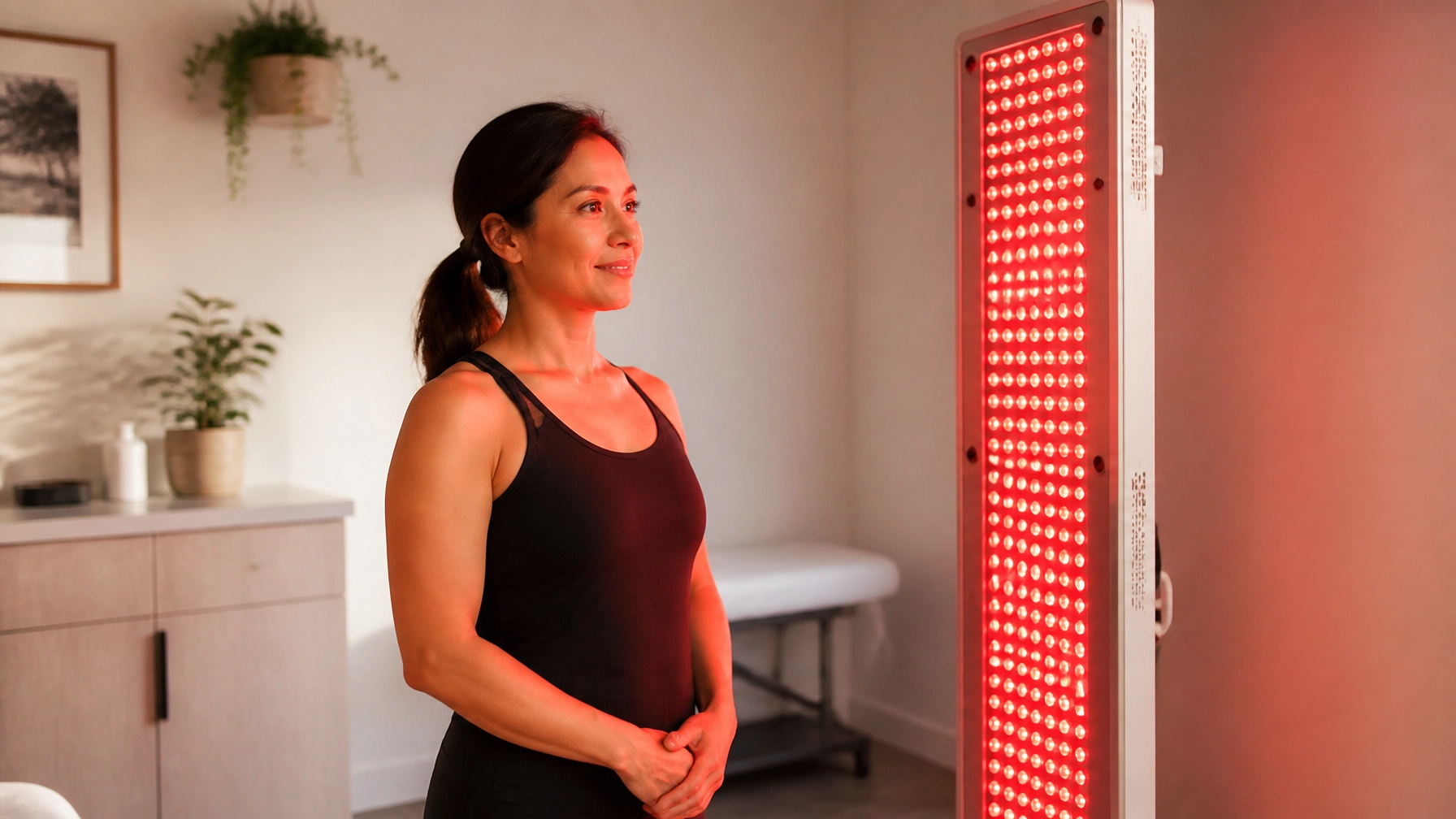
Red light therapy before and after photos can be useful, but they can also create unrealistic expectations. Lighting, camera angle, hydration, skin care, and the number of treatments can all change how results look.
So, what can you reasonably expect from red light therapy in 2026?
The short answer is that results are usually gradual. Some people notice changes in comfort or skin tone within a few weeks. Collagen-related changes take longer. Hair growth is typically the slowest. Consistency, treatment quality, and your starting concern all matter.
This guide answers the most common questions about red light therapy benefits, realistic timelines, professional sessions, and how to track progress.
What is red light therapy?
Red light therapy, also called photobiomodulation, uses low-level red and near-infrared wavelengths to interact with cells.
In simple terms, light energy may support cellular activity involved in circulation, inflammation, tissue repair, and collagen production. Red light tends to work closer to the skin’s surface, while near-infrared light can reach deeper tissues.
Research suggests possible benefits for:
- Skin tone and texture
- Fine lines and mild wrinkles
- Temporary redness and irritation
- Muscle recovery and soreness
- Some types of joint discomfort
- Wound and tissue healing support
- Certain forms of hereditary hair thinning
The evidence is not equally strong for every use. The American Academy of Dermatology explains that some red-light devices have shown promise for skin aging and hair loss, but more research is still needed. Red light therapy is best viewed as a supportive wellness treatment, not a miracle cure or replacement for medical care.
What changes first after red light therapy?
The earliest changes are often about how your skin or body feels rather than a dramatic visual transformation.
Some people report:
- A mild feeling of warmth during treatment
- Temporary relaxation
- Softer-feeling skin
- Less noticeable redness
- Reduced muscle soreness or improved comfort
These early effects should not be confused with deeper collagen remodeling or permanent structural change. Hydration, circulation, and reduced irritation can affect how you feel or look in the short term. More gradual changes require repeated sessions.

Red light therapy before and after: realistic timelines
The following ranges are practical expectations, not guarantees. Individual results vary based on age, skin condition, treatment area, device specifications, lifestyle, and consistency.
Weeks 2–4: skin tone, texture, and comfort
For skin-related concerns, subtle changes may begin during the first month.
You may notice:
- Skin that feels smoother or more comfortable
- A more even-looking tone
- Less visible redness
- A fresher appearance
- Mild improvements in surface texture
A clinical study published in Photomedicine and Laser Surgery evaluated large-area red and near-infrared light treatments. Participants received treatments twice weekly and were assessed after a series of sessions. Researchers reported improvements in skin complexion, skin feeling, skin roughness, and collagen density compared with controls. Read the full study through PubMed Central.
For a fair comparison, do not judge your results after one session. Two to four weeks is a more reasonable window for noticing early skin changes.
Weeks 8–16: collagen, firmness, and fine lines
Collagen production and skin remodeling take time. This is why wrinkle-related results usually appear later than a temporary glow.
Between eight and 16 weeks of regular treatment, some people may see:
- Softer-looking fine lines
- Smoother skin texture
- A modest improvement in firmness
- More even-looking skin
- Gradual changes around areas such as the cheeks or forehead
The results are generally subtle. Red light therapy will not erase deep wrinkles or recreate the effects of surgery. It may support healthier-looking skin when used consistently alongside sun protection, adequate sleep, hydration, and a sensible skin-care routine.
A systematic review of randomized controlled trials found that LED treatments may help with certain dermatological concerns, but the studies used different wavelengths, intensities, session lengths, and schedules. That makes it difficult to compare one device directly with another. You can review the findings in the systematic review published in Lasers in Surgery and Medicine.
One to three sessions: possible pain and soreness relief
Pain relief can happen sooner than visible skin changes.
Some people notice improved comfort after one to three sessions, particularly when the concern involves temporary muscle soreness, stiffness, or localized inflammation. For others, the response may take several weeks.
A realistic expectation is:
- First 1–3 sessions: possible short-term relief or reduced soreness
- Weeks 4–8: more consistent improvement for people who respond
- Beyond eight weeks: reassessment may be useful if symptoms have not changed
Pain has many possible causes. Red light therapy should not delay an assessment for severe, worsening, unexplained, or persistent pain. It should also complement: not replace: appropriate medical care, physiotherapy, strength training, or other recommended treatment.
Weeks 16–26: the slowest timeline for hair growth
Hair growth typically requires the most patience.
Hair follicles move through natural growth cycles, so any change in density or thickness tends to take months rather than weeks. When red light therapy helps, early changes may be difficult to see at first.
A reasonable timeframe is:
- Weeks 1–12: usually too early to judge hair density
- Weeks 16–26: possible changes in thickness or visible growth
- After six months: assess whether the treatment is worthwhile as part of a broader plan
Results depend heavily on the cause of hair loss. Red light therapy is not expected to regrow hair from inactive or permanently damaged follicles. The American Academy of Dermatology notes that red-light devices may support regrowth for some people with hereditary hair loss, but they will not restore a full head of hair for everyone.
If you are experiencing sudden, patchy, or significant hair loss, speak with a physician or dermatologist to identify the cause.
Why consistency matters
Red light therapy is not usually a one-time treatment. A common starting routine is three to five sessions per week, depending on the device, treatment goal, and professional guidance.
More is not automatically better. Light therapy has a dose-response relationship, and excessive use may irritate the skin or reduce comfort. Follow the recommended session length and schedule.
Consistency matters because:
- Cellular processes need repeated stimulation
- Collagen remodeling happens gradually
- Hair follicles require time to cycle
- Pain and recovery goals may depend on cumulative support
- Missed sessions make it harder to evaluate progress
After an initial treatment series, some people continue with maintenance sessions one to three times per week.
How should you track red light therapy before and after results?
Photos can help, but only if they are taken consistently.
Use the following approach:
- Take baseline photos before your first session.
- Use the same camera or phone.
- Photograph the same area and angle.
- Keep the distance from the camera consistent.
- Use the same room and background.
- Take photos in similar natural or neutral lighting.
- Avoid filters, tanning, heavy makeup, or strong cosmetic products.
- Compare photos every two to four weeks, not every day.
For pain, also keep a simple log. Record your comfort level before treatment, immediately afterward, and the next day. Note exercise, sleep, weather, and other factors that may influence symptoms.

Professional full-body sessions versus at-home devices
At-home masks, panels, caps, and wands can be convenient. They may work well for maintenance or mild concerns when used as directed.
Professional full-body systems may offer several advantages:
- Larger treatment coverage
- More consistent positioning
- Controlled session timing
- Access to both red and near-infrared wavelengths
- Higher or more consistent output than many consumer devices
- A structured routine that is easier to follow
The AAD explains that in-office red light devices are generally more powerful than at-home versions. Stanford Medicine similarly notes that clinic-based delivery will often be more powerful than consumer devices, although results still depend on wavelength, strength, timing, and frequency. Read Stanford’s overview of what the science says.
This does not mean every professional session produces faster or better results for every person. It means treatment parameters may be more controlled and the light can cover a larger area.

In Edmonton, Wave Therapy offers full-body red and near-infrared light sessions for people exploring non-invasive support for skin rejuvenation, recovery, comfort, and general wellness. A session typically feels like gentle warmth, and clients can return to normal activities afterward.
Who may be a good candidate?
Red light therapy may be worth exploring if you are:
- Looking for non-invasive skin-care support
- Managing everyday muscle soreness or stiffness
- Interested in supporting post-exercise recovery
- Hoping to improve the appearance of fine lines or uneven texture
- Exploring supportive options for certain types of hair thinning
- Comfortable with gradual results and regular sessions
It is not suitable for everyone. Speak with a healthcare professional before treatment if you:
- Have a light-sensitive condition such as lupus
- Take medication that increases sensitivity to light
- Have an unexplained skin lesion or active skin condition
- Have a history of skin cancer in the treatment area
- Are pregnant or breastfeeding and have questions about suitability
- Have significant or unexplained pain
- Are considering treatment for a diagnosed medical condition
Protect your eyes according to the provider’s or device manufacturer’s instructions. Also remember that “FDA-cleared” refers to the safety and intended use of a specific device. It does not guarantee dramatic results.
What about fat loss and cellulite?
Red light therapy is sometimes promoted for fat reduction, metabolism, or cellulite. Results in these areas are less predictable than skin-related outcomes, and red light therapy should not be presented as a substitute for nutrition, movement, or medical weight-management care.
Before-and-after measurements can also be affected by posture, bloating, hydration, and changes in exercise. If body contouring is your main goal, ask how results are measured and what timeframe is realistic before beginning.
For people combining light therapy with recovery-focused care, a qualified massage provider may also be relevant. You can explore local referral options through Massage Quest or learn more about massage services through Book a Therapy.
The practical takeaway
Realistic red light therapy before and after results usually look like this:
- 2–4 weeks: improved comfort, skin tone, and surface texture may become noticeable
- 8–16 weeks: collagen-related changes, firmness, and fine-line improvements may gradually appear
- 1–3 sessions: some people may notice early pain or soreness relief
- 4–8 weeks: sustained comfort improvements may be easier to assess
- 16–26 weeks: hair-growth changes, when they occur, are usually the slowest to evaluate
The best approach is to set one clear goal, take consistent photos or notes, follow the recommended schedule, and reassess over time.
If you are curious about red light therapy in Edmonton, you can learn more about Wave Therapy or explore the available introductory options through the Edmonton booking page when you are ready.
Frequently asked questions
How long does red light therapy take to show results?
Early skin tone, texture, or comfort changes may appear within two to four weeks. Collagen and wrinkle changes generally take eight to 16 weeks. Hair-related changes may require 16 to 26 weeks or longer.
How often should I use red light therapy?
Many routines involve three to five sessions per week during an initial series. Always follow the treatment schedule recommended for the specific device or professional system.
Is professional red light therapy better than at-home treatment?
Professional systems often provide greater coverage and more controlled output. At-home devices can still be useful for maintenance, but their strength and treatment parameters vary widely.
Can red light therapy remove wrinkles?
It may support gradual improvements in fine lines, skin texture, and firmness. It cannot remove deep wrinkles or guarantee a dramatic transformation.
Can red light therapy regrow hair?
It may support hair growth for some people with certain types of hereditary hair loss. Results are gradual and unpredictable, and it is not expected to regrow hair from permanently inactive follicles.
Is red light therapy a replacement for medical care?
No. It may be a complementary wellness treatment, but it should not replace diagnosis, prescribed care, or professional advice for pain, skin conditions, wounds, or hair loss.
Health note: This article is for general education and does not replace medical advice. Speak with a qualified healthcare professional about your individual situation, medications, and treatment options.
Leave a Reply