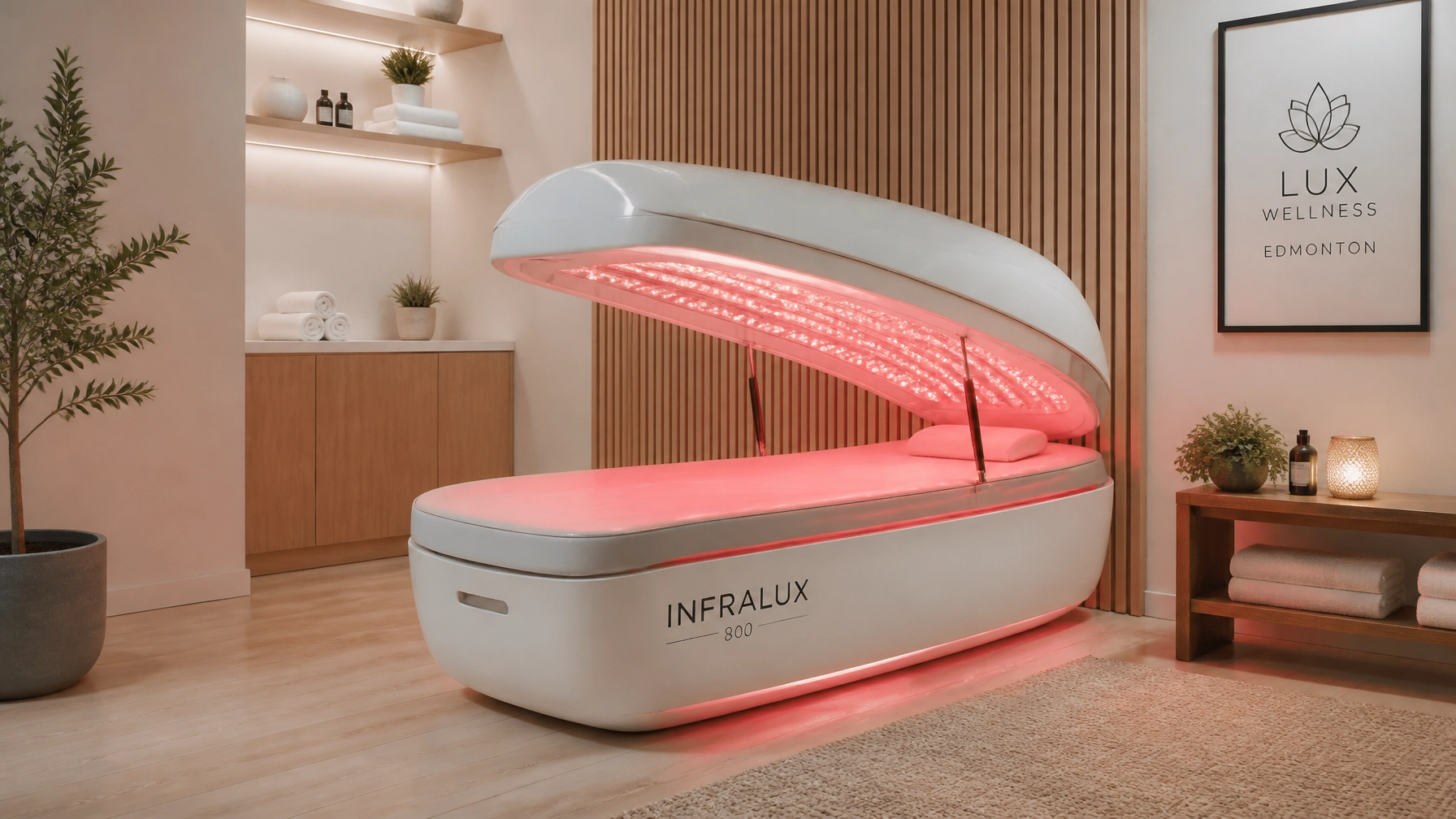
Red light therapy (RLT) has officially moved from a niche biohacking secret to a staple of the Edmonton wellness scene in 2026. Whether you are walking through Old Strathcona or browsing the latest health tech online, you've likely seen the glowing red panels and futuristic LED masks.
But as the technology becomes more accessible, a common question arises: Should I invest in a home device or visit a professional clinic?
With consumer devices flooding the market, it can be difficult to tell the difference between a high-quality medical tool and a glorified desk lamp. In this guide, we’ll break down the science of irradiance, wavelength precision, and why professional systems like those at Wave Therapy offer a fundamentally different experience than what you can achieve in your living room.
The Science of the "Glow": How It Works
To understand the difference between home and professional therapy, we first have to look at the biology. Red light therapy, or photobiomodulation (PBM), works by sending specific wavelengths of light into your cells.
According to Scientific American, these photons are absorbed by the mitochondria: the "powerhouses" of your cells. This stimulates the production of Adenosine Triphosphate (ATP), the fuel your cells need to repair damage, reduce inflammation, and produce collagen.
The Two Critical Wavelengths
Not all light is created equal. For therapeutic results, the industry standard in 2026 focuses on two specific windows:
- Red Light (630–660nm): This range is ideal for surface-level concerns. It penetrates the skin’s upper layers to stimulate fibroblasts, which helps with fine lines, acne, and overall skin rejuvenation.
- Near-Infrared Light (810–850nm): This light is invisible to the human eye but penetrates much deeper: up to several centimeters into the body. This is the "heavy lifter" for joint pain, muscle recovery, and systemic inflammation.

The Irradiance Gap: Why Power Matters
The biggest differentiator between a $200 home mask and a professional-grade system is irradiance. Irradiance is the "power density" of the light: essentially, how many photons are hitting your skin per second.
As noted by the Cleveland Clinic, professional devices are generally much more powerful and better studied than consumer versions.
- At-Home Devices: Most masks and small panels deliver an irradiance of roughly 5 to 30 mW/cm². Because the power is low, you have to use them for a long time (often 20–30 minutes) just to get a minimal therapeutic dose.
- Professional Systems: Clinical pods and high-output panels, like those used at Wave Therapy, often deliver 100+ mW/cm².
Why does this matter? It’s about "dose." If you want to reach a therapeutic energy level (measured in Joules), a professional system can do in 10 minutes what a home wand might take two hours to achieve. For deep tissue issues or systemic inflammation, the lower power of home devices often can't penetrate deep enough to make a significant impact.
Coverage: Full-Body vs. Spot Treatment
When you use a home device, you are usually treating one small area at a time: your face, a knee, or a shoulder. This is excellent for maintenance, but it misses the systemic benefit of red light therapy.
Professional clinics utilize full-body pods that provide 360-degree coverage. When your entire body is submerged in these specific wavelengths simultaneously, it triggers a systemic anti-inflammatory response. This is particularly beneficial for:
- Chronic joint pain throughout the body.
- Athletic recovery after intense training.
- Boosting overall metabolism and cellular energy.
- Improving sleep quality by regulating circadian rhythms.
For those in Edmonton looking for a comprehensive wellness boost, a session at a clinic ensures that no area is left in the dark.

Realistic Results: What to Expect
It is important to be realistic about what each option can provide. As NPR has reported, while the safety margin for red light is high, the results from consumer devices are often subtle and require extreme consistency: think daily use for months.
Professional Therapy is Best For:
- Acute Pain & Injury: When you need deep penetration for a torn muscle or arthritic joint.
- Body Contouring: Higher irradiance is required to influence fat cells and support metabolic health.
- Systemic Inflammation: When you want to lower inflammation markers across the entire body.
- Fast Results: When you want to see visible skin or recovery changes within 4 to 8 sessions.
At-Home Therapy is Best For:
- Skin Maintenance: Keeping your skin bright and supporting collagen between professional visits.
- Convenience: Daily 10-minute "top-ups" for localized issues like a recurring cold sore or mild wrist strain.
- Budget-Conscious Longevity: A way to stay consistent with light therapy without leaving the house.
The 2026 Hybrid Approach: The Best of Both Worlds
Most of our clients at Wave Therapy have found that the most effective strategy isn't "one or the other": it’s a hybrid approach.
Think of it like dental hygiene: You brush your teeth at home every day (the home device), but you still go to the dentist for a professional cleaning (the clinic session).
- Phase 1 (The Intensive): Start with 2 sessions per week at a professional clinic for 4 weeks. This "loads" the body with the necessary energy to kickstart cellular repair and reduce deep-seated inflammation.
- Phase 2 (The Maintenance): Use a high-quality home panel 3–5 times a week to maintain those energy levels.
- Phase 3 (The Reset): Return to the clinic once or twice a month for a full-body "reset" to ensure your systemic health remains optimized.
Safety and Professional Guidance
One often overlooked benefit of the professional route is guidance. At Wave Therapy, we help tailor your sessions to your specific goals: whether that’s skin rejuvenation or recovery from a session with our partners at Massage Quest.
Furthermore, eye safety is paramount. High-output NIR light is invisible, and while generally safe, it requires proper eye protection and dosing protocols to avoid fatigue or strain. A professional environment ensures you are using the technology safely and effectively.
Final Thoughts
Is professional red light therapy "worth it" in 2026? If you are dealing with chronic pain, looking for deep anti-aging results, or want the systemic benefits of full-body coverage, the answer is a resounding yes. The power and precision of clinical equipment simply cannot be matched by consumer-grade LEDs yet.
However, a home device is a wonderful companion to your professional treatments, helping you stay consistent in your wellness journey.
If you’re ready to experience the difference that professional irradiance makes, we invite you to explore our sessions or book a full-body experience through our sister site, Book A Therapy.
Take it slow, listen to your body, and let the light do the work.
Leave a Reply