For many of us in Edmonton, getting a good night’s sleep can feel like a seasonal struggle. Whether it’s the long, bright summer evenings that keep us energized far past 10:00 PM or the deep winter chill that makes it hard to leave the warmth of our blankets, sleep quality is a top priority for our local community.
Lately, one question has been trending in the wellness world: Can red light therapy help with sleep and anxiety?
While red light therapy (RLT) has long been praised for its ability to soothe joint pain and rejuvenate the skin, its relationship with our circadian rhythm: the internal clock that tells us when to sleep: is now coming into sharper focus. New research published in 2026 provides the most comprehensive look yet at how these therapeutic wavelengths might help us drift off more easily.
At Wave Therapy, we believe in looking at the science first. Here is what the latest research says about using red light to find better rest.
The 2026 Meta-Analysis: A Turning Point in Sleep Science
In early 2026, a landmark systematic review and meta-analysis on photobiomodulation (the clinical term for red light therapy) and sleep quality was published (DOI: 10.1007/s10103-026-04913-5). This study analyzed years of clinical data to determine if red light actually makes a measurable difference in how we sleep.
The findings were encouraging but nuanced. The meta-analysis showed a statistically significant improvement in Pittsburgh Sleep Quality Index (PSQI) scores among participants. On average, users saw a 1.25-point improvement in their sleep quality compared to those using a placebo.
While a 1.25-point shift might sound small, in the world of clinical sleep studies, it represents a meaningful change in how rested people feel. The researchers noted that red light therapy helps by being "circadian-neutral." Unlike the blue light from our phones and TVs: which Cleveland Clinic notes can suppress melatonin: red light does not disrupt our internal clock. Instead, it may actually help stimulate the natural production of melatonin, the hormone responsible for sleep.
Red Light Therapy for Nurses and Shift Workers
In a city like Edmonton, we have a massive community of healthcare professionals and shift workers who keep our city running 24/7. For these individuals, "standard" sleep schedules don't exist.
A 2026 randomized controlled trial specifically focused on shift-work nurses found that targeted red light therapy sessions helped bridge the gap between irregular shifts and quality rest. The study highlighted that nurses who utilized red light therapy reported feeling less "sleep inertia": that heavy, groggy feeling when waking up: and showed more stable mood patterns throughout their work week.
For those navigating the complexities of shift work, combining red light therapy with other recovery tools like therapeutic massage from Massage Quest can be a powerful way to manage the physical stress that comes with a demanding schedule.

Does it Help with Anxiety? Understanding the Nuance
The most common follow-up question we hear is whether red light therapy can help with the anxiety that often accompanies insomnia. This is where the science gets interesting.
A recent study published in Frontiers in Psychiatry took a deep dive into the relationship between red light, insomnia, and anxiety. The research suggested that for the general population, red light is incredibly soothing and helps lower the body’s "fight or flight" response.
However, there is a nuance: for some individuals with severe, chronic insomnia, exposure to intense light right before bed: even red light: can occasionally increase subjective alertness or anxiety. This is why the timing and quality of the light are so important.
Using professional-grade systems, like those we use at Wave Therapy, ensures you are receiving specific, controlled wavelengths (660nm red and 850nm near-infrared). These are designed to be therapeutic, whereas many untested consumer devices may use "red-colored" bulbs that don't offer the same cellular benefits and may actually cause more eye strain or alertness than desired.
Why Quality Wavelengths Matter (Clinic vs. Home)
It’s tempting to pick up a cheap red light mask or a "sleep bulb" online, but not all red light is created equal. To see the results mentioned in the 2026 studies, the light must be powerful enough to reach the mitochondria in your cells.
- Professional Wavelengths: At Wave Therapy, our systems deliver 660nm (red) for skin and surface-level rejuvenation and 850nm (near-infrared) for deeper tissue and systemic benefits.
- Controlled Dosing: The meta-analysis (DOI: 10.1007/s10103-026-04913-5) highlighted that the "dose" or intensity of the light is what drives the 1.25-point PSQI improvement. Most home devices simply aren't powerful enough to mimic these clinical results.
- Safety: Our FDA-approved systems ensure you aren't being exposed to harmful UV rays or flickering light that can trigger headaches.
If you are looking for a comprehensive wellness routine, we often suggest pairing your red light sessions with a deep-tissue or relaxation session at Book a Therapy, which can further help lower cortisol levels before you head home for the night.

What to Expect from a Sleep-Focused Session
If you’re in Edmonton and want to try red light therapy for sleep, here is what a typical experience looks like at our clinic:
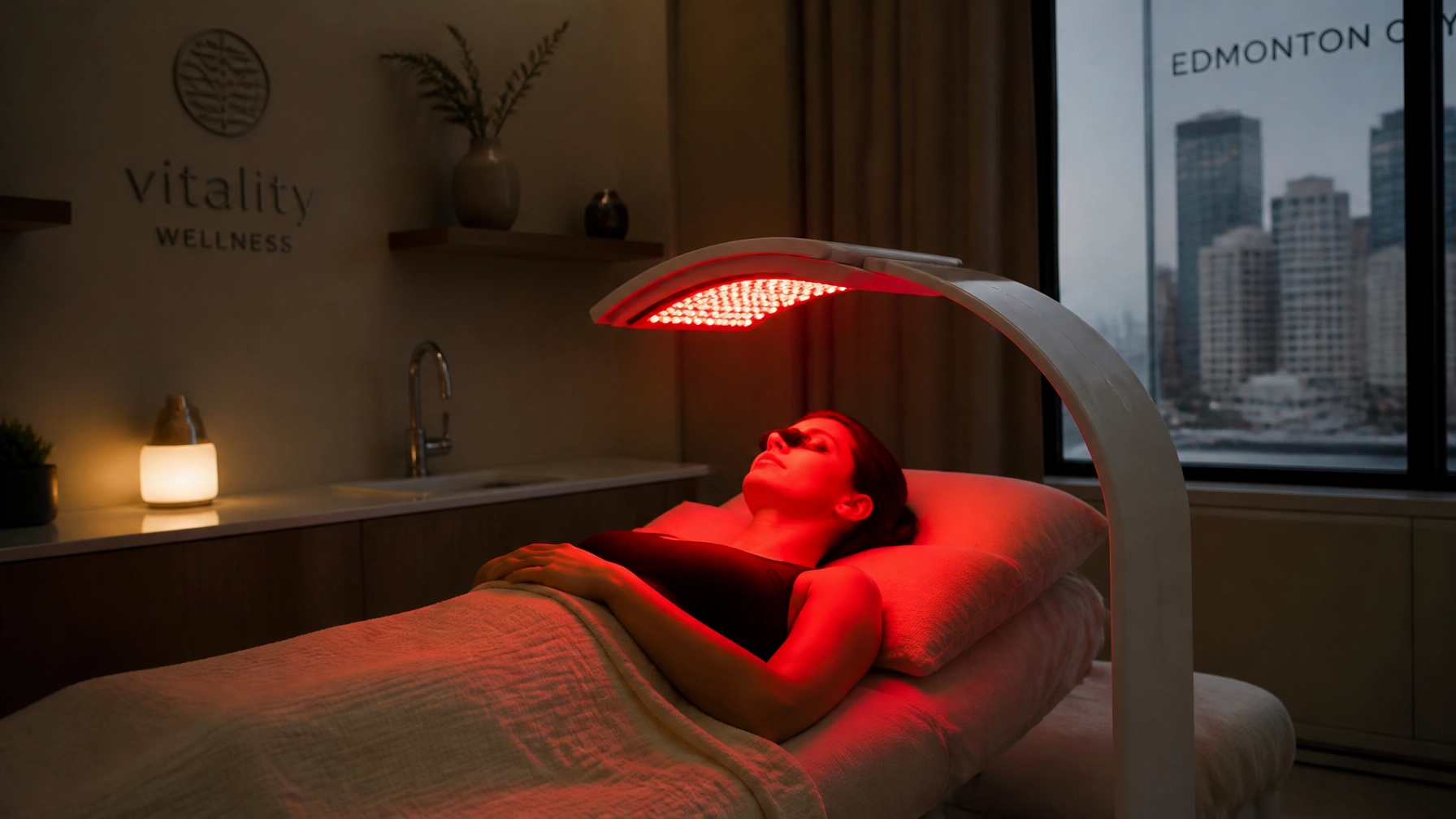
- The Environment: You’ll relax in a private, quiet room. The atmosphere is designed to be a "digital detox" from the blue light of the outside world.
- The Treatment: A full-body session usually lasts about 10–20 minutes. Most people describe the sensation as a gentle, soothing warmth.
- The Timing: For sleep benefits, many of our clients find that late afternoon or early evening sessions work best. It signals to the body that the day is winding down.
- The Results: While some feel a sense of "calm" immediately, the 2026 research suggests that the best improvements in sleep quality occur after 4 to 8 consistent sessions.
According to Healthline, consistency is key when using light to regulate your biological clock. Much like a workout routine, the benefits of red light therapy build over time.
A Grounded Approach to Better Rest
Red light therapy isn't a "miracle cure" that will fix a lifetime of sleep issues overnight. However, the latest 2026 research confirms it is a scientifically grounded, non-invasive tool that can help you reclaim your rest. By supporting your body at a cellular level and protecting your melatonin production, it offers a natural alternative to more invasive sleep aids.
If you’ve been struggling with the "Edmonton haze" of poor sleep, or if your anxiety keeps your mind racing at night, it might be time to see how your cells respond to the right kind of light.

Ready to explore a better way to rest?
At Wave Therapy, we’re here to help you navigate the science and find a protocol that works for your lifestyle.
Explore our sessions or book your visit when you're ready.
Leave a Reply