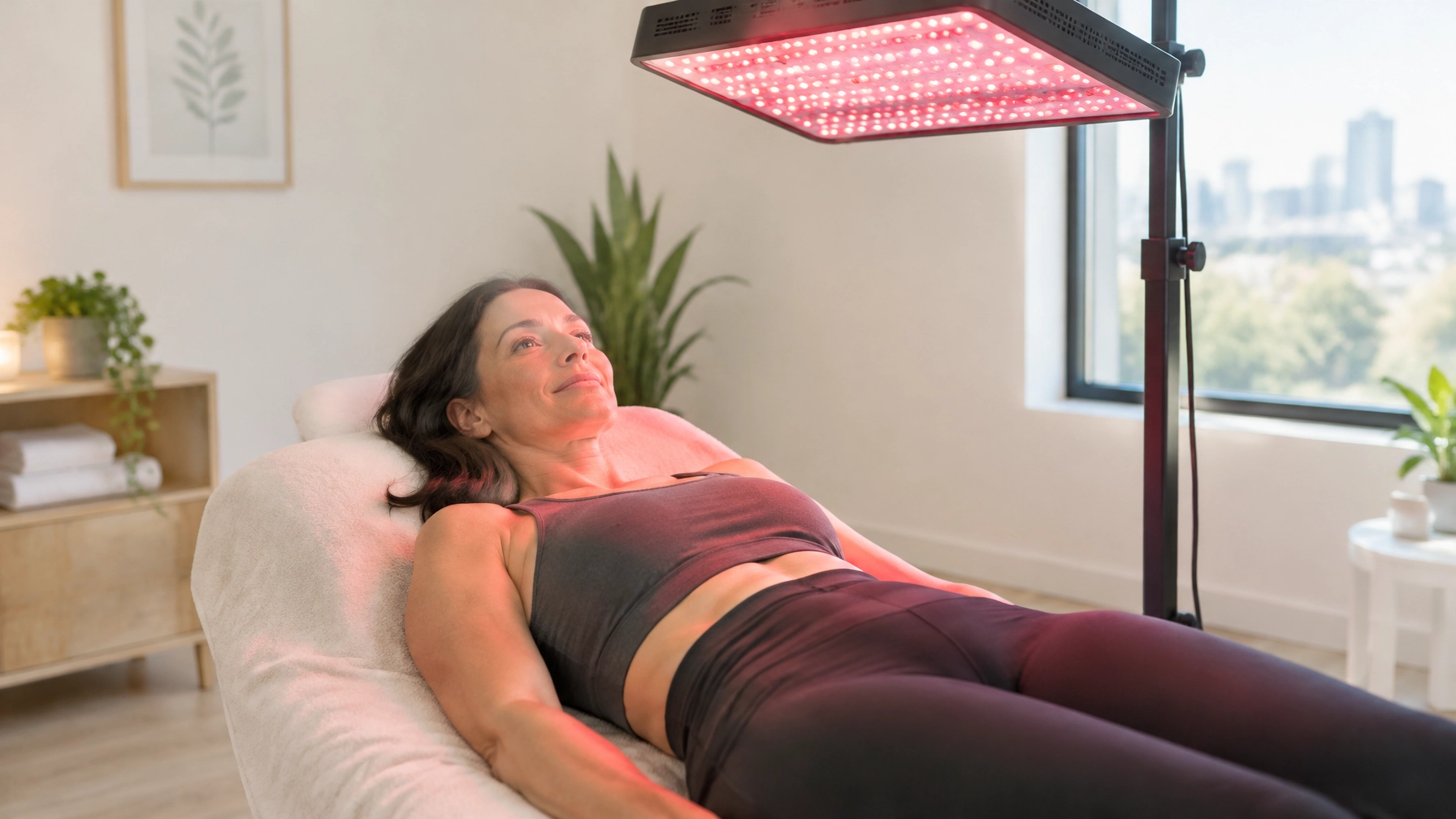
Red light therapy is easy to encounter online, and harder to evaluate. Some claims are supported by early or condition-specific research; others stretch far beyond what studies show.
So, does red light therapy work? The clearest answer is that it may support certain goals when the device and dose are appropriate. It is not a cure-all, and results depend on what is being treated. Here’s a practical look at the most common myths, what the science can and cannot tell us, and what to ask before booking a session.
What does red light therapy actually do?
Red light therapy, also called photobiomodulation, uses low-level red or near-infrared light. In plain language, certain cells absorb some of this light, which may influence processes involved in cell activity, inflammation and tissue repair. Researchers are still investigating exactly how these effects work and which protocols are most useful.
The term “red light therapy” covers different devices and approaches. Wavelength, light output, treatment area, distance and exposure time can all matter. As the Scientific American explainer notes, research is growing, but device and dose differences make broad conclusions difficult.

Is red light therapy a miracle cure for everything?
No. It is a tool being studied for specific uses, not a treatment for every health concern. Evidence varies by condition, and promising findings for one use do not prove that the same device can treat something else.
A 2025 evidence-based consensus on photobiomodulation discusses clinical uses while also underscoring the importance of matching treatment protocols to the condition. Red light therapy should be considered alongside appropriate standard care, not instead of medical assessment or treatment. For a broader overview, see the Cleveland Clinic’s red light therapy guide.
Is more light always better?
No. A longer session or a more powerful device does not automatically mean better results. The amount of light delivered depends on factors such as irradiance (light power over an area) and exposure time. An unsuitable dose may be ineffective, and overdoing a session does not speed progress.
There is no single frequency or session length that suits every device and goal. Follow the instructions for the specific equipment you’re using, and ask the provider how they determine session timing. Wave Therapy also explores why device output and treatment dose matter in its article on red light therapy dosimetry.
If a device is FDA-cleared, is it proven to work for everything?
No. FDA clearance is specific to a device and its intended use. It is not blanket proof that the device works for every condition, or that results will be dramatic.
Be cautious with marketing that treats “FDA-cleared” as a guarantee of effectiveness. Check the exact device, its stated purpose and its instructions. The American Academy of Dermatology’s safety guidance explains that clearance does not tell consumers how effective a device will be.
Can an at-home mask treat deep joint or nerve problems?
A small mask is mainly designed to expose a limited, shallow area such as facial skin or the scalp. Light output and penetration vary, so it is not reasonable to assume a mask can deliver a useful dose to a deep joint or nerve.
Near-infrared light may reach farther into tissue than visible red light, but this does not mean every device can treat deep structures. For joint or nerve symptoms, seek a proper assessment rather than relying on a consumer mask. The Nature feature on the science behind the hype discusses both the potential of photobiomodulation and the important questions that remain about delivery and dose.
Does red light therapy replace exercise, sleep or medical care?
No. It is best viewed as a possible adjunct to a broader plan. Movement, adequate rest, rehabilitation and appropriate medical care remain important. Red light therapy is not a substitute for diagnosis, prescribed treatment or healthy routines.
If you are using it for exercise recovery, it may fit alongside sensible training and rest, not replace them. Massage can also be part of a personal recovery routine; Edmonton clients can explore services through Massage Quest, Wave Therapy’s provider/referral partner. For massage booking, Book a Therapy is Wave Therapy’s sister company.

Do results appear overnight?
Usually, it takes repeated sessions over time to assess a change. Some people notice something within four to eight sessions, but that is not a promise or a universal timeline. The concern being treated, the device, the schedule and the individual all matter.
For skin or hair goals in particular, the American Academy of Dermatology notes that regular use may be needed and that not everyone sees results. Keep expectations realistic and track the specific change you hope to notice rather than relying on a general promise of “rejuvenation.”
Is red light therapy unsafe because it is “radiation”?
The word radiation can sound alarming, but red and near-infrared light are non-ionizing. Red light therapy is not UV tanning. Still, “non-invasive” does not mean risk-free: temporary irritation, warmth or discomfort can occur, and eye exposure should be taken seriously. Follow device guidance on eye protection.
Ask a health professional before starting if you have a photosensitive condition, take medication that increases light sensitivity, have a history of skin cancer, are pregnant, or have an eye condition. If you notice persistent discomfort or a concerning skin or vision change, stop and seek advice. Wave Therapy has more information in its red light therapy safety and side effects FAQ.
What red light therapy benefits have the strongest support?
Evidence is developing, and the level of support differs by use. Research and clinical guidance point to possible benefits in some specific situations, not guaranteed results for everyone.
- Pattern hair loss: Some studies suggest repeated treatment may support modest regrowth for androgenetic alopecia. It is not proven for every cause of hair loss.
- Selected wounds: Clinical research suggests photobiomodulation may support healing in certain wound-care settings. Significant, infected or unexplained wounds need medical care.
- Some signs of skin aging: Studies report possible gradual improvements in fine lines, texture or redness. Results vary by device and protocol.
- Some pain and inflammation concerns: Research is condition-specific; red light therapy should not replace an assessment of ongoing or severe pain.
- Exercise-related muscle soreness and recovery: Early research suggests possible support for recovery, but it does not replace rest, training adjustments or rehabilitation.
Claims about major weight loss, broad “metabolism boosting” or eliminating cellulite should be treated cautiously. Red light therapy is not a substitute for weight-management care, and evidence for these outcomes is not established in the same way as the uses above.
How can you spot red light therapy marketing hype?
A few questions can help you assess a claim before choosing a device or booking a session:
- Does the claim name a specific goal and device, or promise to treat many unrelated conditions?
- Does the provider explain the suggested schedule and what evidence applies to that goal?
- Are results described as variable, or guaranteed and immediate?
- Is FDA clearance being presented accurately for a specific intended use?
- Are you encouraged to keep appropriate medical care in place?
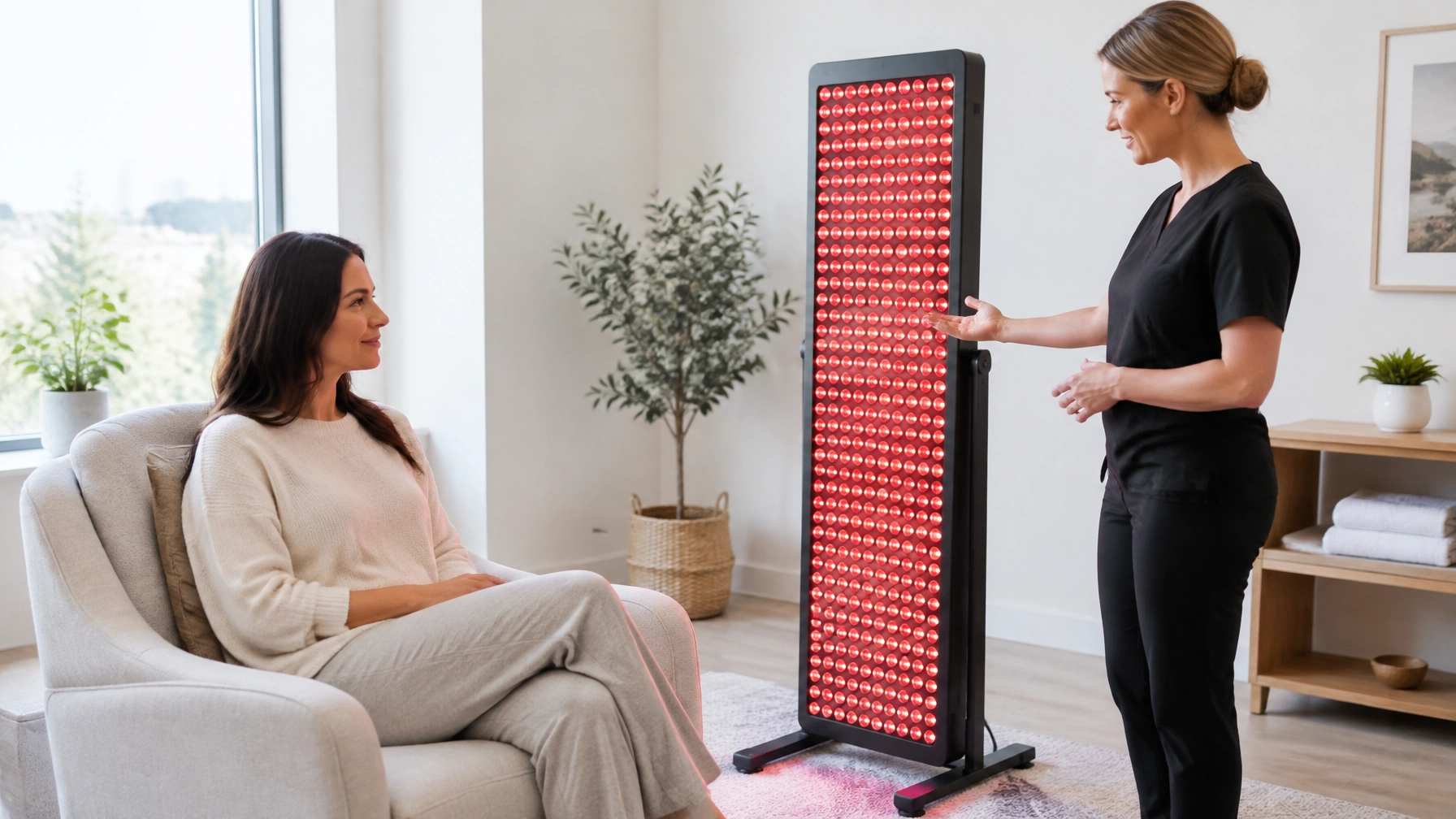
At Wave Therapy, an Edmonton studio, red and near-infrared sessions are offered as a non-invasive wellness option. A session should not be presented as a cure or as a replacement for medical care. You can learn more about Wave Therapy in Edmonton and ask questions about what to expect before deciding whether a session fits your goals.
What should I expect from a red light therapy session?
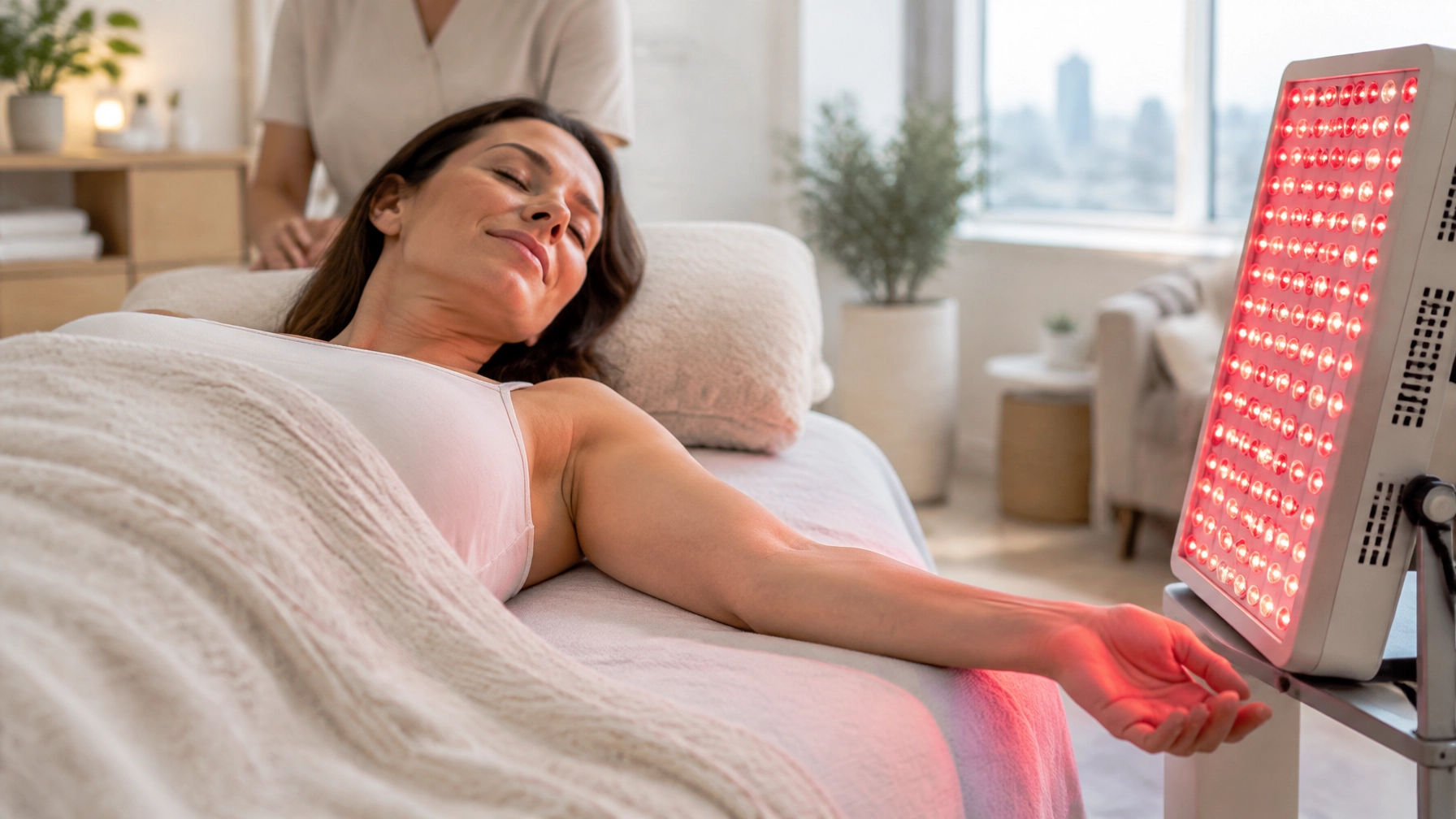
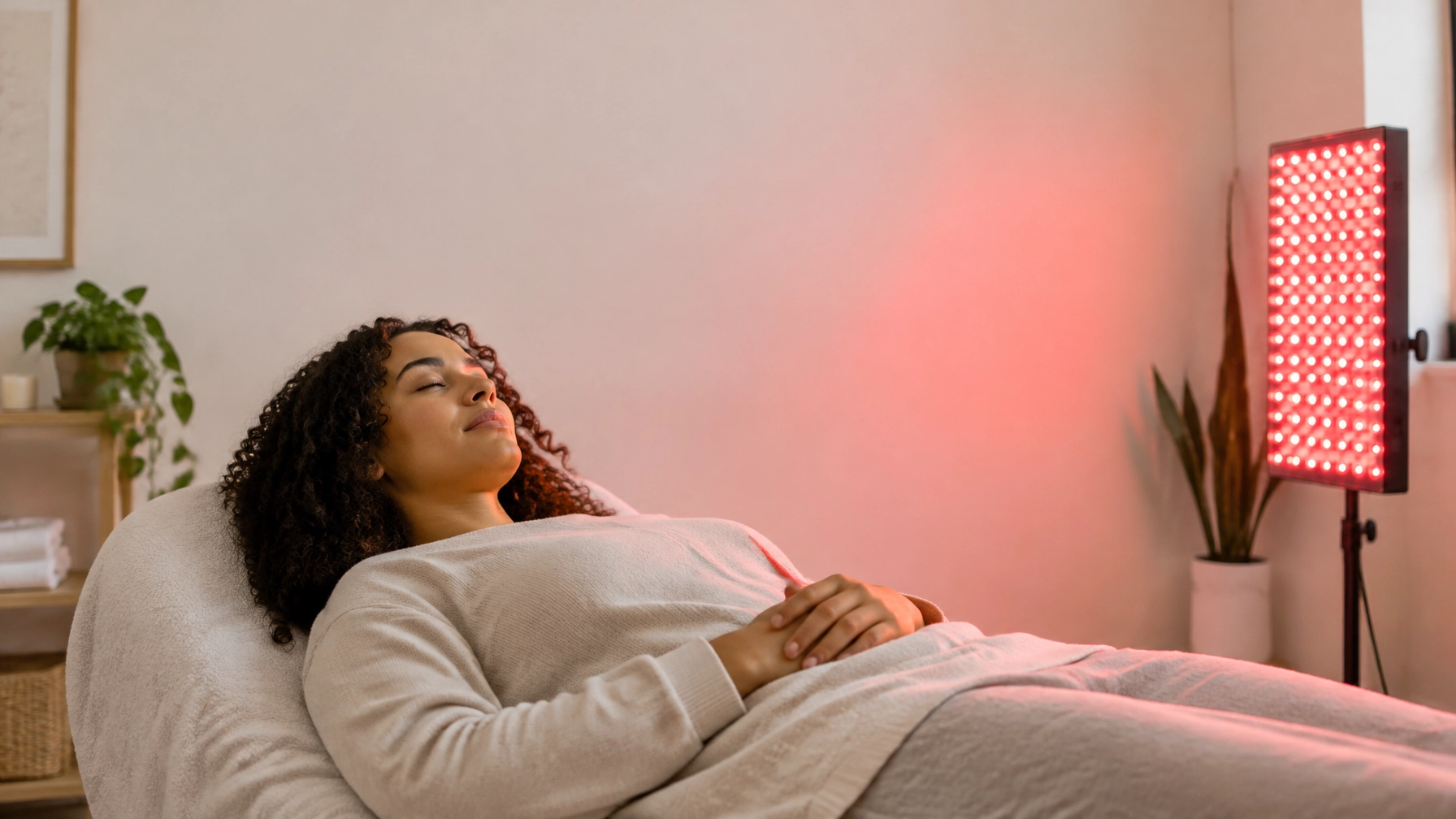
Expect to follow the provider’s guidance for positioning, exposure time and any eye protection. The experience is generally non-invasive; the light may feel warm, though sensations and protocols vary. Before you start, share relevant health information and ask what outcome the session is intended to support. If you are unsure whether your symptoms need medical attention, check with a healthcare professional first.
The practical takeaway: red light therapy has potential in some areas, but the science does not support miracle claims. Device, dose, goal and personal health all matter. If you’re exploring red light therapy in Edmonton, you can visit Wave Therapy to learn more and explore sessions when you’re ready.