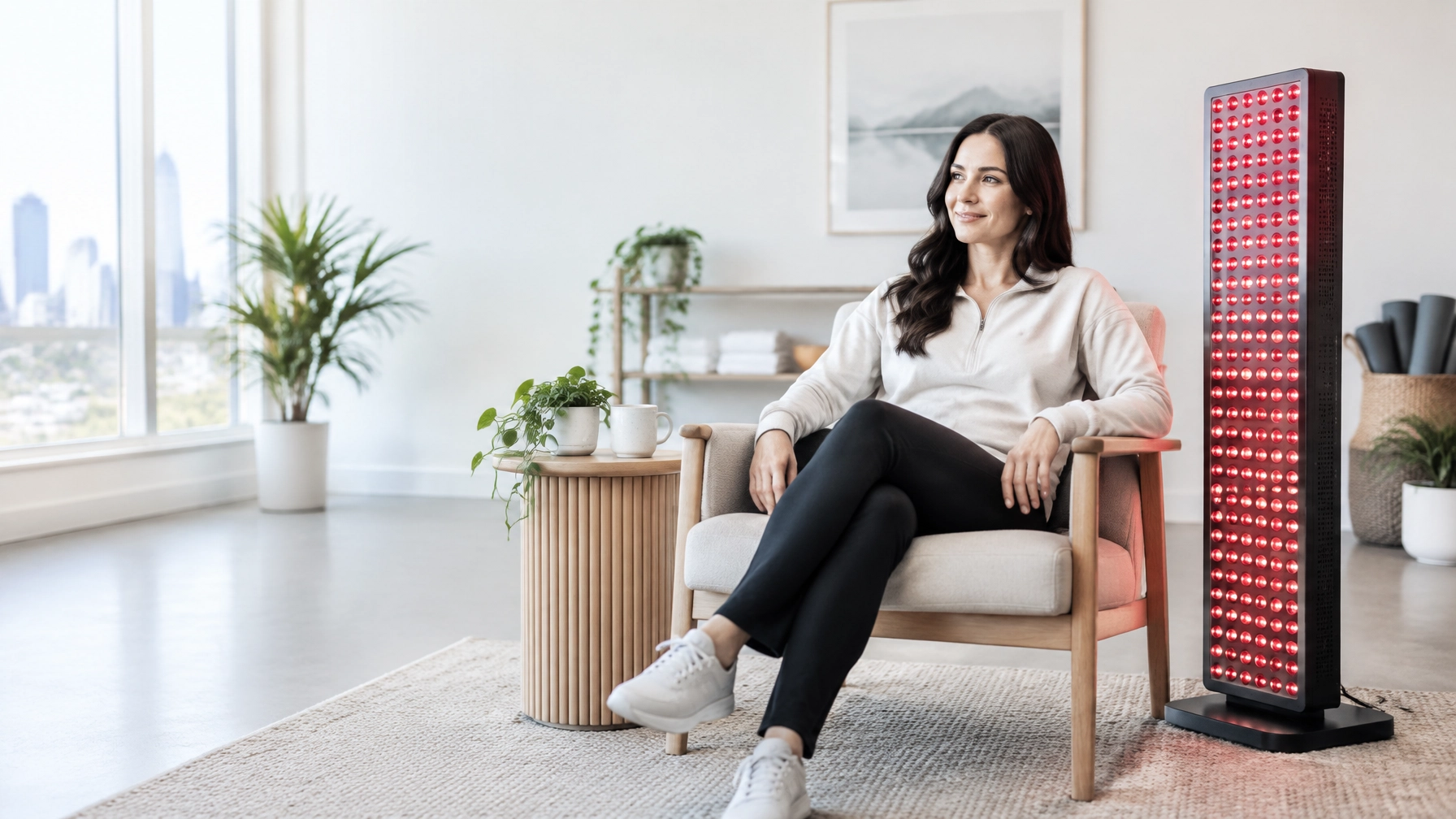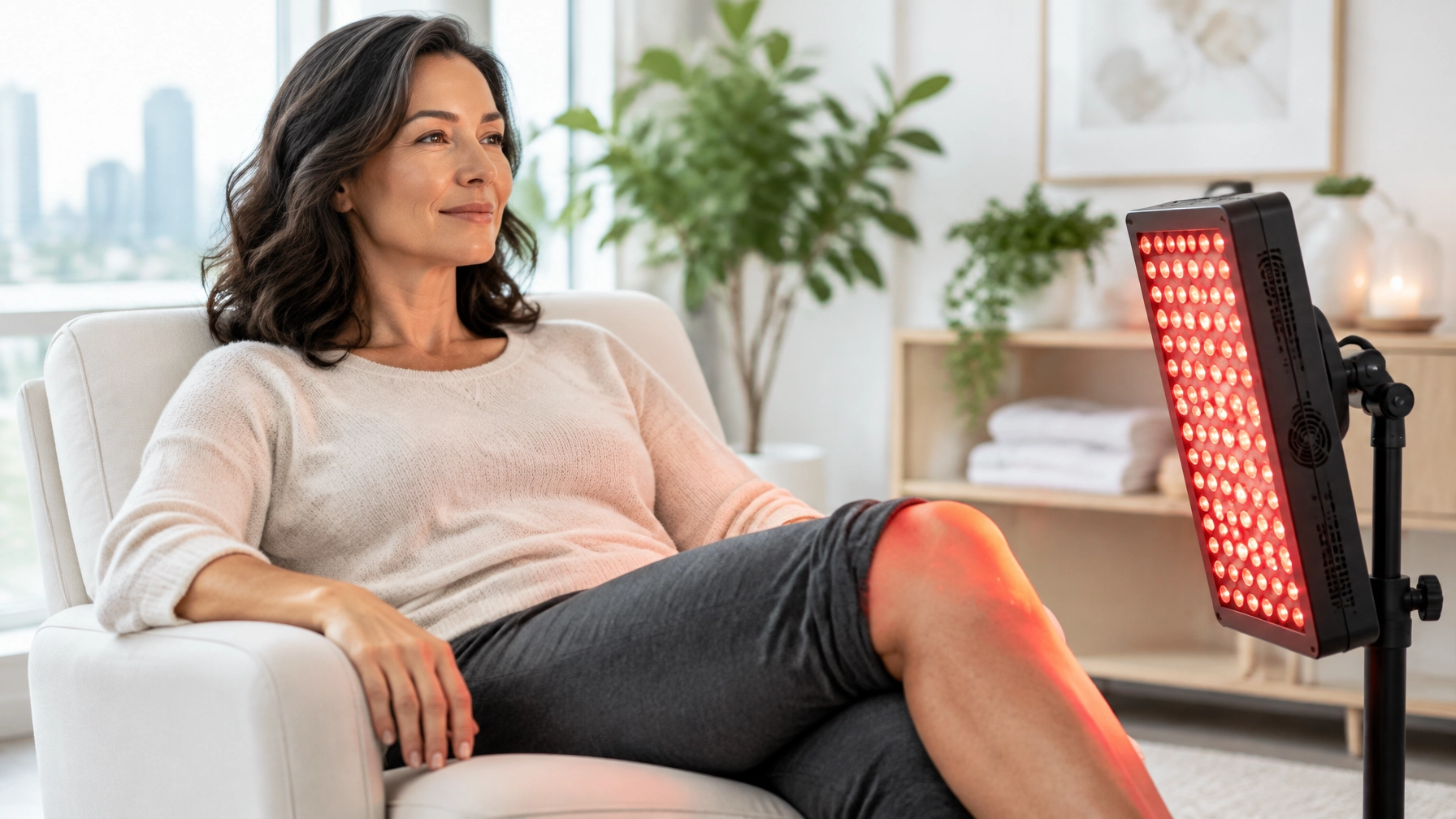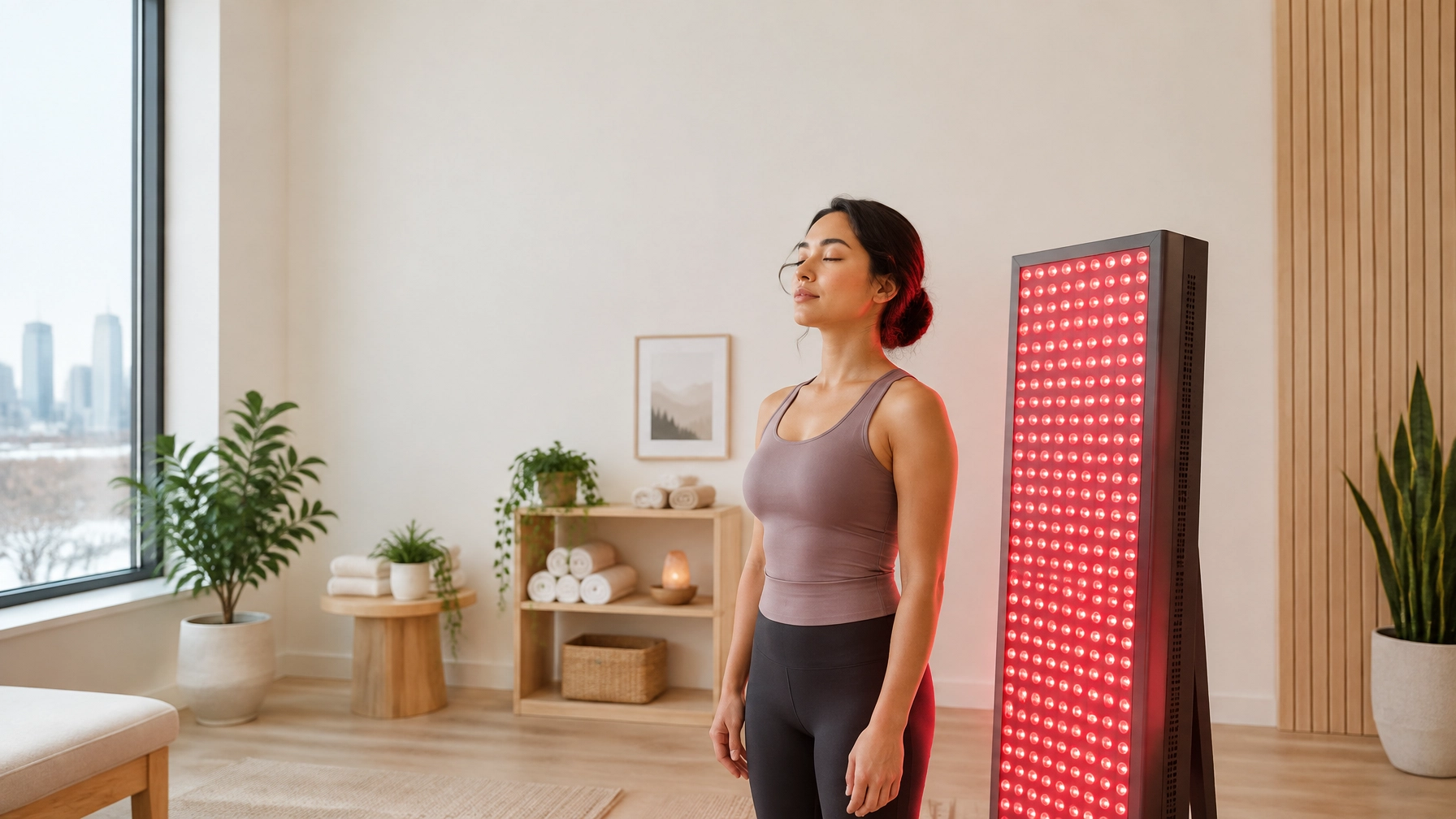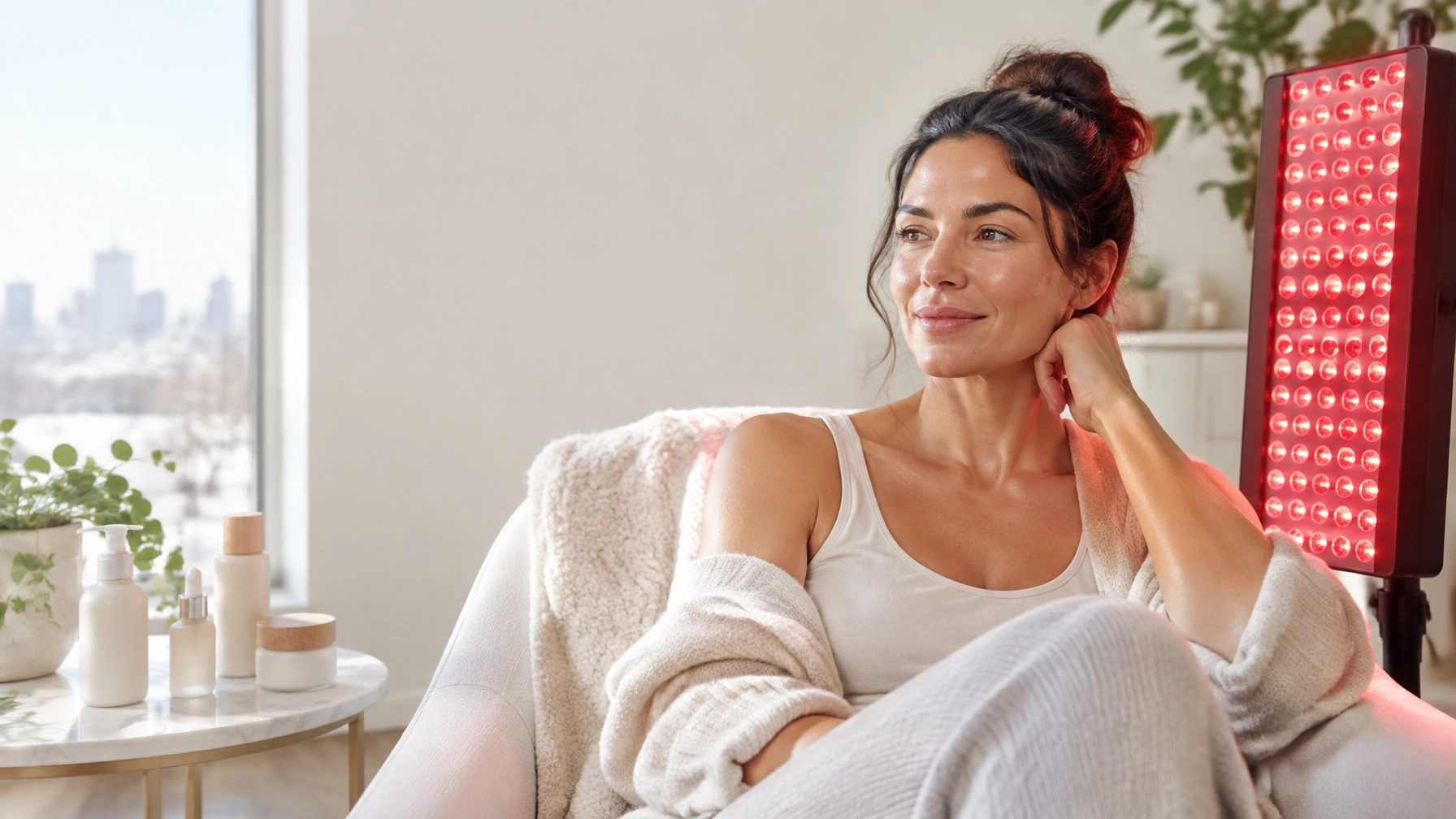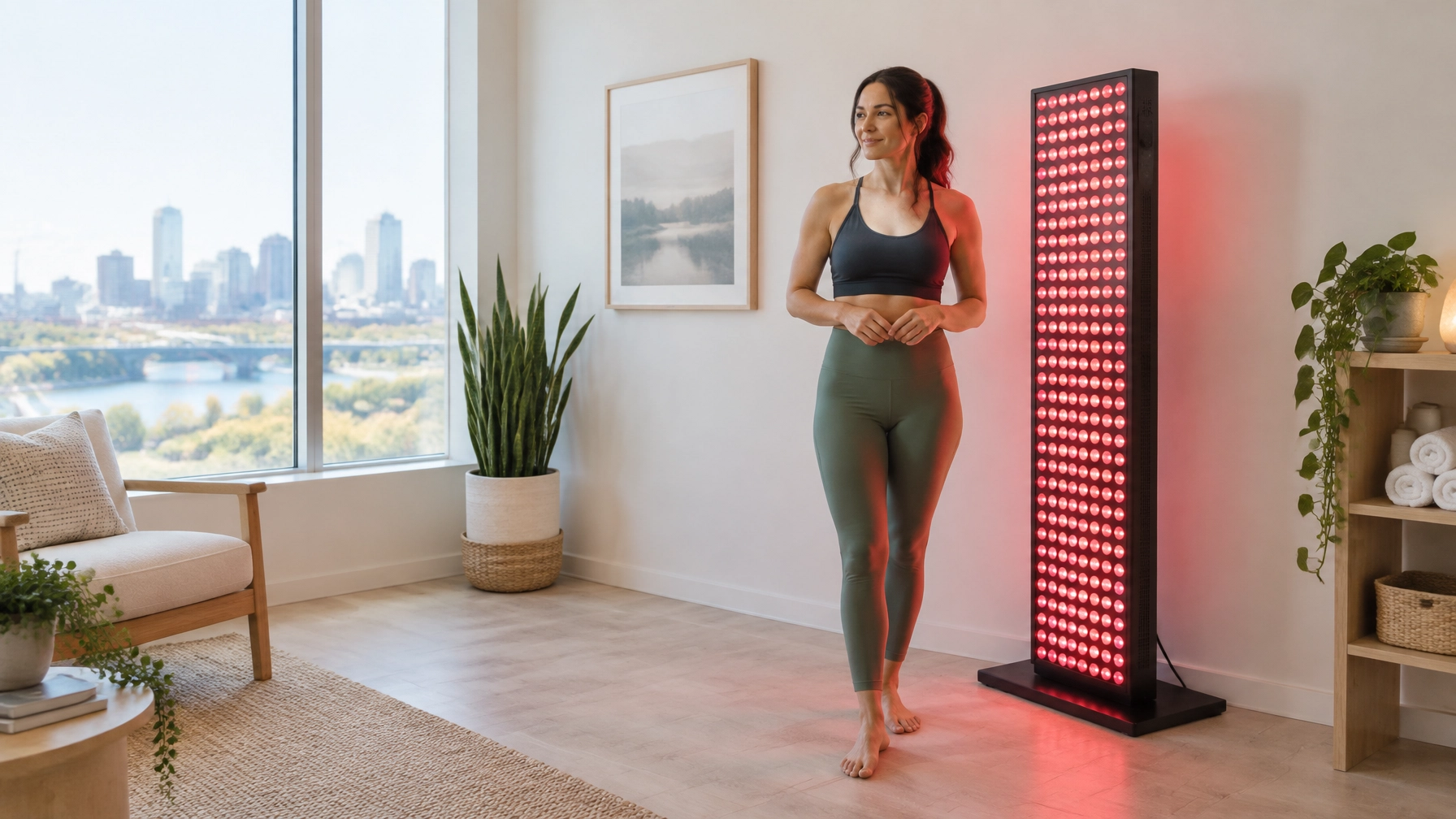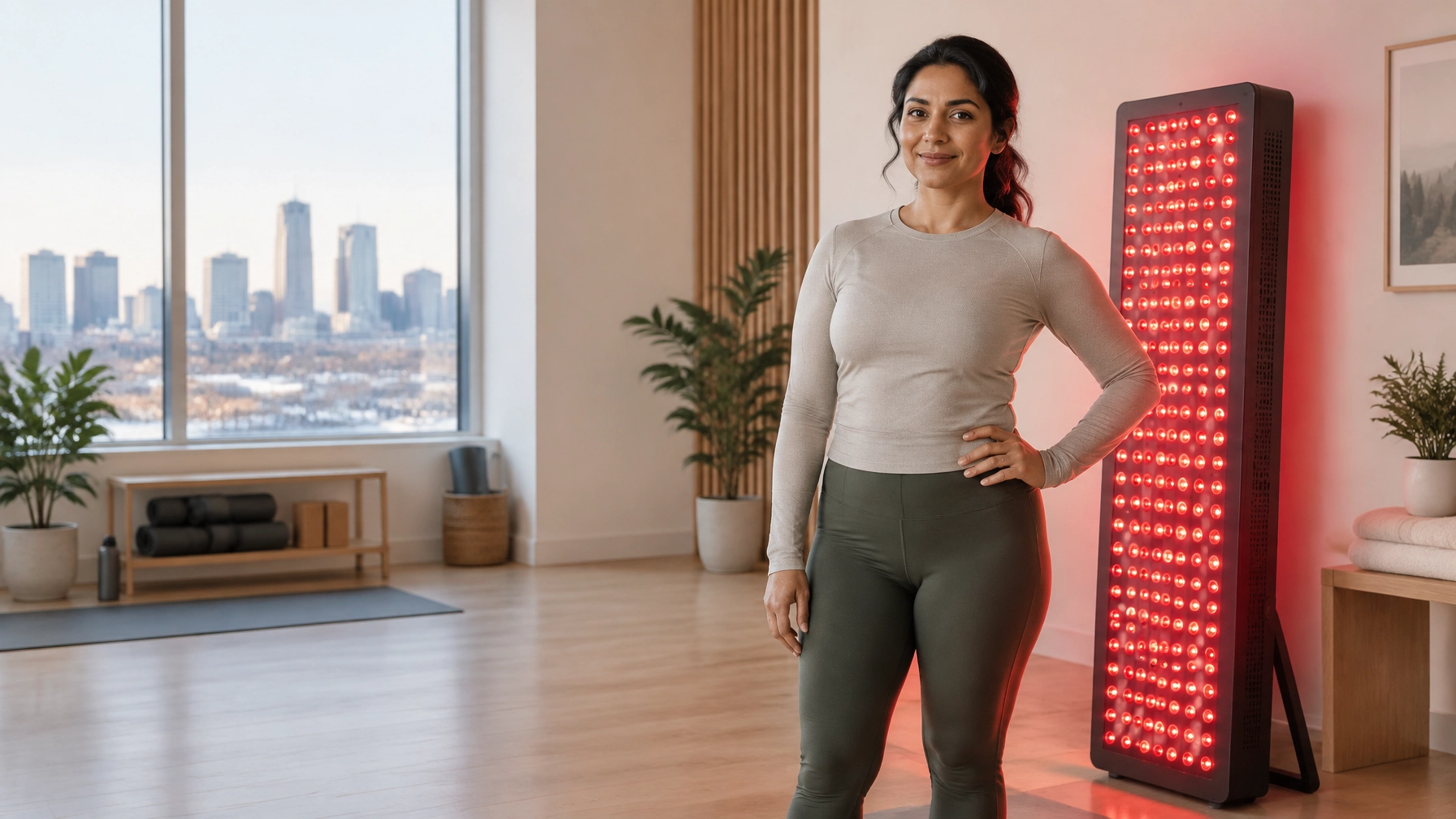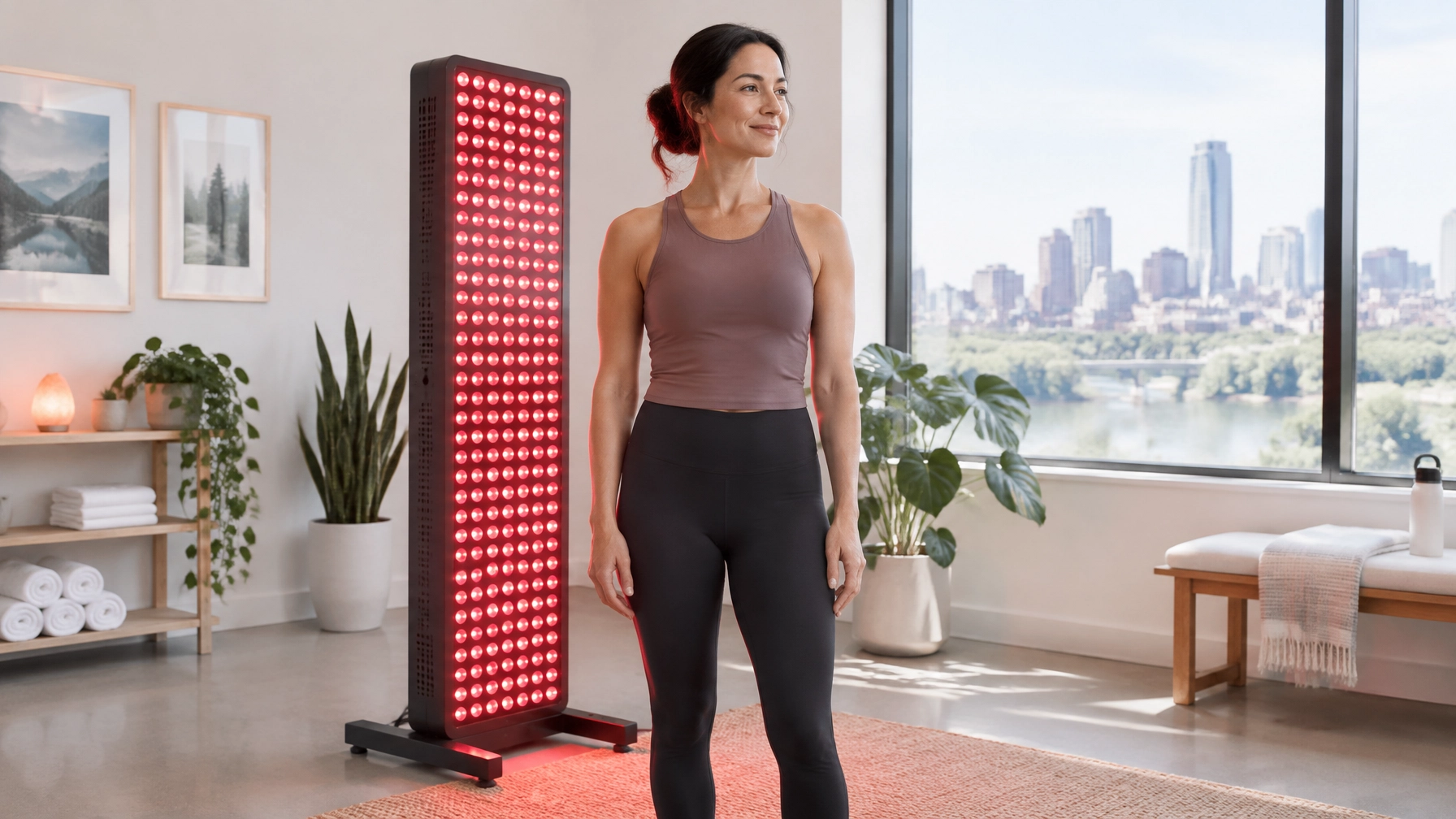
If two red light therapy devices both list 660 nm and 850 nm, it is easy to assume they should produce the same results.
They may not.
Wavelength matters, but it is only one part of the treatment. The amount of light reaching your skin and tissue, the dose, also depends on power density, distance, treatment time, coverage, pulse settings, and the quality of the device.
This difference is sometimes called the dosimetry gap. It helps explain why one device may produce noticeable results while another feels ineffective, even when both appear to use the same wavelengths.
What is photobiomodulation dose?
Red light therapy is also called photobiomodulation, or PBM. It uses specific red and near-infrared wavelengths to support cellular activity.
In simple terms, the treatment dose depends on how much light reaches the tissue and for how long.
Wavelength
Wavelength is measured in nanometres, or nm.
- Red light, such as 660 nm, is generally used for more superficial targets, including skin.
- Near-infrared light, such as 850 nm, can travel farther into tissue and is commonly used for muscle, joint, and recovery goals.
Our guide to choosing red light therapy wavelengths explains this distinction in more detail.
Wavelength tells you what type of light is being used. It does not tell you how much light is being delivered.
Irradiance
Irradiance is the power of light reaching a specific area. It is usually measured in:
- mW/cm², or milliwatts per square centimetre
- W/cm², or watts per square centimetre
You can think of irradiance as the intensity or rate of delivery.
Fluence
Fluence is the total energy delivered to an area. It is measured in J/cm², or joules per square centimetre.
The basic formula is:
Fluence = irradiance × treatment time
When irradiance is listed in mW/cm²:
Fluence (J/cm²) = irradiance (mW/cm²) × time in seconds ÷ 1,000
For example, 50 mW/cm² delivered for 300 seconds equals:
50 × 300 ÷ 1,000 = 15 J/cm²
This is why treatment time cannot be separated from device power. A lower-powered device may need more time to deliver a similar total dose.
Research reviews on PBM dosimetry emphasize that wavelength, irradiance, fluence, time, distance, beam area, and pulse structure should all be reported for a treatment to be understood and repeated. See this PubMed Central review of light parameters and PBM efficacy.
Why the same wavelength does not mean the same dose
Imagine two panels that both advertise 660 nm and 850 nm.
One may have:
- Higher optical output
- More LEDs across a larger treatment area
- Better beam distribution
- More consistent output from LED to LED
- A measured irradiance at the client’s skin
The other may list the same wavelengths but provide little information about the actual light reaching the body.
That difference matters.

Distance changes irradiance
Light intensity generally decreases as distance increases. For a small point source, the idealized inverse square law means that doubling the distance can reduce irradiance to approximately one-quarter.
Real therapy panels are larger than point sources, so they do not follow this law perfectly. However, the practical lesson remains:
A panel’s output at its surface is not necessarily the output at your skin.
A device claiming 100 mW/cm² at the panel face may deliver substantially less at 15 cm. The exact amount depends on the panel’s size, optics, beam angle, spacing, and how the manufacturer measured it.
A useful specification sheet should show irradiance at several treatment distances, such as:
- 10 cm
- 15 cm
- 20 cm
- 30 cm
If it only gives one impressive number without saying where or how it was measured, that number is difficult to interpret.
Beam spread and coverage area
A beam can become more spread out as it travels. This affects both intensity and consistency.
A small panel may produce a stronger reading in the centre but weaker light at the edges. A larger full-body system may provide broader coverage with more even exposure.
Coverage also affects the total amount of energy delivered during a session. A small mask may work well for a face but is not equivalent to a full-body system simply because both include 660 nm LEDs.
LED quality and optical power
The number of LEDs is not the same as the amount of useful light delivered.
Output can vary because of:
- LED quality
- Electrical efficiency
- Lens and reflector design
- Cooling and heat management
- Manufacturing consistency
- The ratio of red to near-infrared LEDs
- Whether output is measured as optical power or electrical power
A professional system should focus on measured light at the treatment surface, not only on wattage, LED count, or the brightness of the glow.
Pulse versus continuous light
Some devices deliver light continuously. Others pulse the light on and off.
With pulsed light, the important questions include:
- What is the pulse frequency?
- What is the duty cycle?
- Is the reported irradiance peak irradiance or average irradiance?
- What is the actual energy delivered during the session?
A device may advertise a high peak output while delivering a much lower average output because the LEDs are off for part of each cycle.
Pulse settings may influence biological response, but they do not replace basic dose information. A clear device specification should explain both the pulse pattern and the resulting average dose.
The biphasic dose response: more is not always better
PBM does not follow a simple “more light equals more benefit” model.
It often follows a biphasic dose response:
- Too little light may not create a noticeable response.
- A moderate dose may support the intended effect.
- Too much light may reduce the benefit or cause irritation.
This is sometimes described as an optimal treatment window. The best dose depends on the target tissue, wavelength, irradiance, treatment schedule, and individual response.
A foundational review, “Biphasic Dose Response in Low Level Light Therapy”, discusses how low and moderate doses may stimulate biological activity while higher doses can become less effective or inhibitory.
That is why doubling a 15-minute session to 30 minutes does not automatically double the results. It may simply move the dose outside the most useful range.
How to read a red light therapy device spec sheet
Before buying a device, look for the following information.
Numbers that matter
- Exact wavelengths, such as 660 nm and 850 nm
- Irradiance in mW/cm²
- Irradiance measured at the skin or treatment distance
- Treatment distance used for each measurement
- Recommended session time
- Calculated fluence in J/cm²
- Continuous or pulsed operation
- Average irradiance for pulsed settings
- Treatment area and coverage
- Eye-protection instructions
- Testing and quality-control information
Marketing numbers that need context
Be cautious when a listing focuses mainly on:
- Total electrical wattage
- Number of LEDs
- “Maximum power”
- A single irradiance measurement at the panel surface
- Claims that more minutes always produce better results
- Broad promises covering pain, weight loss, aging, hair growth, and every other concern at once
Useful questions to ask before buying include:
- What is the irradiance at 15 or 20 cm?
- Was it independently measured?
- Is the number peak or average output?
- What fluence does the recommended session deliver?
- Is the light evenly distributed across the full treatment area?
- How does the device account for distance?
- What eye protection is recommended?
- Are the suggested settings appropriate for my goal?

What can red light therapy help with?
Evidence varies by condition and treatment protocol. Red light therapy should be viewed as supportive care, not a replacement for diagnosis or medical treatment.
Common goals and studied uses include:
- Joint pain support
- Joint stiffness support
- Inflammation support
- Muscle soreness
- Exercise recovery
- Muscle recovery after training
- Tendon discomfort
- Some osteoarthritis-related discomfort
- Some neuropathy symptom support
- Wound-healing support
- Collagen production
- Fine lines and wrinkles
- Skin firmness
- Skin tone
- Skin texture
- Skin rejuvenation
- Mild redness
- Acne support
- Scar appearance
- Stretch-mark appearance
- Sun-damaged skin appearance
- Cellulite appearance
- Skin tightening
- Fat-reduction support
- Body-contouring support
- Metabolism support alongside healthy habits
- Pattern hair loss support
- Natural hair-growth support
- General wellness and relaxation
Who is it for, and who should ask first?
Red light therapy may be suitable for adults interested in non-invasive support for skin, recovery, joint comfort, or general wellness.
Speak with a healthcare professional before treatment if you:
- Have a photosensitive condition
- Take photosensitizing medication
- Have a significant eye condition
- Have active cancer in the treatment area
- Have a suspicious skin lesion
- Are pregnant or breastfeeding
- Have unexplained or severe pain
- Have a light-triggered seizure disorder
- Have an active infection, rash, or worsening skin condition
Cleveland Clinic explains that red light therapy appears safe when used as directed, but also notes that long-term effects and some advertised uses require more research. Read its consumer guide to red light therapy.
Why measured-dose sessions are more predictable
At Wave Therapy in Edmonton, we do not promise identical results across every red light device. The device, dose, distance, treatment area, consistency, and individual biology all matter.
A professional full-body system can make sessions more consistent by controlling:
- Positioning
- Distance
- Session length
- Wavelength selection
- Treatment coverage
- Staff guidance
- Eye-safety instructions

This does not guarantee a specific result. It does make the treatment conditions more repeatable, which is important when your goal involves pain support, recovery, skin rejuvenation, or body contouring.
A typical session is non-invasive and comfortable. You can expect to relax in front of the system for a controlled period, usually experiencing gentle warmth or very little sensation. Many clients assess changes over a series of sessions rather than after one visit.
For broader recovery support, some people also combine light therapy with massage. You can explore Massage Quest or our sister company, Book a Therapy, as part of a wider wellness routine.
Practical takeaways
- Wavelength tells you the colour range, not the complete treatment dose.
- Irradiance describes how quickly light energy reaches the skin.
- Fluence describes the total energy delivered over time.
- Distance can substantially change irradiance.
- A panel’s surface measurement may not represent output at your skin.
- Peak irradiance is not the same as average irradiance for pulsed devices.
- More light is not always better because of the biphasic dose response.
- Device specifications should include output at a defined treatment distance.
- Measured, repeatable sessions are generally easier to compare and monitor.
- Results vary, so red light therapy should be approached as supportive wellness care rather than a guaranteed treatment.
If you are curious about how a measured-dose full-body session feels, learn more about Wave Therapy in Edmonton or explore available session options when you are ready.
This article is for general education only and is not a substitute for medical advice, diagnosis, or treatment.
Frequently Asked Questions
Do two red light panels with the same wavelength work the same way?
No. The wavelength may be the same, but irradiance, treatment distance, beam spread, coverage, pulse settings, and total fluence can be very different.
What is the most important red light therapy number?
Irradiance at the actual treatment distance is one of the most useful numbers. You also need treatment time to calculate fluence in J/cm².
Is 100 mW/cm² always better than 50 mW/cm²?
Not necessarily. PBM often has a biphasic response, meaning an excessive dose may be less effective than a moderate dose for a particular goal.
How far should I stand from a red light panel?
There is no universal distance. Follow the device’s instructions and use a specification sheet that reports irradiance at that distance. Moving farther away can significantly reduce the dose.
Are professional sessions better than home devices?
Professional sessions are not automatically better for every person, but measured-dose systems can provide more consistent distance, coverage, output, and guidance. Home devices vary widely in their documentation and performance.
How many sessions are needed?
It depends on your goal, treatment plan, device, and individual response. Many people evaluate changes over several sessions rather than expecting a one-time result.