If you live with arthritis, especially through an Edmonton winter, you may notice more stiffness, aching, or reduced mobility when temperatures drop. That often leads to a common question: Can red light therapy help arthritis?
The short answer is: possibly, depending on the type of arthritis and the joint involved.
The current evidence is most encouraging for short-term pain relief in knee osteoarthritis. Evidence for hip and hand osteoarthritis is limited. For rheumatoid arthritis, results remain mixed, and red light therapy should only be considered an add-on to medical treatment.
First, what type of arthritis do you have?
“Arthritis” is a broad term for conditions that affect the joints. The two types most relevant to this question are osteoarthritis and rheumatoid arthritis.
Osteoarthritis: joint wear and structural changes
Osteoarthritis, or OA, is the most common form of arthritis in Canada. It develops when the cartilage and other structures in a joint gradually change. It often affects the knees, hips, hands, spine, and feet.
Common symptoms include:
- Pain that increases with activity
- Short-term morning stiffness
- Reduced range of motion
- Mild swelling or tenderness
- Difficulty with stairs, walking, gripping, or bending
The Arthritis Society Canada and the Government of Canada both provide helpful information about osteoarthritis, its risk factors, and standard treatment options.
Rheumatoid arthritis: an autoimmune condition
Rheumatoid arthritis, or RA, is different. It is an autoimmune disease in which the immune system attacks the lining of the joints. RA can cause swelling, warmth, prolonged morning stiffness, fatigue, and symptoms that affect both sides of the body.
RA commonly affects the hands, wrists, feet, knees, and other joints. It can also affect parts of the body beyond the joints.
This difference matters. Red light therapy may help support comfort in some people with joint pain, but it does not control the underlying autoimmune process in rheumatoid arthritis.
How might red light therapy help arthritic joints?
Red light therapy is also called photobiomodulation or low-level light therapy. It uses low-intensity red and near-infrared wavelengths to interact with cells.
Researchers believe the light may influence cellular energy production, circulation, inflammatory signalling, and tissue repair. In practical terms, this may help some people experience:
- Less localized pain
- Reduced feelings of stiffness
- Improved comfort during movement
- Temporary support during recovery from activity
- Better tolerance for exercise or mobility work
These are potential symptom-support benefits, not proof that red light therapy can rebuild cartilage or cure arthritis.

What does the 2026 evidence show for knee osteoarthritis?
Knee OA has the strongest human evidence among the arthritis conditions studied.
A 2024 systematic review and network meta-analysis examined 13 randomized trials involving 673 people with knee osteoarthritis. It found that low-level light therapy was better than sham treatment for knee pain, particularly at approximately eight weeks. However, the review did not find a clear improvement in knee stiffness or physical function, and the researchers rated the overall certainty of evidence as low.
You can read the full review in PubMed Central.
Another systematic review published in BMJ Open also reported pain and disability improvements in some knee OA trials. Still, treatment settings varied considerably. Wavelength, dose, treatment area, and session schedule all differed between studies.
What this means for knee OA
For knee osteoarthritis, red light therapy may be a reasonable non-invasive complement to:
- Strength training
- Physiotherapy
- Weight management when appropriate
- Mobility work
- Doctor-recommended pain management
It should not be viewed as a replacement for movement or medical care. The goal is usually better comfort and function, not a permanent correction of the joint.
What about hip or hand osteoarthritis?
The evidence is less certain for hip and hand OA.
Hip joints are deeper than knee or hand joints, and there are fewer high-quality studies evaluating whether external light can produce consistent results. Current evidence is too limited to make strong claims about red light therapy for hip osteoarthritis.
Hand OA has also been studied less extensively. Some people may report less discomfort or stiffness, but research findings are inconsistent and treatment protocols vary.
If hand pain is accompanied by prolonged morning stiffness, warmth, swelling, or symptoms in both hands, it is especially important to ask a healthcare professional whether rheumatoid arthritis or another inflammatory condition should be investigated.
Can red light therapy help rheumatoid arthritis?
This answer requires more caution.
A 2023 PLOS One systematic review of 18 randomized controlled trials found that infrared laser therapy may not be better than sham treatment for pain, morning stiffness, grip strength, function, inflammation, or disease activity. The researchers described the evidence as low quality or very uncertain.
A newer 2024 review found possible improvements in morning stiffness and grip strength, but results were inconsistent and varied substantially between studies.
So, for rheumatoid arthritis:
- Pain relief is not reliably demonstrated.
- Some people may notice changes in stiffness or hand function.
- Red light therapy should be considered an adjunct, not a primary treatment.
- It must not replace DMARDs, biologic medications, or rheumatology follow-up.
If you have RA, speak with your physician or rheumatologist before making changes to your treatment plan.

How often should you use red light therapy for joint symptoms?
Research protocols vary, so there is no single schedule that works for everyone. A practical starting point often involves:
- Two to five sessions per week
- A consistent trial lasting four to eight weeks
- Reassessing pain, stiffness, walking tolerance, or hand function over time
Some knee OA studies used only two sessions per week, while others used three to five. More sessions are not automatically better. Light therapy has a dose-response relationship, and using a stronger or longer protocol does not necessarily produce better outcomes.
At Wave Therapy, session recommendations can be adjusted based on the area being treated, your goals, and how your body responds. Keep a simple symptom record so you can assess whether the treatment is helping in a meaningful way.
For more general information, read Wave Therapy’s guide on whether red light therapy really works and the Red Light Therapy 101 guide. You can also browse the Wave Therapy blog for related information about pain, inflammation, recovery, and session frequency.
What happens during a session?
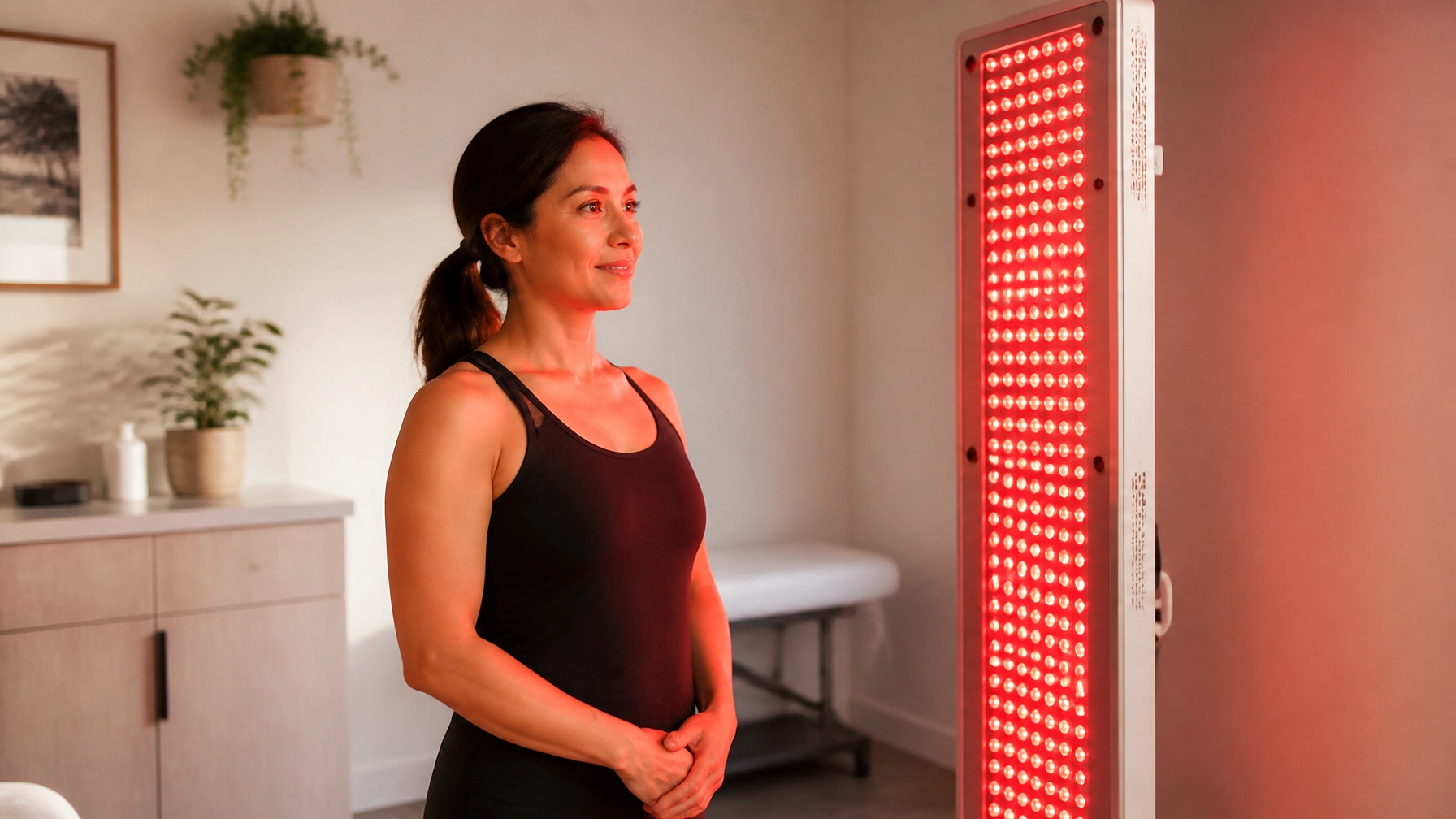
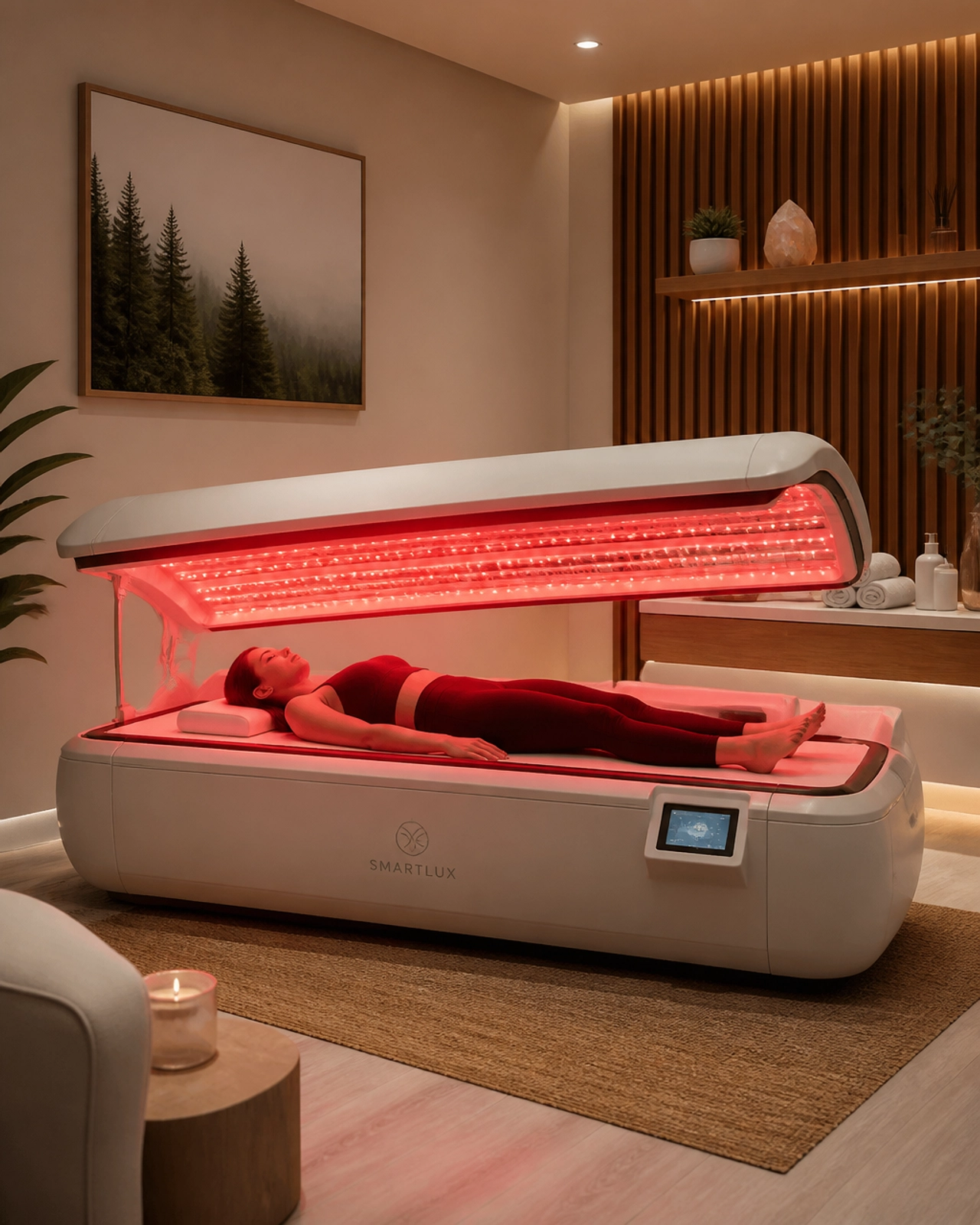
A red light therapy session is usually straightforward and non-invasive.
You will generally:
- Discuss your goals and the area you want to address.
- Position yourself comfortably near the light therapy system.
- Expose the treatment area as directed.
- Relax while red and near-infrared light is delivered.
- Leave without a recovery period in most cases.
Most people feel little or no discomfort. Some notice gentle warmth. Eye protection may be recommended depending on the equipment and treatment area.
Red light therapy does not involve needles, injections, surgery, or forced joint movement. However, you should still communicate if the light feels uncomfortably warm or if symptoms change during or after a session.
Who should be cautious?
Red light therapy is generally well tolerated, but it is not appropriate for everyone without individual consideration.
Speak with a healthcare professional before treatment if you:
- Take medication that increases sensitivity to light
- Have a photosensitive skin condition
- Have an active or recently treated cancer
- Have an eye condition or are unable to use recommended eye protection
- Are pregnant or trying to become pregnant
- Have unexplained joint swelling, fever, or rapidly worsening symptoms
- Recently had joint surgery or a significant injury
Possible red light therapy side effects are usually mild, such as temporary warmth, skin redness, eye discomfort from improper exposure, or short-term sensitivity. As noted in the Cleveland Clinic's overview of red light therapy, red light therapy is generally well tolerated when used as directed, though more research is still needed for many proposed uses. Stop treatment and seek advice if you experience unusual or worsening symptoms.
When should you see a doctor?
Red light therapy should not delay assessment of a new or worsening joint problem.
Arrange medical care if you have:
- A hot, red, or significantly swollen joint
- Fever or feeling unwell alongside joint pain
- Sudden severe pain after an injury
- A joint that looks deformed or cannot bear weight
- Morning stiffness lasting an hour or more on a regular basis
- Swelling in several joints, especially on both sides of the body
- Persistent hand or wrist pain with fatigue
- Symptoms that continue to worsen despite self-care
In Edmonton, winter can make joints feel stiffer, particularly when people are less active or spend more time indoors. Cold weather does not cause osteoarthritis or rheumatoid arthritis, but staying warm and maintaining safe movement may help with day-to-day comfort.
Massage may also be useful for surrounding muscle tension and general relaxation. For massage services, explore Massage Quest or Book a Therapy. Massage does not treat the underlying cause of inflammatory arthritis, but it may complement a broader wellness plan when appropriate.
The bottom line
Can red light therapy help arthritis?
- For knee osteoarthritis, current evidence suggests it may provide modest short-term pain relief for some people.
- For hip and hand osteoarthritis, evidence is limited and inconclusive.
- For rheumatoid arthritis, results are mixed, and red light therapy should only be used as an adjunct to prescribed medical treatment.
- Benefits, when they occur, are usually gradual and require consistent sessions.
- It is not a cure and should not replace medical evaluation, exercise, or prescribed medication.
If you are exploring red light therapy in Edmonton for joint comfort, learn about your options first and ask questions. When you are ready, you can explore Edmonton sessions and checkout options.