Blog

  • AI-Driven Public FAQ Strategy: Can Red Light Therapy Help Plantar Fasciitis and Nerve Pain in Your Feet in 2026?

    AI-Driven Public FAQ Strategy: Can Red Light Therapy Help Plantar Fasciitis and Nerve Pain in Your Feet in 2026?

    Foot pain can make ordinary routines feel difficult. Walking to work, exercising, standing at the kitchen counter, or taking the first steps in the morning may all become uncomfortable.

    People often ask whether red light therapy can help. The answer depends partly on what is causing the pain.

    Plantar fasciitis and Achilles tendonitis are usually mechanical conditions involving muscles, tendons, fascia, and load. Diabetic neuropathy is different. It involves nerves and may cause burning, tingling, numbness, or electric-shock sensations.

    Red and near-infrared photobiomodulation may support pain management in both situations, but it is not a cure-all. It should be viewed as a non-invasive, supportive therapy used alongside appropriate medical care, physiotherapy, stretching, footwear changes, and other treatments.

    What is red light therapy for foot pain?

    Red light therapy, also called photobiomodulation, uses low-level red and near-infrared light to influence cellular activity.

    Red wavelengths are commonly in the 630–660 nanometre range. Near-infrared wavelengths penetrate more deeply and are often found around 800–890 nm. Many foot-pain protocols use wavelengths near 810–830 nm, while some research has explored wavelengths closer to 890 nm.

    The proposed effects include:

    • Supporting cellular energy production
    • Modulating local pain signalling
    • Helping manage inflammation
    • Supporting circulation and tissue metabolism
    • Assisting normal connective-tissue recovery

    The response depends on the wavelength, dose, treatment area, device, and schedule. More light is not automatically better. Treatment protocols need to be applied carefully.

    For a plain-language overview of wavelength differences, see Wave Therapy’s guide to choosing red light therapy wavelengths.

    Can red light therapy help plantar fasciitis?

    It may help reduce plantar fasciitis pain and improve function for some people.

    Plantar fasciitis typically involves pain near the heel or along the bottom of the foot. The pain is often worse with the first steps after sleeping or sitting. It may also flare after long periods of standing, walking, running, or jumping.

    This is mainly a mechanical problem. The plantar fascia is placed under repeated stress, and surrounding tissues may become irritated and sensitive.

    Research on low-level laser therapy and photobiomodulation suggests that it may provide short- to medium-term pain relief when used as part of a broader care plan. A systematic review in BMJ Open found evidence of reduced pain and disability in conditions including plantar fasciitis and lower-extremity tendinopathies, although the studies used different devices and treatment protocols.

    A randomized controlled trial also examined photobiomodulation combined with usual care for plantar fasciitis. The results are available through PubMed.

    The practical takeaway is balanced:

    • Red light therapy may reduce heel pain.
    • It may make movement more comfortable.
    • It does not correct every mechanical cause of plantar fasciitis.
    • It works best when combined with stretching, load management, supportive footwear, and sometimes physiotherapy.
    • Improvement may require a consistent multi-week routine.

    What about Achilles tendonitis and general foot soreness?

    Achilles tendonitis, now often called Achilles tendinopathy, involves irritation or degeneration in the tendon connecting the calf muscles to the heel.

    Near-infrared light may be used as a supportive option for tendon-related pain and inflammation. However, tendon recovery usually depends heavily on gradually managed loading and strengthening. Rest alone is not always enough, and pushing through sharp pain can make symptoms worse.

    Red light therapy may be considered for:

    • Achilles tendon soreness
    • Heel tenderness
    • Foot and ankle stiffness
    • Overuse-related soreness
    • Recovery after exercise
    • Mild soft-tissue irritation

    It should not replace assessment when there is sudden severe pain, a popping sensation, significant swelling, or difficulty pushing off the foot. These symptoms may indicate a more serious tendon injury.

    Can red light therapy help diabetic neuropathy or nerve pain?

    It may help manage symptoms, but it is not a cure for nerve damage.

    Diabetic peripheral neuropathy often causes:

    • Burning
    • Tingling
    • Pins-and-needles sensations
    • Electric or shooting pain
    • Numbness
    • Reduced ability to feel heat, cold, or injury

    These symptoms are different from the first-step heel pain commonly associated with plantar fasciitis. Neuropathy often affects both feet and may be worse at night.

    Small clinical studies have explored red and near-infrared light for diabetic peripheral neuropathy. Some have reported short-term improvements in pain and quality of life. However, the studies vary in wavelength, dose, treatment schedule, and treatment area.

    The evidence is promising but less established than the evidence for mechanical heel pain. Red light therapy should not be described as reversing diabetic nerve damage, restoring normal sensation, or preventing ulcers.

    If you have diabetes, regular medical foot checks remain essential. Blood glucose management, footwear, skin inspections, and treatment of wounds or infections are more important than any complementary therapy.

    Because reduced sensation can make it difficult to notice excessive warmth or irritation, people with significant neuropathy should discuss red light therapy with their physician or qualified healthcare provider before treatment.

    Can 810–890 nm near-infrared light reach the tissues in the foot?

    Near-infrared light generally penetrates more deeply than visible red light. That is one reason wavelengths around 810–890 nm are used in some protocols for muscles, tendons, joints, and the feet.

    However, wavelength alone does not determine whether a treatment will work. Other factors include:

    • Power or irradiance
    • Energy delivered
    • Distance from the skin
    • Session length
    • Treatment frequency
    • Size and thickness of the treatment area
    • The underlying condition

    Research has more commonly focused on wavelengths around 808–830 nm than on exactly 890 nm. Therefore, it is reasonable to discuss 810–890 nm as a near-infrared range, but it would be misleading to suggest that every wavelength in this range has identical evidence.

    The light may help influence pain and inflammation. It cannot repair every structural problem, remove a bone spur, replace a damaged tendon, or reverse established nerve damage.

    For additional context, Wave Therapy explains the difference between red and infrared approaches in its article on red light versus infrared light therapy for chronic pain.

    Adult gently stretching the calf and plantar fascia in an airy wellness setting

    Can it be combined with physiotherapy and stretching?

    Yes. In many cases, combining red light therapy with physiotherapy and a suitable home routine makes more sense than using light therapy alone.

    For plantar fasciitis, a physiotherapist may recommend:

    • Calf stretching
    • Plantar fascia stretching
    • Foot and ankle strengthening
    • Gradual return to walking or running
    • Supportive footwear
    • Orthotics or heel supports
    • Activity modification
    • Balance and mobility exercises

    The goal is to reduce aggravating load while gradually improving the foot’s ability to tolerate normal activity.

    Red light therapy may help make movement more comfortable, which can support participation in a rehabilitation plan. It should not be used to push through worsening pain.

    What treatments and conditions can red light therapy help with?

    Results vary by person and condition. Red light therapy is generally best viewed as supportive care rather than a guaranteed treatment.

    • Plantar fasciitis heel pain
    • Achilles tendon soreness
    • Foot and ankle stiffness
    • General muscle soreness
    • Joint pain and inflammation
    • Knee osteoarthritis discomfort
    • Lower back pain
    • Cold-weather joint stiffness
    • Exercise-related muscle recovery
    • Minor soft-tissue recovery
    • Skin rejuvenation
    • Collagen-supporting anti-aging care
    • Uneven skin tone and texture
    • Cellulite appearance
    • Skin tightening support
    • Non-invasive fat-reduction support
    • Metabolism and body-contouring support
    • Natural hair-growth support

    Open wounds, active infections, unexplained swelling, severe numbness, or suspected fractures require medical assessment rather than self-directed light therapy.

    How many sessions might be needed?

    Wave Therapy commonly tells clients that visible changes may appear within 4–8 sessions, but this is not a guarantee.

    Plantar fasciitis often needs a consistent routine over several weeks. A person may notice reduced morning discomfort before the foot is ready for unrestricted running or prolonged standing.

    Nerve-related symptoms can also take time to assess. Pain may change before sensation does, and symptom relief may not mean that the underlying nerve condition has resolved.

    A useful approach is to track:

    • Morning heel pain
    • Walking tolerance
    • Standing time
    • Sleep disruption
    • Tingling or burning intensity
    • Exercise recovery
    • Changes in swelling or stiffness

    If symptoms are not improving, the treatment plan should be reviewed.

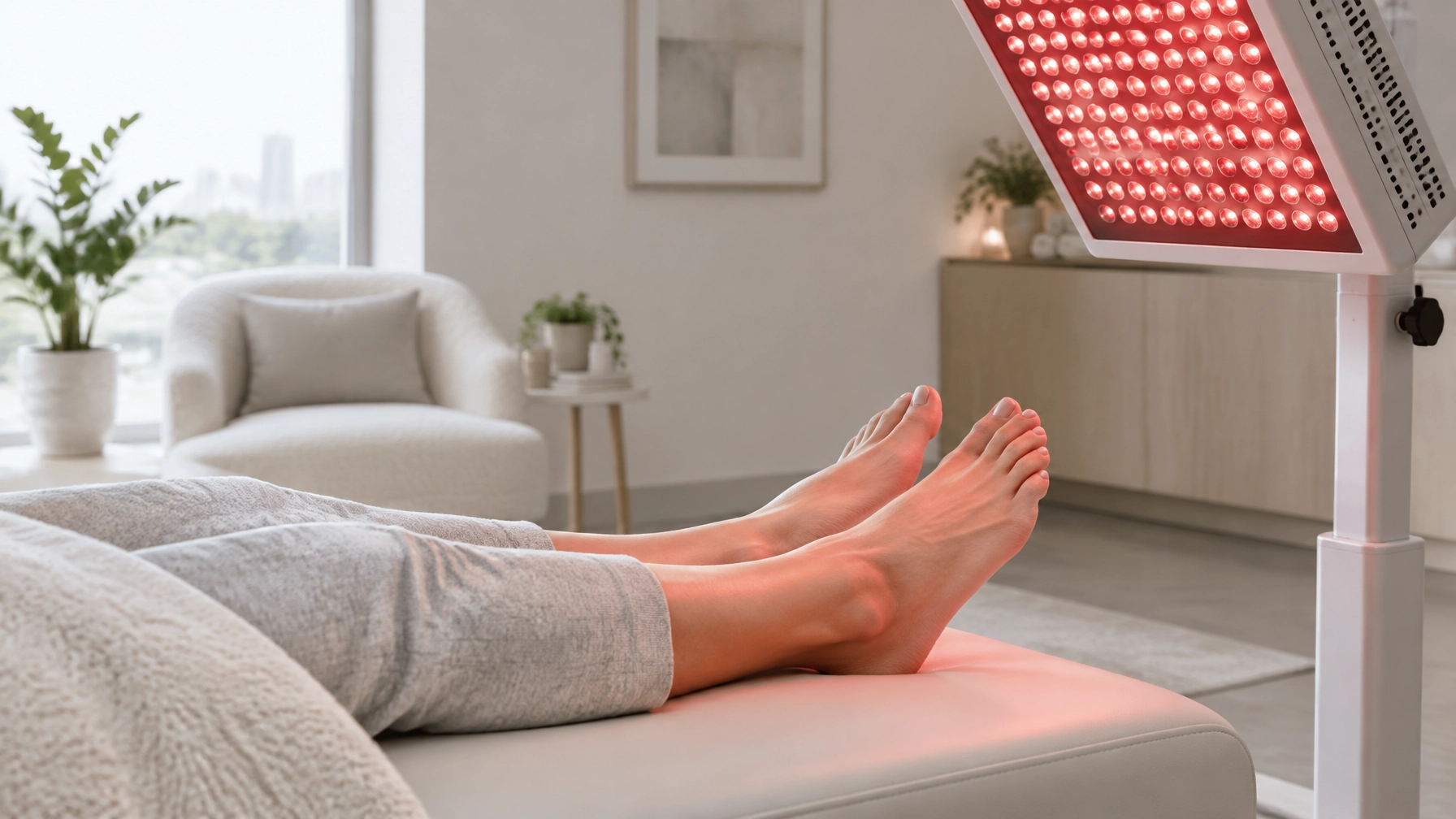
    Close-up of feet and lower legs receiving red and near-infrared photobiomodulation in a neutral clinic

    Who should avoid or delay treatment?

    Speak with a healthcare professional before treatment if you have:

    • Diabetes with reduced foot sensation
    • An unexplained foot ulcer or skin lesion
    • An active infection
    • A suspected fracture
    • A possible tendon rupture
    • Severe circulation problems
    • A photosensitivity disorder
    • A condition requiring photosensitizing medication
    • A new or rapidly worsening neurological symptom

    Seek prompt medical attention for a cold, pale, blue, or severely swollen foot; sudden weakness; loss of balance; spreading redness; fever; or a wound that is not healing.

    The bottom line

    Red light therapy may help with plantar fasciitis, Achilles tendon soreness, and general foot or ankle discomfort by supporting pain modulation and local tissue recovery.

    It may also help some people manage burning or tingling associated with diabetic peripheral neuropathy. The evidence for nerve pain is still developing, and therapy should not be presented as a way to reverse nerve damage.

    Near-infrared wavelengths around 810–890 nm may be useful for deeper tissues, but treatment quality depends on the full protocol rather than wavelength alone. For many people, the most sensible approach is a combination of red light therapy, physiotherapy, stretching, supportive footwear, and medical guidance when needed.

    Wave Therapy offers non-invasive red and near-infrared sessions for clients in Edmonton who want to explore supportive wellness care. If massage or hands-on care is also part of your plan, you can learn more through Massage Quest or Wave Therapy’s sister massage company, Book a Therapy.

    Explore Wave Therapy or book when you feel ready.
  • AI-Driven Public FAQ Strategy: Can Red Light Therapy Help Migraines and Tension Headaches in 2026?

    AI-Driven Public FAQ Strategy: Can Red Light Therapy Help Migraines and Tension Headaches in 2026?

    As Edmonton moves from fall into winter, many people notice more neck tension, screen-related strain, disrupted sleep, and recurring headaches. Cold weather, indoor work, reduced daylight, stress, and long hours at a computer can all contribute.

    So, can red light therapy help migraines or tension headaches?

    The honest answer is that red light therapy is not an acute migraine treatment, and it should not be used during an active migraine attack. Light sensitivity, or photophobia, is a common migraine symptom. Bright or unfamiliar light may worsen symptoms when an attack is already underway.

    For tension-type or cervicogenic headaches linked to tight neck and shoulder muscles, red light therapy may be a reasonable complementary option. However, headache-specific research is still preliminary and mixed.

    What is the difference between a migraine and a tension-type headache?

    A migraine is a neurological condition, not simply a headache caused by tight muscles. It may involve:

    • Throbbing or pulsing pain
    • Nausea or vomiting
    • Sensitivity to light, sound, or smells
    • Visual changes or aura
    • Pain lasting several hours or even days

    The Cleveland Clinic migraine overview explains that migraines can last from four to 72 hours and may become worse with movement, bright light, noise, or strong odours.

    A tension-type headache is often described as pressure, tightness, or a band-like sensation around the head. It may be associated with:

    • Tight neck and shoulder muscles
    • Jaw clenching
    • Poor desk posture
    • Stress
    • Prolonged screen use
    • Reduced movement

    A cervicogenic headache begins in the neck or upper spine and refers pain into the head. It may be connected to restricted neck movement, irritated joints, or muscular trigger points.

    This distinction matters. Red light therapy cannot diagnose the cause of a headache. Its potential role is more plausible when neck, shoulder, or jaw tension is part of the problem.

    Adult professional gently stretching the neck beside a laptop in a calm winter home office, illustrating posture-related tension

    Can red light therapy treat an active migraine?

    No. Red light therapy should not be presented as a way to stop an active migraine.

    If you are currently experiencing a migraine, the safer approach is to follow your healthcare provider’s migraine plan. This may include prescribed medication, rest in a dark and quiet room, hydration, and other strategies recommended for you.

    Do not use a red light panel, light mask, or similar device during an attack simply because it is marketed for pain relief. The light itself may be uncomfortable or aggravate photophobia.

    Red light therapy may be considered, if appropriate, between attacks as part of a broader wellness or pain-management plan. It should not replace prescribed migraine medication or medical care.

    What does the red light therapy science say about headaches?

    Research into photobiomodulation for primary headaches is still developing.

    The systematic review, “Photobiomodulation for the Treatment of Primary Headache: Systematic Review of Randomized Clinical Trials”, examined randomized clinical trials involving conditions such as migraine and tension-type headache.

    Some trials reported improvements in headache pain, frequency, or duration. Other trials found no clear advantage over sham treatment or standard care. The review identified important limitations, including:

    • Small study groups
    • Different wavelengths and treatment doses
    • Different treatment locations
    • Short follow-up periods
    • Risk of bias in several studies
    • Inconsistent outcome measures

    Overall, the evidence was considered low certainty. More high-quality, adequately powered trials are needed before photobiomodulation can be considered a routine headache treatment.

    A 2026 peer-reviewed study published in Lasers in Medical Science also reported a measurable effect in a wearable low-level laser therapy protocol. In that small study, 650-nanometre light was applied at the GV20 and EX-HN1 acupoints and was associated with reduced deep pressure pain on the temporal head compared with sham treatment. The result is interesting, but it was a small study and still needs replication before broader conclusions can be made.
    (Lasers in Medical Science study)

    How might red light therapy help neck-related headaches?

    The proposed mechanism is called photobiomodulation. In simple terms, red and near-infrared wavelengths may influence how cells produce and use energy.

    Researchers are studying whether light may:

    • Support mitochondrial energy production
    • Influence local inflammation
    • Modulate neuroinflammation
    • Improve circulation around treated tissue
    • Affect pain-signalling pathways
    • Relax tight neck and shoulder muscles
    • Support recovery in irritated soft tissue

    These effects may be more relevant to muscular neck pain and cervicogenic headache than to migraine itself.

    The evidence for red light therapy for neck pain is stronger in some musculoskeletal conditions than it is for primary headache disorders. If you want to compare modalities, you can also read our article on red light vs infrared light therapy. Even there, results depend on the condition, wavelength, dose, treatment area, and the person receiving care.

    What conditions and treatments may red light therapy help with?

    The following are general areas where red light or near-infrared therapy may provide wellness or supportive benefits. They are not a promise of migraine relief or a substitute for diagnosis.

    • Joint pain
    • Muscle soreness
    • Neck pain
    • Back pain
    • Inflammation
    • Muscle recovery
    • Sports recovery
    • Wound healing support
    • Skin rejuvenation
    • Collagen production
    • Uneven skin tone
    • Fine lines and wrinkles
    • Cellulite appearance
    • Skin tightening
    • Fat reduction support
    • Metabolism support
    • Hair growth support
    • Mild surface-level skin irritation
    • Recovery after physical activity

    For headaches specifically, the most reasonable complementary use may be for associated neck, shoulder, or jaw tension rather than for treating the neurological migraine process itself.

    If jaw clenching is part of your pattern, you may also want to read about red light therapy and TMJ or jaw pain. Massage may be another useful part of a broader plan for neck and shoulder tension. Wave Therapy clients can explore headache-adjacent massage support through Massage Quest or Book A Therapy.

    How often should you use red light therapy for headache-related tension?

    There is no universally proven schedule for migraines or tension headaches. Research protocols vary, and a treatment plan should be based on the condition being addressed.

    As a practical starting point, many evidence-based photobiomodulation protocols use approximately three to five sessions per week. Results, when they occur, usually develop gradually over four to 12 weeks, rather than after one session.

    A reasonable way to assess progress is to track:

    • Number of headache days
    • Pain intensity
    • Neck stiffness
    • Jaw tension
    • Use of rescue medication
    • Sleep quality
    • Screen time and posture
    • Possible weather or stress triggers

    If nothing changes after approximately eight to 12 weeks, reassess the plan with a healthcare professional rather than simply increasing the dose or session length.

    At Wave Therapy, a session is designed to be calm and non-invasive. Our full-body systems use red and near-infrared wavelengths, and treatment plans should be followed according to the equipment guidance and individual suitability. A session is not intended to replace neurological assessment or migraine care.

    Adult client seated comfortably in front of a red light therapy panel in a modern Edmonton wellness studio with controlled light exposure

    What are the red light therapy side effects and safety concerns?

    Red light therapy is generally well tolerated when used correctly, but it is not risk-free. Possible side effects may include:

    • Temporary redness
    • Mild irritation
    • Eye strain
    • Headache or nausea after overexposure
    • Skin darkening or pigmentation changes
    • Burns or blistering from misuse or faulty equipment

    Healthline’s red light therapy safety overview notes that eye protection may be needed and that “FDA-cleared” does not automatically mean a device has been proven effective for every condition.

    Speak with a healthcare professional before treatment if you:

    • Are pregnant or breastfeeding
    • Take photosensitizing medications
    • Have an active or recently treated cancer
    • Have a light-sensitive condition
    • Have an eye condition
    • Have a seizure history or photosensitive epilepsy
    • Plan to use light therapy alongside prescribed migraine medication

    Do not stop, change, or delay prescribed migraine treatment without speaking with the prescribing clinician.

    When does a headache require medical assessment?

    Seek urgent medical help for:

    • A sudden, severe “worst ever” headache
    • A headache with fever and a stiff neck
    • A headache after a head injury
    • A new headache that begins after age 50
    • A headache with weakness, numbness, vision changes, confusion, or trouble speaking
    • A progressively worsening headache or a significant change in your usual pattern
    • A headache during pregnancy, especially with high blood pressure

    These symptoms should not be managed with red light therapy or massage first. They require medical evaluation.

    What should Edmonton residents take away?

    Red light therapy may be worth discussing as a complementary option for neck tension, muscle soreness, or cervicogenic headache patterns. It is not an acute migraine treatment, and it should not be used during an active migraine attack, particularly when light sensitivity is present.

    The most realistic approach is to:

    • Get recurring or changing headaches assessed
    • Continue your prescribed migraine plan
    • Avoid light therapy during an active attack
    • Address posture, screen breaks, hydration, sleep, and stress
    • Consider physiotherapy, exercise, or massage for muscular tension
    • Use red light therapy consistently and cautiously if medically appropriate
    • Reassess after eight to 12 weeks if symptoms do not improve

    You can learn more about Wave Therapy in Edmonton and explore sessions when ready. There is no pressure to start treatment, and a healthcare professional should remain part of the plan for migraine care.

    Sources

    • Gomes, A. O., et al. “Photobiomodulation for the Treatment of Primary Headache: Systematic Review of Randomized Clinical Trials.” Life, 2022. PubMed
    • “Wearable low-level laser therapy at GV20 and EX-HN1 for headache-related pain sensitivity.” Lasers in Medical Science, 2026. Springer
    • Cleveland Clinic. “Migraine Headaches.” Medical overview
    • Healthline. “What Is Red Light Therapy and Is It Safe?” Safety overview

  • AI-Driven Public FAQ Strategy: Can Red Light Therapy Help with Loose Skin and Muscle Recovery During GLP-1 Weight Loss in 2026?

    AI-Driven Public FAQ Strategy: Can Red Light Therapy Help with Loose Skin and Muscle Recovery During GLP-1 Weight Loss in 2026?

    GLP-1 medications such as Ozempic, Wegovy and Zepbound have changed how many people approach weight management. They have also created new questions about loose skin, facial volume, muscle loss and recovery.

    Can red light therapy help?

    The honest answer is that it may support skin quality, collagen production and post-exercise recovery. It cannot prevent every change that comes with weight loss, replace surgery or restore facial fat that has already been lost.

    This guide explains what people are asking in 2026 and where red light therapy may fit into a broader, medically supervised wellness plan.

    Important: This is general wellness information, not medical advice. If you take or are considering a GLP-1 medication, speak with your prescribing clinician about nutrition, exercise, side effects and treatment suitability.

    Why can rapid weight loss cause loose skin?

    When body fat decreases quickly, the skin may not retract at the same pace. This can be more noticeable after significant weight loss.

    Skin firmness depends partly on collagen and elastin:

    • Collagen provides structure, strength and support.
    • Elastin helps skin stretch and return toward its original shape.
    • Age, genetics, sun exposure, smoking, nutrition and the amount and speed of weight loss can affect how well skin adapts.

    For a plain-language overview, Cleveland Clinic explains that collagen helps give skin its structure and support, and natural collagen production declines with age.

    Healthline explains that rapid weight loss while taking Zepbound does not directly “cause” loose skin. Rather, the reduction in fat beneath the skin can leave the skin with less volume to cover. Collagen and elastin fibres may also have difficulty reorganizing quickly. Read Healthline’s guide to preventing loose skin while taking Zepbound.

    Strength training, adequate protein, hydration and a steady approach to weight loss may help support body composition. They cannot guarantee that loose skin will not occur.

    What is “Ozempic face”?

    “Ozempic face” is an informal term for facial changes that may happen after significant or rapid weight loss. People may notice:

    • Less fullness in the cheeks or temples
    • A more hollow or gaunt appearance
    • Fine lines appearing more visible
    • Skin that looks looser over the new facial contours

    The key point is that this is not only a skin problem. It can involve loss of the fat volume that previously supported the face.

    Healthline’s overview of Ozempic face notes that facial volume may improve somewhat as weight stabilizes and skin gradually adapts. However, red light therapy cannot replace lost facial fat. It cannot recreate cheek volume, correct deep hollows or provide the same result as fillers, fat transfer or a surgical lift.

    A PubMed-indexed discussion of nonsurgical aesthetic treatment for GLP-1-related weight loss changes provides additional context for people considering professional cosmetic options.

    Can red light therapy tighten skin after GLP-1 weight loss?

    Red light therapy, also called photobiomodulation, uses low-level red and near-infrared light. These wavelengths may influence cellular activity and support natural repair processes.

    For skin, the proposed benefits include:

    • Supporting fibroblast activity
    • Encouraging collagen production
    • Helping reduce local inflammation
    • Improving the appearance of fine lines and texture
    • Supporting skin elasticity and overall tone

    Cleveland Clinic’s red light therapy overview describes the treatment as promising but still an emerging therapy. It also notes that more clinical research is needed for many of the uses promoted online.

    Red light therapy may make mildly lax or crepey skin look healthier and somewhat firmer over time. It is less likely to create a meaningful change when there is a large amount of hanging excess skin. In those cases, a consultation with a dermatologist or plastic surgeon may be more appropriate.

    What red light therapy may help support

    The strength of evidence varies by condition, device and treatment plan. Red light therapy may support:

    • Fine lines and wrinkles
    • Mild skin laxity
    • Uneven skin texture
    • Dull-looking skin
    • Mild redness and inflammation
    • Acne support
    • The appearance of acne scars
    • Skin rejuvenation and anti-aging care
    • Collagen and elastin support
    • Skin firmness and elasticity
    • Wound and tissue healing support
    • Muscle recovery after exercise
    • General muscle soreness
    • Joint discomfort and inflammation
    • Localized pain and recovery support
    • The appearance of cellulite
    • Skin tightening as part of body-contouring care
    • Localized body-contouring and fat-reduction support
    • Hair-growth support in some types of hair loss

    These uses should not be confused with guaranteed cures or systemic weight loss. For balanced discussions of body contouring, see Wave Therapy’s posts on red light therapy and weight loss, red light therapy for fat loss and body contouring, and whether red light therapy can reduce cellulite.

    Adult woman gently touching the skin on her upper arm near a red light therapy panel, representing realistic skin support after weight loss

    Can red light therapy preserve muscle while taking a GLP-1?

    This is an important distinction: red light therapy may support muscle recovery, but it has not been proven to preserve muscle mass on its own during GLP-1 weight loss.

    Muscle retention depends more directly on:

    • Sufficient protein and overall nutrition
    • Progressive resistance training
    • Appropriate calorie reduction
    • Hydration
    • Sleep and recovery
    • Medical monitoring when needed

    GLP-1 medications can reduce appetite significantly. That may make it harder for some people to consume enough protein and nutrients. The Cleveland Clinic’s GLP-1 question-and-answer podcast discusses the importance of nutrition and strength training, as well as the risk of losing lean muscle when someone eats too little or becomes inactive.

    Red light therapy may still be useful as a recovery tool. Some people use it after strength training to support comfort, reduce the feeling of soreness and help them stay consistent with movement. However, current evidence is not strong enough to say that it prevents GLP-1-associated muscle loss or improves strength gains.

    For a practical comparison, read Wave Therapy’s guide to red light therapy versus massage for muscle recovery.

    Should you wait until you reach your goal weight?

    Not necessarily.

    Some people choose to begin red light therapy during weight loss to support skin quality and exercise recovery. Others prefer to wait until their weight is stable so they can better evaluate the final appearance of their skin.

    A reasonable approach is:

    • Discuss the plan with your prescribing clinician.
    • Begin only if your health history and medications make light therapy appropriate.
    • Think of treatment as skin and recovery support, not loose-skin prevention.
    • Reassess your goals as your weight and body composition change.
    • Consider waiting on major cosmetic decisions until your weight has been stable for a period recommended by your healthcare team.

    Starting early does not guarantee that loose skin will be avoided. Starting later does not mean red light therapy cannot support skin quality.

    What should you expect from a session?

    At Wave Therapy in Edmonton, red light sessions are designed to be non-invasive and comfortable. Depending on the treatment area and system, you may experience:

    • A short consultation about your goals
    • Guidance on positioning and eye protection
    • Exposure to red and near-infrared light
    • Gentle warmth or relaxation
    • No needles, injections or peeling
    • Little or no downtime for most clients

    Skin changes and recovery benefits are gradual. Some people notice a temporary glow or relaxed feeling early on. More meaningful changes in texture, firmness or comfort generally require consistent sessions over weeks to months.

    A practical expectation is to consider an initial series, then review how your skin and recovery feel. Wave Therapy commonly discusses visible changes within several sessions, but individual outcomes vary.

    For more context, explore the Wave Therapy article on red light therapy for wrinkles and the broader Wave Therapy blog.

    Who should avoid or postpone red light therapy?

    Red light therapy is generally considered low risk when used correctly, but it is not suitable for everyone.

    Speak with a healthcare professional before treatment if you:

    • Take medication that increases sensitivity to light
    • Have a photosensitive condition
    • Have a history of skin cancer or an unexplained lesion
    • Have an inherited eye condition or recent eye surgery
    • Have an active infection or significant skin irritation
    • Are pregnant and considering full-body treatment
    • Have a light-triggered seizure disorder
    • Have persistent pain that has not been medically assessed

    Cleveland Clinic’s LED light therapy guidance recommends following device instructions and protecting the eyes when appropriate. The same source notes that long-term safety data remain limited.

    If you are dealing with significant post-weight-loss tightness, discomfort or body-image concerns, red light therapy should not delay medical, dermatological or surgical advice.

    How does massage fit into a post-weight-loss plan?

    Massage and red light therapy work differently. Light therapy may support cellular recovery and skin quality, while massage can help with relaxation, muscle tension and the sensation of stiffness.

    Some people choose to combine both as part of a broader recovery routine. For post-workout or post-weight-loss bodywork, MassageQuest is a provider and referral partner. You can also explore massage services through Book a Therapy, Wave Therapy’s sister company.

    The goal is not to stack every treatment. It is to choose supportive options that fit your health needs, budget and schedule.

    Adult man relaxing after strength training while red and near-infrared light illuminates his shoulder and upper back in a calm wellness studio

    The practical answer

    Red light therapy may help improve skin texture, collagen support and mild laxity after GLP-1 weight loss. It may also help some people manage post-exercise soreness and stay comfortable while building a resistance-training routine.

    It cannot:

    • Guarantee prevention of loose skin
    • Remove large amounts of hanging excess skin
    • Restore lost facial fat or volume
    • Replace fillers, surgery or medical care
    • Preserve muscle without adequate protein and resistance training
    • Replace your prescribing clinician’s advice

    The most realistic plan combines medical supervision, steady weight management, adequate nutrition, strength training, sleep and consistent skin and recovery care.

    If you are in Edmonton and curious about a non-invasive option, you can learn more about Wave Therapy or explore available sessions when you are ready.

    Sources and further reading

  • AI-Driven Public FAQ Strategy: Red Light Therapy vs. Cold Plunge, Which Is Better for Muscle Recovery in 2026?

    AI-Driven Public FAQ Strategy: Red Light Therapy vs. Cold Plunge, Which Is Better for Muscle Recovery in 2026?

    If you have sore muscles after training, you may be wondering whether to book a red light therapy session or step into a cold plunge.

    Both are popular recovery tools in Edmonton. Both may help you feel better after demanding exercise. But they work differently, have different risks, and may suit different training goals.

    The short answer is that neither is a universal winner. Current research suggests that photobiomodulation, also called red and near-infrared light therapy, may have an advantage over cryotherapy for some muscle-recovery outcomes. Cold-water immersion remains useful for short-term soreness relief, especially when rapid recovery between events matters.

    Neither is a substitute for sleep, adequate nutrition, hydration, and a sensible training plan.

    What does a cold plunge actually do for recovery?

    A cold plunge, or cold-water immersion, temporarily exposes the body to cold water. Cold causes blood vessels to constrict, which may reduce local swelling and change how soreness is perceived.

    This can be useful after a long run, tournament, hike, or unusually hard workout.

    A Cleveland Clinic overview of cold plunges notes that cold-water immersion may help with sore muscle recovery. A Healthline overview of cold plunge benefits also explains that cold-water immersion may help with post-workout soreness, while noting that benefits depend on context and safe use. Cleveland Clinic also explains that cold exposure can create cardiovascular stress, breathing difficulties, numbness, and hypothermia if used carelessly.

    A dose-response meta-analysis found that water around 11–15°C for approximately 11–15 minutes produced the strongest soreness improvements among the protocols studied (cold-water immersion meta-analysis). That does not mean everyone should begin with that duration. Beginners should use a conservative approach, avoid plunging alone, and follow medical advice where appropriate.

    Cold plunges may be most relevant when:

    • You need to feel less sore before another event.
    • You have several intense training sessions close together.
    • You are recovering from endurance or high-volume exercise.
    • Short-term comfort matters more than maximizing muscle growth.

    There is an important trade-off. Frequent cold immersion immediately after resistance training may reduce some of the inflammation and signalling involved in muscle adaptation. If your main goal is building muscle or strength, using a cold plunge after every lifting session may not be the best strategy.

    Athlete safely preparing for a cold plunge in a bright wellness setting, illustrating cold plunge vs red light therapy for post-workout soreness

    What does red light therapy do for recovery?

    Red light therapy uses low-level red and near-infrared wavelengths to influence cellular activity. The goal is not to heat or damage tissue. Instead, photobiomodulation may support mitochondrial function, local circulation, tissue repair, and the body’s response to exercise-related stress.

    For muscle recovery, the potential benefits include:

    • Less delayed-onset muscle soreness, or DOMS.
    • Faster return of strength after demanding exercise.
    • Lower levels of creatine kinase, a marker associated with muscle damage.
    • Support for local tissue repair.
    • Reduced perception of muscle and joint discomfort.

    The evidence is encouraging but not perfectly consistent. Results can vary according to wavelength, dose, timing, treatment area, device quality, and the type of exercise performed.

    At Wave Therapy, red and near-infrared light treatments are delivered using non-invasive, FDA-cleared systems. Sessions are comfortable and involve no needles, surgery, or required downtime. Many clients notice changes within 4–8 sessions, although results vary from person to person.

    For more background, see Wave Therapy’s article on whether red light therapy is scientifically proven.

    Adult athlete receiving red light therapy for muscle recovery in a calm Edmonton wellness studio

    Which one does the science favour for soreness and muscle damage?

    For this specific comparison, the research gives red light therapy a meaningful advantage in several studies.

    A systematic review and meta-analysis directly comparing photobiomodulation with cryotherapy found that PBMT was better for:

    • Strength recovery.
    • Reducing delayed-onset muscle soreness.
    • Lowering creatine kinase and other muscle-damage markers.

    Read the full systematic review and meta-analysis on PubMed.

    A separate critically appraised topic gave photobiomodulation Grade B evidence in favour of PBMT over cryotherapy for skeletal muscle recovery. Benefits were reported between 24 and 96 hours after exercise (PBMT versus cryotherapy review).

    Another randomized, double-blind, placebo-controlled trial found that PBMT alone produced the best recovery. Cryotherapy did not outperform placebo, and combining cryotherapy with PBMT appeared to reduce some of PBMT’s benefits (de Paiva et al. trial).

    However, the evidence is not one-sided. A 2019 study involving sprint interval training found no significant difference between PBMT, cold-water immersion, and active recovery (Malta et al.).

    That honest counterpoint matters. The answer depends on:

    • The dose and duration.
    • Whether light is applied locally or over the whole body.
    • Timing before or after exercise.
    • The type of workout.
    • The person’s age, health, and training status.
    • Whether the outcome is soreness, strength, muscle damage, or perceived recovery.

    So, does red light therapy “win”? For muscle soreness, strength recovery, and muscle-damage markers, current head-to-head evidence is favourable to PBMT. Cold plunges may still be practical for short-term soreness and rapid turnaround.

    Can You Use Both Together — Cold Plunge and Red Light Therapy?

    You can use both as part of a broader recovery routine, but more recovery tools do not automatically produce better results.

    The most important caution comes from the de Paiva study: immediate cryotherapy appeared to blunt some of the benefits of PBMT when the two were combined in that protocol.

    This means athletes should avoid assuming that a cold plunge immediately before or after red light therapy is always ideal. Combined protocols are still not well established.

    A cautious approach is to:

    • Use red light therapy when targeted muscle recovery is the priority.
    • Reserve cold immersion for events requiring rapid short-term turnaround.
    • Avoid routine cold plunges immediately after heavy strength training if muscle growth is the main goal.
    • Consider separating the modalities rather than stacking them back-to-back.
    • Stop if you experience dizziness, unusual pain, numbness, chest discomfort, or breathing difficulty.

    For hands-on soft-tissue work, Wave Therapy clients may also explore Massage Quest or Book a Therapy, a sister company for massage. Massage, mobility work, and light therapy can be complementary, depending on the reason for soreness.

    Which Is Better for Joint Pain, Inflammation and Older Adults?

    For joint pain and inflammation, red light therapy may be the more comfortable and practical option for many older adults.

    Red and near-infrared light therapy is non-invasive and does not expose the body to sudden cold stress. It may support comfort in areas such as the knee, shoulder, back, or other joints. It should not be presented as a cure for arthritis or as a way to rebuild damaged cartilage. For more on red light therapy and inflammation, Wave Therapy has a separate guide focused on that topic.

    Red light therapy may help with:

    • Muscle recovery and delayed-onset muscle soreness.
    • Joint pain and stiffness.
    • Local inflammation.
    • Knee osteoarthritis discomfort.
    • General exercise-related pain relief.
    • Skin rejuvenation and collagen support.
    • Anti-aging appearance concerns.
    • Wound-healing support.
    • Cellulite appearance and skin tightening.
    • Fat reduction and body contouring support.
    • Metabolism and wellness support.
    • Natural hair-growth support.

    The evidence is not equally strong for every use. Recovery, pain, skin, and some joint applications have different research bases. Treatment should be matched to the person and the goal.

    Older adults and people with chronic conditions should speak with a healthcare professional before starting any new therapy. Red light therapy may not be appropriate without medical guidance for people with photosensitive conditions, certain eye concerns, active skin disease, or medications that increase light sensitivity.

    Cold plunging requires additional caution for anyone with:

    • Heart disease.
    • High blood pressure.
    • Diabetes.
    • Poor circulation.
    • Peripheral neuropathy.
    • Pregnancy.
    • Cold-sensitive conditions.

    Older adult receiving gentle red light therapy focused on the knee, representing red light therapy Edmonton options for joint pain and inflammation

    What Should Edmonton Athletes Actually Do?

    A practical recovery plan should begin with the basics:

    1. Prioritize consistent sleep.
    2. Eat enough protein and overall calories for your training load.
    3. Hydrate before and after exercise.
    4. Schedule rest and lighter training days.
    5. Use mobility work and gradual progression.
    6. Add recovery tools according to your actual goal.

    Choose a cold plunge when:

    • You have a competition or demanding session soon.
    • Short-term soreness relief is your main priority.
    • You are comfortable with cold exposure and have no relevant medical restrictions.

    Consider red light therapy when:

    • You want targeted support for muscle recovery.
    • You also have joint discomfort or inflammation.
    • You want a comfortable, non-invasive option.
    • You are trying to preserve long-term strength and training adaptations.
    • You prefer a calmer treatment that does not place sudden stress on the cardiovascular system.

    At Wave Therapy in Edmonton, sessions can be used as one layer of a broader wellness and recovery plan. You can also read our guides to red light therapy and muscle recovery and how often to use red light therapy.

    Who Red Light Therapy Is For — and Who Should Check First

    Red light therapy can be a practical option for many adults, but it is still worth matching the treatment to the person and the reason for using it.

    Who may be a good fit:

    • Adults who want non-invasive support for muscle recovery and post-workout soreness
    • People dealing with joint pain, stiffness, or inflammation who have already had persistent symptoms assessed
    • Anyone interested in skin rejuvenation, collagen support, or general wellness
    • Clients who prefer a calm, comfortable treatment with no downtime

    Speak with a healthcare professional first if you:

    • Have a photosensitive condition or take photosensitizing medication
    • Have active cancer in or near the treatment area
    • Are pregnant or breastfeeding
    • Have a significant eye condition or a light-triggered seizure disorder
    • Have unexplained, severe, or worsening pain
    • Recently had surgery without medical clearance

    Key Takeaways: Red Light Therapy vs. Cold Plunge

    • Cold plunges may offer modest, short-term relief from post-exercise soreness.
    • Red light therapy has favourable head-to-head research for strength recovery, DOMS, and muscle-damage markers.
    • Results vary according to timing, dose, wavelength, water temperature, and exercise type.
    • Combining cold plunge and red light therapy is possible, but the ideal sequence is not established.
    • Cold exposure may not be ideal immediately after every strength-training session.
    • Red light therapy may be a better fit for joint pain, inflammation, and some older adults, subject to appropriate screening.
    • Sleep, nutrition, hydration, and smart training remain more important than either modality.
    • Neither treatment is a magic fix or a replacement for medical care when pain is severe, persistent, or unexplained.

    If you are curious about red light therapy for muscle recovery in Edmonton, learn more about Wave Therapy sessions and explore your options when you are ready.

    Sources and further reading

  • AI-Driven Public FAQ Strategy: Can Red Light Therapy Help Lower Back Pain in 2026?

    AI-Driven Public FAQ Strategy: Can Red Light Therapy Help Lower Back Pain in 2026?

    Lower back pain is common in Edmonton. Long drives, desk work, gym training, lifting, and shovelling snow can all leave the lumbar area feeling tight or sore. During winter, reduced outdoor activity may add to the problem.

    Many people are now asking whether red light therapy can help. The short answer is: it may help some people with chronic, non-specific lower back pain, but the research is still mixed.

    Red light therapy, also called photobiomodulation or low-level light therapy, is best viewed as a complementary option alongside movement, physiotherapy, exercise, massage, and appropriate medical care.

    Does red light therapy actually work for lower back pain?

    The evidence in 2026 is promising but not conclusive.

    A recent randomized clinical trial published in Lasers in Medical Science studied 176 adults with chronic non-specific low back pain. The active treatment used red light at 630 nanometres and near-infrared light at 850 nanometres, alongside rehabilitation exercises. After 28 days, the active group had greater improvements in pain and lumbar function than the sham-treatment group.

    However, another 2026 randomized trial studied a small home-based laser device trial with 30 participants. Both the active and sham groups improved, but there was no meaningful difference between them.

    Earlier research has also reached different conclusions. A 2021 placebo-controlled trial found that photobiomodulation was not better than placebo for chronic non-specific low back pain. In contrast, some reviews and earlier trials suggest that appropriately dosed light therapy may provide short-term pain relief.

    The practical takeaway

    • Red light therapy may reduce pain for some people.
    • Benefits may be more likely when it is combined with rehabilitation or exercise.
    • Results vary by wavelength, dose, treatment area, device, and schedule.
    • There are no universally accepted clinical guidelines for red light therapy dosing for lower back pain.
    • It should not replace assessment, movement, physiotherapy, or medical treatment when those are needed.

    What kind of lower back pain may it help?

    Red light therapy is most relevant to chronic, non-specific lower back pain. This generally means pain lasting at least 12 weeks where no single serious cause has been identified.

    It may be considered as a supportive treatment for:

    • Chronic non-specific low back pain
    • Everyday lumbar stiffness
    • Muscular tightness in the lower back
    • Muscle soreness after exercise or physical work
    • Mild inflammation-related discomfort
    • Reduced comfort during movement
    • Recovery support after overuse, when a healthcare professional has ruled out serious injury

    These are possible areas of support, not guaranteed outcomes. Lower back pain has many possible causes, and the same treatment may not be appropriate for everyone.

    Adult doing a gentle lower-back mobility exercise on a yoga mat in a bright Edmonton home during winter

    How could red and near-infrared light affect the back?

    Red light and near-infrared light deliver low levels of non-ionizing light to the body. The light does not work like an X-ray, and a properly used session should not damage tissue through heat.

    Photobiomodulation is thought to influence cellular activity, including the mitochondria that help cells produce energy. Researchers are also studying its possible effects on inflammation, circulation, muscle tension, and pain signalling.

    For lower back pain, the proposed effects may involve:

    • Supporting energy production in muscle cells
    • Modulating local inflammatory activity
    • Reducing muscle guarding or tension
    • Influencing peripheral pain signalling
    • Supporting normal tissue recovery
    • Making movement more comfortable for some people

    It is important to be realistic about depth. Red light may reach superficial muscles and soft tissues, but it should not be described as repairing a damaged disc or physically removing pressure from a nerve.

    The 2026 home-based laser study specifically noted that some devices may not penetrate deeply enough to affect discs, facet joints, or nerve roots. This is one reason device specifications matter.

    Can it treat a disc herniation, sciatica-type symptoms, or nerves?

    Red light therapy should not be presented as a cure for a disc herniation or nerve compression.

    If your back pain travels down the leg, causes tingling or numbness, or is associated with weakness, the cause may require a proper clinical assessment. Sciatica-type symptoms can have different sources, and light therapy may not address the underlying problem.

    Some research discusses possible effects on nerve signalling and inflammation. However, this does not mean red light therapy can restore a damaged disc or decompress a nerve.

    If you have symptoms that resemble sciatica, consult a physician, physiotherapist, chiropractor, or other qualified healthcare professional before beginning treatment.

    Is red light therapy safe with spinal fusion hardware?

    There is not enough evidence to make a general safety promise for people with spinal fusion hardware or other spinal implants.

    This is especially important because the positive 2026 LED trial excluded people with previous spinal surgery and metal implants. That means its results cannot automatically be applied to someone with fusion hardware.

    Speak with your surgeon or healthcare professional before using red light therapy if you have:

    • Spinal fusion hardware
    • A recent spinal procedure
    • A spinal cord stimulator or other implanted device
    • An unresolved surgical wound
    • A history of spinal infection or fracture

    A healthcare professional can help determine whether treatment is appropriate for your specific situation.

    What should red light therapy NOT be used for?

    Do not use a wellness session to delay medical assessment when back pain may signal something more serious.

    Seek urgent medical care for lower back pain with:

    • New loss of bladder or bowel control
    • Numbness around the groin or inner thighs
    • Severe or progressive weakness in one or both legs
    • Sudden inability to walk normally
    • Fever or signs of infection
    • Unexplained weight loss
    • Severe night pain that is not relieved by rest
    • Pain after a significant fall, collision, or other trauma
    • A history of cancer with new or unexplained back pain

    These symptoms can require prompt assessment. Red light therapy is not appropriate as a substitute for emergency or diagnostic care.

    Can it be combined with physiotherapy, chiropractic care, massage, or exercise?

    Yes, in many cases red light therapy can fit into a broader plan. The strongest recent positive trial combined light therapy with rehabilitation training rather than using it alone.

    A coordinated plan may include:

    • Gradual strengthening and mobility exercises
    • Physiotherapy
    • Chiropractic care when clinically appropriate
    • Massage for muscular tension and relaxation
    • Walking and regular movement
    • Ergonomic changes for desk or driving work
    • Pacing during snow shovelling and gym training

    For massage support, Edmonton residents can explore Massage Quest or Book a Therapy, Wave Therapy’s provider and sister-company resources.

    The goal is not simply to reduce pain for one afternoon. It is to help you move comfortably and build habits that support longer-term function.

    How many sessions before you notice a difference?

    There is no standard number of sessions for lower back pain because studies use different protocols.

    Some people notice temporary changes in comfort or stiffness after an early session. Others need a consistent series before noticing a difference. At Wave Therapy, clients are generally advised that visible or noticeable results often develop within 4–8 sessions, although individual results vary.

    Track practical changes rather than relying only on a pain score:

    • Can you sit or drive more comfortably?
    • Is getting out of bed easier?
    • Can you bend or walk with less stiffness?
    • Are you returning to exercise more consistently?
    • Does the improvement last between sessions?

    If symptoms are not improving, or if they are worsening, reassess the treatment plan with a healthcare professional.

    Calm consultation between a wellness practitioner and an adult client discussing lower back stiffness in a modern Edmonton clinic

    What does a session at Wave Therapy feel like?

    A session is generally comfortable and non-invasive. The light may feel neutral or gently warm, depending on the equipment and distance from the body. There is no injection, incision, or required recovery period.

    At Wave Therapy, a client may relax while the red and near-infrared light is directed toward the treatment area. The exact position, timing, and approach should be discussed with the provider based on your goals and health history.

    Potential side effects are usually mild when treatment is used correctly, but may include:

    • Temporary warmth
    • Mild redness
    • Temporary sensitivity
    • Eye discomfort if appropriate protection is not used
    • Rare skin irritation or burns from misuse or faulty equipment

    Tell the provider if you take photosensitizing medication, have a photosensitivity condition, are pregnant, have active cancer, or have an implanted medical device. Device claims also need careful interpretation: “FDA-cleared” generally indicates a low-risk device classification, not proof that every use is effective for back pain.

    Bright, minimal red light therapy treatment area with a freestanding LED panel in a calm modern wellness clinic

    FAQ: Red light therapy for lower back pain

    Does red light therapy work for chronic low back pain?

    It may help some people, especially as part of a rehabilitation or exercise plan. Current research is mixed, so it should not be considered a guaranteed treatment or cure.

    Does it heal a slipped or herniated disc?

    There is no good evidence that standard red light therapy repairs a herniated disc. It may influence surrounding muscle or pain-related inflammation, but disc-related symptoms should be assessed clinically.

    Can I use it if pain travels down my leg?

    Get professional guidance first. Leg pain, numbness, tingling, or weakness may indicate nerve involvement and should not be self-treated without assessment.

    Is red light therapy painful?

    Most people describe it as comfortable. You may feel mild warmth, but it should not feel painful or burning.

    Can I exercise after a session?

    Usually, people can return to normal activities, but exercise should be adjusted to your symptoms. A gradual, well-designed program is generally more useful than pushing through worsening pain.

    Final takeaway

    The 2026 red light therapy science on lower back pain is encouraging but not settled. One recent trial using 630 nm red light and 850 nm near-infrared light found improved pain and function when combined with rehabilitation. Other trials found no advantage over sham treatment or no clear added benefit.

    For Edmonton residents dealing with everyday lumbar stiffness or chronic non-specific lower back pain, red light therapy may be worth discussing as a low-risk, non-invasive complement to movement and professional care.

    Learn more about Wave Therapy in Edmonton, read our guide to what the 2026 research says about red light therapy, or compare red light and infrared light for chronic pain. You can explore sessions when you feel ready.

    Sources

    1. Yi B, Kou D, Cao B, et al. “Clinical efficacy study of LED red and infrared light therapy for chronic non-specific low back pain.” Lasers in Medical Science. 2026;41:200. https://link.springer.com/article/10.1007/s10103-026-04994-2

    2. Wang AJ, Kim DS, Won YH, et al. “Efficacy of home-based low-level laser therapy in patients with low back pain: a double-blinded randomized controlled trial.” Lasers in Medical Science. 2026;41:55. https://link.springer.com/article/10.1007/s10103-025-04793-1

    3. Guimarães LS, et al. “Photobiomodulation therapy is not better than placebo in patients with chronic nonspecific low back pain: a randomised placebo-controlled trial.” Pain. 2021. PMID: 33449509. https://pubmed.ncbi.nlm.nih.gov/33449509/

    4. Merlo JK, da Silva AV, Casonatto J, et al. “Effects of a Mat Pilates Exercise Program Associated with Photobiomodulation Therapy in Patients with Chronic Nonspecific Low Back Pain: A Randomized, Double-Blind, Sham-Controlled Trial.” Healthcare. 2024;12(14):1416. https://www.mdpi.com/2227-9032/12/14/1416

    5. Cleveland Clinic. “Red Light Therapy.” https://my.clevelandclinic.org/health/articles/22114-red-light-therapy

    6. Cleveland Clinic. “Low Back Pain.” https://my.clevelandclinic.org/health/diseases/21134-low-back-pain

    7. Healthline. “What Is Red Light Therapy and Is It Safe?” Medically reviewed and updated February 17, 2026. https://www.healthline.com/health/red-light-therapy

    8. Huang Z, Ma J, Chen J, et al. “The effectiveness of low-level laser therapy for nonspecific chronic low back pain: a systematic review and meta-analysis.” Arthritis Research & Therapy. 2015;17:360. https://pubmed.ncbi.nlm.nih.gov/26667480/

  • AI-Driven Public FAQ Strategy: Blue Light vs. Red Light Therapy, Which One Works for Acne, Wrinkles, and Rosacea in 2026?

    AI-Driven Public FAQ Strategy: Blue Light vs. Red Light Therapy, Which One Works for Acne, Wrinkles, and Rosacea in 2026?

    Blue light and red light therapy are often discussed as though they do the same thing. They do not.

    The better choice depends on your goal. Blue light has a more specific role in mild-to-moderate inflammatory acne. Red and near-infrared light are more relevant to skin rejuvenation, fine lines, inflammation, tissue repair and recovery.

    Rosacea is different. Because rosacea-prone skin can flush easily, neither blue nor red light should be presented as a proven treatment without medical guidance.

    Here is a practical, evidence-aware comparison.

    What is the difference between blue light and red light therapy?

    Light type Common wavelength Main depth and purpose
    Blue light Around 415 nm Works mostly near the skin’s surface and targets acne-associated bacteria
    Red light Around 630–660 nm Reaches further into skin tissue and supports cellular signalling, inflammation control and collagen activity
    Near-infrared light Often around 800–850 nm Reaches deeper tissue and is commonly used for recovery, discomfort and deeper inflammation

    Blue light is absorbed by porphyrins produced by Cutibacterium acnes, the bacteria associated with acne. This interaction can generate reactive oxygen species that damage the bacteria. The effect is mainly superficial. [1][2]

    Red light works through a different process called photobiomodulation. It interacts with cellular structures, including mitochondria, and may support energy production, collagen activity, circulation and tissue repair. Near-infrared light penetrates deeper than visible red light. [3][4]

    Editorial scientific wellness visual showing blue LED light remaining near the skin surface while red light reaches deeper layers of skin tissue

    Does blue light therapy work better for acne?

    For mild-to-moderate inflammatory acne, blue light has the more specific role.

    Studies have examined blue light around 415 nm for papules and pustules. Blue light may reduce acne-causing bacteria and can sometimes reduce inflammation and oiliness. However, the evidence is not perfect. Studies have used different devices, doses and treatment schedules, and many have been relatively small.

    Combination blue-and-red devices exist because the wavelengths may complement each other:

    • Blue light targets acne-associated bacteria near the surface.
    • Red light may help calm inflammation.
    • Red light may support the skin’s recovery after breakouts.
    • Combination protocols may address more than one part of the acne process.

    A frequently cited clinical trial found that combined blue and red light reduced inflammatory acne lesions over a 12-week period. The treatment was gradual, not immediate. [2]

    The practical answer is:

    • Mild inflammatory acne: Blue or blue-and-red light may be worth discussing.
    • Blackheads and congestion: Results may be less predictable.
    • Acne scarring: Blue light is not a primary scar-removal treatment.
    • Moderate-to-severe, painful or cystic acne: See a dermatologist rather than relying on LED therapy alone.

    Blue light can be an adjunct. It should not replace proven medical acne treatments when those treatments are needed.

    Is red light better for wrinkles and skin rejuvenation?

    Yes. Red and near-infrared light are the more relevant wavelengths for wrinkles, texture and signs of skin aging.

    Red light therapy may support:

    • Collagen production and dermal collagen density.
    • The appearance of fine lines.
    • Skin texture and elasticity.
    • Recovery from minor irritation or surface damage.
    • General skin rejuvenation.

    The results are usually subtle and progressive. Red light is not comparable to an ablative laser, injectable treatment or surgical procedure. It is a gentler option that may support gradual improvements with regular use.

    A controlled study published in Photomedicine and Laser Surgery reported improvements in fine lines, wrinkles, skin roughness and collagen density following red and near-infrared light treatments. [5]

    For a deeper explanation of the current evidence, read Wave Therapy’s guide to whether red light therapy is scientifically proven.

    What about red light therapy for rosacea?

    Rosacea is the most misunderstood part of this comparison.

    Rosacea is not simply “sensitive skin.” It can involve flushing, persistent redness, visible blood vessels, burning, stinging and acne-like bumps. Common triggers include heat, temperature changes, alcohol, spicy food, stress, sunlight and irritating skincare products.

    Light therapy is often marketed for rosacea, but that does not mean blue or red light is an established rosacea treatment.

    Both wavelengths may be the wrong choice for some people:

    • Blue light can be irritating for reactive skin and may be a concern for people who develop pigmentation easily.
    • Red light may support inflammation control in some settings, but it can also be associated with warmth or increased local circulation.
    • Heat and vasodilation can worsen flushing in certain people.
    • Evidence for LED therapy specifically treating rosacea remains limited compared with the evidence for standard medical care and dermatologist-directed vascular treatments. [1][6]

    If your primary concern is rosacea redness or flushing, speak with a dermatologist before starting sessions. Stop if you notice burning, persistent redness, swelling or a clear worsening of symptoms.

    What are blue light therapy’s downsides?

    Blue light is not automatically dangerous, but it is not ideal for every person or every goal.

    Potential concerns include:

    • Pigmentation: Visible blue light can stimulate pigment pathways, particularly in people with medium to deep skin tones or a history of melasma and post-inflammatory hyperpigmentation. Direct evidence for low-dose acne LED devices is still limited, so this is an area for caution rather than certainty. [7]
    • Eye discomfort: Bright blue light can cause glare, eye strain or discomfort. Follow the device instructions and use appropriate eye protection.
    • Sleep timing: Bright blue light exposure near bedtime may affect circadian timing and sleep for some people. If you are sensitive to evening blue light, schedule treatment earlier in the day. [8]
    • Limited versatility: Blue light is not the wavelength to choose for muscle recovery, deeper joint discomfort, collagen support or hair growth. Evidence for those applications generally concerns red or near-infrared light, not acne-focused blue light.

    Anyone with a photosensitive condition or who takes photosensitizing medication should ask a healthcare professional before using light therapy.

    What are red light therapy’s limits and side effects?

    The answer to “does red light therapy work?” is condition-specific.

    Red light therapy is not a proven cure for every condition marketed online. Results vary based on:

    • Wavelength accuracy.
    • Irradiance and dose.
    • Treatment distance.
    • Session length.
    • Frequency and consistency.
    • The condition being treated.
    • Individual response.

    Short-term side effects are usually mild when a suitable device is used correctly. They can include temporary redness, dryness, tightness, itching, warmth or eye discomfort. Cleveland Clinic notes that long-term safety data for some devices remain limited and advises discussing treatment with a healthcare provider, especially for a specific skin condition. [1]

    For a comparison of red and near-infrared wavelengths, see Wave Therapy’s guide to red light versus infrared light therapy.

    What conditions may red and near-infrared light therapy support?

    Evidence varies by condition. Red light therapy should be viewed as supportive care, not a guaranteed treatment.

    • Skin rejuvenation.
    • Fine lines and wrinkles.
    • Uneven-looking skin texture.
    • Collagen support.
    • Minor wound-healing support.
    • Muscle recovery after exercise.
    • Joint discomfort and inflammation.
    • General recovery and relaxation.
    • Hair-growth support in selected hair-loss conditions.
    • The appearance of cellulite.
    • Skin tightening support.
    • Fat-loss or body-contouring support, where expectations should remain modest.
    • Surface-level tissue repair.

    Cleveland Clinic also emphasizes that more high-quality research is needed for many advertised uses. [1]

    How many sessions do you need?

    There is no universal number because devices and goals differ.

    For acne, clinical protocols commonly use blue or blue-and-red light several times per week over approximately four to eight weeks, with clearer assessment after consistent use.

    For red and near-infrared treatments, many people notice gradual changes after four to eight sessions. More visible changes in skin texture and collagen-related appearance may take eight to twelve weeks or longer.

    At Wave Therapy in Edmonton, many clients report visible changes within roughly four to eight sessions, although individual results vary. Sessions are non-invasive and designed to fit into a regular wellness routine.

    Relaxed client receiving professional red and near-infrared light therapy in a clean, modern Edmonton wellness studio

    What should you choose: blue, red or both?

    Start with the goal, not the marketing.

    • Active inflammatory acne: Blue or blue-and-red light may be the most relevant option.
    • Wrinkles, texture and skin rejuvenation: Red and near-infrared light are more appropriate.
    • Muscle recovery or joint discomfort: Red and near-infrared light are generally the wavelengths discussed.
    • Rosacea flushing: Get medical guidance first. Do not assume either blue or red light will treat it.
    • Pigmentation concerns: Discuss visible-light exposure with a dermatologist, especially if your skin tends to develop melasma or dark marks.

    Wave Therapy provides red and near-infrared sessions rather than blue-light acne treatment. Its Edmonton services are focused on non-invasive wellness applications such as skin rejuvenation, recovery and support for discomfort.

    Some clients also combine light therapy with massage or other recovery services. You can explore options through Massage Quest or Book a Therapy.

    When should you see a doctor or dermatologist?

    Seek professional advice before continuing light therapy if you have:

    • Painful, cystic or rapidly worsening acne.
    • Persistent facial flushing or suspected rosacea.
    • New or worsening pigmentation.
    • Significant burning, swelling or rash.
    • A photosensitive condition.
    • A medication that increases light sensitivity.
    • A history of skin cancer or an unexplained skin lesion.
    • Symptoms that do not improve after a consistent trial.

    The sensible approach is to match the wavelength to the concern, use realistic expectations and involve a qualified professional when the diagnosis is uncertain.

    If you are exploring red light therapy in Edmonton for recovery, discomfort or skin rejuvenation, you can learn more about Wave Therapy and explore sessions when you are ready.

    Sources

    1. Cleveland Clinic. Red Light Therapy.
    2. Papageorgiou P, Katsambas A, Chu A. “Phototherapy with blue and red light in the treatment of acne vulgaris.” PubMed.
    3. Jagdeo J, Austin E, Mamalis A, et al. “Light-emitting diodes in dermatology: A systematic review of randomized controlled trials.” PubMed.
    4. Avci P, Gupta A, Sadasivam M, et al. “Low-level laser (light) therapy in skin: stimulating, healing, restoring.” PMC.
    5. Wunsch A, Matuschka K. “A controlled trial to determine the efficacy of red and near-infrared light treatment.” PMC.
    6. American Academy of Dermatology. Rosacea: Lasers and lights.
    7. Mahmoud BH, et al. Research on visible light and pigmentation, including skin of color considerations. PMC.
    8. Healthline. Blue light therapy.

  • AI-Driven Public FAQ Strategy: Can Red Light Therapy Improve Blood Circulation and Cold Hands in 2026?

    AI-Driven Public FAQ Strategy: Can Red Light Therapy Improve Blood Circulation and Cold Hands in 2026?

    As Edmonton moves into cooler autumn temperatures, many people notice colder hands and feet, stiff joints, and less comfort outdoors. That naturally raises a common question: Can red light therapy improve blood circulation or help with cold hands and feet?

    The short answer is: possibly, especially at the level of local microcirculation, but the evidence is still developing.

    Red and near-infrared light, also called photobiomodulation, may influence blood vessel behaviour and nitric oxide signalling. However, it is not a proven treatment for vascular disease, and it should not replace medical care for persistent or unexplained circulation problems.

    Can red light therapy improve blood circulation?

    Early research suggests that red and near-infrared light may support local microcirculation, which refers to blood flow through the smallest vessels, including capillaries.

    One possible explanation involves nitric oxide. Nitric oxide helps blood vessels relax and widen. When vessels widen appropriately, blood can move more easily through nearby tissues.

    Red light therapy may also affect cellular energy production and inflammatory signalling. These effects are part of the reason photobiomodulation is being studied for pain, recovery, wound healing, and tissue repair.

    That said, “improve circulation” can mean different things. A local increase in skin or muscle blood flow is not the same as treating:

    • Peripheral artery disease
    • A blood clot
    • Heart disease
    • Uncontrolled high blood pressure
    • An autoimmune vascular condition
    • Other serious circulation disorders

    Research in this area is promising but not yet strong enough to support broad medical claims. Cleveland Clinic also describes red light therapy as an emerging treatment that still needs more high-quality clinical trials. Read its overview of red light therapy.

    How does red light therapy affect blood flow?

    The most useful way to understand the red light therapy science is to separate the proposed mechanism from the clinical evidence.

    Red and near-infrared wavelengths may:

    • Interact with light-sensitive structures inside cells
    • Support cellular energy production
    • Influence nitric oxide-related signalling
    • Encourage temporary relaxation of small blood vessels
    • Support tissue repair and recovery
    • Help moderate certain inflammatory responses

    A 2021 review by Colombo and colleagues examined red and near-infrared photobiomodulation in relation to endothelial dysfunction. The endothelium is the thin lining inside blood vessels. The review found biologically plausible pathways involving vasodilation, nitric oxide, and blood vessel function, while also noting the need for stronger clinical evidence.

    A 2022 review by Kashiwagi and colleagues also explored the relationship between photobiomodulation and nitric oxide signalling. This helps explain why red light therapy may affect local circulation, but it does not prove that every person will experience the same result.

    The wavelength matters, too. Red light and near-infrared light are not identical. Near-infrared wavelengths generally penetrate more deeply, while red wavelengths tend to act closer to the skin’s surface. You can learn more in Wave Therapy’s guide to red light versus infrared light therapy.

    Adult’s hands resting comfortably near a red and near-infrared light therapy panel in an Edmonton wellness studio

    Does red light therapy help cold hands and feet?

    It may help some people feel warmer during or after a session because light exposure can produce gentle warmth and may temporarily influence local blood flow.

    However, there is an important distinction:

    • Feeling warmer during a session may reflect the comfortable environment, relaxation, or mild heat from the device.
    • Improved microcirculation is a physiological response measured in research.
    • Treating the underlying cause of chronically cold hands or feet requires medical assessment.

    A randomized controlled study by Gavish and colleagues found that 830-nanometre near-infrared light increased measured microcirculatory flow by approximately 27% during treatment and 54% after treatment in the study group. In that study, 633-nanometre red light did not produce the same increase.

    This is useful information, but it does not mean that every near-infrared session will produce those numbers. Responses can vary based on wavelength, dose, skin and tissue characteristics, treatment area, underlying health, and individual biology.

    For someone whose hands are simply uncomfortable in Edmonton’s winter, red light therapy may be a complementary wellness option. For someone with persistent numbness, colour changes, pain, sores, or one-sided symptoms, the priority should be a healthcare assessment.

    Is red light therapy good for poor circulation during Edmonton winters?

    Edmonton winters bring several factors that can make hands and feet feel colder:

    • Low outdoor temperatures
    • Wind exposure
    • Reduced outdoor activity
    • Tight footwear or gloves
    • Dehydration
    • Stress-related vessel constriction
    • Existing medical conditions

    Red light therapy may fit into a broader winter wellness routine for people who want non-invasive support for local comfort, recovery, and relaxation.

    It should be considered alongside basic habits such as:

    • Keeping your entire body warm, not just your hands
    • Wearing insulated mittens and moisture-wicking socks
    • Moving regularly throughout the day
    • Avoiding tobacco and limiting triggers that worsen cold sensitivity
    • Staying hydrated
    • Speaking with a healthcare professional about persistent symptoms

    If muscle tightness or joint discomfort is also part of the problem, Wave Therapy’s red light therapy services may be one option to explore. Massage can also complement a wellness routine. Edmonton readers can learn more through Massage Quest or book a massage with Wave Therapy’s sister company, Book a Therapy.

    Can red light therapy help Raynaud’s phenomenon?

    There is a biological reason people ask this question. Raynaud’s involves episodes in which small blood vessels in the fingers or toes constrict in response to cold or stress. Fingers may become white, blue, numb, cold, or tingly before blood flow returns.

    However, red light therapy is not an established treatment for Raynaud’s phenomenon.

    The current evidence for using photobiomodulation specifically for Raynaud’s or chronically cold digits is limited. Much of the support comes from laboratory research, animal studies, general microcirculation studies, and small human trials involving other conditions.

    Cleveland Clinic explains that Raynaud’s can be primary or secondary. Secondary Raynaud’s may be connected to conditions such as connective tissue disease, peripheral artery disease, thyroid problems, medications, or other health concerns. Its management may involve lifestyle changes, medication, and treatment of the underlying condition. Read Cleveland Clinic’s Raynaud’s overview.

    Do not use red light therapy as a substitute for evaluation or prescribed treatment. Speak with a healthcare professional if you have:

    • Repeated attacks that cause white, blue, or purple fingers
    • Persistent numbness or loss of sensation
    • Finger or toe sores
    • Severe pain
    • Symptoms on only one side of the body
    • New or worsening cold sensitivity
    • Symptoms that interfere with daily activities

    What may red light therapy help support?

    Depending on the treatment goal, wavelength, device, and individual response, red and near-infrared light therapy may help support:

    • Local microcirculation
    • Temporary warmth and comfort in treated areas
    • Joint comfort
    • Muscle recovery
    • Exercise recovery
    • Inflammation management
    • Wound-healing support
    • Collagen production
    • Skin tone and texture
    • Fine lines and wrinkles
    • Skin rejuvenation
    • Cellulite appearance
    • Skin firmness
    • Natural hair growth
    • Non-invasive fat-reduction goals
    • General relaxation and wellness

    These are support-oriented claims, not guarantees. Results vary, and some uses have stronger evidence than others. For a broader discussion of what current research does and does not show, see Wave Therapy’s article on whether red light therapy is scientifically proven.

    Who is red light therapy for?

    Red light therapy may be appropriate for adults who:

    • Prefer a non-invasive wellness option
    • Want support for muscle recovery or joint comfort
    • Are interested in skin rejuvenation
    • Experience winter-related stiffness or general cold discomfort
    • Understand that results are gradual and individual
    • Are willing to use it as a complement to, rather than replacement for, medical care

    You should check with a healthcare professional before treatment if you:

    • Have unexplained or persistent circulation symptoms
    • Have Raynaud’s or suspected vascular disease
    • Take photosensitizing medication
    • Have a condition that makes you sensitive to light
    • Are pregnant or breastfeeding
    • Have an active or recently treated cancer
    • Have an eye condition or difficulty following eye-safety instructions
    • Are managing a serious chronic illness

    What should you expect from a session at Wave Therapy?

    Red light therapy sessions are generally non-invasive. At Wave Therapy, the treatment uses red and near-infrared light systems, and the company describes its equipment as FDA-approved in its company materials.

    A typical session may involve:

    1. A discussion of your goals and relevant health information.
    2. Positioning near or in front of the light therapy system.
    3. Exposure to the selected red and near-infrared wavelengths for a scheduled period.
    4. Gentle warmth or a relaxed feeling during treatment.
    5. Returning to normal activities afterward, with no typical recovery period.

    Wave Therapy reports that many clients see visible results within approximately four to eight sessions, although circulation-related comfort and other outcomes can vary. The number of sessions depends on the goal, the treatment plan, and how your body responds.

    What are the possible red light therapy side effects?

    Red light therapy is generally well tolerated when used correctly. Possible short-term effects can include:

    • Temporary warmth
    • Mild redness
    • Eye discomfort if protection is not used appropriately
    • Temporary skin sensitivity
    • Burns or irritation if a device is misused, overused, or malfunctioning

    Healthline notes that “FDA-cleared” and “FDA-approved” do not mean the same thing, and that device claims should be considered carefully. Review its current safety guidance.

    Does red light therapy work for circulation?

    The most accurate answer is: it may support local microcirculation in some circumstances, but it is not a proven treatment for vascular disease or Raynaud’s phenomenon.

    The red light therapy benefits supported by current research are best understood as potential, goal-specific, and dependent on treatment details. For cold hands and feet, it may be reasonable as a complementary wellness option after concerning symptoms have been assessed.

    If you are curious about red light therapy in Edmonton, you can learn more about Wave Therapy and explore whether a session fits your wellness goals. There is no pressure to decide immediately. Book when you feel ready.

    Sources

    1. Gavish L, et al. “Microcirculatory Response to Photobiomodulation. Why Some Respond and Others Do Not: A Randomized Controlled Study.” Lasers in Surgery and Medicine. 2020. PubMed. The study reported that 830-nanometre near-infrared light increased microcirculatory flow by approximately 27% during treatment and 54% after treatment, while 633-nanometre red light did not produce the same response.

    2. Colombo E, et al. “Experimental and Clinical Applications of Red and Near-Infrared Photobiomodulation on Endothelial Dysfunction: A Review.” Biomedicines. 2021. PubMed.

    3. Kashiwagi S, et al. “Photobiomodulation and nitric oxide signaling.” Nitric Oxide. 2022. PubMed.

    4. Cleveland Clinic. “Red Light Therapy.” Medically reviewed health information. Cleveland Clinic.

    5. Healthline. “What Is Red Light Therapy and Is It Safe?” Medically reviewed and updated February 17, 2026. Healthline.

    6. Cleveland Clinic. “Raynaud’s Syndrome.” Medically reviewed and updated June 26, 2026. Cleveland Clinic.

  • AI-Driven Public FAQ Strategy: Can Red Light Therapy Support Thyroid Health and Hormonal Balance in 2026?

    AI-Driven Public FAQ Strategy: Can Red Light Therapy Support Thyroid Health and Hormonal Balance in 2026?

    Questions about red light therapy and thyroid health are becoming more common. People with Hashimoto’s disease, hypothyroidism, fatigue, and inflammation often want to know whether red or near-infrared light can support hormone balance.

    The short answer is: possibly, but the evidence is still developing.

    Red light therapy, also called photobiomodulation, may support cellular energy and help regulate inflammation. However, it is not a cure for thyroid disease and should not replace levothyroxine, blood tests, or care from a physician or endocrinologist.

    This FAQ explains what the current red light therapy science suggests, what remains uncertain, and how to approach treatment safely in Edmonton.

    What is red light therapy?

    Red light therapy uses specific wavelengths of visible red and near-infrared light. These wavelengths are non-ionizing, meaning they do not contain ultraviolet radiation.

    In simple terms, light energy is absorbed by cells and may influence the mitochondria, which produce energy for the body. Researchers believe photobiomodulation may support:

    • Cellular energy production
    • Local circulation
    • Tissue repair
    • Inflammation regulation
    • Recovery after physical stress

    These mechanisms help explain some of the commonly discussed red light therapy benefits, including support for skin health, muscle recovery, and joint comfort.

    Thyroid treatment is a more specialized question because it involves a hormone-producing gland and an autoimmune condition in many patients.

    Does red light therapy affect the thyroid?

    It can interact with tissue in the neck when applied directly, but that does not mean it will improve thyroid function in everyone.

    A small randomized clinical trial examined low-level laser therapy applied to the thyroid region in people with hypothyroidism related to chronic autoimmune thyroiditis. The study reported lower levothyroxine requirements in the treatment group compared with the placebo group. Some analyses also reported a reduction in thyroid peroxidase antibodies.

    However, the study was relatively small, and its results should not be treated as proof that red light therapy can restore normal thyroid function. More recent research has produced mixed findings. For example, a 2024 sham-controlled study found improvements in oxidative stress markers and quality of life, but did not find a significant difference in thyroid function or thyroid antibodies between active treatment and sham treatment.

    You can review the original research through:

    The most accurate conclusion is that thyroid-focused photobiomodulation is promising but not established medical treatment.

    Can red light therapy help with Hashimoto’s disease?

    Hashimoto’s disease is an autoimmune condition in which the immune system gradually attacks the thyroid. It can eventually cause hypothyroidism, meaning the thyroid does not produce enough hormone.

    Some early studies suggest that targeted low-level light therapy may:

    • Reduce local inflammation
    • Influence oxidative stress
    • Improve certain thyroid blood markers
    • Reduce thyroid antibody levels in some participants
    • Potentially reduce the amount of levothyroxine needed in carefully monitored cases

    These findings are interesting, but they do not mean red light therapy treats the root cause of Hashimoto’s or works for every patient.

    According to Cleveland Clinic’s information on Hashimoto’s disease, thyroid hormone replacement remains the standard treatment when Hashimoto’s causes hypothyroidism. If you take levothyroxine, do not reduce or stop it because of a light therapy session or an online claim.

    Any medication change should be based on blood testing and supervised by your healthcare provider.

    Adult woman receiving a gentle red light therapy session directed toward the upper chest and neck area in a calm wellness studio

    Does red light therapy change hormone levels?

    There is some evidence that thyroid-targeted photobiomodulation may influence thyroid-related markers such as TSH, free T4, and thyroid antibodies. The evidence is not consistent enough to say that it reliably changes hormone levels.

    It is also important to separate thyroid hormones from broad “hormone balance” claims.

    At this time, there is not strong clinical evidence that ordinary full-body red light therapy reliably balances:

    • Cortisol
    • Estrogen
    • Progesterone
    • Testosterone
    • Insulin
    • Reproductive hormones

    Red light therapy may support relaxation, sleep, recovery, and inflammation management. Those effects can influence how you feel, but feeling more rested is not the same as changing hormone levels in a clinically meaningful way.

    Is it safe to use red light therapy near the neck or throat?

    For many healthy adults, red light therapy is generally well tolerated. But using light directly over the thyroid is different from receiving a standard full-body session.

    Long-term data on repeated thyroid exposure are limited. If you have a thyroid condition, speak with your physician before using a device directly over your neck.

    Extra caution is appropriate if you have:

    • Thyroid nodules
    • An unexplained lump or swelling in the neck
    • A history of thyroid cancer
    • Hyperthyroidism or Graves’ disease
    • Recent thyroid surgery
    • A rapidly changing thyroid diagnosis
    • A medication or condition that causes photosensitivity
    • Pregnancy or plans to become pregnant

    A neck treatment should never delay an ultrasound, blood test, biopsy, or other medical assessment.

    Eye protection also matters when your face or upper body is close to bright LEDs, especially when near-infrared light is included. Wave Therapy explains more in its guide: Do You Need Eye Protection for Red Light Therapy?.

    What conditions may red light therapy help with?

    The level of evidence varies by condition, and results depend on the device, dose, treatment area, and individual response. As a supportive wellness treatment, red light therapy may help with:

    • Joint pain
    • Inflammation
    • Muscle recovery
    • Exercise-related soreness
    • Skin rejuvenation
    • Fine lines and wrinkles
    • Uneven skin tone
    • Collagen support
    • Wound healing support
    • Cellulite appearance
    • Skin tightening
    • Localized fat reduction support
    • Metabolism support
    • Hair growth support
    • General tissue recovery

    These are not all equivalent medical claims. A session designed for skin rejuvenation is not the same as a research protocol directed at the thyroid.

    For a broader discussion of what the research does and does not show, read Wave Therapy’s article on whether red light therapy is scientifically proven.

    How often should you use red light therapy for thyroid support?

    There is no universally accepted schedule for thyroid health.

    Published thyroid studies have used structured protocols, including approximately two sessions per week for several weeks. Participants were then followed with blood tests over a longer period. That is very different from using a home panel whenever you feel tired.

    The answer to “how often to use red light therapy” depends on:

    • The treatment goal
    • The light wavelength
    • The device’s power and distance
    • The area being treated
    • Your medical history
    • Whether the thyroid is being exposed directly
    • Guidance from your healthcare provider

    For general full-body wellness, Wave Therapy sessions are typically designed to be comfortable, consistent, and easy to fit into a busy routine. Many clients notice changes in areas such as skin comfort, recovery, or joint stiffness after several sessions, but thyroid-related changes should be evaluated with lab work rather than symptoms alone.

    What should you expect during a session?

    A typical full-body session at Wave Therapy begins with a brief discussion of your goals and relevant health history. You then relax near or under the red light system while the treatment is delivered.

    Most clients experience:

    • Gentle warmth or no noticeable sensation
    • A quiet, relaxing environment
    • No needles or injections
    • No required recovery time
    • A session that can fit into a lunch break

    A full-body wellness session is not automatically a thyroid treatment. If you are considering direct neck exposure, disclose your diagnosis, medications, nodules, recent procedures, and any medical concerns before treatment.

    Wave Therapy serves clients looking for red light therapy in Edmonton for recovery, skin, pain, and general wellness goals. You can review Wave Therapy’s Edmonton sessions or visit the main Wave Therapy website to learn more.

    Relaxed adult man receiving a full-body red light therapy session in a modern minimalist wellness studio

    Can red light therapy replace thyroid medication?

    No.

    Red light therapy should be viewed as a possible supportive tool, not a replacement for:

    • Levothyroxine
    • Thyroid blood tests
    • Ultrasound monitoring
    • Endocrinology appointments
    • Treatment for thyroid nodules
    • Evaluation of unexplained fatigue or neck swelling

    If a clinician believes your medication dose may need to change, that decision should be based on appropriate testing. Never stop thyroid medication without medical guidance.

    Is red light therapy right for everyone with thyroid concerns?

    Not necessarily. Some people may be appropriate candidates for general full-body red light therapy, while others should wait for medical clearance.

    Before booking, ask your healthcare provider if you have Hashimoto’s, hypothyroidism, Graves’ disease, thyroid nodules, or another endocrine condition. A provider can help determine whether direct neck exposure is appropriate or whether a non-thyroid treatment area makes more sense.

    For clients who also want to explore massage and recovery support, Wave Therapy can point you toward its referral partner, Massage Quest, or its sister company, Book a Therapy.

    Key takeaways

    • Red light therapy may influence cellular energy and inflammation.
    • Small studies suggest possible benefits for some people with Hashimoto’s-related hypothyroidism.
    • Thyroid research remains limited and mixed.
    • Red light therapy is not a proven cure for Hashimoto’s or hypothyroidism.
    • It should not replace thyroid medication or medical monitoring.
    • Direct neck exposure deserves more caution than ordinary full-body treatment.
    • Thyroid-related progress should be assessed with symptoms and blood tests.
    • A personalized plan is safer than copying a device schedule online.

    If you are curious about red light therapy and have a thyroid condition, start with an honest conversation with your healthcare provider. When you are ready, you can explore Wave Therapy sessions in Edmonton and ask which approach best fits your goals.

  • AI-Driven Public FAQ Strategy: Does Cold Weather Make Joint Pain Worse, and Can Red Light Therapy Help in 2026?

    AI-Driven Public FAQ Strategy: Does Cold Weather Make Joint Pain Worse, and Can Red Light Therapy Help in 2026?

    As September ends in Edmonton, cooler mornings and shorter days are arriving. For many people, that also means more stiffness in the knees, hips, hands, shoulders, or lower back.

    If your joints ache more when the temperature drops, you may wonder whether the cold is actually affecting your body, or whether it is simply coincidence. You may also be searching for natural options, including red light therapy for pain.

    The short answer is that cold weather may worsen symptoms for some people, but the science is not completely settled. Red light therapy may help support pain relief and recovery for certain conditions, although it should be viewed as a complementary option rather than a cure.

    Does cold weather really make joint pain worse?

    For many people, yes. People with osteoarthritis, previous joint injuries, or chronic inflammation often report more pain and stiffness during cold, damp, or rapidly changing weather.

    A 2014 study found that a significant number of people with osteoarthritis believed weather affected their joint symptoms. However, personal experience does not always match research findings. Some studies report an association between weather and pain, while others find little or no meaningful connection.

    A 2024 systematic review and meta-analysis examined weather and musculoskeletal pain across multiple conditions. Its findings support a cautious conclusion: weather may influence pain for some people, but the relationship varies depending on the condition, the individual, and the specific weather factors involved. In other words, the effect is possible, but it is not universal.

    Cold weather also does not usually mean that your joint is being damaged. It may make an existing problem feel more noticeable without causing new arthritis or structural injury.

    What does the science actually say?

    Several explanations have been proposed for weather-related joint pain. None fully explains every person’s experience.

    Reduced blood flow

    Cold temperatures cause blood vessels near the skin and extremities to narrow. This helps your body conserve heat, but it may also contribute to stiffness or discomfort in the hands, feet, and other areas.

    Thicker synovial fluid

    Synovial fluid helps lubricate joints. Some sources suggest that cold may increase its thickness, making movement feel less smooth. This is one proposed mechanism, but it has not been proven as the sole cause of weather-related pain.

    Barometric pressure changes

    Changes in atmospheric pressure may affect the tissues surrounding a sensitive joint. The theory is that tissues may expand slightly when pressure falls, increasing discomfort in a joint that is already inflamed or restricted.

    Cleveland Clinic notes that studies on this topic show different results and that the mechanism remains uncertain. The best scientific answer is not that “rain causes arthritis,” but that weather changes may influence pain perception in certain people.

    Less movement

    This explanation may be especially important. When it is cold, dark, or icy outside, many people walk less and spend more time sitting indoors. Reduced activity can cause muscles and joints to become stiffer.

    Mood and pain sensitivity

    Shorter days and reduced outdoor time may affect mood, sleep, and stress. These factors can influence how strongly pain is perceived, even when the joint itself has not changed.

    Adult hands resting over a knee wrapped in a warm blanket beside a frosty Edmonton window

    Why joints feel stiffer in Edmonton winters specifically

    Edmonton winters combine several factors that can make joint discomfort more noticeable:

    • Dry, cold air that encourages people to stay indoors.
    • Sudden temperature changes between heated buildings and outdoor air.
    • Snow and ice that make walking more difficult.
    • Less outdoor activity and fewer casual walks.
    • Shorter daylight hours that can affect routines and mood.
    • More time sitting at a desk, in a vehicle, or at home.
    • Cold muscles and connective tissues that need more time to warm up.

    This does not mean Edmonton weather causes arthritis. It means the combination of cold, inactivity, and seasonal routine changes may make existing pain or stiffness more difficult to manage.

    For more information, you can also read Wave Therapy’s guide on red light versus infrared light therapy for chronic pain.

    Can red light therapy help joint pain when it’s cold out?

    It may help some people, but there is an important distinction: red light therapy has not been proven to specifically prevent cold-weather joint pain.

    Red light therapy, also called photobiomodulation, uses low levels of red and near-infrared light. The light is thought to interact with cellular structures, including mitochondria, which produce energy for cells. Researchers are studying whether this process may support circulation, tissue repair, and a balanced inflammatory response.

    The red light therapy science is promising in some areas, but still developing. A review in Frontiers in Cell and Developmental Biology found potential benefits for knee osteoarthritis, including pain and function improvements in some studies. However, the review also identified inconsistent results, different treatment protocols, and uncertainty about the ideal wavelength and dose.

    That means red light therapy may be useful as one part of a broader winter pain-management plan. It should not replace medical assessment, exercise, physiotherapy, medication prescribed by a clinician, or treatment for an underlying condition.

    Red light therapy may support:

    • Joint pain relief.
    • Osteoarthritis-related knee discomfort.
    • Inflammation management.
    • Muscle recovery after exercise.
    • Soft-tissue recovery.
    • Circulation and cellular repair.
    • Wound-healing support.
    • Skin rejuvenation.
    • Collagen production.
    • Improved skin tone and texture.
    • Fine lines and wrinkles.
    • Acne support.
    • Scar appearance.
    • Cellulite appearance.
    • Skin tightening.
    • Natural hair-growth support.
    • Fat reduction and body-contouring support.
    • Metabolism and weight-loss support.
    • General anti-aging treatments.
    • Full-body wellness and rejuvenation.

    The evidence is stronger for some uses than others. Pain, inflammation, muscle recovery, skin rejuvenation, and wound healing are actively studied. Claims involving fat loss, cellulite, metabolism, and hair growth remain more variable and should be approached with realistic expectations.

    What are the red light therapy benefits for winter pain?

    When used appropriately, red and near-infrared light may offer several potential benefits:

    • It is non-invasive.
    • It does not use ultraviolet light.
    • Sessions are generally comfortable.
    • There is no surgery or injection.
    • It may be used alongside movement and rehabilitation.
    • It may support recovery from muscle soreness and soft-tissue strain.
    • It may help some clients manage mild or moderate discomfort.

    At Wave Therapy, full-body sessions use advanced red and near-infrared light systems to support natural cellular processes. The treatment is non-invasive, and Wave Therapy describes its systems as FDA-approved. Many clients report visible results within approximately four to eight sessions, although outcomes vary by condition, consistency, age, and overall health.

    It is also worth understanding the phrase red light therapy side effects. The treatment is generally well tolerated when used as directed, and Wave Therapy reports no harmful side effects. Still, some people may experience temporary redness, eye sensitivity, or discomfort if instructions are not followed. Eye protection and correct treatment settings matter.

    Adult client standing comfortably in a modern full-body red and near-infrared light therapy studio

    What to expect from sessions at Wave Therapy

    A typical session is designed to be simple and relaxing.

    You will usually:

    1. Discuss your goals and any relevant health concerns.
    2. Stand or sit near the full-body red light system.
    3. Wear appropriate eye protection if recommended.
    4. Relax while the red and near-infrared lights are applied.
    5. Return to normal activities afterward, since there is generally no required downtime.

    Red light therapy does not usually produce the intense heat associated with a sauna or tanning bed. You may notice a gentle warmth, but the treatment should not feel painful.

    A course of four to eight sessions may be suggested when clients are looking for visible changes. Pain and stiffness can respond differently from skin-related concerns, so it is better to track your comfort, movement, sleep, and daily function rather than expect an instant result.

    Wave Therapy’s Edmonton sessions and checkout page provides more information for people who want to explore treatment options.

    Who may benefit, and who should check first?

    Red light therapy may be worth discussing for adults who:

    • Have recurring mild or moderate joint stiffness.
    • Experience muscle soreness after training.
    • Want a non-invasive wellness option.
    • Are interested in supporting skin health.
    • Prefer to combine treatment with exercise and healthy routines.

    Speak with a healthcare professional before treatment if you:

    • Take photosensitizing medication.
    • Have a known photosensitivity condition.
    • Are pregnant or trying to become pregnant.
    • Have active cancer in or near the treatment area.
    • Have an unexplained new joint problem.
    • Have a recent surgery, open wound, or serious injury.
    • Have significant swelling, redness, warmth, or loss of function.

    Seek medical care for sudden severe pain, a hot or visibly swollen joint, fever, an injury that prevents weight-bearing, or symptoms that continue or worsen.

    Practical winter tips for joint comfort

    Red light therapy works best as part of a consistent routine. Helpful winter habits include:

    • Stay active: Try walking indoors, swimming, cycling, stretching, or gentle strength work.
    • Warm up before going outside: Move your joints and muscles for several minutes before facing the cold.
    • Layer up: Wear warm clothing, gloves, socks, and footwear that protect your hands, feet, knees, and neck.
    • Keep moving during the day: Avoid sitting in one position for long periods.
    • Stay hydrated: Cold weather can reduce your sense of thirst, but hydration still matters.
    • Use gentle heat: A warm shower or heating pad may ease stiffness.
    • Plan around the weather: Allow extra time to move safely on icy days.
    • Track patterns: Note your activity, sleep, weather, and symptoms to identify what affects you.

    Edmonton adult in layered winter clothing performing gentle warm-up stretches indoors before going outside

    The practical takeaway

    Cold weather may make joint pain feel worse, particularly when it leads to muscle tension, less movement, or changes in mood and routine. The scientific evidence is mixed, so there is no single weather explanation that applies to everyone.

    Red light therapy may help support pain relief, inflammation management, and recovery for some people. However, it is best treated as one tool, not a cure for arthritis or a replacement for professional medical care.

    If massage is also part of your winter wellness plan, MassageQuest is Wave Therapy’s provider and referral partner. You can also explore therapeutic massage options through sister company Book a Therapy.

    Learn more about Wave Therapy and explore sessions when you are ready.

    Sources

  • AI-Driven Public FAQ Strategy: Can Red Light Therapy Help Hyperpigmentation and Even Skin Tone in 2026?

    AI-Driven Public FAQ Strategy: Can Red Light Therapy Help Hyperpigmentation and Even Skin Tone in 2026?

    If you are searching for red light therapy before and after photos for dark spots or uneven skin tone, it is important to set realistic expectations.

    Red light therapy may support overall skin health, collagen production, inflammation control, and wound healing. However, it is not a guaranteed treatment for hyperpigmentation, and the evidence for directly fading dark spots remains limited.

    There is also an important safety question: can light-based treatments make pigmentation worse, particularly in people with darker skin tones?

    The honest answer is that results and risks vary. Here is what current guidance and research suggest in 2026.

    What are hyperpigmentation, melasma, and PIH?

    Hyperpigmentation is a general term for areas of skin that look darker than the surrounding skin. It happens when the skin produces or stores more melanin, the pigment responsible for skin colour.

    Common examples include:

    • Dark spots or age spots: Often associated with sun exposure and natural aging.
    • Melasma: Larger, symmetrical brown or grey-brown patches, commonly appearing on the cheeks, forehead, nose, or upper lip.
    • Post-inflammatory hyperpigmentation, or PIH: Dark marks that remain after acne, eczema, an injury, a burn, shaving irritation, or another inflammatory skin problem.

    These conditions do not all respond to the same treatment. Melasma, in particular, can be persistent and may return after improvement.

    Any persistent, rapidly changing, bleeding, or unusual pigmented lesion should be assessed by a physician or dermatologist before starting cosmetic treatment. Some pigmented lesions require medical evaluation rather than light therapy.

    Can red light therapy fade hyperpigmentation?

    Possibly in limited circumstances, but the evidence is not strong enough to call red light therapy a reliable pigment-fading treatment.

    Red and near-infrared light are forms of photobiomodulation. In simple terms, specific wavelengths may interact with cells and support processes related to energy production, inflammation, collagen, and tissue repair.

    Most red light therapy research has focused on:

    • Collagen and skin firmness
    • Fine lines and wrinkles
    • Skin texture
    • Acne-related inflammation
    • Wound healing
    • General skin rejuvenation

    Research directly focused on melasma, PIH, and dark spots is smaller and less consistent. A PubMed-indexed review of photobiomodulation for melasma found some encouraging results, but the available studies were generally small, used different devices and treatment protocols, and had limitations in study design.

    The Cleveland Clinic explains that red light therapy is still an emerging treatment. Some studies show promise, but more high-quality research is needed for many of its advertised uses.

    So, does red light therapy work for dark spots? It may support healthier-looking skin, but it should not be presented as a proven or guaranteed way to erase hyperpigmentation.

    Professional red light therapy panel glowing softly in a clean, minimalist wellness room

    Why can red light therapy sometimes worsen pigmentation?

    Red light is visible light. Visible light can stimulate pigment production in some people, especially those with darker skin tones.

    The American Academy of Dermatology notes that people with darker skin tones may be more sensitive to visible light, including red light. This sensitivity can contribute to hyperpigmentation that is darker or longer-lasting.

    Heat, irritation, or inflammation may also trigger or worsen PIH. The risk can increase when a device is used:

    • At a higher intensity
    • For longer than recommended
    • Too frequently
    • Too close to the skin
    • On recently sun-exposed or irritated skin
    • Without considering the person’s skin type and medical history

    This does not mean every person with skin of color must avoid red light therapy. It means the treatment should be approached conservatively, with careful monitoring and appropriate medical guidance when pigment concerns are present.

    The 2026 American Medical Association patient guidance states that red light therapy is generally safe for most people, but skin-of-color patients may have a higher risk of persistent redness, discoloration, or blistering with some masks and devices. Lower, shorter treatments are recommended initially.

    Is red light therapy safe for skin of color?

    It can be safe for some people when used correctly, but it is not risk-free.

    The Fitzpatrick scale is sometimes used to describe how skin responds to sunlight. Types I and II generally burn more easily, while types V and VI have more melanin and usually tan or rarely burn. Skin type is only one part of the picture, and the scale does not describe every person or every response accurately.

    If you have a deeper skin tone, melasma, or a history of PIH:

    • Ask a dermatologist whether red light therapy is appropriate.
    • Start with a shorter, lower-intensity protocol.
    • Avoid increasing treatment time quickly.
    • Monitor for new darkening, patchiness, persistent redness, burning, or blistering.
    • Stop treatment if pigmentation appears worse.
    • Use sun and visible-light protection consistently.

    For melasma and PIH, a tinted sunscreen containing iron oxides may be helpful because it can provide protection against visible light. Your dermatologist can also discuss established options such as prescription topicals or carefully selected procedures.

    Woman with a darker skin tone discussing red light therapy safety with a dermatologist in a calm clinical setting

    What red light therapy may help with

    The strength of evidence varies by condition, wavelength, dose, and device. These are supportive or studied uses, not guarantees:

    • Collagen production
    • Fine lines and wrinkles
    • Skin firmness
    • Skin texture
    • Skin rejuvenation
    • Mild redness and inflammation
    • Acne support
    • Acne-related healing
    • Scar appearance
    • Stretch-mark appearance
    • Wound-healing support
    • Joint discomfort
    • Joint stiffness
    • Muscle soreness
    • Exercise recovery
    • Tendon discomfort
    • Some osteoarthritis-related symptoms
    • Pattern hair-loss support
    • Natural hair-growth support
    • Cellulite appearance
    • Skin-tightening support
    • Localized fat-reduction support
    • Body-contouring support
    • General relaxation and wellness

    For a closer look at skin-focused uses, read Wave Therapy’s guides on red light therapy for wrinkles and red light therapy for acne.

    Who should be cautious or wait?

    Speak with a physician, dermatologist, or pharmacist before treatment if you:

    • Have melasma or recurring PIH.
    • Have recently had significant sun exposure or sunburn.
    • Have active inflammation, an unexplained rash, an infection, or an open wound in the treatment area.
    • Take medication with a photosensitivity warning.
    • Take certain antibiotics, acne medications, isotretinoin, or other medicines that may increase light sensitivity.
    • Have lupus, porphyria, or another photosensitive condition.
    • Have photosensitive epilepsy.
    • Have a history of skin cancer or a changing pigmented lesion.
    • Have a significant eye condition or recent eye surgery.
    • Are pregnant or breastfeeding and are considering full-body treatment.

    Do not stop a prescribed medication on your own. Ask the prescribing clinician whether light exposure is suitable.

    For more information, see Wave Therapy’s 2026 red light therapy safety guide.

    What should you expect from a session?

    At a professional red light therapy Edmonton clinic such as Wave Therapy, a session may include:

    1. A conversation about your goals, skin concerns, medications, and relevant health history.
    2. Clean, product-free skin before treatment.
    3. Positioning guidance and eye protection instructions.
    4. Exposure to red and near-infrared light for a controlled period.
    5. Gentle warmth or very little sensation.
    6. No needles, injections, peeling, or expected downtime for most people.

    A typical session may last approximately 10 to 20 minutes, depending on the system and treatment plan. Full-body sessions may use a different schedule.

    For general wellness goals, many clients assess changes after approximately four to eight sessions. Pigmentation is different. Any improvement may take weeks to months, and some people may see no meaningful change. Take progress photos in similar lighting, without filters, and avoid treating a single post-session glow as a permanent result.

    Adult client relaxing comfortably during a professional red light therapy session in a bright Edmonton wellness setting

    Frequently asked questions

    Can red light therapy remove dark spots?

    No. Red light therapy is not a guaranteed dark-spot remover. It may support skin repair and overall skin quality, but the evidence for directly treating hyperpigmentation is limited.

    Can red light therapy help melasma?

    The evidence is preliminary and mixed. Because visible light and heat can worsen melasma in some people, professional or dermatology guidance is especially important.

    Can red light therapy cause hyperpigmentation?

    It can. The risk appears higher for some people with darker skin tones, particularly when using higher-energy devices, excessive treatment times, or treating irritated skin.

    What are common red light therapy side effects?

    Temporary redness, warmth, mild tenderness, dryness, or eye discomfort may occur. Stop and seek medical advice for blistering, burning, persistent redness, new dark patches, vision changes, or significant pain.

    Should I use red light therapy before and after a skin procedure?

    Ask the clinician who performed the procedure. Recent peels, lasers, waxing, microneedling, or other treatments may temporarily increase irritation or pigmentation risk.

    The practical answer

    Red light therapy may be a reasonable addition to a broader skin-health routine, particularly for goals such as collagen support, fine lines, texture, and general rejuvenation. However, current evidence does not support treating it as a dependable solution for hyperpigmentation, melasma, or PIH.

    For skin of color, the safest approach is individualized. Get persistent or changing pigmentation assessed first, protect your skin from UV and visible light, and use conservative treatment settings if a qualified professional determines red light therapy is appropriate.

    Learn more about Wave Therapy’s Edmonton services or explore available sessions when you are ready. If massage is part of your broader wellness routine, you can also visit Massage Quest or Book a Therapy, Wave Therapy’s sister company for massage services.

    Health disclaimer: This article is for general education only. It does not diagnose, treat, or cure hyperpigmentation, melasma, PIH, or any other medical condition. It is not a substitute for advice from a physician, dermatologist, pharmacist, or other qualified healthcare professional. Seek medical assessment for persistent, changing, bleeding, or unusual pigmented lesions.

    Sources and further reading