Author: AI Marblism

  • How to Choose the Best Red Light Therapy Wavelengths (Compared)

    How to Choose the Best Red Light Therapy Wavelengths (Compared)

    If you’ve started looking into red light therapy (RLT), you’ve probably noticed a lot of numbers being thrown around: 630nm, 660nm, 850nm. It can feel a bit like a high school physics class, but these numbers (wavelengths) are actually the secret to why red light therapy works so well for so many different things.

    At Wave Therapy in Edmonton, we get asked all the time: "Which wavelength is the best?" The truth is, there isn't one "best" wavelength. Instead, there are different wavelengths for different goals. Whether you want to smooth out fine lines, recover from a tough workout at the gym, or manage chronic joint pain, the wavelength you choose determines how deep the light goes and what it does for your body.

    In this guide, we’ll break down the most common wavelengths used in red light therapy so you can understand exactly what they do and how to choose the right one for your needs.

    What Exactly Are Wavelengths?

    Light travels in waves, and the distance between the peaks of those waves is called a wavelength. This is measured in nanometers (nm).

    When it comes to therapy, we generally look at two main categories:

    1. Red Light (600nm to 700nm): This light is visible to the human eye. It’s excellent for treating things near the surface of the body, like your skin.
    2. Near-Infrared Light (700nm to 1100nm): This light is invisible to the naked eye. It has a longer wavelength, which allows it to penetrate deeper into your body: reaching muscles, nerves, and even bone.

    Most high-quality systems, like the ones we use at Wave Therapy, use a combination of both to provide a "full-spectrum" experience.

    The Skin Specialists: 630nm vs. 660nm

    If your primary goal is anti-aging, acne, or general skin health, these are the wavelengths you want to look for. They focus their energy on the epidermis and dermis (the top layers of your skin).

    630nm: The Surface Smoother

    The 630nm wavelength is one of the more shallow options. It’s fantastic for targeting the very surface of the skin. Research published in the National Library of Medicine suggests that 630nm is highly effective for reducing fine lines, improving skin texture, and helping with superficial skin conditions like psoriasis.

    660nm: The Collagen Booster

    660nm is often called the "gold standard" for red light therapy. It penetrates slightly deeper than 630nm, reaching the fibroblasts that produce collagen and elastin. This makes it the go-to choice for anyone looking to firm up their skin, reduce the appearance of scars, or speed up the healing of minor wounds. It’s a core component of anti-aging treatments because it helps the skin look more resilient and youthful.

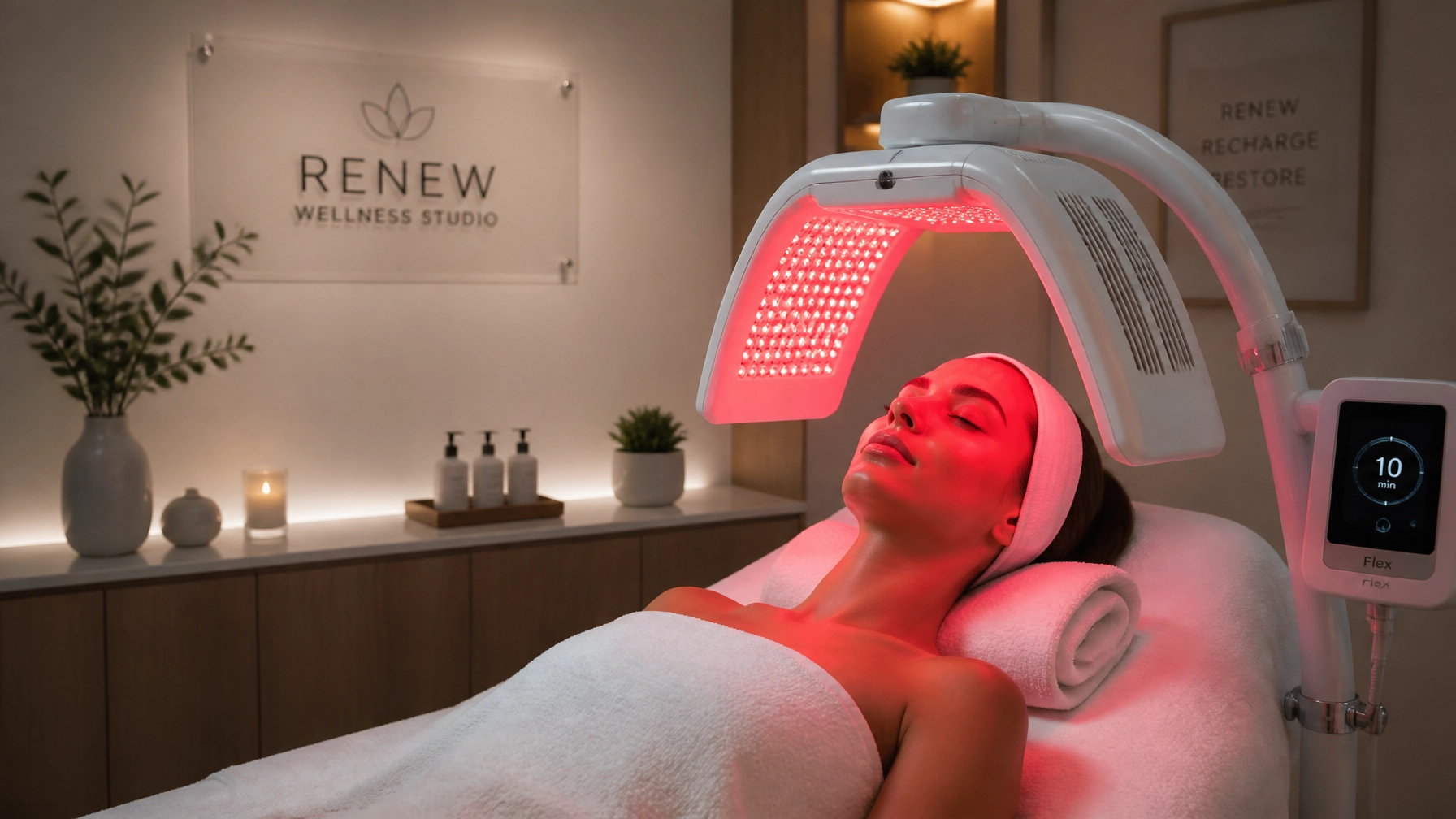
    A woman with healthy, glowing skin in a soft, peaceful environment, highlighting the benefits of red light therapy for skin rejuvenation.

    The Deep Tissue Workers: 810nm, 830nm, and 850nm

    Near-infrared (NIR) light is where things get interesting for athletes and anyone dealing with chronic pain. Because these wavelengths are longer, they don't get absorbed as quickly by the skin, allowing them to travel deep into the body.

    810nm: The Brain and Nerve Specialist

    The 810nm wavelength is particularly unique because it has been shown to penetrate the skull and reach brain tissue. According to studies highlighted by Healthline, 810nm is being researched for its ability to support neurological health, improve recovery from traumatic brain injuries, and even boost cognitive performance. It’s also excellent for deep muscle recovery and nerve regeneration.

    830nm: The Injury Healer

    If you’ve recently had surgery or a sports injury, 830nm is a powerful ally. This wavelength is highly effective at speeding up the healing of deep wounds and bone repairs. It helps reduce the formation of scar tissue and ensures that the body’s natural repair processes are working at peak efficiency.

    850nm: The Muscle and Joint Expert

    850nm is perhaps the most popular near-infrared wavelength. It targets the muscles and joints directly, making it the favorite for fitness enthusiasts in Edmonton. It helps reduce inflammation, decreases oxidative stress in the muscles, and significantly speeds up recovery after a heavy lifting session or a long run.

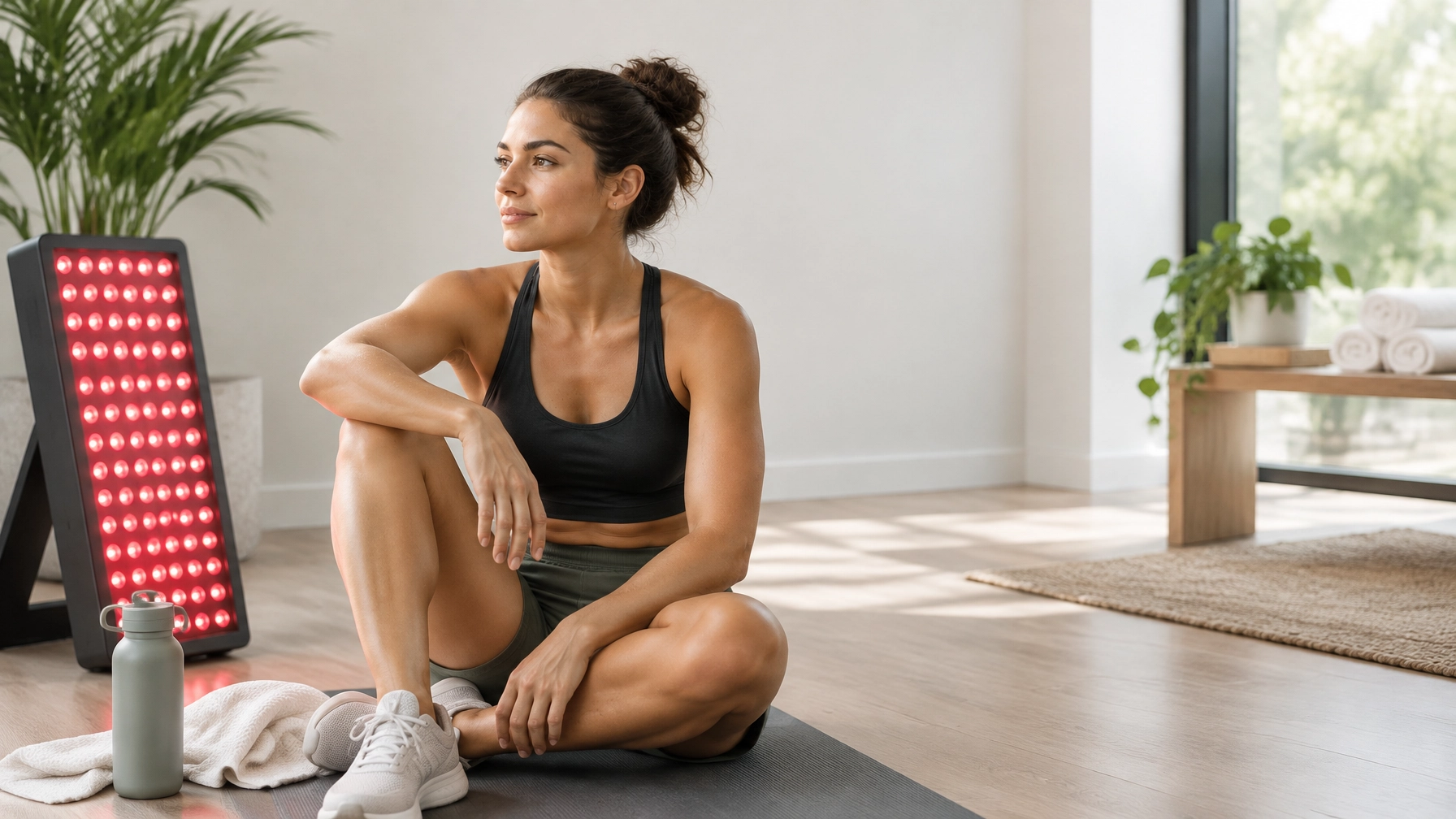
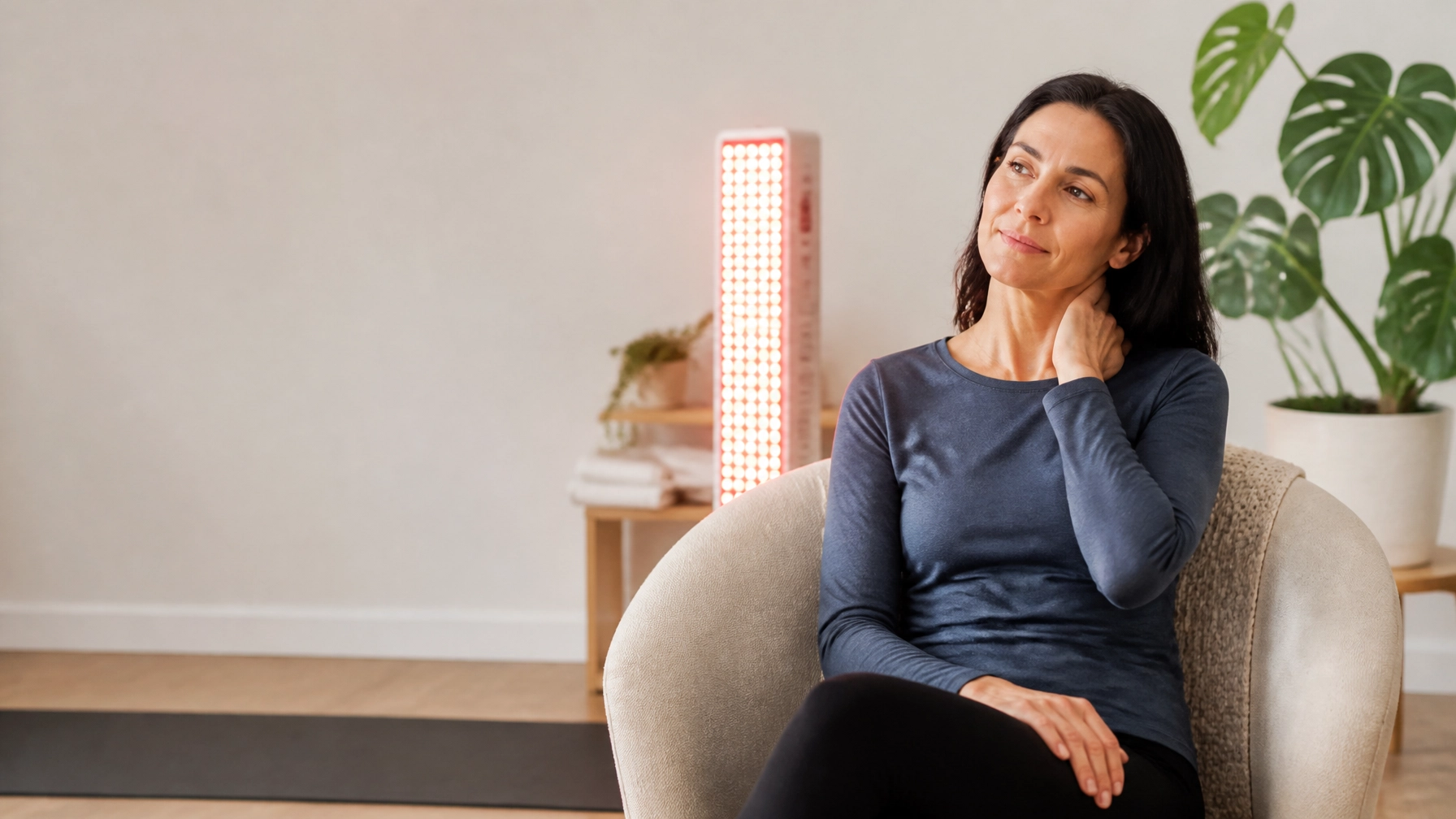
    A fitness enthusiast in a wellness space, focusing on muscle recovery and the tranquility provided by red light therapy.

    Comparison Table: Which Wavelength Do You Need?

    Wavelength Category Best For… Depth
    630nm Red Skin texture, surface inflammation, acne Shallow (Skin surface)
    660nm Red Collagen, fine lines, hair growth, scar healing Medium (Dermis)
    810nm NIR Brain health, nerve recovery, deep muscle Deep (Nerves/Brain)
    830nm NIR Bone repair, deep wound healing, surgery recovery Very Deep (Bone/Tissues)
    850nm NIR Muscle recovery, joint pain, chronic inflammation Very Deep (Muscles/Joints)

    Why "Multi-Wave" is Usually the Better Choice

    While you can find devices that only offer one wavelength, most people benefit more from a multi-wave approach. Why? Because most health goals overlap.

    For example, if you are treating a sports injury, you likely want 850nm to help the deep muscle tissue, but you might also want 660nm to help heal any surface bruising or inflammation. Similarly, if you're using red light for fat reduction, a combination of wavelengths can help stimulate the fat cells while also tightening the skin in that area.

    At Wave Therapy, we use advanced systems that deliver a balanced mix of red and near-infrared light. This ensures that every layer of tissue: from your skin down to your muscles: gets the energy it needs to heal and rejuvenate.

    What to Expect From a Session in Edmonton

    If you’re new to red light therapy, the process is incredibly simple and relaxing. Unlike a tanning bed, there is no UV radiation and no risk of burning. You won’t feel "hot": instead, you’ll just feel a gentle, soothing warmth.

    A typical session lasts between 10 to 20 minutes. Most clients find it to be a great time to disconnect, meditate, or just breathe. Because it's non-invasive and has no downtime, you can pop in for a session at our Edmonton location during your lunch break and head right back to work feeling refreshed.

    For best results, we usually recommend a series of sessions. While some people feel a difference in pain levels after just one visit, the most significant changes in skin tone and muscle recovery usually appear within 4 to 8 sessions.

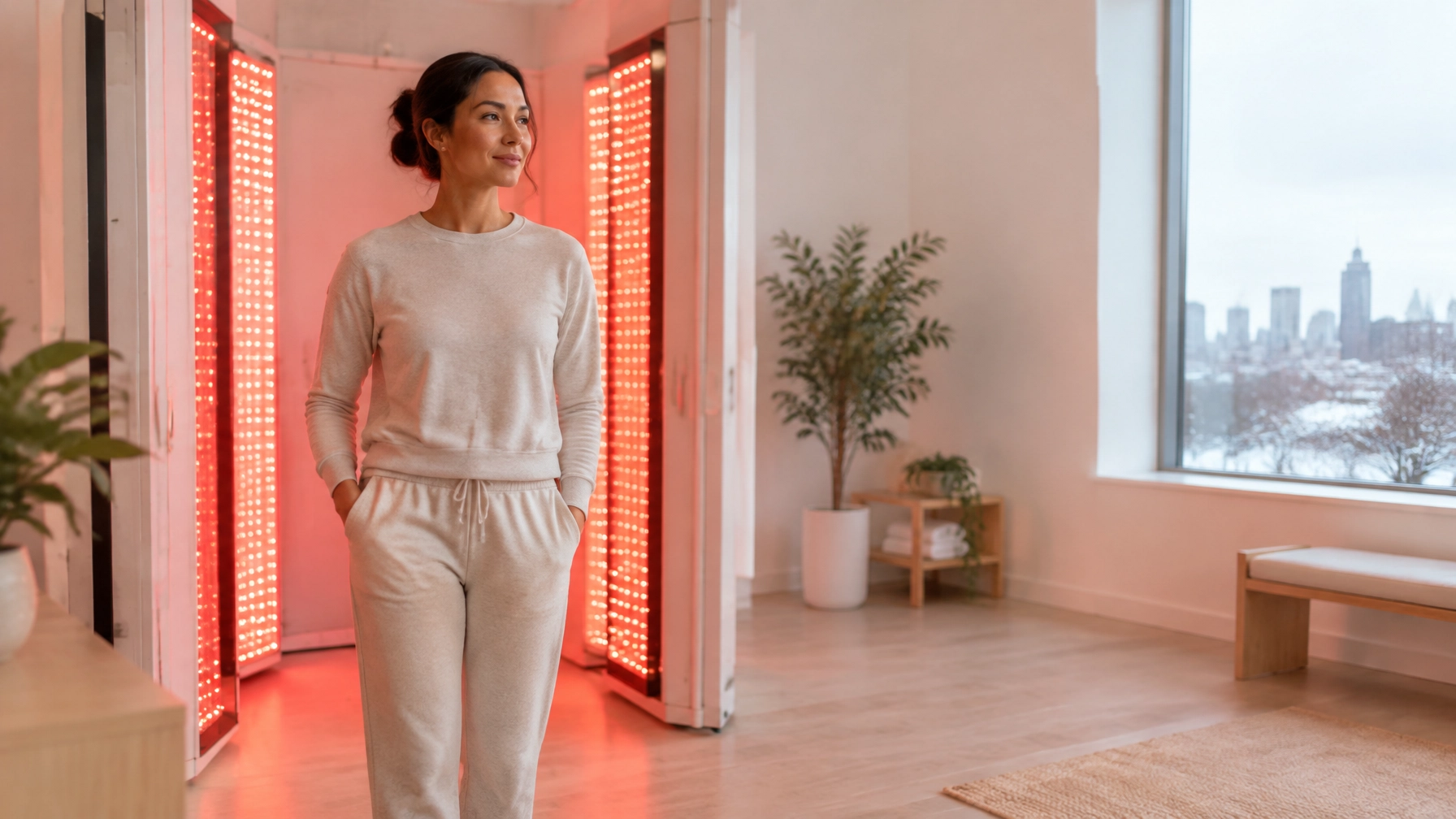
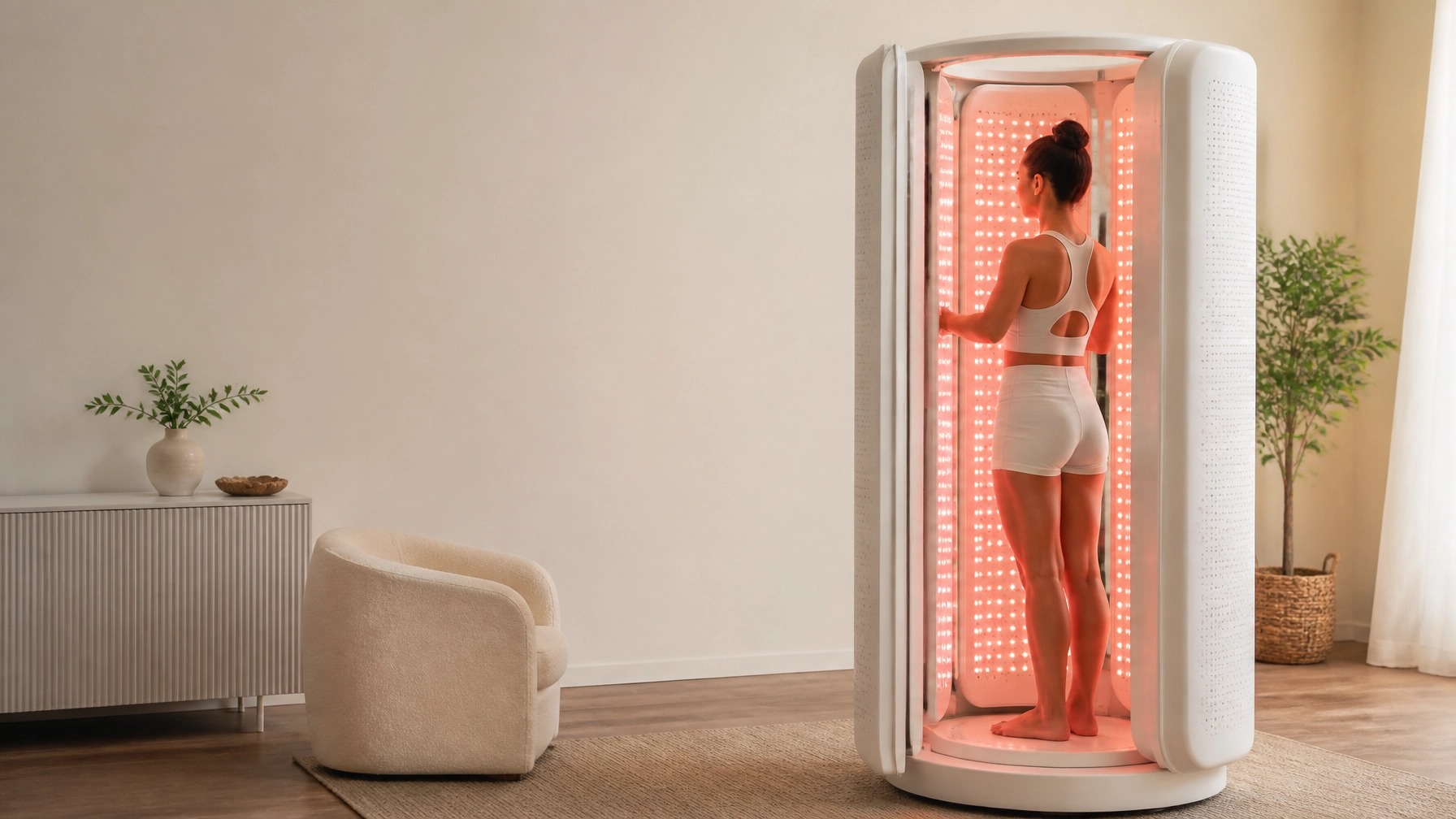
    The interior of a modern wellness clinic in Edmonton, showing a full-body red light therapy setup in a professional and inviting environment.

    Ready to Experience it Yourself?

    Choosing the right wavelength doesn't have to be a solo mission. Our team is here to help you tailor your sessions to your specific goals, whether you're looking for pain relief, fat reduction, or just a natural glow.

    If you're also looking for other ways to support your recovery, we highly recommend checking out our partners at Massage Quest for expert massage therapy, or booking a session through Book a Therapy to find a variety of wellness providers in the Edmonton area.

    Red light therapy is a science-backed, gentle way to help your body perform its best. Whether you're a busy professional, an athlete, or just someone looking to feel a little better every day, there’s a wavelength (or two) that can help.

    Explore sessions today and see how the right light can make a difference.

    Book Your Session at Wave Therapy


  • How to Choose the Best Red Light Therapy Wavelengths (Compared)

    How to Choose the Best Red Light Therapy Wavelengths (Compared)

    If you have spent any time looking into red light therapy (RLT), you have likely run into a sea of numbers: 630nm, 660nm, 810nm, 850nm. It can feel a bit like reading a radio frequency dial. But these numbers, wavelengths, are actually the secret sauce that determines whether your sessions help with fine lines or deep muscle recovery.

    In Edmonton, where we face long winters and high-intensity lifestyles, finding the right "light recipe" can be a game-changer for your wellness routine. At Wave Therapy, we often get asked: “Does the specific wavelength really matter, or is red light just red light?”

    The short answer? It matters a lot. Let’s dive into the science of wavelengths so you can choose the right one for your specific health goals.

    What Exactly is a Wavelength?

    To understand how light heals, we have to look at how it travels. Light travels in waves, and the distance between the peaks of those waves is called a wavelength. This is measured in nanometers (nm).

    The human body reacts differently to different wavelengths because they penetrate our tissues at varying depths. Think of it like a sound system: some frequencies are high and crisp (surface-level), while others are deep bass that you can feel in your bones.

    A professional diagram showing the light spectrum from red to near-infrared light.

    When we talk about Red Light Therapy, we are usually looking at two main "bands" of light:

    1. Visible Red Light (630nm – 660nm): This is the bright red glow you see. It primarily targets the skin.
    2. Near-Infrared Light (810nm – 850nm): This light is mostly invisible to the naked eye. It travels deeper into the body to reach muscles and joints.

    The Most Popular Wavelengths: A Quick Comparison

    When you are looking at professional-grade systems or high-quality home panels, these are the five wavelengths you will encounter most often.

    630nm: The Skin Refiner

    This wavelength is often called the "beauty wavelength." It is absorbed by the very top layers of the skin (the epidermis).

    • Best For: Reducing redness, evening out skin tone, and dealing with superficial skin issues like mild acne or fine lines.
    • Why it works: It stimulates the cells at the surface to boost circulation and reduce surface-level inflammation.

    660nm: The Collagen Booster

    This is perhaps the most well-researched wavelength in the red light spectrum. According to studies highlighted by the Cleveland Clinic, wavelengths in this range are excellent for stimulating fibroblasts, which are the cells responsible for collagen production.

    • Best For: Anti-aging, wound healing, and improving skin elasticity.
    • Why it works: It penetrates slightly deeper than 630nm, reaching the dermis to repair skin from the inside out.

    Close-up of healthy skin illuminated by red light therapy.

    810nm: The Brain and Nerve Specialist

    This is where we move into the Near-Infrared (NIR) range. Because 810nm can penetrate through bone (like the skull), it is frequently used in research regarding cognitive health and nerve repair.

    • Best For: Brain fog, nerve recovery, and deep tissue health.
    • Why it works: It has a unique ability to reach deep structures that visible red light simply can't touch.

    830nm: The Healing Accelerator

    This wavelength is a powerhouse for tissue repair. It is often used in medical settings to help patients recover from surgery or injury.

    • Best For: Faster healing of deep wounds, infection prevention, and reducing chronic inflammation.
    • Why it works: It increases the energy (ATP) produced by the mitochondria in deeper tissues, giving them the fuel they need to repair themselves faster.

    850nm: The Muscle and Joint Deep-Diver

    If you are an athlete or someone dealing with chronic joint pain, 850nm is likely your best friend. This wavelength travels the deepest into the body, up to several centimeters.

    • Best For: Muscle recovery, joint pain (like arthritis), and reducing deep inflammation after a hard workout.
    • Why it works: It reaches the muscle fibers and connective tissues that are tucked away beneath layers of skin and fat.

    Why Multi-Wavelength Systems Are Winning

    You might be thinking, “Do I have to choose just one?”

    Thankfully, no. The most effective treatments usually involve a combination of these wavelengths. When you visit a specialized studio like Wave Therapy, you are typically using a system that emits multiple wavelengths simultaneously.

    Research published on PubMed suggests that combining red and near-infrared light can create a synergistic effect. While the 660nm light works on your skin's surface to reduce inflammation, the 850nm light is simultaneously working on the muscles underneath to help you recover. It’s a "top-to-bottom" approach to wellness.

    A person resting after a workout with a red light panel in the background.

    Who Should Choose Which Wavelength?

    Choosing the right light is all about your personal goals. Here is a quick guide to help you decide:

    • The "Glow-Getter" (Skin Focus): Focus on 630nm and 660nm. If your main goal is to look refreshed, reduce wrinkles, and have that "lit from within" look, visible red light is your priority.
    • The Athlete (Recovery Focus): Focus on 810nm and 850nm. If you’re training for an Edmonton marathon or just trying to stay mobile in the cold, near-infrared light will help your muscles bounce back faster.
    • The All-Rounder (General Wellness): Go for a Combined System. This is what we recommend for most people in Edmonton. By getting a mix of red and NIR, you get the skin benefits and the recovery benefits in one session.

    What to Expect During a Session

    Many people are surprised by how relaxing red light therapy actually is. Unlike a tanning bed, there is no UV radiation, so there is no risk of burning. It feels like a very gentle, warm glow.

    At Wave Therapy, our full-body systems ensure that these targeted wavelengths are delivered evenly across your body. Most people find that they feel a sense of calm during the session and a slight boost in energy afterward.

    If you are already incorporating wellness practices like massage: which we highly recommend through our partners at Massage Quest or for easy booking via Book a Therapy: red light therapy acts as a perfect "pre-game" or "post-game" to your manual therapy. It helps relax the muscles, making the massage even more effective.

    A high-end red light therapy panel in a minimalist wellness room.

    Practical Takeaways for Choosing Your Light

    1. Check the specs: If you are buying a home device, ensure it clearly lists the wavelengths. Avoid devices that just say "red light" without specifying the nanometers.
    2. Look for 660nm and 850nm: These are the "gold standard" duo for a reason: they cover the widest range of benefits.
    3. Intensity matters: The wavelength tells you where the light goes, but the "irradiance" tells you how strong it is. Professional systems are usually much more powerful than small hand-held units.
    4. Consistency is key: Whether you are targeting skin or muscles, light therapy works best when done regularly (usually 3-5 times a week initially).

    Final Thoughts

    Choosing the right wavelength doesn't have to be complicated. By understanding that "Red" is for the surface and "Near-Infrared" is for the depths, you can tailor your wellness routine to exactly what your body needs today.

    Whether you're looking to rejuvenate your skin after a dry Edmonton winter or recover from a weekend of hiking, the right light can make all the difference.

    Ready to see what the right wavelengths can do for you?
    Explore our sessions or learn more about our technology when you're ready to take the next step.


  • Does Infrared Light Therapy Really Matter in 2026? Why Everyone Is Talking About It

    Does Infrared Light Therapy Really Matter in 2026? Why Everyone Is Talking About It

    It’s July 2026, and if you’ve spent any time in the Edmonton wellness scene lately, you’ve likely heard the buzz about light. Not just any light: specifically, the deep, warm glow of Near-Infrared (NIR) and Red Light Therapy.

    A few years ago, these "glowing beds" were seen as a niche luxury for biohackers or pro athletes. Fast forward to today, and they’ve become a staple for everyone from busy downtown professionals to retirees looking to stay active in the River Valley.

    But with all the noise, it’s fair to ask: Does it actually matter? Or is this just another wellness trend destined to fade? At Wave Therapy, we believe the science has finally caught up to the hype. Let’s dive into why everyone is talking about infrared light in 2026 and what it actually does for your body.

    The Science: Red vs. Near-Infrared Light

    To understand why this therapy matters, we have to look under the skin. Most people use the terms "Red Light Therapy" and "Infrared Therapy" interchangeably, but in 2026, the distinction is where the real magic happens.

    A scientific illustration of human skin layers showing Red Light (660nm) affecting the surface and Near-Infrared Light (850nm) penetrating deeper into muscles and joints.

    1. Red Light (630–660nm): This wavelength is the "beauty" light. It doesn't travel very deep, but it’s incredibly effective at treating the surface of your skin. It stimulates collagen, reduces redness, and helps with surface-level wound healing.
    2. Near-Infrared Light (810–850nm): This is the "heavy lifter." These wavelengths are invisible to the naked eye, but they can penetrate up to 30mm deep into your body. This means they reach your muscles, nerves, and even your joints.

    According to a 2024 JAAD CME review, these wavelengths work by targeting your mitochondria: the "powerhouses" of your cells. When your cells absorb this light energy, they produce more ATP (energy), which accelerates repair and reduces inflammation.

    1. Chronic Pain and "The Edmonton Effect"

    If you live in Edmonton, you know the toll our climate takes on the body. From the bone-chilling winters that make joints ache to the active summers spent hiking and biking, our bodies are constantly under stress.

    In 2026, Near-Infrared therapy has become a go-to for pain management. Recent studies, including a 2025 systematic review, have shown that regular sessions can significantly reduce pain in conditions like:

    • Osteoarthritis: Reducing stiffness in knees and hips.
    • Neuropathy: Helping with that "pins and needles" feeling often associated with diabetes.
    • Lower Back Pain: Relieving the deep muscle tension that comes from long commutes or desk jobs.

    At Wave Therapy, we see many clients who use light therapy as a "warm-up" for their body. If you're already seeing a specialist at Massage Quest for deep tissue work, adding a red light session can actually help your muscles relax more deeply, making your massage even more effective.

    2. The 2026 Glow: Skin Rejuvenation Without the Chemicals

    We’ve moved past the era of aggressive chemical peels and invasive "tweakments." In 2026, the trend is biostimulation: helping your body fix itself.

    Close-up of a person with healthy, glowing skin, looking peaceful after a red light therapy session.

    Red light therapy is now a cornerstone of anti-aging because it naturally boosts collagen production. Unlike a topical cream that sits on top of your skin, the light penetrates the dermis to trigger actual structural changes.

    • Fine Lines & Wrinkles: Regular sessions help "plump" the skin from the inside out.
    • Acne & Scarring: By reducing inflammation, it helps clear breakouts faster and fades those stubborn post-acne marks.
    • Skin Tone: It evens out redness and gives you that "rested" look, even if you’ve been pulling long hours at work.

    3. Recovery and Performance: Why Athletes Swear By It

    Whether you’re training for the Edmonton Marathon or just trying to stay consistent at the gym, recovery is your biggest bottleneck.

    An athlete sitting in a wellness center, reflecting on their recovery session with a red light panel in the background.

    In 2026, the "weekend warrior" has access to the same tech as the pros. Using NIR light before a workout can improve circulation and muscle endurance. Using it after a workout helps clear out metabolic waste and reduces the dreaded "delayed onset muscle soreness" (DOMS).

    It’s not just about muscles, either. Athletes are increasingly using light therapy to support sleep quality. By helping regulate your circadian rhythm, a session at Wave Therapy can help you fall into a deeper, more restorative sleep: which is when your body does its best repair work.

    What to Expect at Wave Therapy

    If you’ve never tried it, the experience is surprisingly simple and deeply relaxing. Unlike a tanning bed, there is no UV radiation, so you won't get a tan or a sunburn. It’s a "cold" light, though you might feel a gentle, soothing warmth from the systemic increase in circulation.

    When you visit us in Edmonton, you’ll step into a private suite and relax in a full-body bed. A typical session lasts about 15 to 20 minutes. Most of our clients describe it as a "meditative" break in their day.

    • Frequency: For chronic pain or skin goals, we usually recommend 2–3 sessions per week to start.
    • Preparation: Just come as you are. For the best results, you want the light to hit your skin directly, so we provide a private space for you to change.

    Is It Right For You?

    While light therapy is incredibly safe and FDA-approved, it isn’t a miracle cure for everyone. It works best as part of a holistic lifestyle. If you’re already focusing on good nutrition and movement, this is the "force multiplier" that helps you see results faster.

    If you’re ready to see what the glow is all about, you can explore our sessions or even book your first visit online. If you’re also looking for a comprehensive wellness plan that includes RMT, we highly recommend checking out our partners at Book A Therapy to round out your recovery routine.

    The technology of 2026 has made it easier than ever to feel good in your own skin. Whether you're fighting off the Edmonton chill or just want to perform at your peak, infrared light therapy is a simple, non-invasive way to support your body's natural healing power.


    Practical Takeaways for 2026

    • Red Light is for the surface (skin, hair, scars).
    • Near-Infrared (NIR) is for the deep stuff (joints, muscles, inflammation).
    • Full-Body is better than handheld masks because it triggers a systemic anti-inflammatory response.
    • Consistency is key. You wouldn't go to the gym once and expect a six-pack; your cells need regular "charging" to show lasting results.

  • 7 Mistakes You’re Making with Infrared Light Therapy (and How to Fix Them)

    7 Mistakes You’re Making with Infrared Light Therapy (and How to Fix Them)

    Red light therapy (RLT) has quickly become a staple for health-conscious Edmontonians. Whether you’re trying to soothe joint pain after a cold winter walk or looking to brighten your skin, the benefits of red and near-infrared light are backed by a growing body of scientific research.

    However, simply standing in front of a red light isn't enough to guarantee results. Like any wellness practice: whether it’s a session at Wave Therapy or a deep tissue massage at Massage Quest: technique and consistency matter.

    If you feel like your progress has stalled, you might be making one of these common mistakes. Here are the seven most frequent errors we see and exactly how to fix them to get the most out of your light therapy sessions.


    1. Treating Through Clothing

    One of the most common mistakes is trying to use red light therapy while fully clothed. While near-infrared light (NIR) can penetrate slightly deeper than red light, both are significantly blocked by fabric.

    Red light wavelengths (typically around 660nm) are designed to interact with the surface of your skin to boost collagen and heal wounds. If there is a layer of denim or even a thin cotton t-shirt in the way, the light energy is absorbed by the fabric rather than your cells.

    The Fix: For the best results, the light needs to hit your bare skin directly. If you’re targeting a specific area like the knee or lower back, make sure that area is exposed. At our Edmonton studio, we provide a private, comfortable environment so you can ensure the light reaches exactly where it needs to go.

    2. The "Weekend Warrior" Approach (Inconsistency)

    Light therapy works through a process called photobiomodulation. It’s essentially "charging" the batteries of your cells (the mitochondria). Just like you can’t charge your phone once a month and expect it to stay powered, you can't do one light therapy session and expect permanent results.

    Many people try RLT for two days, don't see a visible change, and give up. According to Healthline, the cumulative effect is what leads to long-term skin rejuvenation and pain relief.

    The Fix: Consistency is king. Aim for 3 to 5 sessions per week. Most of our clients at Wave Therapy start seeing significant changes in skin tone and inflammation levels after 4 to 8 weeks of regular use.

    A high-quality red light therapy panel glowing in a minimalist wellness setting

    3. Sitting Too Far Away (The Inverse Square Law)

    In physics, there is a rule called the Inverse Square Law. It essentially means that as you move further away from a light source, the intensity of the light drops off much faster than you’d expect.

    If you are 24 inches away from a panel designed to be used at 6 inches, your body is receiving only a tiny fraction of the intended dose. This is a primary reason why many home users feel their devices "don't work": they are simply sitting too far back to receive a therapeutic dose.

    The Fix: Check your device’s manual or ask your technician about the "sweet spot." Generally, for skin benefits, 6–12 inches is standard. For deeper tissue or joint issues, you may want to be even closer. If you’re looking for a professional-grade experience without the guesswork, booking a session at our Edmonton location ensures you're always positioned for maximum irradiance.

    4. Falling for the "More is Better" Trap

    If 10 minutes is good, 60 minutes must be better, right? Not with light therapy.

    There is a concept in biology called "biphasic dose-response." In simple terms, there is a peak where the benefit is maximized. If you continue to apply light beyond that point, the benefits actually start to decrease, and you may even cause slight oxidative stress to the cells. Over-treating an area can lead to diminishing returns where the body "shuts off" its response to the light to protect itself.

    The Fix: Stick to the recommended times. Most professional sessions last between 10 and 20 minutes per area. If you’re using light therapy for recovery alongside a session from Book a Therapy, keep your light exposure focused and intentional rather than marathon-length.

    5. Forgetting to Clean Your Skin

    Your skin is your body's primary barrier. If you arrive at a session wearing heavy makeup, thick moisturizers, or: most importantly: SPF, the light will struggle to penetrate. Sunscreen is specifically designed to reflect light; while it’s great for a sunny day at the park, it’s the enemy of an infrared session.

    Even some "natural" oils can scatter the light, reducing the amount of energy that actually reaches your mitochondria.

    The Fix: Always start with clean skin. Remove makeup and lotions before your session. If you’re coming from work, use a gentle cleanser first. This ensures that every photon of light has a clear path to your cells.

    A person with healthy, glowing skin following a professional wellness treatment

    6. Skipping Eye Protection

    While red light is generally safe, professional-grade panels are incredibly bright. Staring directly into the LEDs can cause eye strain or "ghosting" in your vision (similar to looking at a camera flash). While some studies suggest certain wavelengths may benefit eye health, it should only be done under very specific medical guidance. For general wellness sessions, protecting your eyes is the standard safety protocol.

    The Fix: Always use the provided blackout goggles or eye protection. If you are treating your face, keep your eyes closed even with the goggles on. It makes the session more relaxing and protects your retinas from unnecessary strain.

    Protective goggles for light therapy resting on a clean white towel in a spa environment

    7. Expecting Instant Miracles

    We live in an era of instant gratification, but biological healing takes time. Red light therapy is not a "magic wand" that erases a decade of joint pain or sun damage in twenty minutes. It works by supporting your body’s natural healing processes, which happen at a cellular level over weeks and months.

    Expecting a miracle after session one often leads to "treatment fatigue," where users stop just as the real benefits are about to kick in.

    The Fix: Reframe your expectations. Think of red light therapy like exercise or a healthy diet. You don't go to the gym once and expect a six-pack; you go because you know it's building a healthier foundation. Track your progress with photos or a pain journal over a 30-day period. You’ll likely be surprised by the subtle but significant shift in how you look and feel.


    The Edmonton Approach to Wellness

    At Wave Therapy, we believe in a holistic approach to health. Red light therapy is a powerful tool, especially when paired with other recovery methods. If you're a fitness enthusiast looking to speed up muscle recovery, combining RLT with a therapeutic massage from Massage Quest can be a game-changer for your routine.

    Whether you're looking to reduce inflammation, boost your metabolism, or simply find a moment of calm in a busy week, avoiding these seven mistakes will ensure you get the most out of every minute under the light.

    A refreshed fitness enthusiast stretching in a bright, modern Edmonton home

    Ready to see the difference for yourself?
    If you're in the Edmonton area and want to experience professional-grade red light therapy without the guesswork, we're here to help.

    Explore our sessions | Book your Edmonton visit

  • Red Light Vs. Infrared Light Therapy: Which Is Better For Your Chronic Pain?

    Red Light Vs. Infrared Light Therapy: Which Is Better For Your Chronic Pain?

    If you’ve been living with chronic pain, you know that the "Edmonton ache" is a very real thing. Whether it’s a stiff back from a long commute on the Whitemud, sore knees after a weekend hiking in Elk Island, or just the general inflammation that seems to flare up when the temperature drops, finding relief is a top priority.

    Lately, there’s been a lot of buzz around light therapy. But as you start your research, you’ll likely run into two main terms: Red Light Therapy and Near-Infrared (NIR) Light Therapy.

    At first glance, they look the same, a warm, comforting glow. But for someone dealing with chronic pain, the difference between these two wavelengths is the difference between treating the surface and reaching the source.

    Let’s break down which one is better for your chronic pain and why the best approach often involves a little bit of both.

    What’s the Difference, Anyway?

    To understand how these therapies work, we have to talk about wavelengths. Light is measured in nanometers (nm).

    • Red Light (typically 630–700 nm) is visible to the human eye. It’s that bright, deep red color you see in the panels.
    • Near-Infrared Light (typically 750–1,000 nm) is mostly invisible to us. You can’t see it, but your body can certainly feel its effects.

    The most important distinction for pain management is penetration depth.

    A conceptual view of red light affecting the skin surface while near-infrared light reaches deeper into the muscle and joint tissue.

    Red Light: The Surface Specialist

    Red light has a shorter wavelength, which means it doesn’t travel very deep into the body. It’s primarily absorbed by the skin’s surface and the very top layers of tissue.

    If your "pain" is related to skin rejuvenation, minor surface wounds, or superficial inflammation (like a fresh scrape or a shallow tendon strain), red light is your best friend. It’s excellent for boosting collagen and helping the skin look its best, but it doesn't quite have the "reach" needed for deep-seated joint issues.

    Near-Infrared (NIR): The Deep Recovery Expert

    NIR light has a longer wavelength, allowing it to bypass the skin and travel deep into your muscles, tendons, ligaments, and even your bones.

    When it comes to chronic pain: the kind that feels like it’s "stuck" in your lower back, your hips, or deep inside your shoulder: NIR is the heavy lifter. Research published in PubMed suggests that near-infrared wavelengths are particularly effective at reaching deeper tissues to reduce neuroinflammation and promote cellular repair.

    How Light Actually Heals Your Pain

    You might be wondering, "How can light stop my back from hurting?" It sounds a bit like science fiction, but the biology is actually quite grounded.

    Both red and near-infrared light work through a process called photobiomodulation. Inside almost every cell in your body are tiny "power plants" called mitochondria. These mitochondria absorb the light energy and use it to produce Adenosine Triphosphate (ATP).

    ATP is the fuel your cells use to repair themselves. By increasing ATP production, light therapy:

    1. Reduces Inflammation: It helps clear out the biological markers that cause swelling and pain.
    2. Improves Blood Flow: It encourages the release of nitric oxide, which dilates blood vessels and brings fresh, oxygenated blood to the painful area.
    3. Speeds Up Repair: It tells your cells to get to work fixing damaged tissue.

    For a deeper dive into the general benefits, Healthline offers a great overview of how this process works across the body.

    Which One Is Better for Your Pain?

    The "better" choice depends entirely on where your pain is located. Here’s a quick guide to help you decide:

    Use Red Light (660nm) if:

    • You have superficial skin inflammation or redness.
    • You are treating a surface-level injury like a minor cut or burn.
    • You want to improve skin tone and reduce signs of aging while managing mild discomfort.
    • Your pain is located in very shallow tendons (like the top of the hand or foot).

    Use Near-Infrared Light (850nm) if:

    • You have deep muscle soreness or "knots."
    • You suffer from chronic joint pain (arthritis, bursitis, etc.).
    • You are recovering from a deep tissue injury or a sports-related strain.
    • You have nerve-related pain or neuropathy.
    • You deal with chronic low back or neck pain.

    A person sitting comfortably in front of a red light therapy panel, enjoying a quiet session of deep-tissue recovery.

    The "Secret Sauce": Using Both Together

    At Wave Therapy, we don’t make you choose. Our advanced red light therapy systems utilize a combination of both red and near-infrared wavelengths simultaneously.

    Why? Because chronic pain is rarely just "one thing."

    If you have a sore knee, you likely have inflammation at the skin level and deep within the joint. By using both wavelengths, you get the superficial benefits of red light along with the deep, restorative power of NIR. This synergistic approach ensures that every layer of tissue: from your skin to your bone: is receiving the energy it needs to heal.

    What to Expect During a Session

    If you’re new to the world of light therapy in Edmonton, don’t worry: it’s one of the most relaxing wellness treatments available.

    Unlike a tanning bed (which uses harmful UV rays), red light therapy is completely non-invasive and heat-free (though you might feel a very gentle, soothing warmth). You simply relax in front of the panel for 10 to 20 minutes. Most of our clients at Wave Therapy use this time to meditate, listen to a podcast, or just breathe.

    There’s no downtime. You can head straight from your session to a meeting downtown or a grocery run at the Italian Centre without feeling "wiped out." In fact, most people report feeling a boost in energy and a significant reduction in stiffness immediately after.

    Leveling Up Your Recovery

    While red light therapy is a powerhouse for chronic pain, it works even better when paired with other holistic approaches.

    If your pain is caused by structural issues or extreme muscle tension, we often recommend combining your light therapy with professional massage. Our partners at Massage Quest and Book A Therapy offer incredible deep-tissue and therapeutic treatments that can help "unlock" the muscles while the red light works on the cellular level.

    Think of it as a two-pronged attack on pain: massage handles the physical tension, and light therapy handles the biological recovery.

    A peaceful, modern wellness room featuring a professional red light therapy panel, designed for a calm and healing experience.

    Final Thoughts: Ready to Feel Better?

    Living with chronic pain is exhausting. It drains your energy and keeps you from enjoying everything Edmonton has to offer. Whether you choose red light for its skin-deep benefits or near-infrared for its deep-tissue power, the goal is the same: getting you back to living your life comfortably.

    If you’re tired of the "quick fix" solutions that don't last, it might be time to look at the science of light.

    Want to see if it's right for you?
    Explore our sessions at Wave Therapy and see how the right wavelengths can make all the difference in your recovery journey.

  • Is Red Light Therapy Bad for Your Skin? Here’s the Truth

    Is Red Light Therapy Bad for Your Skin? Here’s the Truth

    If you’ve been scrolling through wellness trends lately, you’ve probably seen the glowing red panels and masks popping up everywhere. From high-end spas in downtown Edmonton to home setups, red light therapy (RLT) is having a major moment. But with all the hype comes a very fair question: Is this actually safe for my skin?

    We’ve all been taught to be wary of light. We slather on SPF to hide from the sun’s UV rays and wear blue-light glasses to protect our eyes from screens. So, sitting in front of a giant red light might feel a bit counterintuitive.

    The short answer? No, red light therapy is not "bad" for your skin, in fact, for most people, it’s quite the opposite. But like any wellness tool, there’s a right way to use it and a few things you should know before you dive in.

    Let’s break down the science, the safety, and the truth about what that red glow is actually doing to your cells.


    What is Red Light Therapy, Anyway?

    Before we talk about safety, we have to understand what we’re actually looking at. Red light therapy, also known as photobiomodulation (PBM), uses specific wavelengths of red and near-infrared (NIR) light.

    Unlike the sun, which emits a broad spectrum of light including harmful ultraviolet (UV) rays, RLT focuses on a very narrow range. Usually, this is between 630–660 nanometers (red light) and 810–850 nanometers (near-infrared light).

    These wavelengths are special because they can penetrate the skin without causing damage. Once they get inside, they interact with your mitochondria, the "powerhouses" of your cells. According to research highlighted by the Cleveland Clinic, this process helps your cells produce more energy (ATP), which allows them to repair themselves and function more efficiently.

    Think of it like photosynthesis for humans. You aren't getting a tan or a burn; you’re giving your cells a tiny, energetic "recharge."

    A close-up of a professional-grade red light therapy panel with vibrant red and near-infrared LEDs.


    The Big Concern: Red Light vs. UV Light

    The most common worry we hear at Wave Therapy is whether red light causes skin cancer or sun damage.

    The answer is a definitive no.

    Skin damage and cancer are primarily caused by UV radiation (UVA and UVB). UV rays have a very short wavelength and high energy, which allows them to damage the DNA in your skin cells. This leads to sunburns, premature aging, and an increased risk of melanoma.

    Red light therapy does not use UV wavelengths. It is a "cool" therapy, meaning it doesn't use heat to create a reaction, and it doesn't have the energy required to damage DNA. In fact, many people use RLT specifically to repair the damage caused by the sun. According to Healthline, RLT is widely considered a safe, non-invasive alternative to more aggressive laser treatments or chemical peels.


    Are There Any Side Effects?

    While it’s generally safe, RLT isn't "magic water", it is a biological intervention. Some people may experience mild, temporary side effects, especially if they have very sensitive skin or are new to the therapy.

    1. Temporary Redness (Erythema)

    Immediately after a session, you might notice a slight flush to your skin. This isn't a burn; it’s actually a sign of increased blood flow to the area. It usually fades within an hour.

    2. Mild Irritation or Dryness

    If you use a high-powered panel for too long or sit too close, your skin might feel a little dry or tight. This is usually a sign of "over-dosing" the light. Like a workout, more isn't always better.

    3. Eye Sensitivity

    This is the one area where RLT can actually be "bad" if you aren't careful. The light is incredibly bright, especially the near-infrared wavelengths which you can't even see. Looking directly into the LEDs for an extended period can cause eye strain or headaches.

    A person wearing specialized protective goggles during a red light therapy session to ensure eye safety.


    Who Should Be Careful?

    While most Edmontonians can benefit from a session at Wave Therapy, there are a few groups who should check with a doctor first:

    • People with Photosensitivity: If you have a condition like Lupus or are taking medications that make you sensitive to light (like certain antibiotics or Accutane), RLT might cause a reaction.
    • Hyperpigmentation and Melasma: For those with darker skin tones or melasma, some studies suggest that high-intensity light (even red light) can sometimes trigger more pigment production. It’s best to start with shorter sessions to see how your skin reacts.
    • Pregnancy: While there’s no evidence that RLT is harmful during pregnancy, there haven't been enough long-term studies to give it a 100% green light. We always recommend chatting with your OBGYN first.

    The Benefits: Why People Love It

    So, if it's not bad for your skin, what makes it good? The list of benefits for skin health is growing every year as more clinical trials are published.

    Collagen Production

    Collagen is the protein that keeps our skin bouncy and wrinkle-free. As we age, we produce less of it. Red light therapy has been shown to stimulate fibroblasts, which are the cells responsible for making collagen. This helps smooth out fine lines and improve skin texture over time.

    Reducing Inflammation

    Whether you're dealing with acne, rosacea, or even minor wounds, red light helps calm the "fire" in your skin. By reducing inflammation, it allows the skin to heal faster and stay clearer.

    Better Circulation

    By boosting blood flow, RLT ensures that your skin cells are getting the oxygen and nutrients they need to look vibrant. This is why many people report a "glow" after just a few sessions.

    A macro shot of healthy, clear skin showing natural texture and a hydrated, youthful glow.


    What to Expect at a Wave Therapy Session

    If you’re ready to try it out, the experience at a professional studio is quite different from using a small handheld device at home.

    At Wave Therapy, we use advanced, full-body systems that ensure you’re getting the right "dose" of light across your entire body. When you come in for a session in Edmonton, here’s what you can expect:

    1. A Calm Environment: You’ll be in a private, relaxing room.
    2. Safety First: We provide specialized eye protection to ensure your eyes are shielded from the brightness.
    3. Quick and Easy: Most sessions last between 10 to 20 minutes. You won't feel pain, just a gentle, soothing warmth.
    4. No Downtime: You can head straight back to work or out for dinner right after. There’s no peeling, no needles, and no recovery time.

    Most of our clients see the best results after 4–8 sessions, as the cellular changes take a little time to reflect on the surface of the skin.

    A peaceful, boutique wellness center interior in Edmonton, providing a professional and calming atmosphere.


    Practical Takeaways for Your Skin

    If you're considering adding red light to your wellness routine, keep these tips in mind:

    • Consistency is Key: Think of RLT like going to the gym. One session is great, but the real skin-transforming benefits come from regular use.
    • Don't Overdo It: Stick to the recommended times. Staying under the light for an hour won't give you 4x the results; it might just irritate your skin.
    • Hydrate: Since the therapy boosts cellular metabolism, keeping your skin and body hydrated helps support the healing process.

    Final Thoughts

    Is red light therapy bad for your skin? The truth is that when used correctly, it is one of the safest and most effective ways to support your skin’s natural healing processes. It isn't a "miracle cure," but it is a science-backed tool that helps your body do what it does best: repair and rejuvenate.

    If you’re in the Edmonton area and want to see what full-body red light therapy can do for your skin, your mood, or your recovery, we’re here to help.

    Explore our sessions and see if red light therapy is the right fit for your wellness journey.


    FAQ: Common Questions About Red Light Therapy

    Can red light therapy burn my skin?
    No, professional red light therapy devices do not emit UV rays and do not get hot enough to burn the skin when used as directed.

    Does it help with acne?
    Yes, by reducing inflammation and promoting healing, red light can be a great addition to an acne treatment plan.

    How often should I do it?
    For skin benefits, most people see the best results with 3–5 sessions per week initially, then moving to a maintenance schedule.

    Can I wear makeup during a session?
    It’s best to have clean skin. Makeup, especially those with SPF, can block some of the light from penetrating your skin effectively.

  • Red Light Therapy 101: A Beginner’s Guide to Mastering Joint Pain Relief

    If you live in Edmonton, you know the "joint pain season" all too well. Whether it’s the damp chill of a river valley autumn or the bone-deep cold of a -30°C January, our climate can be notoriously tough on our bodies. If you’ve found yourself reaching for the ibuprofen a little too often or sitting out on a beautiful hike because your knees just aren’t having it, you aren’t alone.

    Lately, there’s been a lot of buzz around a "bright red" solution. You might have seen red-tinted rooms on Instagram or heard about professional athletes using light panels for recovery. This is Red Light Therapy (RLT): also known as photobiomodulation: and it’s quickly becoming a go-to for those seeking natural, non-invasive relief from chronic joint pain and inflammation.

    But how does shining a light on your skin actually help a deep-seated ache in your hip or shoulder? In this beginner’s guide, we’re breaking down the science, the benefits, and exactly how you can start using red light therapy to get back to the activities you love.

    What Exactly is Red Light Therapy?

    At its simplest, Red Light Therapy involves exposing your skin to specific wavelengths of low-level red and near-infrared (NIR) light. Unlike the UV rays from the sun or a tanning bed, RLT doesn’t burn your skin or cause damage. Instead, it’s all about energy.

    Think of your cells like a smartphone. When the battery is low, the phone slows down and eventually stops working correctly. Your cells have "batteries" too: they’re called mitochondria.

    When red and near-infrared light hits your skin, it penetrates deep into the tissue. The mitochondria absorb this light and use it to produce more ATP (Adenosine Triphosphate). ATP is the pure energy your cells need to repair themselves, reduce inflammation, and function at their peak.

    Close-up of human skin with a gentle red light overlay, showing a stylized representation of mitochondria or cellular energy being activated. Clean, scientific but approachable aesthetic.

    The Wavelength Difference

    For joint pain, not all light is created equal.

    • Red Light (approx. 630–660 nm): This is great for surface-level issues like skin rejuvenation and wound healing.
    • Near-Infrared Light (approx. 810–850 nm): This is the "magic" wavelength for joints. NIR light can penetrate up to 5 centimeters into the body, reaching deep into muscles, tendons, and the joint capsule itself.

    How It Works: The Joint Pain Connection

    Joint pain is often a combination of three things: inflammation, poor circulation, and tissue damage. Red Light Therapy tackles all three simultaneously.

    1. Reducing Inflammation

    Inflammation is your body’s natural response to injury, but when it becomes chronic (like in arthritis), it causes constant pain and stiffness. Studies published by the National Institutes of Health (PubMed) have shown that RLT can significantly lower pro-inflammatory cytokines. By calming the "chemical fire" inside the joint, the pain often begins to subside.

    2. Boosting Blood Flow

    Your joints don’t have as much blood flow as your muscles do, which is why they take longer to heal. RLT stimulates the release of nitric oxide, which helps dilate blood vessels. Improved circulation means more oxygen and nutrients reach the joint, and metabolic waste (the stuff that makes you feel "stiff") is cleared out more efficiently.

    3. Supporting Cartilage and Tissue Repair

    While more research is ongoing, some studies suggest that the boost in ATP production can help chondrocytes (cartilage cells) repair themselves more effectively. This makes RLT a promising supportive therapy for conditions like knee osteoarthritis.

    What to Expect During a Session

    If you’re visiting us at Wave Therapy in Edmonton, the experience is designed to be the most relaxing part of your day. Unlike a doctor's visit, there are no needles, no cold gels, and no recovery time.

    1. The Environment: You’ll be in a private, comfortable room. You can choose to target specific areas (like just the hands or knees) or opt for a full-body treatment in one of our advanced systems.
    2. The Feeling: You won’t feel "heat" in the way you would in a sauna. You might feel a very subtle, pleasant warmth as your circulation increases, but the light itself is cool to the touch.
    3. The Time: A typical session lasts between 10 to 20 minutes. Most of our clients use this time to meditate or simply unplug.
    4. The Frequency: For joint pain, consistency is key. While some people feel a "lightness" after one session, the real biological changes happen over time. Most clients see visible and physical results within 4 to 8 sessions.

    A person in comfortable athletic wear sitting relaxed in a professional wellness clinic. They are receiving red light therapy on their knee from a specialized panel. The lighting is soft and neutral.

    Is Red Light Therapy Right for You?

    One of the best things about Red Light Therapy is its safety profile. Because it is non-invasive and chemical-free, it’s suitable for a wide range of people.

    It’s great for:

    • Active Edmontonians: If you’re a runner, a Crossfitter, or a weekend hiker dealing with "jumper’s knee" or Achilles tendonitis.
    • Seniors: Looking to manage the daily stiffness of osteoarthritis or rheumatoid arthritis without relying solely on medication.
    • Office Workers: Dealing with "tech neck" or wrist pain from long hours at a desk.
    • Post-Surgery Recovery: To help accelerate wound healing and reduce swelling (always consult your surgeon first!).

    It may not be for:

    While safe for most, we generally recommend caution or a doctor’s consult if you:

    • Are pregnant.
    • Have active skin cancer in the area being treated.
    • Are taking photosensitizing medications (certain antibiotics or skin treatments).
    • Have a history of epilepsy triggered by light.

    A Beginner’s Routine for Success

    If you're ready to try RLT for your joint pain, here is a simple roadmap to get the best results:

    • Step 1: Focus on Proximity. Ensure the light is close to the skin (usually about 6 inches away) so the wavelengths can penetrate deeply.
    • Step 2: Start Consistent. Aim for 3 to 5 sessions per week for the first month. This "loads" the cells with energy to jumpstart the healing process.
    • Step 3: Track Your Progress. Keep a simple log. Note your pain levels on a scale of 1–10 and how much mobility you have in the morning.
    • Step 4: Combine with Movement. RLT works best when paired with gentle movement. Once the light reduces your pain, try some light stretching or a walk through Edmonton’s River Valley to keep the joints lubricated.

    A scenic view of an Edmonton park in autumn, with a person walking comfortably and smiling, representing joint health and mobility. Natural lighting, airy feel.

    Why Wave Therapy?

    At Wave Therapy, we specialize in providing high-output, medical-grade red light therapy treatments right here in Edmonton. We know that navigating chronic pain can be frustrating and overwhelming. Our goal is to provide a calm, professional space where you can focus on recovery without the "clinical" feel of a hospital.

    Our advanced systems are designed to provide the optimal "dose" of light to ensure you aren't just standing in front of a red bulb, but actually receiving the therapeutic wavelengths needed for deep tissue change.

    Final Takeaway: Be Patient with Your Body

    Red light therapy isn’t a "magic pill" that erases a decade of arthritis in ten minutes. It’s a biological tool that helps your body do what it already wants to do: heal. By giving your cells the energy they need to reduce inflammation and repair tissue, you’re investing in long-term joint health rather than just masking a symptom.

    If you’re tired of the "stiff-start" to your mornings, it might be time to see what a little light can do.

    Ready to see if Red Light Therapy is the right fit for your recovery?
    Explore our sessions or learn more about our pain relief services today.


  • Is Red Light Therapy Bad? The Truth About Safety and Side Effects

    When something sounds "too good to be true," our natural instinct is to look for the catch. We’ve all been there, scrolling through wellness trends and seeing claims that a simple red light can fix your skin, melt fat, and erase joint pain. It sounds a bit like science fiction.

    So, it’s only natural to ask: Is red light therapy bad for you? Does it have hidden side effects, or could it even be dangerous?

    At Wave Therapy in Edmonton, we believe in transparency. Red light therapy (RLT) is a powerful tool, but like any wellness treatment, it works best when you understand exactly how to use it safely. Today, we’re stripping away the hype and looking at the science-backed truth about RLT safety, side effects, and who should think twice before booking a session.

    What Exactly Is Red Light Therapy?

    Before we talk about safety, let’s clear up what it is. Red light therapy uses low-level wavelengths of visible red and near-infrared light. Unlike the ultraviolet (UV) light from the sun or tanning beds, red light is non-ionizing. This means it doesn't have enough energy to damage DNA or cause skin cancer.

    Instead of "burning" or "tanning" the skin, these wavelengths penetrate deep into your cells. They specifically target the mitochondria, the "powerhouses" of your cells, helping them produce more energy (ATP). This boost in energy is what helps your body repair tissue, reduce inflammation, and stimulate collagen.

    Is Red Light Therapy Safe?

    The short answer is yes. According to major medical institutions like the Cleveland Clinic, red light therapy is generally considered safe and painless. Because it doesn't use heat or harsh chemicals, the risk of serious side effects is very low compared to invasive procedures or heavy medications.

    However, "safe" doesn't mean "ignore the rules." Most issues arise from overuse or using low-quality, non-regulated devices.

    A close-up shot of a person's face showing healthy, glowing skin under soft, natural lighting. The person looks rejuvenated and calm, emphasizing the gentle nature of wellness treatments.

    Common Side Effects (The "Maybe" List)

    While most people walk away from a session feeling refreshed, some may experience minor, temporary side effects. These usually resolve within a few hours.

    • Temporary Redness: Just like after a warm shower, your skin might look a little flushed. This is usually due to increased blood flow to the area.
    • Mild Irritation: If your skin is particularly sensitive, you might feel a slight tingling or tightness.
    • Headaches or Eye Strain: If you’re using a very bright panel without eye protection, the glare can cause a mild tension headache.
    • Hyperpigmentation: For those with darker skin tones, some studies suggest that visible light can occasionally trigger temporary dark spots if the intensity is too high.

    The Rare Risks: When Things Go Wrong

    Serious problems with red light therapy are rare, but they almost always fall into three categories:

    1. Overuse: More is not always better. If you sit in front of a high-powered light for an hour when the recommended time is 15 minutes, you might experience skin "over-saturation," which can lead to dryness or mild blistering.
    2. Poor Eye Protection: Your retinas are sensitive. Staring directly into intense LEDs without the right goggles can cause long-term eye strain or damage.
    3. Low-Quality Equipment: Cheap, non-cleared devices found online may have inconsistent wavelengths or "flicker," which can be irritating or even trigger issues for people with light sensitivity.

    Who Should Avoid Red Light Therapy? (Contraindications)

    Even though it’s natural, RLT isn't for everyone. You should consult a doctor: or skip the session: if you fall into these categories:

    • Photosensitizing Medications: Certain drugs (like some antibiotics, lithium, or even some acne treatments like Accutane) make your skin hyper-reactive to light.
    • Lupus or Light-Triggered Disorders: Conditions like systemic lupus erythematosus (SLE) can be aggravated by light therapy.
    • Active Cancer or Tumors: While RLT is often used to help with the side effects of cancer treatment (like mouth sores from chemo), it should never be applied directly over an active tumor without an oncologist's approval.
    • Pregnancy: There isn't enough research to say it’s "bad," but because clinical trials on pregnant women are limited, most providers recommend avoiding the abdomen area just to be safe.
    • Epilepsy: If you have photosensitive epilepsy, the flicker from certain low-quality LED panels could potentially trigger a seizure. At Wave Therapy, we use professional-grade, flicker-free systems to mitigate this risk for our clients.

    A pair of professional black safety goggles resting on a clean white linen towel in a spa-like setting. Soft natural light highlights the modern and safe environment.

    Protecting Your Eyes: A Non-Negotiable

    We get asked about eyes a lot. Some studies, like those published in the National Institutes of Health (NIH), suggest that red light might actually help with certain eye conditions like age-related macular degeneration.

    However, there is a big difference between a controlled medical dose and staring into a high-powered industrial LED panel. Always wear your goggles. At our Edmonton studio, we provide medical-grade eye protection for every session to ensure your safety is the priority.

    Does "FDA Cleared" Actually Matter?

    You’ll often see red light devices labeled as "FDA Cleared." This is a good sign! It means the manufacturer has proven to the FDA that their device is safe and effective for a specific use (like treating wrinkles or joint pain) and is similar to other legally marketed devices.

    While "FDA Cleared" doesn't mean the light is a "miracle cure," it does mean the device meets strict manufacturing standards, reducing your risk of electrical issues or accidental burns.

    What to Expect at a Wave Therapy Session

    If you’re in Edmonton and curious about trying red light therapy, we want your first experience to be relaxing, not stressful.

    1. The Environment: Our rooms are private, clean, and designed for comfort.
    2. The Dose: We don’t guess. We follow evidence-based protocols to ensure you get the right "dose" of light for your specific goals: whether that's muscle recovery or skin rejuvenation.
    3. The Feeling: Most people describe it as a gentle, soothing warmth. It’s a great time to meditate or just breathe.
    4. No Downtime: You can head straight back to work or your workout at the gym immediately after.

    A wide-angle shot of a modern wellness room with a full-body red light therapy bed. The room is minimalist with light wood accents and a peaceful atmosphere.

    Practical Takeaways for a Safe Session

    If you’re ready to start, keep these three tips in mind:

    • Consistency over Intensity: You’ll get better results from three 15-minute sessions a week than one 45-minute session. Don't overdo it.
    • Hydrate: Just like any therapy that boosts cellular metabolism, your body needs water to flush out toxins and keep skin supple.
    • Listen to Your Body: If a session feels uncomfortable or your skin feels "hot," stop. Red light therapy should be a soothing experience, never a painful one.

    The Bottom Line

    Is red light therapy bad? No. For the vast majority of people, it is a low-risk, high-reward way to support the body’s natural healing processes. By using professional equipment and following simple safety guidelines: like wearing eye protection and checking your medications: you can enjoy the benefits of "the glow" with total peace of mind.

    If you have more questions about how red light therapy might fit into your wellness routine, feel free to explore our sessions or chat with us next time you're in the neighborhood.


  • How Often Should You Use Red Light Therapy? The Proven Framework for Results

    How Often Should You Use Red Light Therapy? The Proven Framework for Results

    If you’ve recently discovered the world of red light therapy (RLT), you’ve probably heard the glowing reviews. From athletes in Edmonton using it to bounce back after a weekend in the Rockies to those of us looking to combat the effects of our dry, harsh winters on our skin, RLT is becoming a local wellness staple.

    But once you decide to try it, the most common question isn't if it works: it’s how often should you do it?

    Using red light therapy is a bit like going to the gym or starting a new skincare routine. You can’t go once, work out for eight hours, and expect a six-pack. Similarly, you can’t sit in front of a red light panel for three hours on a Sunday and expect your joint pain to vanish forever.

    Results come from a specific rhythm. In this guide, we’ll break down the "Proven Framework" for red light therapy frequency based on your specific goals: whether that’s skin rejuvenation, pain management, or faster muscle recovery.

    The Golden Rule: Consistency Over Intensity

    Before we dive into the specific schedules, there is one foundational principle you need to know: Photobiomodulation (the scientific name for red light therapy) relies on a cumulative effect.

    Red and near-infrared light work by stimulating your mitochondria: the powerhouses of your cells. This process triggers the production of ATP (cellular energy), which helps cells repair themselves and function more efficiently. This isn't a "one-and-done" fix; it’s a biological nudge that requires regular reinforcement.

    Research published in the National Library of Medicine (PubMed) highlights that while red light therapy is highly effective for tissue repair and inflammation, the "dose-response" curve is critical. Too little light won't trigger the cellular response, but interestingly, too much light can actually diminish the benefits. This is why following a framework is better than just "winging it."


    1. Red Light Therapy for Skin Rejuvenation and Anti-Aging

    Recommended Frequency: 3–5 sessions per week

    Close-up of a person with healthy, glowing skin, emphasizing the benefits of red light therapy for skin rejuvenation.

    If your goal is to reduce fine lines, boost collagen, or clear up your complexion, your skin needs frequent, gentle reminders to stay in "repair mode."

    In clinical studies, such as those cited by Healthline, participants often saw the best results for skin texture and tone when they used the therapy consistently over a period of 8 to 12 weeks.

    • The Initial Phase (Weeks 1-4): Start with 3 to 5 sessions per week. This builds the cellular energy necessary to start ramping up collagen production.
    • The Results Phase (Weeks 5-12): Continue the 3-5 sessions. This is usually when Edmontonians notice that "winter dullness" starting to lift.
    • Maintenance: Once you’ve achieved your desired glow, you can often drop back to 2 sessions per week to maintain the results.

    At Wave Therapy, we see many clients who integrate these sessions into their weekly self-care routine, often noticing a visible difference in skin plumpness after just a month of consistent visits.


    2. Red Light Therapy for Pain Relief and Inflammation

    Recommended Frequency: 3–5 sessions per week (Daily during flare-ups)

    Managing chronic pain: whether it’s from arthritis, an old sports injury, or just the daily grind: requires a slightly more aggressive initial approach. Because red light therapy helps reduce inflammation and increases circulation, it provides both immediate relief and long-term healing.

    For those dealing with joint pain, a study found that two sessions per week for ten weeks significantly reduced pain levels. However, many people find that in the early stages, more frequent sessions provide a better "compounding" effect on inflammation.

    • For Acute Pain (Injury or Flare-up): You can safely use red light therapy once a day (10-20 minutes per area) until the acute symptoms subside.
    • For Chronic Pain: A steady schedule of 3 to 4 times per week is the "sweet spot" for most people.

    If you are looking for pain relief in Edmonton, focusing on full-body exposure can be particularly helpful, as inflammation is often systemic rather than localized to just one joint.


    3. Red Light Therapy for Muscle Recovery and Athletic Performance

    Recommended Frequency: Pre-workout or Post-workout (3–5 times per week)

    A relaxed athlete resting after a workout, highlighting the role of red light therapy in muscle recovery.

    Edmonton has a vibrant community of runners, CrossFitters, and outdoor enthusiasts. If you’re pushing your body, red light therapy is your secret weapon for reducing DOMS (Delayed Onset Muscle Soreness).

    • Pre-Workout: Using RLT for 10 minutes before a session can "prime" the muscles, potentially increasing endurance and reducing the risk of injury.
    • Post-Workout: Using RLT within a few hours of exercise helps clear metabolic waste (like lactic acid) and speeds up the repair of micro-tears in the muscle fibers.

    Most athletes find that 3 to 5 sessions a week, timed around their hardest training days, yields the best results for staying on the field or in the gym.


    4. The "Fat Loss" and Body Contouring Framework

    Recommended Frequency: 3 sessions per week for 4–6 weeks

    It’s important to be realistic here: red light therapy is not a substitute for a healthy diet and movement. However, it can be a powerful tool for fat reduction and skin tightening.

    The theory is that specific wavelengths of light cause fat cells to temporarily "leak" their contents, which are then processed by the body's lymphatic system. To see results in body contouring:

    • The Schedule: Most successful protocols involve 3 sessions per week for about 4 to 6 weeks.
    • The "Secret" Ingredient: Hydration and movement. Since your lymphatic system is doing the heavy lifting of moving those released fats, we always recommend a brisk walk or plenty of water immediately following your session at Wave Therapy.

    Can You Use Red Light Therapy Too Much?

    While RLT is non-invasive and FDA-approved with virtually no side effects, there is a point of diminishing returns.

    If you spend two hours a day under the lights, you aren't going to heal twice as fast. In fact, you might over-stimulate the cells, which can actually cause them to "shut down" the beneficial response temporarily (a phenomenon known as the biphasic dose-response).

    Signs you might be overdoing it:

    • Temporary redness or slight "tightness" in the skin (similar to a very mild sun-kissed feeling, though RLT contains no UV).
    • Irritability or mild headaches (usually only if you aren't protecting your eyes or are dehydrated).

    Stick to the 10 to 20 minutes per session rule. It’s better to do 15 minutes every day than 100 minutes once a week.

    Who Is Red Light Therapy For (and Not For)?

    Red light therapy is incredibly versatile, but it’s not for everyone.

    It’s Great For:

    • People with chronic joint or muscle pain.
    • Anyone looking to improve skin tone, texture, or manage acne.
    • Athletes looking for faster recovery times.
    • Individuals wanting a natural, non-invasive wellness boost.

    Who Should Consult a Doctor First?

    • Pregnancy: While there’s no evidence of harm, we generally advise avoiding the abdomen unless cleared by your physician.
    • Photosensitizing Medications: If you are on drugs like Tetracycline or certain acne treatments that make you sensitive to light, talk to your pharmacist.
    • Active Cancer: We recommend avoiding areas with active cancerous lesions.

    What to Expect at Wave Therapy in Edmonton

    A modern, serene full-body red light therapy bed in a private treatment room at Wave Therapy.

    At Wave Therapy, we’ve designed the experience to be the easiest part of your day. Unlike at-home "wands" or small panels that only cover a tiny fraction of your body, our professional systems offer full-body coverage. This means you can treat your skin, your joints, and your muscles all in one 15-minute session.

    When you walk into our Edmonton studio, you’re stepping into a calm, professional environment. Most clients find the warmth of the lights deeply relaxing: it’s like a 15-minute nap that actually recharges your cells.

    Final Thoughts: Start Where You Are

    The "perfect" frequency is the one you can actually stick to. If you can only make it in twice a week, that is far better than not coming at all. Most people begin to see and feel the difference within 4 to 8 sessions.

    If you’re ready to see what a consistent red light routine can do for your energy, your skin, and your recovery, we’re here to help you build a plan that works for your life in Edmonton.

    Ready to start your framework for results?
    Explore sessions at Wave Therapy and discover how 15 minutes can change your week.

  • Red Light Therapy Explained in Under 3 Minutes: Your Top Edmonton FAQs Answered

    Red Light Therapy Explained in Under 3 Minutes: Your Top Edmonton FAQs Answered

    If you’ve spent any time looking into wellness trends in Edmonton lately, you’ve likely seen the term "Red Light Therapy" (RLT) popping up everywhere. From high-end spas to biohacking circles and local recovery centers, it’s being hailed as a bit of a multi-tool for health: helping with everything from winter skin blues to post-gym muscle soreness.

    But if you’re like most of us, you probably have a few questions. Is it just a fancy tanning bed? Does it actually work, or is it just clever lighting? And why is everyone in Edmonton suddenly obsessed with it?

    At Wave Therapy, we believe in keeping things simple. You don’t need a degree in photobiology to understand how light can help you feel better. In this guide, we’re answering the most common questions we hear in our clinic, giving you the facts without the hype.


    1. What exactly is Red Light Therapy?

    Think of red light therapy as a "super-charger" for your cells. Technically known as photobiomodulation (PBM), it involves exposing your skin to specific wavelengths of red and near-infrared (NIR) light.

    Unlike the UV rays from the sun or a tanning bed, red light doesn’t burn your skin. In fact, it doesn’t even get hot. These specific wavelengths (usually between 630nm and 900nm) are chosen because they can penetrate deep into your tissues. Once there, they interact with your cells in a way that’s remarkably similar to how plants use sunlight for photosynthesis.

    A close-up of a person experiencing the calm, warm glow of red light therapy for skin rejuvenation.

    2. How does it work at a cellular level?

    To understand RLT, we have to go back to high school biology. Inside almost every cell in your body are mitochondria: the "powerhouses" of the cell. Their job is to create ATP (adenosine triphosphate), which is the energy your cells use to function, repair themselves, and stay healthy.

    When you sit in a red light pod or use a panel, the light particles (photons) are absorbed by the mitochondria. This process stimulates them to produce more ATP. According to research published on PubMed, this boost in cellular energy allows your body to heal faster, reduce inflammation, and produce more collagen.

    Essentially, you aren’t just "shining a light" on yourself; you’re giving your cells the fuel they need to do their best work.

    Educational diagram showing red light wavelengths penetrating the skin to reach the mitochondria.

    3. What are the main benefits for Edmontonians?

    We live in a beautiful city, but let’s be honest: our climate and lifestyle can be tough on the body. Red light therapy addresses several common local concerns:

    Skin Health and Anti-Aging

    The most popular use for RLT is skin rejuvenation. By stimulating collagen production, it helps reduce fine lines, wrinkles, and even mild sagging. It’s also incredibly effective for reducing redness and helping with chronic conditions like acne or rosacea. Harvard Health notes that LED light therapy is a safe, non-invasive way to improve skin texture without the downtime of chemical peels or lasers.

    Joint Pain and Muscle Recovery

    Whether you’re training for the Edmonton Marathon or just dealing with the "winter ache" in your joints, RLT can help. Near-infrared light penetrates deep into muscles and joints to reduce inflammation and accelerate tissue repair. Many of our clients use it to bounce back faster after a heavy session at the gym or to manage chronic joint stiffness.

    Mood and Energy Support

    In a city where we lose a lot of daylight in the winter, anything that supports cellular energy is a win. While RLT isn’t a direct replacement for Vitamin D, many people find that the sessions provide a much-needed "recharge" during the shorter, darker days.

    Fat Loss Support

    One of the more surprising benefits is RLT’s ability to support fat reduction. When the light hits fat cells, it can cause them to temporarily "leak" their contents, which the body then processes as energy. When combined with a healthy lifestyle, it’s a great tool for targeting stubborn areas and reducing the appearance of cellulite.

    4. Is it safe? (And what about my eyes?)

    One of the best things about red light therapy is its safety profile. It is a non-invasive, FDA-approved treatment with no known harmful side effects when used as directed. Because it doesn’t use UV light, there is no risk of skin cancer or sun damage.

    A note on your eyes: While the light is safe, it is very bright! We always recommend wearing protective goggles (which we provide) during your session, especially if you are using a full-body pod.

    A professional wellness reception area in Edmonton, reflecting a clean and grounded health brand.

    5. What should I expect during a session?

    If you’ve never tried it before, here’s the play-by-play of a typical visit to Wave Therapy:

    1. The Environment: You’ll be in a private, quiet room.
    2. The Setup: For the best results, you want as much skin exposure as possible. Most people opt for undergarments or swimwear.
    3. The Sensation: You’ll lie in our advanced red light therapy pod. You won’t feel heat, and you won’t feel any pain. Most people find it incredibly relaxing: some even take a quick power nap.
    4. The Timing: Sessions usually last between 10 and 20 minutes.
    5. The Aftermath: You can get dressed and go right back to your day. There is no "recovery time" or redness to worry about.

    6. How many sessions do I need?

    While some people feel a boost in mood or a reduction in minor pain after just one session, red light therapy is a cumulative treatment. Think of it like going to the gym: you don’t get a six-pack in one day, and you don’t get perfect skin in one session.

    Most of our clients at Wave Therapy see visible results in their skin tone, inflammation levels, or fat loss goals within 4 to 8 sessions. For long-term benefits, many people incorporate a weekly "maintenance" session into their wellness routine.

    An athlete sitting next to a red light panel, highlighting the focus on muscle recovery and joint health.

    7. Who is Red Light Therapy not for?

    While RLT is safe for almost everyone, we always recommend chatting with your doctor first if:

    • You are pregnant.
    • You are taking medications that make you sensitive to light (like certain antibiotics or Accutane).
    • You have a history of skin cancer in the specific area being treated.

    Why choose Wave Therapy in Edmonton?

    There are a lot of "at-home" red light gadgets on the market these days, but there is a significant difference between a handheld wand and a professional-grade, full-body system. At Wave Therapy, we use advanced systems that provide the specific power output and wavelengths needed to actually reach your deeper tissues.

    We’re a local Edmonton brand focused on helping our neighbors feel their best. Whether you’re looking to rejuvenate your skin, manage pain, or just find a new way to support your overall wellness, we’re here to help you navigate the science and find a routine that works for you.

    Ready to see what the glow is all about?
    You don’t have to take our word for it. The best way to understand red light therapy is to experience it for yourself.

    Explore our sessions or book your first visit in Edmonton when you’re ready to recharge.